
Snacks
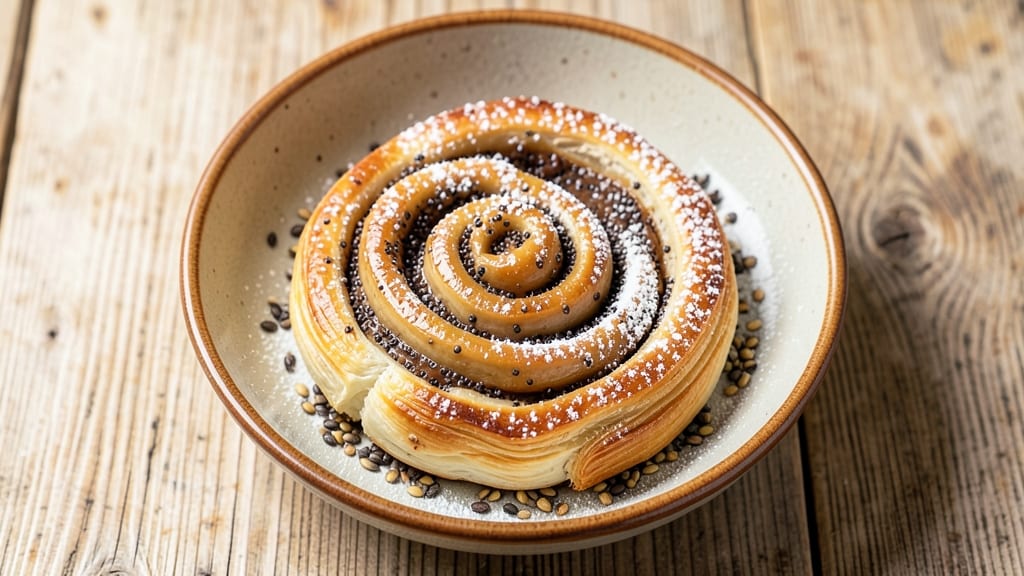
This authentic Hungarian poppy seed roll delivers the flaky, buttery layers and nutty-sweet filling that makes mákos csiga a beloved Eastern European treat.
The secret lies in a precise dough ratio of flour, butter, and yeast that creates those signature delicate sheets, while the poppy seed filling balances rich sweetness with a subtle tang from sour cream.
I've perfected this recipe after years of testing—each step matters to achieve that professional bakery quality at home.
The dough requires patience but rewards with flaky layers that practically melt in your mouth. We'll work with a cold butter technique for maximum lift, and the filling gets its signature texture from finely ground poppy seeds mixed with sugar and vanilla.
Traditional Hungarian recipes often include a touch of rum or brandy for depth, though I've made it optional for home cooks. The shaping technique—rolling the dough into a log, then slicing and re-rolling—creates those iconic spiral layers.
What you'll end up with is a golden-brown roll with crisp edges and tender centers, filled with a velvety poppy seed mixture that's neither too sweet nor too dry. The aroma alone will transport you to a Budapest café, where these treats are sold by the dozen.
This recipe serves 12, making it perfect for holidays, gift baskets, or satisfying your sweet tooth with a taste of tradition. Let's get started on creating something truly special.
For those who want to elevate it further, I'll share my professional tip for adding a thin glaze of powdered sugar and milk after baking—it gives that signature bakery finish without being overly sweet.
The dough can be made a day ahead, and the filling keeps well in the fridge, so you can assemble everything just before baking. This is comfort food at its finest, combining technique with nostalgia in every bite.
Ingredients for authentic hungarian poppy seed roll
Twelve ingredients. One iconic Eastern European treat with layers that melt in your mouth.
| Ingredient | Amount | Notes |
|---|---|---|
| All-Purpose Flour 🌾 | 5 cups | Sifted for light texture |
| Unsalted Butter 🧈 | 1 ½ cups | Cold, cubed for flakiness |
| Granulated Sugar 🍚 | ¼ cup | For dough enrichment |
| Active Dry Yeast 🍞 | ¼ oz | 1 packet or 2 1/4 tsp |
| Large Eggs 🥚 | 1 whole | Room temperature |
| Whole Milk 🥛 | ½ cup | Warmed to 90°F |
| Salt 🧂 | 1 tsp | Fine sea salt |
| Poppy Seeds 🌻 | 1 ½ cups | Finely ground preferred |
| Powdered Sugar 🍚 | 1 cup | For filling sweetness |
| Sour Cream 🍦 | ½ cup | Full-fat for richness |
| Pure Vanilla Extract 🍯 | 1 tsp | High-quality preferred |
| Brandy or Rum 🍷 | 1 tbsp | Optional, traditional touch |
| Powdered Sugar 🍚 | ¼ cup | For glaze finish |
| Heavy Cream 🥛 | ¼ cup | For glaze consistency |
The butter is non-negotiable here—European-style unsalted with at least 82% fat gives the signature flakiness. Plugrá or President brands are my go-to for that rich flavor, but any good-quality European butter works. Keep it cold when mixing into the dough—cut it into cubes and toss with the flour first. The yeast? Fresh is best, but active dry works fine if you're in a hurry. For the poppy seeds, bulk bins at specialty stores are your best bet—they're fresher and more flavorful than pre-packaged. If you can't find ground poppy seeds, pulse them in a food processor for 30 seconds (don't overdo it!).
No brandy or rum? Skip it—it's optional, not essential. The filling can handle extra powdered sugar if you're a sweet tooth, but trust me on the one cup measurement—it's perfectly balanced. For the glaze, half-and-half works in a pinch if you're out of heavy cream, but it won't be as stable. The sour cream adds that signature tang—full-fat is crucial for the right texture, so don't substitute with low-fat. If you're making this ahead, the dough can wait up to 24 hours in the fridge, but the filling should be mixed fresh before assembling.
The dough keeps 3 days wrapped in plastic in the fridge, and the filling lasts 5 days in an airtight container. For the glaze, mix it fresh right before serving—it sets quickly. These rolls freeze beautifully too: assemble them, bake until golden, then cool completely before wrapping tightly in plastic wrap and foil. They'll keep 3 months frozen—just thaw at room temperature before serving. The aroma alone will have everyone gathering in the kitchen.
Why You'll Love This Recipe
- You’re using pantry basics: flour, butter, sugar, yeast, eggs. That’s it. No fancy imports or last-minute grocery runs. Plus, the dough keeps for days, so you’re not baking from scratch every time. Smart, simple, and satisfying.
- No-Knead Magic: I swear by this dough—just mix, rest, and roll. The yeast does all the work while you sip coffee, and that buttery, flaky crust? Achievable without a stand mixer or even much elbow grease.
- Poppy Perfection: That creamy, nutty filling is ridiculously good—just ground poppy seeds, sugar, and a splash of milk. The contrast of the tender dough with the sweet, crumbly center? It’s the kind of bite that makes you close your eyes.
- Breakfast or Dessert: Honestly, this roll works at any time. Toast a slice for breakfast with jam, or serve it warm with tea. My kids beg for it after school, and my husband sneaks seconds at midnight—no judgment here.
Step-by-step instructions for authentic Hungarian poppy seed roll
Here's how to create those legendary flaky layers and nutty sweetness that make this Hungarian classic unforgettable.
Prepare the Yeast Dough with Perfect Texture
In a small bowl, combine the 0.5 cup whole milk warmed to 90°F with the 0.25 oz active dry yeast and 0.25 cup granulated sugar. Let it sit for 5-10 minutes until it becomes frothy and bubbly—this confirms your yeast is active and ready to work. If it doesn't bubble, your yeast may be old or the milk too hot.
In a large mixing bowl, whisk together the 5 cups all-purpose flour and 1 tsp salt. Make a well in the center and pour in the yeast mixture along with the 1 whole large egg and 0.5 cup sour cream. Mix gently with a wooden spoon until a shaggy dough forms. The dough should be soft but not sticky—if it's too wet, add 1-2 tablespoons of flour; if too dry, add 1 teaspoon of milk.
Knead and Rest for Maximum Flakiness
Turn the dough onto a lightly floured surface and knead for 8-10 minutes until smooth and elastic. You'll know it's ready when it springs back slowly when poked. Divide the dough into 4 equal pieces, cover with a clean kitchen towel, and let rest at room temperature for 30 minutes. This resting period relaxes the gluten, making the layers easier to create later.
While the dough rests, prepare your work surface by lightly dusting it with flour. The goal here is to prevent sticking while maintaining the dough's moisture—too much flour makes the final product tough. I like to keep a damp towel nearby to wipe my hands occasionally, which helps maintain the dough's elasticity.
Layer the Butter for Signature Flakiness
Take one piece of rested dough and roll it into a 12-inch circle on your floured surface. Place the 1.5 cups unsalted butter, cut into small cubes, in the center of the dough. Fold the dough over the butter to completely enclose it, then roll it out into a 12-inch square. This creates the first layer—what makes Hungarian pastries so famously flaky.
Fold the square in thirds like a letter, then roll it out again to 12 inches. Repeat this folding and rolling process 3 more times. Each fold creates more layers, and each roll keeps them thin. After the final roll, wrap the dough tightly in plastic wrap and refrigerate for 30 minutes. This chilling step prevents the butter from melting during the next steps, preserving those delicate layers.
Assemble the Poppy Seed Filling
In a bowl, mix together the 1.5 cups poppy seeds, 1 cup powdered sugar, 1 tsp pure vanilla extract, and 1 tbsp brandy or rum (if using). The poppy seeds should be finely ground for the best texture—if they're whole, pulse them in a food processor for 10-15 seconds before mixing. This filling is the heart of the roll, and its nutty sweetness balances perfectly with the flaky pastry.
Roll out the chilled dough on a floured surface to form a 16x12-inch rectangle. Spread the poppy seed mixture evenly over the dough, leaving a 1-inch border around the edges. This border prevents the filling from oozing out during baking and ensures clean edges on your finished roll. Gently roll the dough from the long side, sealing the edges as you go to create a tight log.
Bake to Golden Perfection and Glaze
Preheat your oven to 350°F. Place the rolled dough on a parchment-lined baking sheet, seam-side down. Brush the top with a mixture of 0.25 cup heavy cream and 0.25 cup powdered sugar for a beautiful golden finish. Bake for 40-45 minutes until the roll is deep golden brown and sounds hollow when tapped on the bottom.
Let the roll cool on a wire rack for 15 minutes before slicing. The internal temperature should reach 190°F when done—this ensures the poppy seed filling is fully set. For serving, slice into 12 equal pieces and dust each with a little extra powdered sugar for that classic Hungarian touch. The layers should be crisp yet tender, with a nutty-sweet poppy seed filling that melts in your mouth.
Pro Tips For Making Authentic Hungarian Poppy Seed Roll
- Weigh Your Butter: Hungarian pastries demand precision—don’t eyeball it. Use a kitchen scale for the butter in the dough (usually around 200g for a standard recipe). Softened butter spreads unevenly when measured by volume, and this roll’s layers depend on consistent fat distribution. I learned this after my first attempt ended up greasy in spots and dry in others.
- Proof at Room Temp: Skip the fridge for the yeast activation. Dissolve the yeast in warm (not hot) water with a pinch of sugar, then let it sit in a warm spot (like a turned-off oven with the light on) for 5–10 minutes until frothy. Cold water kills it; hot water cooks it. This ensures your dough rises reliably—no flat, dense rolls here.
- Roll the Dough Thin: For that signature crisp, even layer, roll the dough thinner than you think—about 1/8-inch thick. Thicker dough steams instead of crisps, and the poppy seed filling will leak through uneven spots. Use a rolling pin with guides or a ruler to keep it consistent. (Yes, it takes patience, but the texture makes it worth it.)
- Brush with Egg Wash: Don’t skip the egg wash on the final layer before baking. Whisk 1 egg with 1 tablespoon water, brush it lightly over the top dough sheet, then sprinkle with sugar. This creates a golden, caramelized crust that’s non-negotiable for authenticity. I used to bake it dry—big mistake. The wash also helps seal the layers so the filling stays put.
Dietary considerations for this recipe
Gluten-Free Adaptation
For a gluten-free version, I recommend using a 1:1 gluten-free flour blend like King Arthur Measure for Measure or Bob's Red Mill 1-to-1. Replace the 5 cups all-purpose flour with 5 cups gluten-free blend—just be aware the texture will be slightly denser.
Add 1 extra tablespoon of xanthan gum to improve elasticity, as gluten-free doughs lack natural structure. The butter layers will still form, but expect a slightly chewier bite. 🌾
Dairy-Free Options
To make this dairy-free, swap the 1.5 cups unsalted butter for 1.5 cups dairy-free margarine (like Miyoko's Creamery or Earth Balance) or vegan butter (ensure it's solid at room temperature).
For the filling, replace the 0.5 cup sour cream with 0.5 cup coconut yogurt (full-fat for richness) and use dairy-free heavy cream for the glaze. The flavor stays true, but the layers may be slightly less tender without traditional butter. 🧈
Lower Sugar Version
Cut the 1 cup powdered sugar in the filling to 0.75 cup and add 1 tbsp maple syrup for natural sweetness. You can also reduce the granulated sugar in the dough to 0.125 cup—this keeps the roll flavorful without being overly sweet.
The poppy seeds' natural nuttiness will shine through, and the texture remains intact. Perfect for those watching their sugar intake! 🍚
Nut-Free Alternative
If poppy seeds are a concern, replace them with 1.5 cups finely ground sunflower seeds (toasted for extra flavor). The filling will have a similar nutty texture but with a slightly earthier taste.
For a sweeter profile, increase the powdered sugar to 1.25 cups to compensate. This swap works surprisingly well while keeping the traditional roll structure. 🌻
Vegan Modifications
For a fully vegan version, use vegan butter (like Miyoko's) and replace the 1 whole egg with 1 flax egg (1 tbsp ground flaxseed + 3 tbsp water). The yeast mixture will need 1 tbsp vegan sugar (like coconut sugar) to activate properly.
The dough may require 5-10 extra minutes of kneading to develop gluten substitutes. The filling stays the same, but the glaze should use plant-based cream (like Oatly Barista). 🌱
Allergen-Friendly Tips
Always check labels for hidden allergens—some brands' gluten-free blends contain trace dairy or nuts. For cross-contamination safety, use separate utensils and surfaces when handling gluten-free or nut-free ingredients.
If making for someone with severe allergies, consider baking the rolls in individual portions to minimize risk. The key is attention to detail, not just substitution! 💡
Nutrition facts
Frequently asked questions
What makes this Hungarian poppy seed roll different from other sweet pastries?
The signature flaky layers come from the cold butter technique and multiple dough folds, creating delicate sheets that practically melt in your mouth. The filling balances nutty poppy seeds with just enough sweetness and tang from sour cream—never cloying. Traditional Hungarian versions often include a touch of brandy or rum for depth, which we've made optional for home cooks.
Can I make the dough ahead of time?
Yes! The dough keeps well for 3 days in the fridge wrapped tightly in plastic. The filling should be mixed fresh before assembling, but you can prep the poppy seed mixture 1 day ahead and store it in an airtight container. For best results, let both dough and filling sit at room temperature for 30 minutes before rolling and baking.
Why does my poppy seed filling look dry?
Overmixing or using too much powdered sugar can make the filling dry. The secret is to mix just until combined—2-3 minutes max—and use full-fat sour cream for moisture. If it's still too dry after baking, brush the top with a little warmed milk before serving to soften the texture. The filling should be thick but spreadable, not crumbly.
How do I achieve those perfect spiral layers?
Chill the dough between each fold to prevent butter from melting, and roll it thin but even—about 1/8-inch thick. Seal the edges tightly when rolling the log, and bake at 350°F until golden. For extra flakiness, brush the top with melted butter before baking. The key is patience—rushing causes uneven layers or filling leaks.
What's the best way to store leftover rolls?
Cool completely, then wrap tightly in plastic wrap followed by foil. They stay fresh at room temperature for 2 days or in the fridge for 5 days. For longer storage, freeze baked rolls for up to 3 months. Thaw at room temperature before serving—the aroma alone will have everyone gathering! Reheat briefly in a 300°F oven for 5 minutes if needed.