
Side Dishes
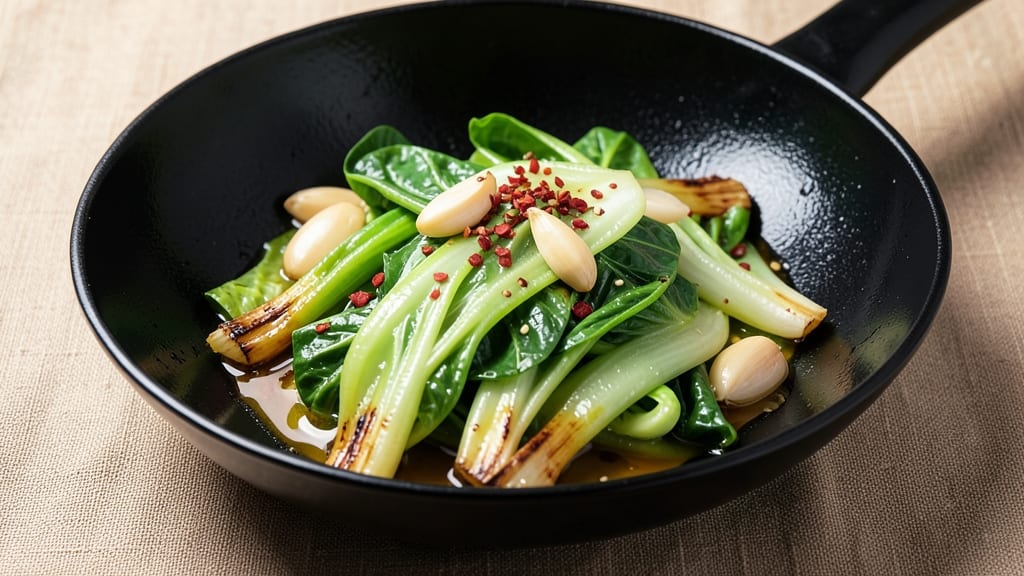
This stir-fried bak choy recipe transforms humble bok choy into a vibrant, crunchy side dish that delivers restaurant-quality flavor in just 15 minutes. The secret lies in high-heat cooking that preserves crisp-tender stems while caramelizing the leaves with garlic and chili.
I developed this version after discovering how a simple wok technique could elevate a basic vegetable into a dish worthy of any table.
What makes this recipe stand out is its versatility—it works as a side for proteins like chicken or tofu, or as a standalone vegetarian dish packed with bold flavors. The combination of garlic, chili, and sesame oil creates a savory, slightly spicy profile that pairs beautifully with Asian-inspired meals.
For best results, use fresh bak choy with firm stems and vibrant green leaves, as they hold up perfectly to the stir-frying process.
By the time you finish cooking, you'll have a dish that's crisp on the edges, tender in the center, and infused with aromatic garlic and chili. The stems retain their satisfying crunch while the leaves wilt just enough to soak up the flavorful sauce.
This recipe delivers restaurant-quality results without requiring advanced techniques—just a hot pan and a few minutes of attention.
Serve this stir-fried bak choy alongside steamed rice, grilled meats, or noodles for a complete meal. The dish also reheats well, making it perfect for meal prep. Whether you're cooking for a weeknight dinner or preparing for a gathering, this recipe delivers bold, satisfying flavor with minimal effort.
Ingredients for bak choy
Fresh bok choy, aromatic garlic, and chili flakes create a crisp-tender stir-fry with restaurant-quality boldness.
| Ingredient | Amount | Notes |
|---|---|---|
| Bok Choy (Bak Choy) 🥬 | 2 whole | Baby or full-size, stems intact |
| Garlic Cloves 🧄 | 6 cloves | Minced, fresh preferred |
| Dried Chili Flakes 🌶️ | 1 tbsp | Adjust for heat preference |
| Sesame Oil 🫒 | 1 tbsp | Toasted, for aroma |
| Light Soy Sauce 🍶 | 2 tbsp | Low-sodium preferred |
| Neutral Oil (Vegetable or Canola) 🫒 | 2 tbsp | High smoke point |
| Sesame Seeds 🥜 | 1 tbsp | Toasted, for garnish |
| Green Onion 🧅 | 1 whole | Thinly sliced, for garnish |
| Salt 🧂 | ½ tsp | Kosher or sea salt |
| Black Pepper 🌶️ | ¼ tsp | Freshly ground |
| Rice Vinegar 🍶 | 1 tbsp | For brightness |
| Sugar 🍯 | ½ tsp | Balances flavors |
The bok choy is the star—look for firm, vibrant green heads with crisp stems at Asian markets or well-stocked grocery stores like Whole Foods. Baby bok choy cooks faster, but full-size holds its shape better for stir-frying. The garlic should be fresh and plump, not shriveled—Costco's bulk garlic is a great budget-friendly option. For chili flakes, Ma Ma brand delivers consistent heat, but any dried chili works. Toast the sesame seeds lightly in a dry pan before using—they add nutty depth that pre-toasted seeds can't match.
No sesame oil? Toasted peanut oil works in a pinch, though it lacks that signature aroma. Short on garlic? Garlic powder at half the amount suffices, but fresh is non-negotiable for this dish. The soy sauce can be swapped for tamari for gluten-free or coconut aminos for a subtler flavor. If you're avoiding sugar, a pinch of honey balances the acidity just as well. For extra crunch, add julienned carrots or bell peppers—they take the heat beautifully. The green onion is optional but adds a fresh finish that ties everything together.
This stir-fry reheats beautifully—just 2 minutes in a hot pan with a splash of water revives the crisp-tender texture. Store in an airtight container for 3-4 days in the fridge, or freeze for up to 2 months. For meal prep, divide into single portions before freezing to avoid thawing the whole batch. The dish also makes an excellent base for homemade takeout bowls—just add steamed rice and your choice of protein. Garnish with extra sesame seeds right before serving to keep them toasty.
Why You'll Love This Recipe
- No-Chop Nightmare: I swear, this is one of those recipes where you can eyeball everything. The bak choy stays whole—just rinse, trim the ends, and toss it in. That garlic? Smashed with the flat side of a knife, no dice needed. Honestly, it’s the kind of dish that makes me feel like a cooking genius when my hands are still sticky from the kids’ snack time.
- Umami Bomb: That first hit of sesame oil hitting the pan? Instant flavor explosion. The garlic sizzles, the chili flakes add a whisper of heat, and the soy sauce ties it all together like a cozy blanket. The bak choy gets that perfect crisp-tender bite—crunchy edges, silky centers—while still soaking up all the good stuff. It’s the kind of simple dish that tastes like you slaved over it for hours.
- Leftover Hero: Between us, this stuff improves the next day. Reheat it in a wok with a splash of water, and it’s like a fresh batch—just more flavor-packed. I make a big batch on Sundays, and by Wednesday, it’s still the star of my lunch. Pack it in containers, toss it in salads, or eat it straight from the fridge. It’s my go-to for lazy days when I’d rather be scrolling than cooking.
- Pantry Staple Power: Five ingredients, none of which will break the bank. Bak choy lasts forever in the fridge, garlic’s a must-have, and sesame oil? A little goes a long way. I’ll be real: this is my budget-friendly answer to “What’s for dinner?” when I’ve got nothing but a wok and 10 minutes. Plus, it’s the kind of dish that makes even the pickiest eaters ask, “Can we have this again?”
Step-by-step instructions for stir-fried bak choy with garlic and chili
This method delivers crisp-tender bak choy with bold, aromatic flavors in under 15 minutes.
Prep the Bak Choy and Aromatics
Separate the 2 whole bak choy into leaves and stems. Rinse thoroughly under cold water and pat completely dry with paper towels—any moisture will steam instead of crisp. Cut the stems into 1-inch pieces and leave the leaves whole.
In a small bowl, combine the 6 cloves minced garlic, 1 tablespoon dried chili flakes, 0.5 teaspoon salt, and 0.25 teaspoon black pepper. This dry rub intensifies the garlic flavor and distributes heat evenly. Set aside until ready to use.
Stir-Fry Until Crisp-Tender
Heat a wok or large skillet over high heat until a drop of water sizzles instantly. Add the 2 tablespoons neutral oil and swirl to coat. When the oil shimmers but doesn't smoke, add the garlic-chili mixture and stir for 30 seconds until fragrant—don't let it brown.
Add the bak choy stems first, tossing continuously for 2 minutes until they begin to soften but still retain a slight crunch. Push stems to one side, add the leaves, and stir-fry for another 2 minutes until the edges curl slightly. You're aiming for bright green leaves with crisp edges and tender stems.
Finish with Flavor Balance
Pour in the 2 tablespoons light soy sauce, 1 tablespoon rice vinegar, and 0.5 teaspoon sugar. Toss everything vigorously for 1 minute until the sauce coats the bak choy evenly. The sugar helps balance the acidity from the vinegar while enhancing the soy flavor.
Remove from heat and immediately drizzle with 1 tablespoon sesame oil. This adds nutty aroma and helps distribute the sauce. Toss one final time to ensure every piece is coated.
Garnish and Serve Immediately
Transfer to a serving platter and sprinkle with 1 tablespoon toasted sesame seeds and thinly sliced green onion. The seeds add texture contrast while the green onion provides freshness. Serve while the bak choy is still vibrant and crisp—it loses texture quickly once off the heat.
For best results, pair with steamed jasmine rice and a drizzle of chili oil. The residual heat from the pan ensures the sesame oil stays aromatic rather than turning greasy. Leftovers can be refrigerated for up to 2 days, but reheating may soften the texture.
Pro Tips For Making Bak Choy
- Trim the Roots First: Cut off the thick white roots before chopping the rest—this keeps the leaves tender and prevents them from turning mushy. I learned this the hard way after ending up with a pile of limp bok choy that tasted like overcooked lettuce.
- Bloom the Garlic: Crush the garlic cloves with the flat side of your knife before adding them to the pan. This releases more flavor faster—no need to wait for them to soften. (Yes, even if you’re impatient like me.)
- Toast the Chili Flakes: Dry-toast the chili flakes in the empty pan for 10 seconds before adding oil—they’ll perfume the whole dish with a deeper, smokier kick. Skipping this step means you’re just sprinkling on heat, not flavor.
- Use Less Soy Sauce: Start with half the amount listed and taste—light soy sauce is salty, and you can always add more. I used to drown the bok choy in it, then wonder why the dish tasted flat. Balance is everything.
Regional styles of this dish
Cantonese Stir-Fry
The classic Cantonese approach to bak choy focuses on simplicity and balance. In this version, I use just 1 tablespoon oyster sauce instead of soy sauce, along with ½ teaspoon white pepper for a more refined flavor.
The key technique is to cook the stems and leaves separately—stems first for 3 minutes until just tender, then leaves for 1 minute to wilt without overcooking. Garnish with crispy fried shallots for texture and a splash of Shaoxing wine to deepen the sauce.
This style is perfect for dim sum or family-style meals. 🥢
Sichuan Spicy Version
For a fiery kick, the Sichuan region transforms bak choy into a spicy, numbing dish. I start by blooming 1 teaspoon Sichuan peppercorns in 1 tablespoon neutral oil until fragrant, then add 2 tablespoons doubanjiang (fermented chili bean paste) and 1 tablespoon chili crisp.
The stems get 4 minutes of stir-frying while leaves wilt in 1 minute. Finish with 1 tablespoon dark soy sauce for color and a touch of rice vinegar to cut the heat. Serve immediately with steamed mantou to balance the spice. 🌶️
Japanese Sunomono Style
In Japan, bak choy is often served raw in a refreshing sunomono salad. Thinly slice the stems and leaves, then toss with a dressing of 2 tablespoons rice vinegar, 1 tablespoon soy sauce, 1 teaspoon mirin, and ½ teaspoon sugar.
Add 1 tablespoon toasted sesame seeds and thinly sliced cucumber for crunch. This no-cook version highlights the vegetable's natural sweetness and crispness, making it ideal for hot summer days. 🌿
Thai Basil Stir-Fry
For a Thai-inspired twist, I stir-fry bak choy with 2 tablespoons fish sauce, 1 tablespoon palm sugar, and 1 tablespoon lime juice. After cooking, fold in ¼ cup fresh Thai basil leaves and top with crushed peanuts and chili flakes.
The basil adds an aromatic finish that pairs beautifully with the umami-rich sauce. Serve with jasmine rice and grilled chicken for a complete meal. 🍛
Korean Kimchi Bak Choy
This Korean adaptation adds ½ cup chopped kimchi to the stir-fry for tangy depth. After cooking the bak choy with garlic and chili, add the kimchi and toss with 1 tablespoon gochujang (Korean chili paste) and 1 teaspoon sesame oil.
Finish with 1 tablespoon toasted sesame seeds and a sprinkle of toasted sesame oil. The fermented flavors create a complex, savory dish that's perfect with steamed rice and bulgogi. 🥬
Nutrition facts
Frequently asked questions
What’s the best way to pick fresh bak choy?
Look for heads with vibrant green leaves and crisp, firm stems. Avoid any with wilted leaves or yellowing—these indicate age. Baby bak choy cooks faster, while full-size holds up better for stir-frying. Check the stems for moisture; they should feel sturdy, not slimy.
Can I substitute baby bok choy for full-size?
Yes, but adjust cooking time! Baby bok choy (whole heads) takes just 2-3 minutes to wilt, while full-size stems need 3-4 minutes for crisp-tender texture. If using baby bok choy, reduce the recipe by half or add extra stems for volume. The flavor difference is minimal—just texture!
Why did my bak choy turn mushy?
Overcooking or crowded pans cause mushiness. Always stir-fry in a hot wok with enough space—don’t overfill! Cook stems and leaves separately: stems first for 2-3 minutes, then leaves for 1-2 minutes. Remove from heat immediately after tossing with sauce to lock in crispness.
How can I make this dish spicier?
Double the dried chili flakes to 2 tablespoons or add ½ teaspoon cayenne pepper> to the garlic mixture. For heat with depth, swap chili flakes for 1 teaspoon gochujang> (Korean chili paste) or 1 tablespoon sambal oelek. Balance with extra rice vinegar to brighten the flavors.
Can I use this recipe for meal prep?
Yes, but reheat carefully! Store in an airtight container for 3-4 days. Reheat in a hot pan for 2 minutes with a splash of water to revive texture. For freezing, divide into portions and thaw overnight—microwaving makes it soggy. Garnish fresh sesame seeds/seeds after reheating for best results.