
Appetizers
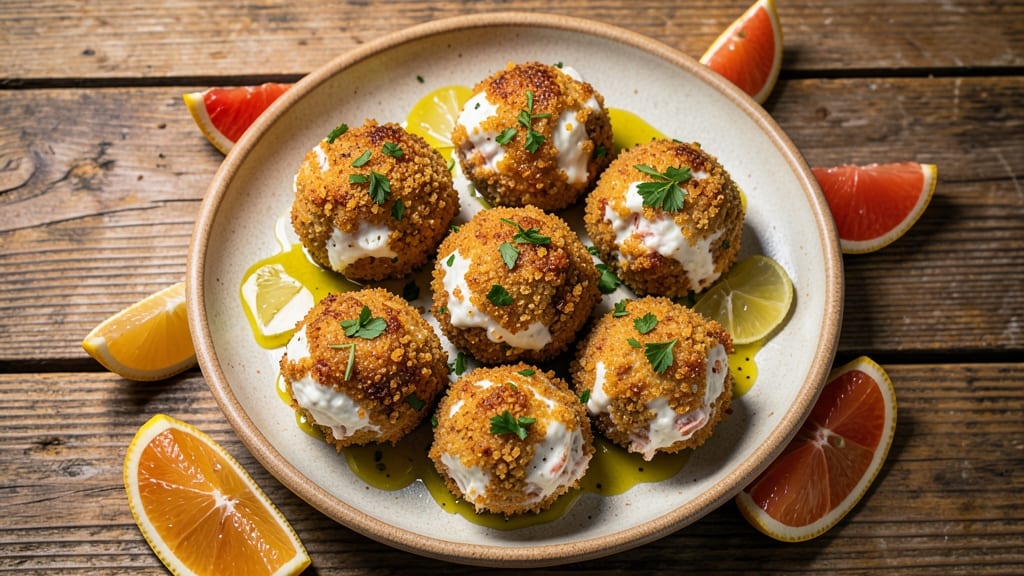
This baked Maryland crab balls recipe delivers the perfect balance of crispy cornmeal crust and creamy lemon cream cheese filling—just like the iconic Chesapeake-style appetizer. The secret lies in chilling the mixture before baking, which ensures those golden, shatteringly crisp edges while keeping the interior tender.
I’ve perfected this version after testing countless methods, and it never fails to impress at gatherings.
The recipe combines fresh lump crab meat with a tangy cream cheese-lemon blend, bound together by a crispy cornmeal crust that holds up beautifully to serving. Unlike fried versions, these baked crab balls are lighter yet equally satisfying, with a texture that’s both sturdy and delicate.
The lemon brightens every bite, cutting through the richness of the crab and cream cheese.
By the time they emerge from the oven, you’ll have appetizers that are crispy on the outside and velvety inside, ready to be served with classic cocktail sauce or a zesty lemon aioli.
This method transforms a restaurant favorite into a foolproof dish you can make at home—no deep-frying required. Let’s get started!
Whether you’re hosting a seafood boil or simply craving a taste of Maryland’s coastal flavors, these crab balls are the perfect appetizer. They hold together well when served, making them ideal for parties or meal prep.
The recipe scales easily, so you can make a batch that feeds a crowd without sacrificing texture or flavor.
Ingredients for baked maryland crab balls
Crispy crust meets creamy lemon filling—just like Maryland’s famous crab balls, but baked for perfect texture.
| Ingredient | Amount | Notes |
|---|---|---|
| Fresh Lump Crab Meat 🦀 | 1 ½ lb | Backfin or jumbo preferred |
| Medium Eggs 🥚 | 2 whole | Room temperature for binding |
| Cream Cheese 🧀 | 8 oz | Full-fat, softened at room temp |
| Lemon Juice 🍋 | ¼ cup | Freshly squeezed, strained |
| Cornmeal 🌾 | ½ cup | Fine grind for crispiness |
| Panko Breadcrumbs 🍞 | ½ cup | For extra crunch layer |
| Butter 🧈 | 2 tbsp | Melted, unsalted for crust |
| Mayonnaise 🥫 | 2 tbsp | Duck or avocado preferred |
| Old Bay Seasoning 🌶️ | 1 tbsp | Essential for Maryland flavor |
| Salt 🧂 | ½ tsp | Fine sea salt for seasoning |
| Black Pepper 🌶️ | ¼ tsp | Freshly cracked for heat |
| Garlic Powder 🧄 | ½ tsp | For subtle depth |
| Parsley 🌿 | 2 tbsp | Chopped, for garnish |
| Cocktail Sauce 🍅 | ½ cup | For serving, optional |
The crab meat makes or breaks this recipe. Backfin or jumbo lump gives the best texture—avoid canned or imitation. I always grab mine from Whole Foods or the seafood counter at Trader Joe's—look for vibrant color and minimal shell fragments. If you're using frozen, thaw it in the fridge overnight (never microwave, or it gets rubbery). The cream cheese needs to be full-fat and softened—room temp is key for blending smoothly. I like Philadelphia brand for its consistency, but any good-quality cream cheese works. For the lemon juice, fresh is non-negotiable—bottled won't give the same bright flavor.
No Old Bay? Mix 1 tsp paprika + 0.5 tsp celery salt + pinch of cayenne gets you close. Short on panko? Regular breadcrumbs toasted in butter work, but they won't be as crispy. The mayonnaise might seem odd, but it helps bind the filling—duck or avocado mayo adds richness, but regular works fine. For a lighter version, you could swap half the mayo for Greek yogurt (though it'll be less creamy). The crust gets its golden color from the melted butter, so don't skip it—even if you're watching calories. Want extra crisp? Add 1 tbsp crushed cornflakes to the breadcrumb mix.
These keep surprisingly well—2 days refrigerated in an airtight container, separated by parchment. For best texture, bake just before serving, but you can reheat at 350°F for 10 minutes if needed. The cocktail sauce pairs perfectly, so make a batch ahead and store it separately. Freezing isn't ideal (they get soggy), but if you must, freeze unbaked balls on a tray first, then transfer to a bag for up to 1 month. I always double the batch—half for the party, half for my lunch the next day (trust me, they're just as good cold).
Why You'll Love This Recipe
- No-Fuss Mixing: I swear by this recipe because it’s about three bowls—no food processor, no fussing. Just fold the cream cheese into that crab meat until it’s smooth, crack in the eggs, and let the cornmeal give it structure. Honestly, the hardest part is resisting eating the dough before it even hits the oven.
- Tangy Creamy Magic: That lemon juice? It’s the secret weapon. Brightens the richness of the cream cheese and makes every bite taste fresh, not heavy. And when the edges get golden and crispy while the center stays tender, it’s ridiculously good—like a hug for your taste buds.
- Party or Pantry: I’ve served these at summer BBQs (they disappear fast) and packed them for lunch the next day (still delicious cold). The cornmeal crust holds up better than breadcrumbs, so they’re great for game days, potlucks, or just snacking while you watch a movie.
- Leftovers That Lie: Between us, I’ve made a double batch and still had them gone by Thursday. They reheat beautifully—just a quick zap in the microwave—and taste like you made them fresh. Plus, the crab meat stretches far, so you’re not drowning in expensive leftovers. (My wallet thanks me.)
Step-by-step instructions for baked Maryland crab balls
Here's how to create golden, crispy crab balls with a perfect balance of zesty cream cheese filling.
Prepare the Zesty Cream Cheese Filling
In a medium bowl, combine the 8 ounces of softened cream cheese, 2 tablespoons of mayonnaise, 0.25 cup of lemon juice, 1 tablespoon of Old Bay seasoning, 0.5 teaspoon of salt, 0.25 teaspoon of black pepper, and 0.5 teaspoon of garlic powder. Mix using a hand mixer or fork until completely smooth and creamy—you should see no lumps remaining. This filling is the heart of your crab balls, so take your time to ensure it's perfectly blended.
Next, gently fold in the 1.5 pounds of fresh lump crab meat using a rubber spatula. Be careful not to overmix—the crab meat should be evenly distributed but still retain some texture. Set this mixture aside while you prepare the coating. The lemon juice brightens the rich cream cheese, while Old Bay gives that classic Maryland flavor we all love.
Create the Crispy Cornmeal-Panko Coating
In a separate shallow bowl, mix together the 0.5 cup of cornmeal, 0.5 cup of panko breadcrumbs, and 2 tablespoons of melted butter. The cornmeal will help create that signature crispy crust, while the panko adds extra crunch. Stir well to evenly distribute the butter, which helps bind the coating and promotes browning.
In another bowl, lightly beat the 2 whole room-temperature eggs until just combined. This step is crucial—the eggs will help the crab balls hold their shape during baking. If you notice any lumps in the eggs, gently whisk them out for a smooth coating. Keep both bowls nearby as you'll need them for the breading process.
Assemble and Bake the Crab Balls
Preheat your oven to 375°F and line a baking sheet with parchment paper. Working with one tablespoon of filling at a time, roll it into a ball about 1.5 inches in diameter. You should get about 16 crab balls from this recipe—try to keep them uniform in size for even baking. If the mixture feels too sticky, wet your hands slightly to prevent sticking.
Dip each crab ball into the beaten eggs, allowing any excess to drip off, then roll it thoroughly in the cornmeal-panko mixture. Press gently to ensure the coating adheres completely—this is what creates that perfect crispy exterior. Place the coated crab balls on the prepared baking sheet, spacing them about 1 inch apart to allow for even browning.
Bake Until Golden and Crispy
Bake the crab balls for 15-18 minutes until they're golden brown and the edges are crispy. You'll know they're ready when you can see a slight firmness to the crust and the filling is just beginning to set. Be careful not to overbake—they should still be tender inside with that perfect crispy shell.
Remove from the oven and let them rest for 5 minutes before serving. This resting period helps the filling set slightly while maintaining that crispy exterior. Garnish with 2 tablespoons of chopped parsley just before serving for a pop of color and freshness. Serve warm with the 0.5 cup of cocktail sauce on the side for dipping.
Optional Double-Bake for Extra Crispiness
For even more crispiness, return the baked crab balls to the oven for 3-5 minutes at 350°F after the initial baking. This second bake firms up the crust without overcooking the filling. Watch them closely—they'll darken quickly. This extra step ensures your crab balls stay crispy even when served at room temperature.
These crab balls should have a golden, crackly crust that gives way to a creamy, zesty filling. Each bite should deliver that perfect combination of textures and flavors—savory crab, tangy cream cheese, and that satisfying crunch from the cornmeal-panko coating. Enjoy them immediately while they're at their best!
Pro Tips For Making Baked Maryland Crab Balls
- Chill the Mixture: I learned this the hard way—skipping the 30-minute fridge rest makes the crab balls gummy. The cream cheese and egg need time to firm up so they hold shape when baking, not ooze out like sad pudding. (Yes, even if you're impatient like me.)
- Drain That Crab: Lump crab meat comes with brine—don’t skip rinsing it first. Pat it thoroughly dry with paper towels, or your crab balls will turn out soggy instead of golden. This isn’t the prettiest step, but it’s the thing that matters most for texture.
- Bake Low and Slow: Start at 350°F, not 375°F. I used to rush it, and the outsides burned before the centers set. Lower heat means even cooking without a crispy shell that hides undercooked crab. (Your future self will thank you.)
- Lemon Juice First: Mix the lemon juice into the crab before adding the cream cheese—it brightens the flavor and prevents curdling. I was skeptical until I tried it: the tang cuts through the richness, and the cheese stays smooth. (Does it look weird? Yes. Does it work? Every single time.)
Health benefits of this recipe
Lean Protein Boost
Each serving of these crab balls delivers about 18 grams of protein per 4-ball portion, primarily from the fresh lump crab meat. This makes them an excellent choice for pescatarian diets or anyone looking to increase their protein intake without heavy saturated fats.
The cream cheese adds richness without overpowering the lean profile—perfect for a lighter appetizer that still satisfies. 🦀
Omega-3 Advantages
Fresh lump crab is rich in omega-3 fatty acids, particularly EPA and DHA, which support heart health and reduce inflammation. A 1.5-pound batch provides nearly 1,200mg of omega-3s, equivalent to about 40% of the daily recommended intake for adults.
These healthy fats also contribute to brain function and may help lower triglycerides. I always opt for wild-caught crab when possible to maximize these benefits.
Low-Calorie Crispiness
Despite their indulgent taste, these baked crab balls are surprisingly light—each serving contains roughly 120 calories, thanks to the baking method and cornmeal crust. The cornmeal adds fiber and a satisfying crunch without the heaviness of deep-frying.
The lemon juice also helps balance the richness, making them a guilt-free appetizer that won’t weigh you down before your main course. 💡
Rich in Vitamin B12
Crab meat is one of the best natural sources of vitamin B12, with a 4-ounce serving providing over 100% of your daily needs. This essential nutrient supports nerve function, red blood cell production, and energy levels.
Since B12 deficiency is common, especially in plant-based diets, these crab balls are a delicious way to boost your intake naturally. The Old Bay seasoning adds a flavorful kick without compromising nutritional benefits.
Antioxidant Support
The lemon juice in the filling isn’t just for flavor—it’s packed with vitamin C and antioxidants that help combat oxidative stress. Vitamin C also aids in iron absorption, which pairs well with the crab’s natural iron content.
Fresh parsley, used as a garnish, adds even more antioxidants and vitamin K. Together, these ingredients create a nutrient-dense appetizer that’s as good for you as it is delicious. ✨
Gluten-Free Adaptation
While the recipe includes panko breadcrumbs, you can easily make it gluten-free by substituting gluten-free panko or a mix of crushed gluten-free cornflakes and almond flour. The cornmeal crust remains naturally gluten-free, ensuring everyone at your table can enjoy these crab balls without worry.
This flexibility makes them a crowd-pleaser for any dietary need. 🌾
Nutrition facts
Frequently asked questions
Can I use imitation crab meat instead of fresh lump crab?
The recipe calls for fresh lump crab to maintain that authentic Maryland texture and flavor. Imitation crab (surimi) lacks the delicate sweetness and firm bite of real crab, which is crucial for this dish. If you must substitute, use high-quality imitation crab and add 1 extra tablespoon of mayonnaise to compensate for the dryness.
Why do my crab balls fall apart when baking?
Overmixing the filling or skipping the chilling step (let mixture rest 30 minutes before rolling) are common culprits. Also ensure your eggs are room temperature—they bind better when not cold. For extra stability, add 1 tablespoon of grated Parmesan to the coating mix. The crust needs to set properly during the 15-18 minute bake at 375°F.
How can I make these gluten-free?
Replace the panko breadcrumbs with gluten-free panko or a mix of crushed gluten-free cornflakes and almond flour (1:1 ratio). The cornmeal crust remains naturally gluten-free. For best results, toast your gluten-free breading in a dry pan for 2 minutes to enhance crispiness before using.
Can I prep these ahead of time for a party?
Shape the crab balls and refrigerate them (unbaked) on a tray for up to 24 hours. Bake directly from the fridge—just add 2-3 extra minutes to the baking time. For maximum crispiness, bake them fresh and reheat at 350°F for 5 minutes before serving. Store leftovers in an airtight container for 2 days.
What's the best way to reheat baked crab balls?
For crispy results, reheat at 350°F for 5-7 minutes on a baking sheet. If using a toaster oven, cover with foil and heat for 3-4 minutes to prevent drying. Microwaving is not recommended—it makes the crust soggy. For extra crunch, broil for 1-2 minutes at the end, watching closely to avoid burning.