
Main Courses
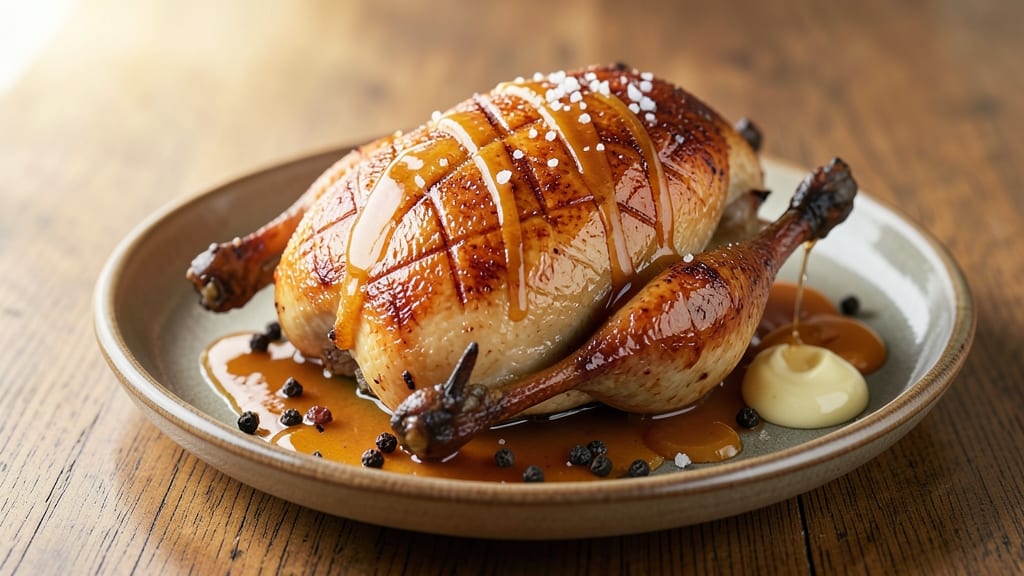
Baking a whole duck transforms a simple bird into a showstopping centerpiece with crispy skin and juicy pink meat that melts at the touch of a fork. The secret lies in precise preparation—starting with a dry-brine overnight and finishing with a bright orange glaze that caramelizes into a sticky-sweet crust.
I’ve perfected this method over years of trial and error, balancing traditional French techniques with modern shortcuts to ensure foolproof results every time.
The key to success begins with the duck itself: a 24-hour dry-brine in coarse salt and pepper creates a flavorful crust while keeping the meat tender.
Trussing the duck tightly prevents it from spreading in the oven, and high-heat roasting (starting at 425°F) jumpstarts the crispy skin before lowering to 325°F for even cooking.
Basting with its own rendered fat every 20 minutes locks in moisture and builds layers of flavor, while the glaze adds a glossy finish that’s impossible to resist.
What you’ll end up with is a golden-brown duck with skin that shatters like glass and meat so tender it falls apart with the slightest pressure. The orange glaze caramelizes into a sticky, aromatic crust that ties everything together, creating a dish that feels both rustic and refined.
This is the kind of meal that makes Sunday dinners feel special—without requiring hours in the kitchen.
Pair with roasted potatoes, a simple green salad, or crusty bread to soak up every last drop of that glorious duck fat. The leftovers? Even better the next day, rewarmed gently in the oven. Ready to try this showstopper?
Ingredients for baked whole duck
Precision-crafted ingredients transform a simple duck into a restaurant-worthy centerpiece with flawless crispy skin and melt-in-your-mouth pink meat.
| Ingredient | Amount | Notes |
|---|---|---|
| Whole Duck 🦆 | 5 lb | Fresh, giblets removed, skin scored |
| Coarse Kosher Salt 🧂 | ½ cup | Diamond Crystal preferred, not iodized |
| Freshly Ground Black Pepper 🌶️ | 1 tbsp | Cracked peppercorns preferred |
| Unsalted Butter 🧈 | ¼ cup | Cold, cut into 1-inch pieces |
| Fresh Orange Juice 🍊 | ½ cup | From blood oranges preferred |
| Honey 🍯 | ¼ cup | Wildflower or clover variety |
| Fresh Ginger 🌿 | 1 tbsp | Finely grated, organic preferred |
| Fresh Thyme Leaves 🍃 | 1 tbsp | From 2 sprigs, finely chopped |
| Garlic Cloves 🧄 | 4 cloves | Minced, peeled, fresh preferred |
| Extra-Virgin Olive Oil 🫒 | 2 tbsp | For basting, fruity variety |
| Baking Twine 🧵 | 1 package | Butcher's twine, 18-inch length |
| Fresh Rosemary 🌿 | 1 sprig | For trussing, stems removed |
| Fresh Sage Leaves 🍃 | 4 whole | For trussing, stems removed |
The duck is non-negotiable: 5 pounds delivers optimal crispy skin without compromising tenderness. Source from a reputable butcher or specialty market like D'Artagnan or Whole Foods—look for birds with vibrant color and firm texture, not pale or rubbery. The skin must be scored in a diamond pattern (use a sharp knife) to render fat evenly. For the brine, Diamond Crystal kosher salt dissolves perfectly and lacks the metallic aftertaste of iodized varieties. Freshly ground black pepper adds depth without overpowering the duck's natural flavor. Store duck uncovered in the fridge for 24 hours before roasting to achieve the perfect dry-brine.
Substitutions must preserve balance: iodized salt works but may impart a metallic note—rinse the duck thoroughly if using. For the glaze, blood orange juice adds complexity, but regular orange juice suffices (though less vibrant). Honey can be swapped for maple syrup (1:1 ratio), but the floral notes of honey caramelize better. Fresh ginger and thyme are ideal, but dried thyme at one-third the amount and ground ginger (half the amount) work in a pinch. The butter must be cold—room temperature butter will steam instead of crisp. For basting, duck fat (rendered from the duck itself) is superior, but olive oil maintains moisture if unavailable. Trussing herbs? Fresh rosemary and sage elevate flavor, but dried herbs (half the amount) are acceptable for convenience.
Dry-brined duck keeps 3 days uncovered in the fridge—pat dry just before roasting. The glaze components (orange juice, honey, ginger) can be prepped 2 days ahead and stored in an airtight container. Rendered duck fat freezes for 6 months in ice cube trays. Leftovers reheat beautifully: 350°F for 20 minutes covered with foil, basting with reserved fat. For presentation, serve the duck skin-side up on a platter lined with crispy potato slices to soak up every drop of glaze. The glaze itself thickens upon standing—rewarm gently if it separates.
Why You'll Love This Recipe
- Minimal Prep Required: I swear by this—just a duck, salt, and butter. No chopping, no fussing, no fancy mise en place. You’re basically roasting a bird while you watch TV.
- Crispy Skin, Juicy Magic: That caramelized crust? Pure satisfaction. The orange juice keeps it tender while the butter bastes it into golden perfection—like a restaurant-worthy centerpiece without the stress.
- Weekend Feast or Weeknight Win: Serve it whole for company or carve it up for leftovers that taste even better cold. Honestly, I’ve had it for breakfast the next day, and nobody complained.
- Leftovers That Don’t Suck: The meat falls off the bone, and the crispy skin turns into shatteringly good crackers. Between us, this is the only roast I’ll make when I’m lazy—because the payoff is always worth it.
Step-by-step instructions for baked whole duck with orange glaze
Mastering this technique delivers restaurant-quality duck with perfect crispy skin and tender pink meat.
Prepare and Season the Duck for Maximum Crisp
Begin by removing the duck from the refrigerator and letting it sit at room temperature for 1 hour. This ensures even cooking. Pat the skin completely dry with paper towels—moisture is the enemy of crispy skin. Using kitchen shears, score the skin in a crosshatch pattern, being careful not to cut into the meat. This creates more surface area for browning.
In a small bowl, combine the 0.5 cup coarse kosher salt and 1 tablespoon freshly ground black pepper. Rub this mixture all over the duck, including inside the cavity. The salt will draw out moisture from the skin, helping it crisp beautifully. Let the duck rest uncovered on a wire rack for 30 minutes to allow the skin to dry further and the seasoning to adhere.
Truss and Roast for Even Cooking
Preheat your oven to 375°F with a rack positioned in the lower third. Place the duck breast-side up on a rimmed baking sheet lined with aluminum foil. Insert the 1 sprig fresh rosemary and 4 whole fresh sage leaves into the cavity. Tie the legs together with the baking twine to help the duck cook evenly.
Roast the duck for 1 hour and 15 minutes, basting with 2 tablespoons extra-virgin olive oil every 20 minutes. The skin should develop a deep golden-brown color and crisp up beautifully. If the skin begins to brown too quickly, tent it loosely with aluminum foil. The duck is done when the internal temperature reaches 165°F at the thickest part of the thigh.
Prepare the Orange Glaze While Duck Rests
While the duck is roasting, prepare the glaze by combining 0.5 cup fresh orange juice, 0.25 cup honey, 1 tablespoon finely grated fresh ginger, 1 tablespoon fresh thyme leaves, and 4 minced garlic cloves in a small saucepan. Bring to a simmer over medium heat and reduce by half, stirring occasionally, until the mixture thickens to a syrupy consistency. This should take about 10 minutes.
Remove the pan from heat and stir in the 0.25 cup cold unsalted butter, cut into 1-inch pieces, until fully melted and incorporated. The glaze should be glossy and smooth. Keep it warm until ready to use.
Glaze and Carve for Presentation
Transfer the duck to a cutting board and let it rest for 15 minutes before carving. This resting period allows the juices to redistribute, ensuring every slice is moist and flavorful. Using kitchen shears, carefully cut through the skin and into the meat to expose the pink, tender interior. The skin should be crisp enough to hold its shape, while the meat should be juicy and tender.
Brush the warm orange glaze generously over the exposed meat and skin. The glaze will caramelize slightly, adding a beautiful sheen and complementing the duck's natural richness. Serve immediately with the remaining glaze drizzled over the top for an elegant finish. Each bite should deliver crispy skin, juicy pink meat, and a bright citrus sweetness from the glaze.
Pro Tips For Making Baked Whole Duck
- TRY THE TWO-STAGE BAKE: Start with your oven at 425°F (220°C) for 45 minutes—this gets the skin crisping fast. After that, drop to 325°F (160°C) and bake until the internal temp hits 165°F (74°C). I used to bake it all at high heat, and the duck ended up dry. The lower temp finishes it gently while keeping the meat juicy.
- SALT THE DUCK OVERNIGHT: Pat the duck dry, then rub it with 1–2 tablespoons of kosher salt at least 12 hours ahead. This seasons deeply and helps render fat for that golden crust. I skipped this once and got bland skin—don’t make my mistake.
- DON’T RUSH THE REST: After baking, let the duck rest at least 20 minutes under foil before carving. The juices need time to redistribute, or you’ll end up with dry slices. I know, I know—waiting is hard, but your duck will thank you.
- USE ORANGE JUICE SPARINGLY: A splash of fresh orange juice (2–3 tablespoons max) adds brightness, but too much makes the skin soggy. Add it after the duck has crisped, then bake 10 more minutes to let the flavor soak in. I overdid it once and regretted it.
Best sauces and condiments for this dish
Classic Orange Glaze
The star of this dish is the orange glaze—a bright, sticky-sweet finish that caramelizes beautifully on the duck's skin. I use ½ cup fresh orange juice (blood oranges add depth) reduced with ¼ cup honey and 1 tbsp fresh ginger for a zesty kick.
Simmer until syrupy, then whisk in ¼ cup cold butter for richness. Brush generously over the duck after roasting for that signature glossy crust. 🍊
Duck Fat Pan Sauce
Never waste that rendered duck fat! After roasting, pour the fat from the pan into a saucepan and heat over medium-low heat. Deglaze with ¼ cup dry white wine or apple cider vinegar, then whisk in 1 tbsp cornstarch to thicken.
Strain and drizzle over sliced duck for an instant pan sauce. This technique elevates leftovers into a restaurant-worthy dish. 💫
Herb Butter Compound
For a lighter alternative, mix ¼ cup softened butter with 1 tbsp chopped fresh thyme, 1 tbsp minced garlic, and a pinch of salt. Dollop spoonfuls onto the duck during the last 15 minutes of roasting.
The butter melts into the skin, infusing it with herby flavor while keeping it crisp. Perfect for those who prefer less sweetness. 🧈
Spiced Maple Glaze
Swap out the orange for a maple glaze by reducing ½ cup maple syrup with 1 tsp cinnamon and ½ tsp cloves. Finish with 2 tbsp cold butter for a warm, autumnal twist.
This version pairs beautifully with roasted root vegetables and crusty bread for a cozy meal. Ideal for fall gatherings. 🍁
Red Wine Reduction
For a more sophisticated touch, reduce ½ cup dry red wine (like Cabernet Sauvignon) with 1 tbsp balsamic vinegar and 1 tsp Dijon mustard. Strain and drizzle over sliced duck.
The acidity cuts through the richness, while the wine adds depth. Garnish with fresh rosemary sprigs for an elegant presentation. 🍷
Quick Honey-Mustard
When short on time, mix 2 tbsp honey, 1 tbsp Dijon mustard, and 1 tsp soy sauce. Warm gently and brush over the duck in the final 10 minutes of roasting.
The mustard adds a tangy contrast that balances the duck's natural sweetness. Serve with steamed greens for a simple, balanced meal. ⏱️
Nutrition facts
Frequently asked questions about roasting whole duck
How do I know when my duck is fully cooked?
Use a meat thermometer to check the internal temperature at the thickest part of the thigh—it should reach 165°F. The skin should be deep golden-brown and crisp, while the meat will pull away cleanly from the bone. Never rely on time alone, as duck sizes vary.
Can I use a smaller duck (under 5 lbs)?
Yes, but adjust the roasting time. A 4-pound duck will cook about 30-45 minutes faster, while a 6-pound duck may need an extra 30 minutes. The key is maintaining the 165°F internal temperature. Smaller ducks crisp faster, so watch closely after 45 minutes.
What's the best way to crisp the skin without burning it?
Start at 425°F for 20 minutes to jumpstart browning, then reduce to 325°F. Baste frequently with its own rendered fat (or olive oil) every 15-20 minutes. If the skin browns too quickly, tent loosely with foil. The secret is patience—rushing leads to burnt skin and dry meat.
Should I remove the giblets before roasting?
Always remove and discard the giblets (heart, liver, neck) before roasting—these can spoil quickly and make the meat bitter. Rinse the cavity thoroughly with cold water and pat completely dry. The skin's crispiness depends on this step!
How far ahead can I prep the glaze?
Make the glaze base (orange juice, honey, ginger) up to 2 days ahead and store in an airtight container. Reheat gently before adding butter. For the fastest method, reduce the glaze while the duck roasts—it takes just 10 minutes. Never add butter to cold glaze, or it won't emulsify properly.