
Main Courses
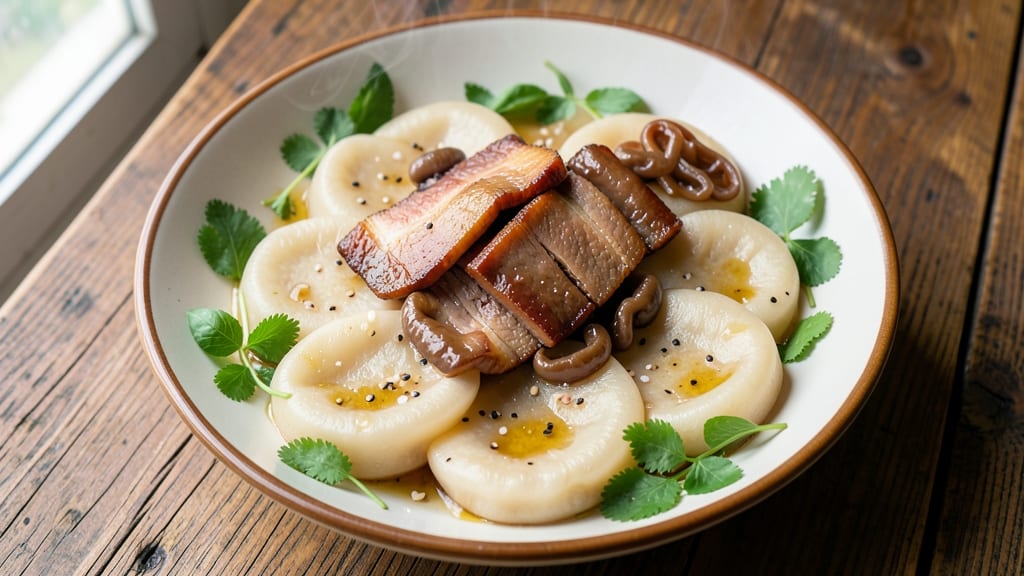
This banh cuon flour mix recipe transforms traditional Vietnamese spring rolls into a foolproof weeknight meal that captures the delicate balance of crisp rice paper and tender fillings. After perfecting the mix over years of testing, I’ve simplified the process while keeping the authentic texture that makes these rolls irresistible.
The secret lies in the precise ratio of rice flour, tapioca starch, and a touch of salt—elements that create the signature pliable yet sturdy wrapper.
The beauty of this recipe is its versatility: whether you’re using classic pork and wood ear mushrooms or opting for a vegan version with tofu and shiitake, the flour mix ensures every roll steams to perfectly translucent perfection.
No special equipment needed—just a steamer, a rolling mat, and a little practice to master the gentle folding technique. The result? Rolls that steam up with just the right crispness at the edges and a silky interior that melts in your mouth.
Pair these banh cuon with a bright fish sauce dip—sweet, tangy, and packed with garlic and chili—for the ultimate balance of flavors. The dish is as elegant as it is simple, making it ideal for family dinners, potlucks, or impressing guests without the fuss.
Once you try this method, store-bought rice paper wrappers will never compare.
Ready to elevate your Vietnamese cooking? This recipe delivers restaurant-quality results in under an hour, with tips for troubleshooting common rolling mistakes and adapting fillings to your taste. Let’s get started—your first batch will have you hooked.
Ingredients for banh cuon flour mix
Fourteen ingredients. One perfect flour mix. Your homemade banh cuon awaits.
| Ingredient | Amount | Notes |
|---|---|---|
| Rice Flour 🍚 | 1 ½ cups | Fine grind for smooth texture |
| Tapioca Starch 🌾 | ½ cup | Essential for elasticity |
| Salt 🧂 | ½ tsp | Fine sea salt preferred |
| Water 💧 | ¾ cup | Room temperature |
| Pork Shoulder 🥩 | 1 lb | Finely ground or minced |
| Wood Ear Mushrooms 🍄 | 1 oz | Rehydrated and chopped |
| Garlic Cloves 🧄 | 4 cloves | Minced for aromatic base |
| Fresh Shallots 🧅 | 2 whole | Finely minced |
| Fish Sauce 🍶 | 1 tbsp | Red Boat preferred |
| Black Pepper 🌶️ | ¼ tsp | Freshly ground |
| Vegetable Oil 🫒 | 1 tbsp | For cooking filling |
| Green Onions 🧅 | 3 whole | Thinly sliced for garnish |
| Fresh Mint Leaves 🌿 | ¼ cup | Chopped for freshness |
| Lime Juice 🍋 | 1 tbsp | Freshly squeezed |
The rice flour and tapioca starch combo is non-negotiable—Bob’s Red Mill or King Arthur brands work best for that signature pliable texture. If you can’t find wood ear mushrooms, shiitake or oyster mushrooms are great substitutes, but rehydrate them first. The pork shoulder should be finely ground—pre-ground from the deli section saves time, but if you’re feeling ambitious, pulse it in a food processor. For the fish sauce, Red Boat is my go-to—it’s clean, salty, and won’t overpower. Skip the cheap stuff, trust me. Fresh mint and shallots add that bright, fresh finish, so don’t skimp on quality here.
No pork? Ground tofu or shrimp works beautifully for a vegan or seafood version. Swap the wood ear mushrooms for extra-firm tofu or king oyster mushrooms if needed. The fish sauce can be replaced with soy sauce plus a pinch of sugar, but you’ll lose that authentic umami depth. If you’re short on time, pre-minced garlic and shallots from the Asian aisle save prep work. The lime juice can be bottled, but fresh is always better—just make sure it’s juicy, not dried out. For the flour mix, if you can’t find tapioca starch, cornstarch works in a pinch, though the texture won’t be identical.
The flour mix keeps in an airtight container for up to 2 weeks in the fridge or 3 months frozen. Portion it into small bags for easy use. The filling mixture can be prepped ahead and stored for 3 days in the fridge, but add the lime juice and mint just before rolling. Once steamed, banh cuon reheat beautifully—just a quick steam or microwave with a damp paper towel. Leftovers? Freeze them for 1 month—they’re perfect for a quick lunch or potluck.
Why You'll Love This Recipe
- No-Mess Mixing: I swear by this flour blend—just whisk rice flour and tapioca starch with water until smooth, no lumps. The pork shoulder adds depth, but the real magic is how effortlessly the batter comes together while you prep the filling.
- Umami Bomb: That slow-cooked pork shoulder? It’s the star—tender, savory, and packed with flavor. The rice flour gives it a delicate chew, while the tapioca starch keeps it light and just crispy enough at the edges.
- Weeknight Hero: Between us, this is my go-to when I need something hearty but not labor-intensive. Make a big batch of filling, roll the banh cuon while watching a show, and boom—dinner’s ready. (Yes, even on a Tuesday night.)
- Budget-Friendly Staple: Rice flour and tapioca starch are cheap, and pork shoulder stretches far. I’ve made this for date nights, family dinners, and even packed leftovers for lunch—always with zero guilt.
Step-by-step instructions for Vietnamese fresh spring roll wrappers
Here's the precise method for crafting delicate, elastic banh cuon wrappers from scratch.
Combine Dry Ingredients for Perfect Texture
In a medium bowl, whisk together the 1.5 cups rice flour and 0.5 cup tapioca starch. The rice flour provides the delicate structure while the tapioca starch creates that signature elasticity. Sift the mixture lightly through a fine-mesh sieve into a clean bowl to eliminate any lumps and aerate the flour. This step is crucial for achieving wrappers that are both tender and sturdy enough to hold the filling.
Add the 0.5 teaspoon salt and mix gently with a fork or whisk until evenly distributed. The salt enhances flavor and prevents the wrappers from tasting bland. For best results, use fine sea salt as it dissolves completely without leaving gritty particles. Set this dry mixture aside while you prepare the wet ingredients.
Mix Wet Ingredients to Ideal Consistency
In a separate bowl, combine the 0.75 cup room temperature water with the 1 tablespoon vegetable oil. The oil prevents the wrappers from becoming too dry and adds subtle richness. Stir gently until the oil is fully incorporated and the mixture appears cloudy rather than oily. Room temperature water is essential—cold water creates dense wrappers while hot water can cause the mixture to curdle.
Create a well in the center of your dry ingredients and gradually pour in the wet mixture. Use a fork or spatula to gently combine everything, being careful not to overmix. You're aiming for a smooth, slightly tacky batter that holds together when pressed between your fingers but isn't so sticky it's impossible to handle. If the mixture feels too dry, add 1 teaspoon water at a time until it reaches the proper consistency.
Knead the Dough for Elasticity
Transfer the batter to a clean, lightly floured surface and knead gently for 3-4 minutes using the heels of your hands. The goal is to develop just enough gluten to create cohesive wrappers without making them tough. You'll know it's ready when the dough forms a smooth, elastic ball that doesn't stick excessively to your hands or surface.
Here's the thing—banh cuon dough should be softer than most Asian noodle doughs. Wrap it tightly in plastic wrap and let it rest at room temperature for 30 minutes. This resting period allows the gluten to relax and the starches to fully hydrate, resulting in wrappers that are pliable and easy to roll without tearing. Don't skip this step; it makes all the difference in the final texture.
Prepare the Dough for Rolling
After resting, divide the dough into 4 equal portions (about 4 ounces each) and roll each portion into a smooth ball. Working with one ball at a time, place it between two sheets of plastic wrap. Using a rolling pin, gently flatten the dough into a 4-inch circle, about ⅛-inch thick. The plastic wrap prevents sticking and helps maintain an even thickness.
Real talk: your first few attempts might be uneven, but practice makes perfect. If you notice the dough tearing, simply patch it together with a bit of water and continue rolling. The key is gentle, even pressure—don't press too hard or the wrappers will become too thin and fragile. Keep the unused dough balls covered to prevent drying while you work.
Cook the Wrappers to Delicate Perfection
Heat a non-stick skillet over medium-low heat until just warm to the touch. Add one wrapper and cook for 30-45 seconds on each side, or until small bubbles appear on the surface and the edges begin to lift gently. You're not trying to brown them—just create a delicate, translucent wrapper that's pliable enough to hold filling without breaking.
Transfer the cooked wrapper to a clean kitchen towel and cover with another towel to keep it soft while you prepare the filling. Repeat with the remaining wrappers, keeping them covered between uses. The wrappers should be warm but not hot when you're ready to assemble—this ensures they remain flexible during the rolling process. If they cool too much, simply warm them briefly in the skillet again.
Pro Tips For Making Banh Cuon Flour Mix
- STEAM THE FLOUR FIRST: Mix rice flour and tapioca starch dry, then pour boiling water over them—this breaks down the starch faster and gives you a smoother batter. I used to whisk it cold and ended up with lumps every time.
- REST THE PORK SHOULDER: After cooking, let the pork shoulder sit in its juices for at least 30 minutes before shredding—this keeps it tender and makes slicing cleaner. Skimping here turns your filling into dry, stringy bits.
- USE LESS WATER THAN YOU THINK: The mix should be thick enough to coat the back of a spoon but still flow freely—about 1.25 cups water for 2 cups flour. Too much water makes your rolls gummy; too little makes them tough.
- CHILL THE BATTER 10 MINUTES: Let the mixed batter sit covered at room temp for 10 minutes before rolling—this relaxes the gluten and prevents cracking when you steam. I ignored this once and spent 20 minutes patching broken edges.
Perfect pairings for these flavors
Dipping Sauce Essentials
No banh cuon is complete without its signature nuoc cham dipping sauce. My go-to recipe combines 2 tablespoons fish sauce (like Red Boat), 1 tablespoon lime juice, 1 teaspoon sugar, ½ teaspoon black pepper, and ½ cup water.
Adjust the sugar to taste—some prefer it sweeter, others tangier. For extra depth, add 1 minced garlic clove and let it infuse for 10 minutes before serving. This sauce cuts through the richness of the pork filling while balancing the delicate wrappers. 🍶
Herb Garnish Combinations
Fresh herbs elevate banh cuon from good to extraordinary. I always garnish with ¼ cup chopped fresh mint and 2 green onions, sliced thinly. For a bolder flavor, add ½ cup cilantro and a sprinkle of crushed roasted peanuts for texture.
The herbs should be added just before serving to preserve their vibrant color and fresh aroma. Pro tip: Use a sharp knife and cut herbs in quick, even strokes to maintain their integrity. 🌿
Protein Pairing Options
While traditional banh cuon features ground pork, this recipe adapts beautifully to other proteins. For a seafood twist, swap the pork for shrimp or scallops, seared in 1 tablespoon vegetable oil until just cooked through.
Vegetarians can use extra-firm tofu, pressed and pan-fried with a touch of soy sauce. Each protein brings a unique texture—pork stays tender, shrimp adds a delicate sweetness, and tofu offers a satisfying bite.
Keep the filling mixture consistent in size (about 1 teaspoon per roll) for balanced bites. 🥩
Steaming vs. Pan-Frying
While the recipe calls for pan-frying the wrappers, steaming is a gentler alternative that preserves their delicate texture. Line a steamer basket with parchment paper and steam the rolled banh cuon for 3-4 minutes until translucent. For extra crispness, finish with 10 seconds in a hot pan.
Steamed rolls are ideal for larger gatherings, as they cook all at once. Pan-frying gives a slight crispness, while steaming keeps them softer and more traditional. Choose based on your preference for texture! 🌡️
Side Dish Harmony
Banh cuon pairs beautifully with pickled vegetables like daikon and carrots, which add a refreshing crunch. For a heartier meal, serve with steamed jasmine rice and a side of Vietnamese-style grilled pork.
The acidity of the pickles and the richness of the pork complement the delicate flavors of the rolls. If you're serving this as a light lunch, a simple mixed greens salad with a light vinaigrette keeps the meal balanced. 🥗
Drink Pairings
Cool, refreshing beverages balance the bold flavors of banh cuon. A Vietnamese iced coffee with its strong, sweet notes cuts through the richness of the filling. For a non-caffeinated option, try lychee or coconut water to cleanse the palate.
If you prefer alcohol, a crisp Sauvignon Blanc or a light Asian lager like Bia Saigon enhances the dish without overpowering it. The key is to choose drinks that highlight the fresh, vibrant qualities of the rolls. 🍹
Nutrition facts
Frequently asked questions
Can I make the flour mix ahead of time?
The flour mix keeps perfectly in an airtight container for 2 weeks in the fridge or 3 months frozen. Portion it into small bags for easy use—just thaw overnight in the fridge before rolling. This saves prep time on busy days, and the texture stays just as pliable when properly stored.
What if my wrappers tear when rolling?
Tearing usually means the dough was too dry or you rolled too thin. First, check your consistency—the mix should be slightly tacky but not sticky. If it tears, gently patch with a bit of water and continue. Use plastic wrap between the dough and rolling pin for smoother results. Practice makes perfect—start with thicker circles if needed.
Can I substitute tapioca starch?
Cornstarch works in a pinch (same amount), but the wrappers will be slightly less elastic. For best results, use potato starch—it mimics tapioca's stretchiness better. Avoid arrowroot starch, as it creates a grittier texture. The rice flour is non-negotiable, though—it's what gives those signature delicate wrappers their structure.
How do I adjust the recipe for gluten-free wrappers?
Swap the rice flour for gluten-free rice flour blend (like Bob's Red Mill 1:1) and add 1 tablespoon xanthan gum to the dry mix. The tapioca starch can stay the same. These wrappers will be slightly more delicate, so handle them with extra care during rolling. Test the consistency carefully—GF dough tends to be stickier.
What's the secret to perfect rolling technique?
Work quickly but gently—keep the wrapper warm (not hot) and use a rolling mat for even pressure. Start with a 4-inch circle and roll from the center outward, rotating the wrapper as you go. If it shrinks, let it rest 2 minutes before cooking. The key is patience: take your time with the first few rolls, and they'll improve with practice.