
Sauces & Condiments
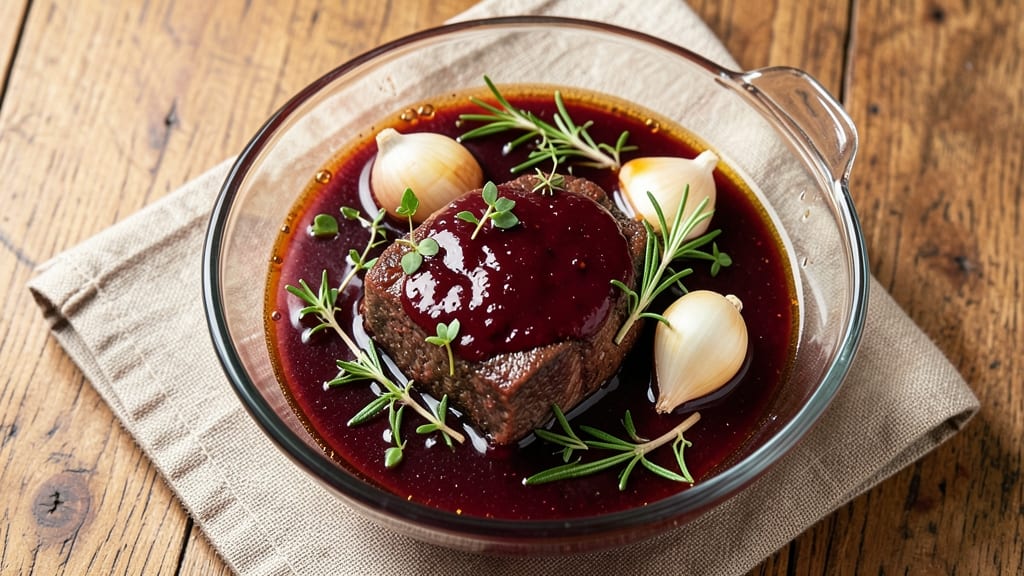
This prime rib marinade recipe transforms ordinary beef into a deep-red, umami-rich masterpiece that rivals any steakhouse cut. The secret lies in balancing bold spices with rich red wine and balsamic vinegar, creating layers of flavor that penetrate every inch of the meat.
I developed this marinade after years of testing—it’s the one that finally earned me compliments even from the most critical food lovers.
The marinade’s power comes from its simple yet precise combination of ingredients: red wine, balsamic vinegar, Worcestershire sauce, and a blend of aromatic spices like rosemary, thyme, and black pepper.
These elements work together to tenderize the meat while infusing it with a deep, savory richness that’s impossible to achieve with store-bought rubs. The marinating time—4 to 24 hours—lets the flavors meld perfectly, ensuring every bite is packed with intensity.
What makes this marinade truly special is its ability to elevate even the most basic prime rib into a showstopping centerpiece. The red wine and balsamic create a glossy, caramelized crust when seared, while the herbs add a fragrant, earthy depth.
This isn’t just marinade—it’s a flavor multiplier that turns a simple roast into an unforgettable experience, worthy of a holiday table or a special dinner.
Store the marinade in an airtight container in the fridge for up to 5 days, or freeze it for months. Whether you’re prepping for a celebration or just craving a restaurant-quality meal, this marinade delivers professional results with minimal effort.
Let’s dive into the ingredients and instructions to bring this deep-red umami bomb to life.
Ingredients for best prime rib marinade
Nine ingredients create a restaurant-quality prime rib marinade that transforms ordinary beef into a deep-red, umami masterpiece.
| Ingredient | Amount | Notes |
|---|---|---|
| Dry Red Wine 🍷 | 1 cup | Bold Cabernet Sauvignon preferred |
| Balsamic Vinegar 🍶 | ½ cup | Aged 10+ years for depth |
| Worcestershire Sauce 🥫 | 2 tbsp | Lea & Perrins brand recommended |
| Fresh Rosemary 🌿 | ¼ cup | Finely chopped sprigs |
| Fresh Thyme 🌿 | 2 tbsp | Leaves only, stems removed |
| Garlic Cloves 🧄 | 6 cloves | Peeled, minced fine |
| Black Peppercorns 🌶️ | 1 tbsp | Freshly cracked preferred |
| Diamond Crystal Kosher Salt 🧂 | 1 ½ tsp | Fine grain for even distribution |
| Extra-Virgin Olive Oil 🫒 | 2 tbsp | High-quality, fruity variety |
| Granulated Honey 🍯 | 1 tbsp | For subtle sweetness balance |
The red wine is non-negotiable—Cabernet Sauvignon delivers the boldest flavor profile, but Merlot works in a pinch. Trader Joe's or Whole Foods carry excellent options at reasonable prices. For balsamic, seek out aged varieties—10+ years creates that signature caramel depth. The Worcestershire sauce should be Lea & Perrins; no substitutions here. Fresh herbs are critical: rosemary and thyme from the grocery store's produce section should smell vibrant and fragrant, not wilted. If you're short on time, dried herbs work at half the quantity, though fresh yields superior results. The garlic should be plump and firm, with no green shoots—avoid those sprouting cloves at all costs.
No red wine? Beef broth with 1 tbsp balsamic vinegar replicates the umami base, though the color will differ slightly. Substituting dried herbs? Use one-third the amount of fresh, but toast them first in a dry pan for 30 seconds to release their oils. For the honey, agave nectar works in a 1:1 ratio if you're avoiding refined sugar. The olive oil must be extra-virgin—anything less will compromise the marinade's richness. If you're concerned about alcohol content, let the marinade sit uncovered in the fridge for 15 minutes before using to allow some evaporation, though the residual flavor remains minimal.
This marinade keeps beautifully—5 days refrigerated or 3 months frozen in an airtight container. For best results, use within 24 hours of preparation, though it will maintain potency for several days. The red wine and balsamic develop deeper complexity when allowed to meld, so don't rush the marinating process. Store any unused portion in the refrigerator, covered tightly, and bring to room temperature before reusing. The honey and olive oil may separate slightly when refrigerated—simply whisk vigorously before using to re-emulsify.
Why You'll Love This Recipe
- Five-Ingredient Magic: The pantry already has most of this—just grab a bottle of red wine (any cheap one works) and toss in the vinegar, Worcestershire, and herbs. No fancy prep, no stress, just 10 minutes of stirring while you wait for the meat to soak.
- Deep Umami Bomb: That Worcestershire and balsamic combo? It’s like a flavor grenade—rich, tangy, and just salty enough to make your prime rib taste like it’s been slow-cooked for hours. The rosemary and thyme add that fresh, woodsy punch that cuts through the richness.
- Weeknight to Holiday: Same marinade works for a quick Sunday roast or a showstopping Thanksgiving centerpiece. Double the batch, freeze half—because nothing says "I tried" like pulling this out last-minute for guests.
- Leftovers That Don’t Suck: The wine and vinegar keep it moist for days, so that second dinner? Still juicy, still packed with flavor. I’ve reheated slices for breakfast sandwiches (yes, really) and never once regretted it. Budget-friendly, too—this marinade costs pennies per serving.
Step-by-step instructions for deep-red umami bomb marinade
This marinade transforms prime rib into a flavor masterpiece with balanced depth and complexity.
Prepare the Herbs and Aromatics
In a medium bowl, combine the 0.25 cup fresh rosemary and 2 tbsp fresh thyme leaves. Use your fingers to gently crush the rosemary sprigs to release their essential oils while keeping the leaves intact. This maximizes flavor extraction without creating a bitter paste. Set aside these aromatic herbs for later infusion.
Next, finely mince the 6 cloves garlic using a sharp chef's knife. Aim for a paste-like consistency—this ensures even distribution throughout the marinade. In a separate small bowl, lightly toast the 1 tbsp black peppercorns in a dry skillet over medium heat for 30 seconds until fragrant. Allow them to cool completely before grinding into a coarse powder using a mortar and pestle or spice grinder. The toasted pepper adds warmth and complexity that raw peppercorns can't match.
Build the Liquid Base
In a large mixing bowl, whisk together the 1 cup dry red wine and 0.5 cup aged balsamic vinegar. The acidity of the balsamic will brighten the wine's tannins, creating a more balanced foundation. Add the 2 tbsp Worcestershire sauce and 1 tbsp granulated honey, whisking vigorously to fully incorporate. The honey acts as a subtle sweetener that rounds out the acidity and enhances the umami profile.
This liquid base should be homogeneous with no visible streaks. If you notice any separation, whisk more vigorously or let it sit for 5 minutes to allow the ingredients to fully emulsify. The wine should now appear slightly darker with a rich, velvety texture—this indicates proper integration of all components.
Infuse and Emulsify the Marinade
Add the prepared herbs, garlic paste, and toasted pepper to the liquid base. Pour in the 2 tbsp extra-virgin olive oil and 1.5 tsp diamond crystal kosher salt, then whisk continuously for 3-4 minutes until the mixture becomes thick and emulsified. You'll notice the oil begin to cling to the back of the spoon rather than separating—this is the sign of a properly emulsified marinade.
For optimal flavor development, cover the bowl with plastic wrap and let the marinade rest at room temperature for 30 minutes. This allows the herbs to steep and the flavors to meld. After resting, give it one final whisk to ensure everything is well combined. The marinade should now have a deep red hue with visible herb flecks and a rich, aromatic scent that hints at the complex flavors to come.
Application and Resting
Transfer the completed marinade to a shallow dish or resealable plastic bag with a zipper lock. Place the prime rib cut, fat side up, in the dish or bag. If using a bag, gently massage the marinade over all surfaces of the meat to ensure complete coverage. For best results, marinate the prime rib for 4-6 hours in the refrigerator, turning occasionally to ensure even exposure.
Real talk: Don't exceed 6 hours of marination time, as the acidity in the wine and vinegar can begin to break down the meat's surface proteins, potentially making it mushy. The ideal marination time balances flavor penetration with texture preservation. Once marinated, remove the prime rib from the refrigerator 30 minutes before cooking to allow it to come to room temperature, ensuring even cooking throughout.
Pro Tips For Making Best Prime Rib Marinade
- Reduce the Wine First: Simmer your dry red wine down by half before mixing it into the marinade—this concentrates the flavor and prevents a watery, weak sauce. I used to skip this, and the marinade always tasted thin and underwhelming. Five minutes on medium heat changes everything.
- Bruise the Herbs: Lightly crush the rosemary and thyme sprigs with the flat of your knife before adding them to the marinade. This releases their oils and aroma, giving the prime rib a deeper, more complex flavor. Don’t chop them—just rough them up.
- Skip the Balsamic Early: Add the balsamic vinegar last to the marinade, right before applying it to the meat. It’s acidic enough to start breaking down the fibers if left too long, and you’ll end up with a mushy texture instead of a rich crust.
- Marinate Overnight, Covered: Let the prime rib sit in the marinade for at least 8 hours, but no more than 12—longer risks turning the meat mushy. Use a resealable bag or container, and flip the meat halfway through to ensure even coating. (Yes, even if you’re impatient like me.)
Creative variations of this best prime rib marinade
Classic French Style
For a refined twist, swap the red wine for 1 cup dry white wine like Sauvignon Blanc and add 1 tbsp Dijon mustard to the marinade. The acidity of the white wine cuts through the richness of the prime rib beautifully, while the mustard adds a subtle tang.
I like to finish with a sprinkle of fresh tarragon instead of rosemary for that classic French bistro vibe. Serve with a red wine reduction sauce made from the leftover marinade for an elegant touch. 🍷
Smoky BBQ Twist
Transform this marinade into a smoky BBQ masterpiece by adding 2 tbsp smoked paprika and 1 tbsp liquid smoke (like Traeger's) to the base. Replace the balsamic vinegar with ¼ cup apple cider vinegar for a sweeter, more approachable acidity.
This version works perfectly for grilled prime rib, especially when paired with caramelized onions and a side of creamy coleslaw. The smoky depth complements the natural richness of the beef beautifully. 🔥
Asian-Inspired Fusion
Give this marinade an exotic twist by adding 1 tbsp soy sauce, 1 tbsp sesame oil, and 1 tsp grated fresh ginger. Replace the Worcestershire sauce with 1 tbsp hoisin sauce for a deeper umami punch.
The red wine and balsamic still form the base, but the Asian ingredients add layers of complexity. Garnish the cooked prime rib with toasted sesame seeds and sliced scallions for a stunning presentation. This fusion version pairs wonderfully with jasmine rice and steamed bok choy. 🌶️
Herb-Forward Italian
For an Italian-inspired marinade, boost the herbs to 0.5 cup fresh rosemary and 3 tbsp fresh thyme, then add 1 tbsp dried oregano and 1 minced shallot. Swap the honey for 1 tbsp balsamic glaze to enhance the sweetness.
Finish with a sprinkle of fresh basil before serving. This version shines when paired with a sun-dried tomato pesto and a side of garlic-roasted potatoes. The bright, herby flavors make this a standout for summer gatherings. 🌿
Spicy Cajun Kick
Turn up the heat with a Cajun-inspired marinade by adding 1 tbsp Cajun seasoning (like Tony Chachere's), ½ tsp cayenne pepper, and 1 tbsp hot sauce (like Crystal or Tabasco). The red wine and balsamic remain the foundation, but the Cajun spices bring bold, spicy depth.
Serve with cornbread and a cooling side of avocado salad to balance the heat. This version is perfect for those who love a little fiery punch in their prime rib. 🌶️
Sweet and Tangy Glaze
For a sweeter, more glaze-like marinade, reduce the red wine by half and add 2 tbsp brown sugar and 1 tbsp apple cider vinegar. The result is a sticky, caramelized crust when seared.
Brush the marinade onto the prime rib in the final 10 minutes of cooking for a beautiful glaze. Pair with roasted root vegetables and a side of mashed sweet potatoes for a comforting, dessert-like finish. This version is ideal for holiday feasts. 🍯
Nutrition facts
Frequently asked questions
Can I use this marinade for other red meats besides prime rib?
This marinade works beautifully with ribeye steaks, New York strip, or even lamb chops. The red wine and balsamic create a rich crust on any beef cut, while the herbs add aromatic depth. For pork, reduce marinating time to 2-3 hours to avoid over-tenderizing.
What's the best way to store leftover marinade?
Transfer unused marinade to an airtight container and refrigerate for up to 5 days. For longer storage, freeze in ice cube trays for 3 months. Thaw overnight in the fridge before using. Pro tip: Save some marinade before applying it to the meat—reduce it into a glossy sauce for serving!
Can I make this marinade without red wine?
Yes! Replace the wine with 1 cup beef broth plus 1 tbsp balsamic vinegar for similar depth. For extra richness, add 1 tbsp soy sauce. The color will be lighter, but the flavors remain robust. The Worcestershire and honey will still create that signature umami punch.
Why does my marinade look separated after refrigeration?
This is normal—the honey and olive oil may separate when cold. Simply whisk vigorously before using to re-emulsify. For future batches, let the marinade sit at room temperature for 15 minutes before applying to ensure even coating. The flavors won't be affected!
How do I adjust this for a larger prime rib cut?
Double the marinade recipe for 8-10 lbs of prime rib. For larger cuts, consider making 1.5x the amount to ensure complete coverage. Use a shallow dish or resealable bag, massaging the marinade into all surfaces. Never reuse marinade that's touched raw meat—discard after application.