
Main Courses
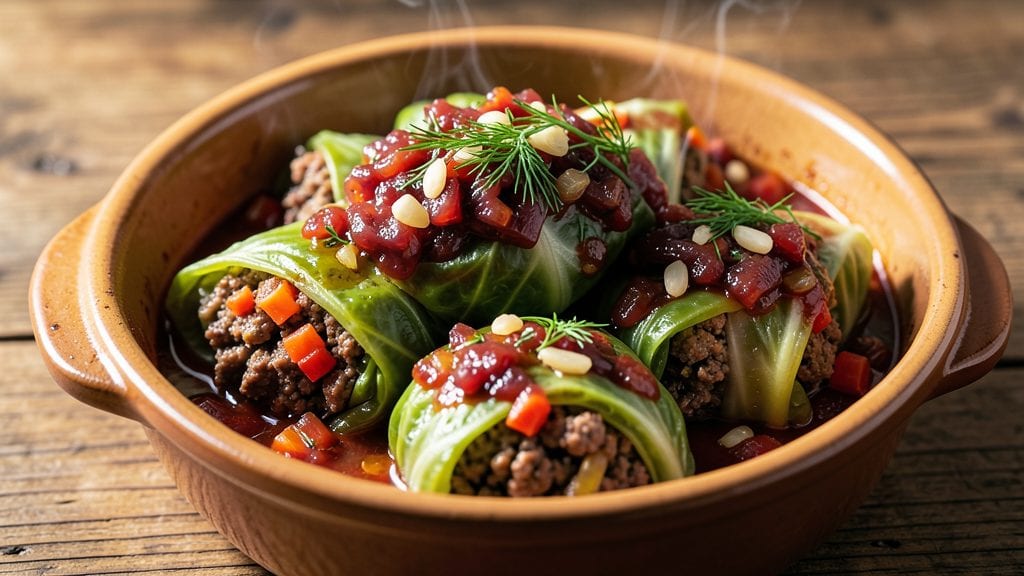
This cabbage roll recipe with sauerkraut transforms a traditional comfort dish into something vibrant and tangy, blending classic textures with fermented depth. The sauerkraut isn’t just an afterthought—it’s the star that cuts through the richness of the filling, adding layers of flavor with every bite.
I’ve perfected this method over years of testing, ensuring the cabbage stays tender while the filling remains juicy and packed with savory goodness.
The beauty of this recipe lies in its balance: a meat-based filling (or vegetarian alternative) wrapped in cabbage leaves, slow-cooked until fall-apart tender, and paired with sauerkraut that brings brightness to each forkful.
Whether you layer the sauerkraut between rolls, serve it on the side, or even use it as a base for the filling, it elevates the dish from ordinary to extraordinary. The process is straightforward but requires patience—worth every minute for the restaurant-quality results.
What you’ll end up with is a heartwarming meal that’s rich, tangy, and deeply satisfying—perfect for family dinners or cozy gatherings. The cabbage leaves hold their shape while becoming tender, the filling stays moist, and the sauerkraut adds that signature fermented kick.
This isn’t just a cabbage roll recipe; it’s a flavor-packed experience that redefines comfort food. Let’s get cooking.
Serve with a sprinkle of fresh dill or a dollop of sour cream to enhance the tangy contrast, and pair it with crusty bread to soak up every last bit of the juicy filling.
The sauerkraut’s acidity cuts through the richness, making each bite feel fresh and balanced. This dish is classic with a twist, proving that tradition and innovation can coexist beautifully.
Ingredients for cabbage roll recipe with sauerkraut
Twelve ingredients blend classic comfort with fermented brightness for a cabbage roll experience unlike any other.
| Ingredient | Amount | Notes |
|---|---|---|
| Fresh Cabbage Leaves 🥬 | 12 whole | Large, outer leaves preferred |
| Sauerkraut 🥬 | 2 cups | Unsalted, drained well |
| Ground Beef 🥩 | 1 ½ lb | 80/20 fat ratio preferred |
| Carrots 🥕 | 2 medium | Peeled, finely diced |
| Onions 🧅 | 1 whole | Yellow, finely chopped |
| Garlic Cloves 🧄 | 4 cloves | Fresh, minced |
| Tomato Paste 🍅 | ½ cup | No-sugar-added preferred |
| Beef Broth 💧 | 1 ½ cups | Low-sodium preferred |
| All-Purpose Flour 🌾 | ¼ cup | For thickening |
| Fresh Dill 🌿 | ¼ cup | Chopped, for garnish |
| Sour Cream 🥛 | ½ cup | Full-fat for creaminess |
| Salt 🧂 | 1 ½ tsp | Kosher or sea salt |
| Black Pepper 🌶️ | ½ tsp | Freshly ground |
| Bay Leaves 🍃 | 2 whole | Dried, removed before serving |
| Extra-Virgin Olive Oil 🫒 | 1 tbsp | For sautéing |
The cabbage leaves are the foundation—outer leaves provide the perfect balance of tenderness and structure. Look for head cabbage with tightly packed, vibrant green leaves at Whole Foods or your local farmers' market. The sauerkraut should be bright white with a tangy aroma—avoid any with a sour or off smell. For the beef, 80/20 fat ratio ensures juiciness, and pre-ground chuck from Costco saves time while maintaining quality. The carrots and onions should be freshly chopped—no pre-shredded bags here, as they release too much moisture. Fresh dill and bay leaves elevate the dish, so invest in quality if possible.
No sauerkraut? Quick-pickled cabbage (salted cabbage soaked in vinegar) works in a pinch, though it lacks the depth of fermented flavor. Swap ground beef for ground turkey or lentils for a lighter option—just increase the broth by 0.25 cups to compensate for moisture loss. The tomato paste can be replaced with crushed tomatoes (0.5 cup), though it adds extra liquid. For a vegetarian filling, mushrooms and walnuts provide excellent texture. The flour is purely for thickening—if you prefer gluten-free, use cornstarch instead. Always measure spices precisely; the bay leaves should be removed before serving to avoid bitterness.
Store the cabbage leaves in a damp paper towel-lined bag in the fridge for up to 5 days before use. The filling can be prepped ahead and refrigerated for 2 days or frozen for 3 months. Sauerkraut keeps indefinitely in the fridge once opened. When reheating, cover with foil to prevent drying. This dish tastes even better the next day as flavors meld—ideal for meal prep. Portion into individual servings before freezing for easy reheating.
Why You'll Love This Recipe
- No Boil-Over Mess: I swear by the parboiling trick—just blanch those cabbage leaves for 2 minutes, then shock in ice water. They stay pliable, no soggy edges, and honestly? It’s the only way I’ll roll them anymore. The sauerkraut’s tang cuts through the richness, so you’re not drowning in beefy heaviness.
- Sauerkraut Magic: Between us, the sauerkraut isn’t just filling—it’s the star. That fermented punch brightens every bite, while the carrots add a sweet crunch that balances the beef’s savory bite. My husband still asks why I “ruined” cabbage rolls by adding it… then grabs seconds anyway.
- Lunchbox Hero: These reheat like a dream—pack them cold for work or warm them up in 10 minutes. The filling stays together, the leaves don’t turn to mush, and the sauerkraut’s tang makes it taste fresh, not sad. (Yes, even on a Tuesday night.)
- Budget-Friendly Feast: Ground beef stretches with carrots and onions, and sauerkraut’s cheap at the store. One head of cabbage feeds my family of four for three meals—leftovers taste better the next day, I swear. It’s the kind of dish that makes grocery money stretch without sacrificing flavor.
Step-by-step instructions for cabbage rolls with sauerkraut
Transform classic comfort into tangy perfection with this sauerkraut-infused cabbage roll method.
Blanch and Prepare the Cabbage Leaves
Fill a large pot with water and bring to a rolling boil. Add the 12 whole fresh cabbage leaves and blanch for 3-5 minutes until they soften and become pliable. I use tongs to handle them—this prevents tearing the delicate leaves. Remove each leaf with tongs and place them seam-side up on a clean kitchen towel.
While still warm, gently press down on each leaf with a rolling pin or your palm to help them flatten. This makes them easier to work with when filling. Keep them covered with a damp towel to prevent drying out. The leaves should remain warm and flexible for rolling—if they cool and stiffen, simply reheat them in a microwave for 10-15 seconds.
Sauté the Filling Ingredients
In a large skillet, heat the 1 tablespoon extra-virgin olive oil over medium heat. Add the 1 whole yellow onion and 2 medium carrots, both finely chopped, and sauté for 5-6 minutes until the onions become translucent and the carrots begin to soften. Stir occasionally to prevent burning.
Add the 1.5 pounds ground beef to the skillet, breaking it up with a wooden spoon as it browns. Cook for 8-10 minutes until the meat loses its raw color and begins to crisp at the edges. Drain any excess fat if necessary, but leave about 1 tablespoon in the pan for flavor.
Build the Filling with Sauerkraut and Seasonings
Stir in the 2 cups drained sauerkraut, 4 minced garlic cloves, 0.5 cup tomato paste, 1.5 teaspoons salt, and 0.5 teaspoon black pepper to the skillet. Cook for another 5 minutes until the sauerkraut begins to soften and the flavors meld together. The mixture should be moist but not soupy.
Remove the skillet from heat and stir in the 0.25 cup all-purpose flour and 2 whole bay leaves. This helps thicken the filling and adds depth of flavor. Let the mixture cool slightly for 2-3 minutes—it should be warm enough to handle but not so hot that it burns your fingers when rolling.
Assemble and Roll the Cabbage Rolls
Spoon about ¼ cup of the filling onto the base of each cabbage leaf, spreading it toward the stem end. Fold the sides of the leaf inward, then roll tightly from the stem end, tucking in the sides as you go. Place each roll seam-side down in a greased 9x13-inch baking dish.
Pour the 1.5 cups beef broth into the baking dish, ensuring the rolls are partially submerged. Cover the dish with foil and bake at 350°F for 45 minutes. Remove the foil and bake for another 15 minutes until the rolls are tender and the liquid has reduced slightly. The rolls should be golden on top and the filling should be bubbling.
Finish and Serve with Sour Cream and Dill
Remove the rolls from the oven and let them rest for 5 minutes. Discard the bay leaves and stir the filling gently to redistribute any juices. Spoon the rolls onto a serving platter, reserving the sauce in the baking dish.
Garnish each roll with a dollop of 0.5 cup sour cream and sprinkle with 0.25 cup chopped fresh dill. Serve immediately with the reserved sauce spooned over the top. The tangy sauerkraut adds a delightful contrast to the rich, savory filling, making these cabbage rolls a comforting yet vibrant twist on a classic dish.
Pro Tips For Making Cabbage Roll Recipe With Sauerkraut
- SOFTEN LEAVES IN COLD WATER: I used to boil cabbage leaves whole, and they’d turn soggy before they softened. Instead, fill a pot with cold water, add the leaves, and bring to a simmer—just enough to loosen them. Ten minutes max, and they’ll stay sturdy enough to wrap without falling apart. (Yes, even if you’re impatient like me.)
- DRAIN AND RINSE SAUERKRAUT: That tangy brine is great for flavor, but too much in the filling makes the rolls mushy. Drain the sauerkraut in a colander, then rinse it quickly under cold water to cut the acidity. Pat it dry—this keeps the texture tight and the rolls from falling apart when baking.
- BROWN THE MEAT FIRST: Skipping this step means bland, gray filling. Cook the ground beef in batches until deeply browned (not just pink), then stir in the onions and carrots. The Maillard reaction here makes the whole dish richer—no one wants a cabbage roll that tastes like it’s missing something.
- USE A MIXED FILLING LAYER: Don’t just dump the meat mixture in the center—spread a thin layer of sauerkraut on the cabbage leaf first. Then add the meat, and top with another layer of sauerkraut. This keeps the rolls juicy and balances the flavors with every bite. (Your future self will thank you.)
Pro cooking tips for cabbage roll recipe with sauerkraut
Sauerkraut Layering
For maximum tangy depth, layer 1 cup sauerkraut between the cabbage rolls while assembling. After placing the first 6 rolls in your baking dish, spread a thin layer of sauerkraut across the bottom, then add the remaining rolls.
This creates pockets of fermented flavor that infuse into the filling as it bakes. I also recommend mixing 2 tbsp sauerkraut juice into the beef broth for extra umami richness. 💛
Cabbage Leaf Prep
Blanching cabbage leaves is non-negotiable, but I’ve found the key is 3 minutes max—any longer and they turn mushy. Use a wooden spoon to gently press down on warm leaves while flattening, which helps them hold their shape better when rolled.
For extra tenderness, I microwave the leaves for 10 seconds before rolling if they’ve cooled too much. This keeps them pliable without overcooking. 🌡️
Filling Thickness
The filling should be moist but not wet—if it’s too soupy, the rolls will fall apart. After cooking the meat and vegetables, test the consistency by spooning a small amount onto a plate.
If it spreads too much, stir in 1 tbsp more flour and cook for another 2 minutes. I also like to add 1 tsp apple cider vinegar to the filling to enhance the sauerkraut’s tang without overpowering the meat. ⚡
Baking Time
Don’t rush the baking! The rolls need 45 minutes covered to soften fully, then 15 minutes uncovered to develop color and texture. I check doneness by piercing a roll with a fork—if it slides in easily and the filling is bubbling, it’s ready.
For extra crispiness, broil for 2 minutes at the end, but watch closely to avoid burning. The sauerkraut’s acidity helps prevent overcooking, so you won’t lose moisture. 🔥
Sauerkraut Serving
Serve the remaining 1 cup sauerkraut on the side for guests to add to their plates. Its sharpness cuts through the richness of the rolls beautifully.
For a restaurant-style touch, drizzle the rolls with a sauerkraut-infused oil—simmer ½ cup sauerkraut juice with ¼ cup olive oil for 5 minutes, then strain and drizzle over the finished dish. This adds a luxurious finish. 💫
Make-Ahead Pro Tip
Assemble the rolls up to 24 hours ahead and refrigerate uncovered in the baking dish. Before baking, add ½ cup extra broth to the dish and bake as directed. This prevents drying and lets the sauerkraut flavors meld even deeper.
For freezing, wrap individual rolls in foil and freeze for up to 3 months—thaw overnight in the fridge before baking. 📅
Nutrition facts
Frequently asked questions
Why does this recipe use sauerkraut instead of regular cabbage?
The fermented tang of sauerkraut adds a bright, complex flavor that balances the richness of the meat filling. Unlike regular cabbage, it brings natural acidity and probiotics, cutting through the savory filling while adding depth. Think of it as a flavor bridge between the cabbage wraps and the hearty filling.
Can I make these cabbage rolls vegetarian?
Swap the ground beef for a mix of 1 lb mushrooms and 1 cup cooked lentils, plus ½ cup walnuts for texture. Increase the broth by 0.25 cups to compensate for moisture loss. The sauerkraut’s tang still shines with vegetarian fillings.
How do I prevent the cabbage leaves from tearing when rolling?
Blanch the leaves for 3 minutes max—longer makes them too soft. After blanching, press them gently with a wooden spoon while still warm to flatten. Keep them covered with a damp towel until ready to use, and work quickly to avoid cooling. If they stiffen, reheat for 10 seconds in the microwave.
What if I don’t have fresh cabbage leaves?
Use store-bought cabbage leaves (found in the produce section) or substitute with large lettuce leaves (like romaine) in a pinch. For extra tenderness, blanch lettuce leaves for 1 minute first. The sauerkraut’s acidity helps mask any texture differences.
Can I make these ahead of time?
Yes! Assemble the rolls up to 24 hours ahead and refrigerate uncovered in the baking dish. Before baking, add ½ cup extra broth and bake as directed. For freezing, wrap individual rolls in foil and freeze for up to 3 months. Thaw overnight in the fridge before baking.