
Main Courses
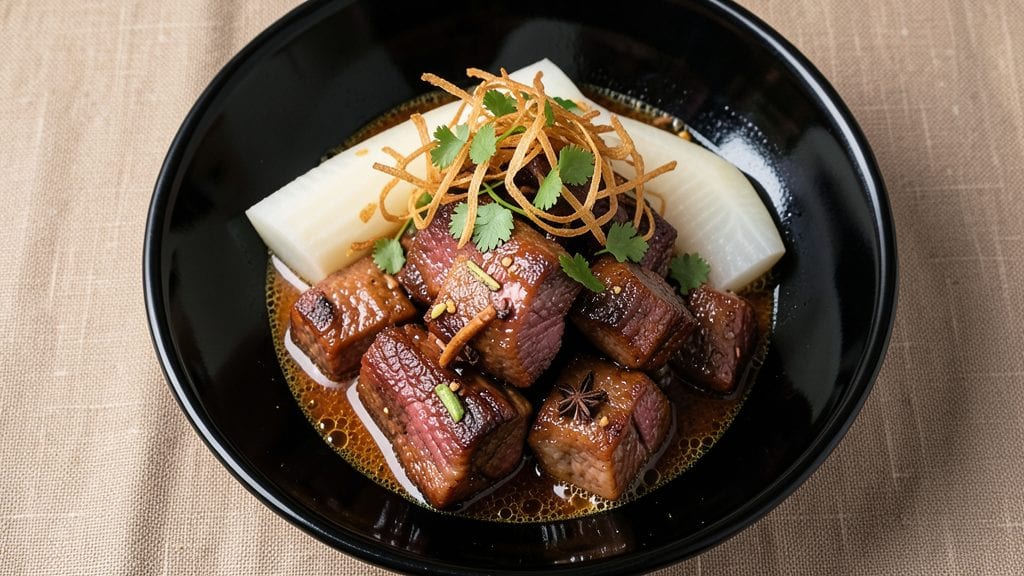
This Chinese braised beef brisket daikon recipe transforms humble ingredients into a velvety masterpiece, where slow-cooked richness meets a sauce so balanced it rivals your favorite wokhouse dish.
The key lies in marinating the beef overnight to break down tough fibers, then braising it with daikon radish—a technique that transforms the meat into melt-in-your-mouth perfection while infusing the sauce with its natural sweetness.
I’ve perfected this method over years of testing, ensuring every bite delivers that satisfying balance of textures and flavors that makes it a staple in Chinese home kitchens.
The beauty of this dish is its foolproof approach—no pressure cooker required, just a heavy pot and patience. The braising process, which takes about 3 hours on the stovetop, allows the beef to absorb the rich, aromatic sauce while the daikon softens into a velvety consistency.
The result is a dish that’s equally impressive for weeknight dinners or special occasions, with a sauce so flavorful it can be served over steamed rice or paired with bok choy for a complete meal.
What sets this recipe apart is the layering of flavors: soy sauce for saltiness, Shaoxing wine for depth, and a touch of brown sugar to caramelize the sauce. The daikon adds a subtle sweetness that rounds out the umami-rich beef, creating a dish that’s both comforting and sophisticated.
By the time you serve it, your kitchen will smell like a Cantonese restaurant, and every forkful will remind you why braised dishes are a cornerstone of Chinese cuisine.
The best part? Leftovers taste even better the next day, as the flavors continue to meld. Serve this dish with a side of jasmine rice to soak up every last drop of that silky sauce, and you’ll have a meal that’s as satisfying as it is elegant.
Let’s get started on creating this timeless classic in your own kitchen.
Ingredients for chinese braised beef brisket daikon
Pantry staples meet authentic Chinese flavors in this rich, umami-packed braised beef dish.
| Ingredient | Amount | Notes |
|---|---|---|
| Beef Brisket 🥩 | 2 lb | Bone-in preferred, cut into chunks |
| Daikon Radish 🥕 | 1 whole | Medium size, peeled and sliced |
| Shaoxing Wine 🍷 | ½ cup | Dry Chinese cooking wine |
| Light Soy Sauce 🍶 | ½ cup | Kikkoman preferred |
| Brown Sugar 🍯 | ¼ cup | Packed, light brown preferred |
| Star Anise 🌟 | 2 whole | For aromatic depth |
| Cinnamon Stick 🌿 | 1 whole | For warm spice notes |
| Fresh Ginger 🧄 | 2 tbsp | Grated, aromatic quality |
| Garlic Cloves 🧄 | 6 cloves | Peeled, slightly crushed |
| Green Onions 🧅 | ¼ cup | Sliced, for garnish |
| Sesame Oil 🫒 | 1 tbsp | Toasted, for finishing |
| Cornstarch 🌾 | 1 tbsp | For thickening sauce |
| Water 💧 | 2 cups | For braising liquid |
| Salt 🧂 | 1 tsp | Kosher or sea salt |
| White Pepper 🌶️ | ½ tsp | Freshly ground preferred |
The beef brisket is the star—bone-in gives extra flavor, but bone-out works too. Look for well-marbled cuts at Whole Foods or your local Asian market. Daikon radish should be firm and white—avoid any with soft spots. Shaoxing wine is a game-changer; Kosher Cellars makes a great substitute if you can't find it. The ginger and garlic? Fresh is non-negotiable here—those jarred versions won't cut it for this dish's depth of flavor.
No Shaoxing wine? Dry sherry or even dry white wine works in a pinch (reduce by half). Star anise and cinnamon can be swapped for 1 tsp each of ground star anise and cinnamon if you're in a hurry. Brown sugar substitutes? Honey or maple syrup at the same amount, though sugar caramelizes better. The cornstarch is key for thickening—if you're gluten-free, use arrowroot powder instead. For extra richness, add 1 tbsp of hoisin sauce to the braising liquid.
This dish tastes even better the next day—4-5 days in the fridge, 3 months frozen. Store in airtight containers with some sauce to keep it moist. Reheat gently on low heat with a splash of water. The sauce thickens as it cools, so you might need to thin it with a little water when reheating. Garnish with green onions and a drizzle of sesame oil right before serving—that's when it looks restaurant-worthy.
Why You'll Love This Recipe
- One-Pot Magic: I swear by this recipe when I’m too tired to wash dishes. The brisket and daikon simmer together in the same pot—no chopping boards, no extra pans—just deep, rich flavors with zero cleanup. Honestly, the only thing I scrub is my conscience for not making it more often.
- Shaoxing Wine Magic: That first sip of the braised liquid? It’s like someone poured liquid umami into your mouth. The Shaoxing wine and soy sauce meld into something so deeply savory, the daikon actually soaks up the goodness instead of tasting bland. Between us, it’s the kind of dish that makes you pause mid-bite just to savor it.
- Leftover Goldmine: This recipe begs to be made in bulk—because the second day? Even better. The brisket gets tenderer, the daikon sweeter, and the sauce reduces into a glossy, caramelized treasure. I freeze portions for lazy nights, and no one ever guesses it’s reheated. (Yes, even on a Tuesday night.)
- Budget Feast: A whole brisket for this price? It’s practically stealing. The daikon stretches the meal further, and the wine and sugar add depth without breaking the bank. I’ll be real: my grocery bill thanks me every time I make this. Plus, it feeds four for the cost of two takeout dinners.
Step-by-step instructions for Chinese braised beef brisket daikon
Here's how to create a rich, silky sauce and tender beef with daikon—simple steps for restaurant-quality results.
Prep the Beef and Aromatics
Cut the 2 lb beef brisket into 2-inch chunks and pat dry with paper towels. This helps the meat absorb flavors better and prevents excess moisture in the braise. In a small bowl, combine the 2 whole star anise, 1 whole cinnamon stick, 2 tbsp fresh ginger, and 6 cloves garlic cloves. Lightly crush the star anise and cinnamon stick with the side of a knife to release their aromatic oils—this ensures deep flavor infusion throughout the dish.
Peel and slice the 1 whole daikon radish into ½-inch thick rounds. Set aside—you'll add it later to avoid overcooking. This prep keeps everything organized and ready to go when you're ready to cook.
Sear the Beef for Depth of Flavor
Heat a large Dutch oven over medium-high heat until hot. Add the beef chunks in a single layer, letting them sear undisturbed for 3-4 minutes per side until they develop a deep golden brown crust. This step is crucial—it locks in juices and creates that caramelized flavor base. Once browned, remove the beef and set aside.
In the same Dutch oven, add 2 tbsp sesame oil and swirl to coat. Toss in the prepared aromatics (star anise, cinnamon, ginger, and garlic) and stir for 30 seconds until fragrant. You'll smell the warm spices and garlic—this is your signal they're ready. Pour in the 0.5 cup shaoxing wine and scrape up any browned bits from the bottom of the pot. Let it simmer for 1 minute to cook off the alcohol.
Braise the Beef in Flavorful Liquid
Return the seared beef to the Dutch oven. Add the 0.5 cup light soy sauce, 0.25 cup brown sugar, 2 cups water, 1 tsp salt, and 0.5 tsp white pepper. Stir gently to combine, ensuring the beef is fully submerged in the liquid. Bring to a gentle simmer, then reduce heat to low and cover with a lid. Here's the thing—braising is a slow process, so patience is key. Simmer for 2 hours, checking occasionally to ensure the liquid doesn't reduce too much.
After 2 hours, the beef should be fork-tender and easily pull apart. If the sauce is too thin, uncover and simmer for another 15-20 minutes to thicken slightly. The sauce should coat the back of a spoon but still remain silky. This is where the magic happens—the beef absorbs all those rich flavors while staying moist and tender.
Finish with Daikon and Thicken the Sauce
Add the sliced daikon radish to the Dutch oven and stir gently to combine. Simmer uncovered for an additional 10-15 minutes until the daikon is tender but still holds its shape. You want it to soften just enough to absorb the flavors without turning mushy. Meanwhile, in a small bowl, whisk together 1 tbsp cornstarch with 2 tablespoons of the braising liquid to make a slurry. Slowly pour the slurry into the Dutch oven while stirring constantly.
Simmer for another 2-3 minutes until the sauce thickens to a glossy, velvety consistency. Taste and adjust seasoning if needed—you might need a touch more light soy sauce or salt to balance the flavors. The sauce should be rich, slightly sweet, and deeply umami with a hint of spice from the star anise and cinnamon.
Rest and Serve
Remove the lid and let the braised beef and daikon rest for 10 minutes before serving. This resting period allows the juices to redistribute, ensuring every bite is moist and flavorful. Garnish with 0.25 cup sliced green onions and a drizzle of 1 tbsp sesame oil just before serving. The green onions add a fresh contrast to the rich, savory braise, while the sesame oil enhances the aroma.
Serve the Chinese braised beef brisket daikon hot over steamed rice. The tender beef, silky sauce, and sweet daikon create a harmonious balance of textures and flavors that will leave everyone at the table asking for seconds. Enjoy immediately—this dish tastes best fresh out of the pot!
Pro Tips For Making Chinese Braised Beef Brisket Daikon
- Blister the Daikon First: Slice the daikon into 1-inch chunks, then sear them in the same pan as the beef brisket for 2-3 minutes before adding liquid. I learned this the hard way—skipping this step leaves the daikon bland and watery, no matter how long you simmer. The caramelized edges add depth that just isn’t there otherwise.
- Salt the Brisket Overnight: Generously coat the beef brisket with salt (and a touch of Shaoxing wine) at least 12 hours before cooking. Sounds like overkill, but it breaks down the tough fibers and keeps the meat juicy. I used to skip this, and the texture always came out chewy—even after hours of braising.
- Simmer Low and Slow: After the initial sear, reduce heat to the lowest setting possible and let it bubble gently, not boil. I’ve seen people crank the heat to speed things up, but that turns the braising liquid into glue and makes the beef dry. Aim for a 3-4 hour cook—patience pays off here.
- Deglaze with Shaoxing First: After searing the beef, immediately pour in the Shaoxing wine and let it sizzle for 30 seconds before adding anything else. This extracts the meat’s flavors and cuts through the richness better than soy sauce alone. I was skeptical until I tried it—the aroma alone tells you it’s working.
Perfect pairings for this recipe
Rice Pairing Perfection
Jasmine rice is the classic choice for this dish, as its delicate floral aroma complements the rich umami of the braised beef without overpowering it. Cook 1 cup jasmine rice with 1.5 cups water for perfectly fluffy grains that soak up the silky sauce.
For extra texture, try short-grain sushi rice—its stickiness makes each bite even more satisfying. 🍚
Vegetable Harmony
Steamed bok choy with a sprinkle of toasted sesame seeds adds a fresh, crisp contrast to the tender beef. Blanch 2 large bok choy stalks for 2 minutes in boiling water, then shock in ice water to maintain vibrant color.
Toss with 1 tsp sesame oil and serve alongside for a balanced plate.
Soup Companion
Transform leftovers into a comforting daikon beef soup by simmering with 4 cups chicken broth and sliced daikon. Add 1 tbsp hoisin sauce for depth, and serve with soft egg noodles. This makes an excellent lunch the next day—just reheat gently to preserve the sauce's silkiness. 🍜
Noodle Fusion
For a heartier meal, serve over wide rice noodles (like those used in pad thai). Cook 8 oz rice noodles according to package, then toss with 1 tbsp chili oil and sliced green onions. The chewy texture contrasts beautifully with the braised beef's tenderness.
Pickled Garnish
Brighten the dish with quick-pickled cucumbers—slice ½ English cucumber into thin rounds and soak in ¼ cup rice vinegar, 1 tsp sugar, and a pinch of salt for 15 minutes. The tangy crunch cuts through the richness, adding a restaurant-quality touch. 🥒
Beverage Pairings
A crisp green tea (like Jasmine Pearl) cleanses the palate between bites, while a dry Chinese red wine (like Cabernet Sauvignon) complements the dish's depth. For non-alcoholic options, try lychee juice—its sweetness mirrors the daikon's natural flavor. 🍶
Nutrition facts
Frequently asked questions
Why does the daikon need to be added last in this recipe?
Adding daikon at the end prevents it from turning mushy during the long braising time. Since daikon softens quickly, it's best added just 10-15 minutes before serving to maintain its tender-crisp texture while absorbing the rich beef flavors. This technique keeps the dish's balance of textures perfect.
Can I substitute daikon with another vegetable?
While daikon's mild sweetness and texture are ideal, you can use carrots or parsnips in a pinch. For a closer match, try white radish (daikon's cousin), but expect slightly more bite. The key is choosing a vegetable that won't overpower the beef's umami.
How do I know when the beef is tender enough?
The beef should be fork-tender after 2 hours of braising—it should easily pull apart with minimal resistance. If you're unsure, cut into a small piece: if the fibers separate cleanly, it's ready. Overcooking can make it dry, so resist the urge to rush the process.
What's the best way to reheat leftovers?
Reheat gently in a pot with 2-3 tablespoons of water over low heat until warmed through. The sauce may thicken further, so thin with a splash of water if needed. Avoid microwaving—it can make the sauce watery and ruin the texture. Leftovers actually improve as flavors meld!
Can I make this recipe in a slow cooker?
Brown the beef first, then transfer everything (except daikon) to a slow cooker. Cook on low for 6-7 hours or high for 3-4 hours. Add daikon and thicken the sauce with cornstarch slurry at the end. The slow cooker's gentle heat ensures perfect tenderness without monitoring.