
Soups & Stews
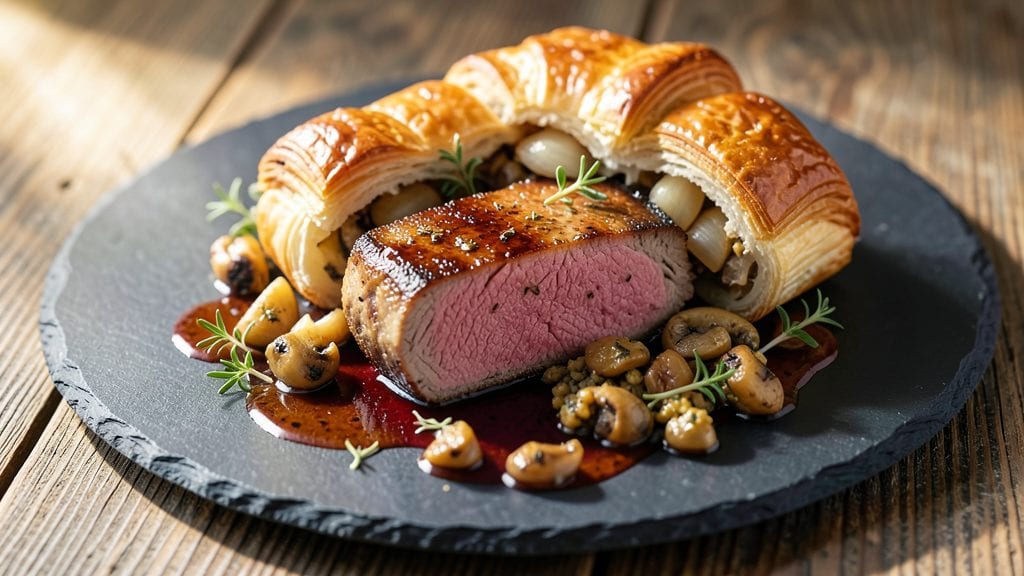
This classic beef Wellington recipe delivers the restaurant-quality experience you’ve been craving—tender beef wrapped in flaky pastry with a rich mushroom duxelles layer. The key lies in precise preparation and a foolproof assembly method that ensures every bite lives up to its reputation.
I’ve perfected this dish over years of testing, balancing tradition with practical shortcuts like store-bought puff pastry without sacrificing authenticity.
The foundation of a great Wellington starts with properly seared beef tenderloin, then a finely chopped mushroom duxelles that adds earthy depth. Wrapping it all in buttery, flaky pastry creates that signature golden crust while keeping the center perfectly pink and juicy.
The result is a showstopping centerpiece that’s as impressive to serve as it is to eat.
Cooking time is critical—roasting at 400°F for 25–30 minutes ensures the pastry crisps while the beef reaches 135°F for medium-rare perfection. Resting the Wellington for 10 minutes after baking is non-negotiable; it lets the juices redistribute, guaranteeing that first cut yields melt-in-your-mouth tenderness.
Pair with a red wine reduction for the full experience.
Whether you’re hosting a holiday dinner or treating yourself to a special meal, this recipe delivers restaurant-quality results with professional techniques simplified for home cooks. The secret?
Attention to detail in every step—from searing the beef to sealing the pastry—so you can serve a dish that feels like a Michelin-starred creation without the fuss.
Ingredients for classic beef wellington
Tender beef, rich duxelles, and flaky pastry—this is the restaurant-quality Wellington experience simplified.
| Ingredient | Amount | Notes |
|---|---|---|
| Beef Tenderloin 🥩 | 1 ½ lb | Center-cut, trimmed of fat |
| Unsalted Butter 🧈 | ½ cup | Cold, for searing and pastry |
| White Wine 🍷 | ½ cup | Dry, such as Chardonnay |
| Shallots 🧅 | 3 whole | Minced, for duxelles |
| Cremini Mushrooms 🍄 | 8 oz | Finely chopped, for duxelles |
| Fresh Thyme 🌿 | 2 tbsp | Chopped leaves, for duxelles |
| Fresh Parsley 🌿 | 2 tbsp | Chopped, for duxelles |
| Dijon Mustard 🍯 | 2 tbsp | For beef coating |
| Prosciutto 🥓 | 4 oz | Thinly sliced, for wrapping |
| Puff Pastry 🥧 | 1 sheet | Store-bought, thawed |
| Diamond Crystal Kosher Salt 🧂 | 1 tsp | For seasoning |
| Freshly Ground Black Pepper 🌶️ | ½ tsp | For seasoning |
| Egg 🥚 | 1 whole | For egg wash |
| Red Wine Reduction 🍷 | ½ cup | For serving, optional |
The beef tenderloin is non-negotiable for this dish—center-cut ensures tenderness, while trimming excess fat guarantees a clean, professional finish. Most butcher shops will trim it for you, but if doing it yourself, use a sharp knife and remove all silver skin. For the mushrooms, cremini or button varieties work best; avoid large portobellos as they can be watery. Fresh thyme and parsley should be vibrant green, not wilted. Whole Foods or local specialty grocers carry the highest quality, but standard supermarkets will suffice if you select firm, unblemished herbs. The prosciutto should be thinly sliced—high-quality Italian from the deli counter adds a luxurious touch.
No white wine? Dry chicken broth with a splash of lemon juice mimics the acidity, though wine adds depth. Substituting mushrooms? Finely chopped shallots and walnuts (1/4 cup) create a similar texture, but the earthy flavor will differ. For the Dijon mustard, avoid the pre-mixed kind—pure Dijon ensures the right balance of sharpness. If using store-bought puff pastry, thaw it completely before handling; cold pastry tears easily. The prosciutto can be swapped for thinly sliced ham, but it lacks the delicate saltiness that complements the beef.
The duxelles should be made 1-2 days ahead—it develops deeper flavor as it sits. Store it in an airtight container in the fridge, covered with plastic wrap pressed directly on the surface to prevent browning. The assembled Wellington can be refrigerated for up to 24 hours before baking, but do not exceed this timeframe as the prosciutto may dry out. For a shortcut, prepare the duxelles and beef mixture a day ahead, then assemble and bake the same day. Leftovers, if any, reheat gently in the oven at 300°F until warmed through—never microwave, as it ruins the pastry.
Why You'll Love This Recipe
- Foolproof Prep: Honestly, this is one of those dishes where the hardest part is waiting for the oven. Slice the mushrooms, mash them with butter and shallots, spread the paste on the beef, wrap it in puff pastry—it’s basically assembly. No chopping onions until they cry, no balancing sauces. Just layer and bake.
- Rich Without Effort: That crispy, golden crust hides a tender beef center so juicy it melts in your mouth. The white wine and butter in the mushroom duxelles? It’s like a little flavor bomb—earthy, savory, with just enough acidity to cut through the richness. (Yes, even on a Tuesday night.)
- Showstopper for Any Gathering: Between us, this looks fancy enough for a holiday dinner but takes less time than ordering takeout. Bring it to a potluck, a date night, or just because your fridge is empty—it’s the kind of dish that makes people pause and ask, "Wait, you made this?"
- Leftover Goldmine: One roast feeds four hungry people, but the leftovers? Even better the next day. Slice the cooled beef thin, toss it with a splash of red wine reduction, and you’ve got a sandwich so good you’ll pretend it’s gourmet. (Spoiler: it is.)
Step-by-step instructions for classic beef Wellington
A perfect Wellington delivers melt-in-your-mouth beef wrapped in golden, flaky pastry. Precision matters at every stage.
Prepare the Duxelles and Season the Beef
Begin by creating the duxelles—the aromatic mushroom base that encases the beef. In a nonstick skillet, melt 0.25 cup of the unsalted butter over medium heat. Add the 8 oz cremini mushrooms and cook for 8-10 minutes until all moisture evaporates and they turn deep golden brown. This step is critical—don't rush it, or the duxelles will remain watery.
Transfer the mushrooms to a food processor and pulse until finely chopped. Add the 3 minced shallots, 2 tbsp chopped fresh thyme, and 2 tbsp chopped fresh parsley, then pulse until you achieve a paste-like consistency. Set aside and let cool completely before using.
While the duxelles cools, season the 1.5 lb beef tenderloin generously with 1 tsp diamond crystal kosher salt and 0.5 tsp freshly ground black pepper, pressing the seasoning into the meat. Then spread 2 tbsp dijon mustard evenly over the surface. This layer creates a flavorful barrier between the beef and the prosciutto, preventing the meat from drying out during baking.
Assemble the Wellington
Preheat your oven to 400°F. On a sheet of parchment paper, spread the cooled duxelles evenly into a ¼-inch thick rectangle, about 3 inches wide and 12 inches long. Place the seasoned beef tenderloin in the center of the duxelles, then carefully wrap it with the 4 oz thinly sliced prosciutto, overlapping the slices slightly. This creates a protective seal that enhances flavor while keeping the beef moist.
Roll the parchment paper tightly around the beef, tucking in the edges to form a neat log. Brush the outside of the pastry with the 0.5 cup white wine, then unroll the 1 sheet puff pastry and place it over the beef. Trim the pastry to ½ inch beyond the edges of the parchment, then brush the pastry with the 1 whole egg beaten with a splash of water for a glossy finish. This egg wash ensures a crisp, golden crust.
Bake to Perfect Doneness
Transfer the Wellington to a baking sheet and bake for 30 minutes until the pastry turns a deep golden brown. Here's the key: the internal temperature of the beef should reach 125°F when measured with a meat thermometer. Remove it from the oven and let it rest for 15 minutes before slicing. This resting period allows the juices to redistribute, ensuring each slice is succulent and tender.
Slice the Wellington into ½-inch thick medallions and serve immediately with 0.5 cup red wine reduction drizzled over the top. The contrast of the rich, flaky pastry with the tender beef and savory mushrooms creates a classic dining experience. For extra flair, garnish with additional chopped fresh parsley and a sprinkle of freshly ground black pepper.
Pro Tips For Making Classic Beef Wellington
- SEAR THE MUSHROOMS LOW: I used to blast them on high heat like I do onions, but cremini mushrooms release their water too fast—you end up with a sad, soupy mess instead of golden, caramelized flavor. Cook them on medium-low for 8-10 minutes, stirring occasionally, until all that liquid evaporates and they’re deep brown. That’s when they’ll actually taste like they belong in a fancy dish.
- SALT THE TENDERLOIN TWICE: First, season the beef all over with salt and pepper at least 4 hours before cooking (overnight is better, but I know, you’re not always that patient). Then, right before searing, hit it with another layer of salt—especially on the sides that’ll touch the pan. The first salt gets absorbed; the second guarantees that crust. Trust me, your future guests will notice.
- DON’T SKIP THE WINE REDUCTION: After deglazing with white wine, let that pan sauce reduce until it’s syrupy enough to coat the back of a spoon. Too many people pour it over the beef and call it a day, but that’s where the depth comes from. If it’s still thin, simmer it another 2-3 minutes—you’ll taste the difference when you slice into that perfect medium-rare center.
- WRAP IT IN FOIL AFTER SEARING: Once you’ve got that beautiful crust on the beef, transfer it to a baking dish, pour the mushroom-duxelles and wine sauce over it, then tent it loosely with foil. This keeps the exterior from drying out while the center finishes cooking—no more overcooked edges or underdone centers. I learned this the hard way when I left mine uncovered for "just a few more minutes."
Make-ahead tips for this recipe
Duxelles Prep Ahead
Make the mushroom duxelles 1-2 days ahead—it tastes even better after resting. Store it in an airtight container with plastic wrap pressed directly on the surface to prevent browning.
The flavors meld beautifully overnight, saving you time on the day of cooking. I always prep this first, as it’s the most time-consuming step. 💫
Beef Prep Timeline
Season and coat the beef tenderloin with Dijon mustard the night before—this gives the spices time to penetrate. Wrap it tightly in plastic wrap and refrigerate. When ready to assemble, simply unwrap and proceed with the prosciutto and pastry. This shortcut ensures perfect seasoning without last-minute stress.
Partial Assembly
Assemble the Wellington up to 24 hours ahead but do not bake yet. Wrap the fully assembled log in plastic wrap and refrigerate. On baking day, simply preheat the oven and bake as directed.
The prosciutto stays fresh, and the pastry remains pliable. This is my go-to strategy for holiday meals when timing is tight. ⏰
Pastry Shortcut
Use store-bought puff pastry to save time—just thaw it completely before handling. Brush it with white wine (or a mix of water and butter) for extra crispiness.
Avoid rolling or stretching the pastry; unroll it gently and place it directly over the beef. This maintains the flaky texture that makes Wellington shine. 🥧
Resting Strategy
Let the baked Wellington rest for 15 minutes before slicing—this is non-negotiable. Place it on a cutting board and tent loosely with foil to keep it warm. Use this time to reheat sides or prepare sauces.
The rest ensures juicy, even slices every time. I’ve learned the hard way that skipping this step leads to dry meat! 💡
Leftovers Plan
If you have leftovers (unlikely with this showstopper!), reheat them in a 300°F oven for 15-20 minutes until warmed through. Avoid microwaving—it turns the pastry soggy. Slice and serve with a drizzle of red wine reduction to revive the flavors.
Store any unused pastry in the fridge for up to 2 days in an airtight container. ❄️
Nutrition facts
Frequently asked questions
Why does the beef Wellington need Dijon mustard?
The Dijon mustard acts as a flavorful barrier between the beef and prosciutto, preventing the meat from drying out during baking. It also adds a subtle tang that complements the richness of the pastry and mushrooms.
Can I use a different type of pastry instead of puff pastry?
Puff pastry is ideal for its flaky, golden texture, but you can substitute with all-butter croissant dough or even homemade puff pastry if you prefer. Avoid pie crust—it won't crisp as beautifully and may make the Wellington too dense.
What's the best way to reheat leftover Wellington?
Never microwave—it ruins the pastry! Instead, slice into portions and reheat in a 300°F oven for 15-20 minutes until warmed through. For extra moisture, drizzle with a little red wine or beef stock. The pastry will regain its crispness this way.
How do I prevent the pastry from puffing up unevenly?
Use a light hand when brushing the egg wash—too much liquid causes excessive puffing. Also, place the Wellington on a baking sheet with a wire rack underneath to allow air circulation. If it puffs too much, gently press it down with a spatula after 15 minutes in the oven.
What's the best way to slice the Wellington?
Use a sharp chef's knife and cut into ½-inch thick medallions at a slight angle. Warm the knife between slices to prevent sticking. For a restaurant presentation, fan the slices slightly before serving.