
Desserts
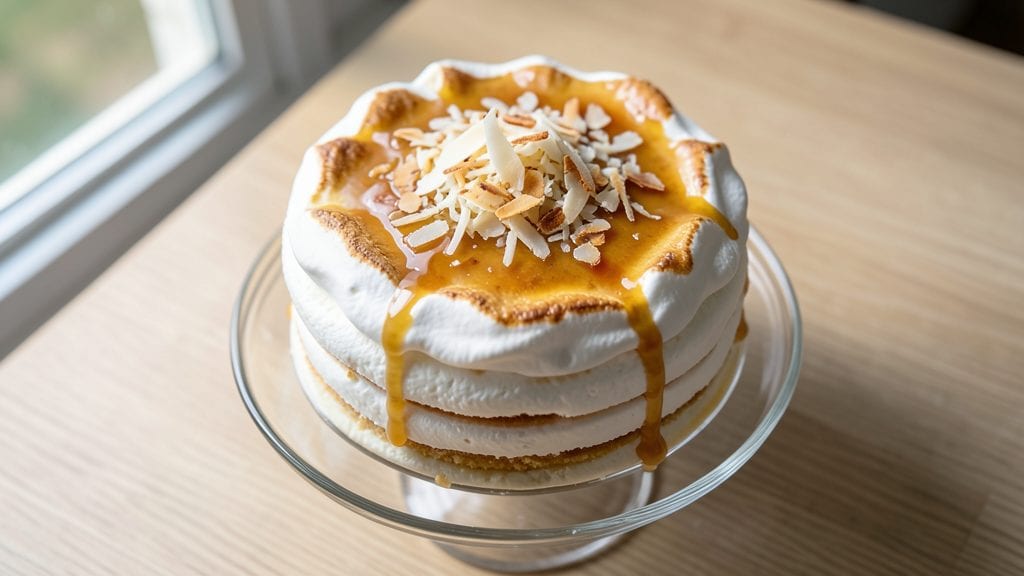
This coconut chiffon cake recipe delivers the signature light-as-air texture and tropical sweetness that makes it a showstopper at any table. The secret lies in precise ingredient ratios and the water bath method, which ensures a perfectly domed, moist cake with no dense center.
After years of testing variations, I’ve perfected a foolproof technique that balances coconut flavor without overpowering the delicate structure.
The key to success begins with properly whipped egg whites—stiff peaks are non-negotiable—and folding in the coconut-infused batter gently to maintain that signature airiness.
A warm water bath during baking creates the ideal environment for even rising, while the coconut extract (not just shredded coconut) infuses every bite with authentic tropical notes. This isn’t just a cake; it’s a textural masterpiece that defies expectations.
By the time it emerges from the oven, you’ll have a cake that’s impossibly light, with a golden dome and tender crumb that practically melts in your mouth. The coconut flavor shines through without being cloying, and the moisture retention keeps it fresh for days.
Whether you’re serving it at a tropical-themed party or simply treating yourself, this recipe delivers professional-quality results at home.
Optional garnishes like toasted coconut flakes or a drizzle of coconut syrup elevate the presentation, but the cake stands beautifully on its own. Ready to master this classic? Let’s get started with the step-by-step instructions that guarantee perfect results every time.
Ingredients for coconut chiffon cake
Twelve essential ingredients transform into a tropical masterpiece with professional chiffon technique.
| Ingredient | Amount | Notes |
|---|---|---|
| Large Egg Whites 🥚 | 12 whole | Room temperature, separated from yolks |
| Granulated White Sugar 🍚 | 2 cups | Divided: 1 cup for meringue, 1 cup for batter |
| Unsalted Butter 🧈 | 1 cup | Melted, cooled to room temperature |
| All-Purpose Flour 🌾 | 1 ½ cups | Sifted, spooned into measuring cup |
| Coconut Extract 🥥 | 1 ½ tbsp | Pure, high-quality brand preferred |
| Vanilla Bean Paste 🌸 | 1 tbsp | Seeds scraped for authentic flavor |
| Whole Milk 🥛 | ½ cup | Room temperature, full-fat preferred |
| Shredded Unsweetened Coconut 🥥 | ½ cup | Toasted lightly for enhanced aroma |
| Diamond Crystal Kosher Salt 🧂 | ½ tsp | Fine grain, for delicate seasoning |
| Baking Powder 🍞 | 1 tsp | Aluminum-free for tender crumb |
| Large Egg Yolks 🥚 | 4 whole | Room temperature, for custard base |
| Cream of Tartar 🍋 | ¼ tsp | Stabilizes meringue peaks |
The egg whites are the foundation—room temperature is critical for stable peaks. Whole eggs are separated using a fine-mesh sieve to eliminate any yolk traces, which prevent stiff peaks. For the best results, purchase fresh, organic eggs from local farms or Whole Foods Market—their higher protein content whips to superior volume. The coconut extract must be pure; Goya or McCormick brands deliver consistent quality without artificial aftertaste. Vanilla bean paste (not extract) provides depth—Madagascar bourbon vanilla from Penzeys elevates the flavor profile. Pre-sift the all-purpose flour using a fine-mesh sieve to eliminate lumps that could disrupt the delicate structure. Diamond Crystal kosher salt is preferred over table salt for its delicate crystal size, which dissolves evenly without altering texture.
No coconut extract? Pure vanilla extract plus 1 tbsp toasted coconut flakes mimics the tropical essence, though the depth won't match. Substituting butter for unsalted margarine (even full-fat) risks a denser crumb—European-style unsalted butter like Plugrá or Kerrygold maintains optimal moisture. For a vegan adaptation, replace egg whites with aquafaba (¼ cup per egg white) and use vegan butter, though texture will differ slightly. Shredded coconut can be omitted entirely if you prefer a subtler coconut presence, but toasting it first (3 minutes at 350°F) intensifies its aroma. Baking powder must be fresh—test by mixing with water; if it fizzes vigorously, it's active. Cream of tartar stabilizes the meringue; if unavailable, lemon juice (¼ tsp) works as a substitute, though acidity may slightly alter flavor.
Store the coconut chiffon cake in an airtight cake dome at room temperature for up to 3 days, protected from humidity. For longer storage, wrap tightly in plastic wrap and refrigerate for up to 1 week, though texture may firm slightly. Freeze unfrosted slices for up to 3 months—thaw at room temperature before serving. Toasted coconut flakes for garnish should be stored in a sealed container at room temperature for up to 2 weeks to retain crispness. Coconut extract remains potent for 1 year unopened; once opened, refrigerate and use within 6 months. Egg whites should be used immediately after separating to prevent oxidation, which hinders peak formation.
Why You'll Love This Recipe
- No Whisking Wars: I swear by this recipe because it’s the only chiffon cake where the egg whites don’t stage a rebellion. Just beat them with sugar until they’re glossy, fold in the rest—no overmixing, no stress. The buttercream layer? A single bowl of melted butter and powdered sugar, spread like frosting. Honestly, my mixer’s never been happier.
- Tropical in Two Bites: That coconut extract? It’s the secret weapon. One teaspoon turns this cake into a vacation in your mouth—vanilla’s sophisticated cousin with a hint of toasted coconut that lingers. The buttercream? Rich but light, cutting through the chiffon’s airy texture like a sigh. Between us, it’s the kind of dessert that makes people ask, “What’s in this?”
- Party or Pajamas: I’ve served this at brunch with fresh mango slices, at book club with a sprinkle of toasted coconut, and even as a midnight snack (yes, even on a Tuesday night). The layers hold up for days, so it’s my go-to for birthdays, potlucks, or when I just want something fancy without the fuss. The only rule? Eat it before the kids discover it.
- Leftovers That Don’t Suffer: Most cakes dry out or get soggy, but this one? It’s the opposite. The chiffon stays tender, the buttercream stays creamy, and the coconut flavor only gets better with time. I’ve had slices for lunch the next day, packed in a container for work, and even reheated a portion in the microwave—still delicious. Plus, it’s cheaper than ordering a cake, and the ingredients stretch for other recipes. Win-win.
Step-by-step instructions for coconut chiffon cake
Mastering this delicate cake requires precision—here's how to achieve that signature light-as-air texture.
Prepare the Meringue Foundation
In a spotlessly clean, grease-free bowl, combine the 12 whole large egg whites with the 0.25 teaspoon cream of tartar. Using a stand mixer fitted with the whisk attachment, beat on low speed until no streaks remain. Gradually add the 1 cup granulated white sugar reserved for the meringue while mixing on medium-high speed.
Increase speed to high and beat for 5-7 minutes until the meringue forms stiff, glossy peaks that hold their shape when the whisk is lifted. The bowl should feel cool to the touch—this indicates proper incorporation of air. Fold in the 1.5 tablespoons coconut extract and 1 tablespoon vanilla bean paste using a spatula, being careful not to deflate the meringue.
Create the Coconut Custard Base
In a separate bowl, whisk together the 4 whole large egg yolks with the remaining 1 cup granulated white sugar until pale and thickened. Gently fold in the 0.5 cup whole milk, 0.5 teaspoon diamond crystal kosher salt, and 1 teaspoon baking powder. In a small saucepan, melt the 1 cup unsalted butter over low heat, then cool to room temperature.
Gradually pour the melted butter into the yolk mixture while whisking continuously. The mixture should thicken slightly—this forms the custard base. Fold one-third of the prepared meringue into the custard to lighten it, then gently fold in the remaining meringue using a spatula in a figure-eight motion until fully combined and no white streaks remain.
Incorporate the Coconut Elements
Sift the 1.5 cups all-purpose flour over the batter and gently fold it in just until combined—overmixing will deflate the batter. In a separate bowl, combine the 0.5 cup shredded unsweetened coconut with the remaining 1 tablespoon vanilla bean paste. Fold this coconut mixture into the batter until evenly distributed.
Transfer the batter to a 10-inch tube pan lined with parchment paper, tapping gently to remove any air bubbles. The batter should reach the top of the pan—this ensures maximum rise. Place the pan in a preheated 350°F oven and bake for 45-50 minutes until the top springs back when lightly touched and a toothpick inserted comes out clean.
Cool and Invert for Perfect Rise
Remove the cake from the oven and let it cool in the pan for 10 minutes. Run a thin knife around the edges to loosen, then invert the cake onto a wire rack. Peel off the parchment paper and let the cake cool completely upside down for at least 2 hours. This gradual cooling process preserves the chiffon's signature airy texture.
Once fully cooled, carefully remove the cake from the tube pan by sliding a thin spatula between the cake and pan. The cake should have a delicate, almost ethereal quality with a tender crumb and subtle coconut aroma. Serve slices at room temperature for the full tropical experience.
Pro Tips For Making Coconut Chiffon Cake
- Whip Whites to Room Temp: I learned this the hard way—cold egg whites from the fridge fold like sad pancakes. Pop them in a bowl of warm water for 5 minutes first. Room-temperature whites whip up faster, hold their shape better, and give that signature chiffon lightness. No excuses: just a quick soak.
- Sift That Flour Twice: Chiffon cake is all about air, and lumpy flour is its enemy. Sift the all-purpose flour before folding it into the egg whites, then sift it again right before mixing. This keeps the batter silky and prevents dense pockets. (Yes, it’s extra work, but your cake’s rise depends on it.)
- Butter the Pan Like It’s 1950: Skip the nonstick spray—this cake needs grip. Use a pastry brush to coat the tube pan with melted butter, then dust with flour, tapping out the excess. The butter creates a barrier that keeps the cake from sticking to the sides while it climbs. (Pro move: chill the pan for 10 minutes afterward to help the batter cling.)
- Bake at 325°F—No Higher: I was skeptical until I tried it: a hot oven (350°F+) makes chiffon cake collapse faster than a soufflé in a draft. Stick to 325°F and bake just until the top springs back when touched—no need to wait for a toothpick test. Overbaking turns that airy texture into a sad, dry sponge.
Creative variations of this coconut chiffon cake
Tropical Fruit Swap
Replace the shredded coconut with ½ cup finely diced mango or passion fruit pulp for a vibrant twist. I use ripe mangoes from Trader Joe's for their sweetness—just toss them with 1 tsp lime juice to prevent browning before folding into the batter.
For passion fruit, blend 2 passion fruits with 1 tbsp sugar to create a purée that adds tangy depth. 🥭
Chocolate-Coconut Fusion
Add ¼ cup Dutch-processed cocoa powder to the dry ingredients for a mocha-chiffon hybrid. I recommend Valrhona cocoa powder for its rich, velvety flavor. Pair with 1 tbsp espresso powder in the custard base to enhance chocolate notes.
Top with a dusting of cocoa powder and toasted coconut flakes for a decadent dessert that still maintains the cake's signature lightness.
Almond-Infused Variation
Swap the coconut extract for 1 tbsp almond extract and fold in ½ cup finely ground almonds along with the flour. This creates a marzipan-like flavor profile that complements the chiffon's airiness.
Toast the almonds first at 350°F for 8 minutes to deepen their aroma. Garnish with sliced almonds for added texture and visual appeal.
Spiced Chai Chiffon
Infuse the custard base with 1 tsp chai spice blend (equal parts cinnamon, cardamom, ginger, and cloves) while whisking the yolks. Add ½ cup raisins or chopped dried apricots for a warm, spiced variation. The spices complement the coconut without overpowering it, creating a cozy dessert perfect for fall gatherings.
Lemon-Coconut Bright
Zest 1 lemon and add the zest plus 1 tbsp lemon juice to the custard base. This brightens the coconut flavor beautifully. I also add 1 tbsp lemon curd to the batter for extra tang. The result is a refreshing twist that pairs wonderfully with a coconut whipped cream frosting.
Matcha Green Tea Twist
Replace the vanilla bean paste with 1 tbsp high-quality matcha powder (I use Ippodo Tea brand) and reduce the coconut extract to 1 tsp. The earthy matcha balances the sweet coconut notes perfectly.
For presentation, dust the cake with matcha powder and garnish with edible gold leaf for an elegant touch that feels luxurious. 💚
Nutrition facts
Frequently asked questions
Can I make this cake without coconut extract?
Yes! Use 1 tbsp pure vanilla extract plus 1 tbsp toasted coconut flakes for the coconut flavor. For a stronger tropical taste, add ½ tsp coconut oil to the custard base. The texture remains light, but the coconut aroma will be more subtle.
Why did my coconut chiffon cake collapse?
This usually happens from overmixing the batter or opening the oven too soon. The meringue must be folded gently to maintain air pockets, and the cake should be tested with a toothpick before removing it from the oven. Let it cool in the pan for 10 minutes before inverting to preserve the structure.
How do I store leftover coconut chiffon cake?
Keep it in an airtight container at room temperature for up to 3 days. For longer storage, refrigerate (up to 1 week) or freeze slices (up to 3 months). Bring frozen slices to room temperature before serving to restore moisture.
Can I bake this in a regular round pan instead of a tube pan?
Yes, but the texture may differ slightly. Use a 9-inch round pan and reduce baking time to 35-40 minutes. The cake will be denser without the tube pan's steam effect, but it will still be delicious. For a more traditional chiffon texture, stick with the tube pan method.
What's the best way to serve this cake?
Slice it with a serrated knife dipped in hot water for clean cuts. Serve at room temperature with a dusting of toasted coconut flakes or a drizzle of coconut syrup. For extra flair, pair it with passion fruit coulis or fresh mango slices.