
Snacks
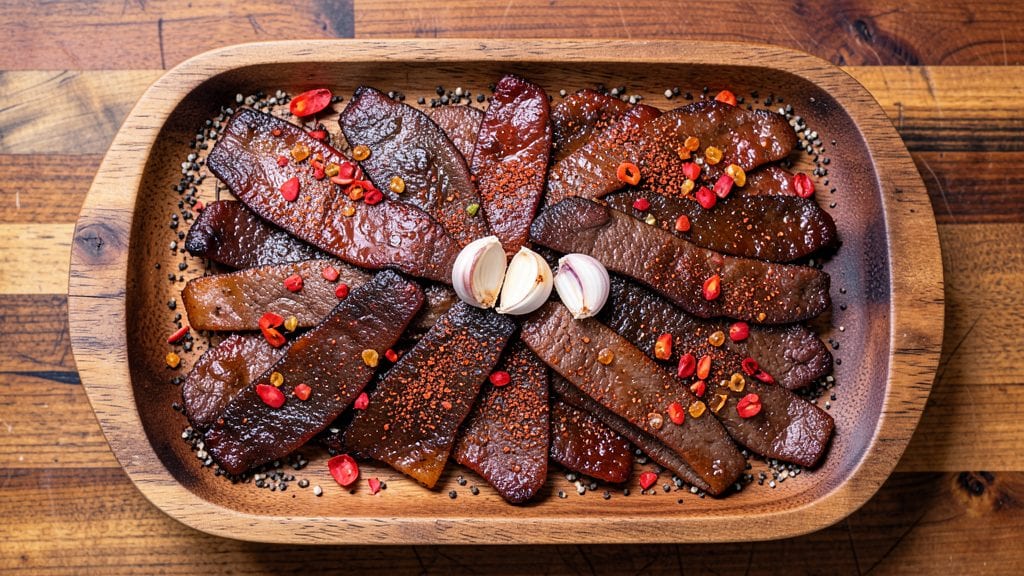
Transforming flank steak into smoky-spiced jerky in just 20 minutes of prep is one of the most satisfying kitchen projects I’ve perfected. The key lies in slicing against the grain and controlling moisture for that perfect chewy texture—no long marinating or dehydrator required.
This method delivers restaurant-quality jerky without the wait, using simple pantry spices and your oven.
What sets this recipe apart is the foolproof technique that ensures tender, flavorful bites every time. A quick brine tenderizes the meat while salt and spices penetrate deeply, and the oven’s gentle heat mimics traditional drying methods.
No special equipment needed—just a baking sheet and a little patience for the final crisp. The result? Jerky that’s smoky, slightly sweet, and packed with protein.
By the time you’re done, you’ll have crispy-edged, chewy-center jerky ready to snack on or pack for hikes. The spices—smoked paprika, garlic powder, and cayenne—create a bold, savory profile that pairs perfectly with mustard or chipotle dips.
This is the kind of jerky that disappears in minutes, making it ideal for game day, travel, or satisfying cravings between meals.
Whether you’re a jerky novice or a seasoned maker, this method delivers restaurant-quality results with minimal effort. Let’s get started on creating your own smoky-spiced bites that taste like they came from a specialty shop.
Ingredients for flank steak jerky
Simple pantry staples transform tough flank steak into restaurant-quality jerky in minutes.
| Ingredient | Amount | Notes |
|---|---|---|
| Flank Steak 🥩 | 1 ½ lb | Center-cut, trimmed of fat |
| Kosher Salt 🧂 | 2 tbsp | Diamond Crystal preferred |
| Brown Sugar 🍯 | 2 tbsp | Light or dark, packed |
| Smoked Paprika 🌶️ | 1 ½ tbsp | High-quality, not dusty |
| Garlic Powder 🧄 | 1 tbsp | Freshly ground preferred |
| Ground Black Pepper 🌶️ | 1 tsp | Freshly cracked |
| Cayenne Pepper 🔥 | ½ tsp | Adjust for heat preference |
| Onion Powder 🧅 | ½ tsp | Finely ground |
| Worcestershire Sauce 🍶 | 1 tbsp | High-quality, not imitation |
| Apple Cider Vinegar 🍏 | 1 tbsp | For tangy depth |
| Extra-Virgin Olive Oil 🫒 | 1 tbsp | For moisture balance |
The flank steak is your canvas—look for center-cut with visible marbling for tenderness. Most butchers will trim the fat for you, but if you're buying pre-packaged, grab the thickest cut available. Costco or local meat counters often have the best quality at reasonable prices. The key here is slicing against the grain—ask your butcher to mark the grain direction if they're unsure. For the spices, Penzeys or bulk bins at natural food stores are my go-to for consistent quality. Smoked paprika should smell rich and smoky, not stale.
No smoked paprika? Substitute half the amount with regular paprika plus a pinch of liquid smoke. Running low on Worcestershire? Soy sauce or coconut aminos work in a pinch, though the flavor will differ slightly. The brown sugar adds just enough sweetness to balance the smokiness—coconut sugar is a great 1:1 swap. For the brine, if you're short on time, dissolve the salt and sugar in warm water first to speed up the process. The apple cider vinegar is non-negotiable for that tangy depth, but balsamic vinegar works if that's what you've got.
This jerky keeps beautifully—1 week in an airtight container at room temperature or 3 months in the freezer. For best texture, let it cool completely before storing. I like to portion mine into small reusable bags so I can grab just what I need for snacks or hikes. The flavors actually improve after 24 hours as the spices meld together. If you're making a big batch, double the spices and use two baking sheets for even drying.
Why You'll Love This Recipe
- Five-Ingredient Magic: I swear by this combo—flank steak, a pinch of salt, brown sugar’s caramel kiss, smoked paprika’s warmth, and garlic powder’s punch. That’s it. No fancy marinades, no stress, just pure flavor in minutes.
- Smoky-Sweet Fix: The brown sugar and smoked paprika? They turn tough flank steak into something dangerously addictive—crispy edges, tender bite, and that deep, smoky-sweet finish that lingers. Honestly, it’s the kind of jerky I’ll make just to snack on while grading papers.
- Snack Attack Ready: Need a quick lunch for the gym bag? A last-minute tailgate staple? Or just a way to keep the kids quiet for 10 minutes? This jerky slices fast, dries in hours, and stays fresh for days. (Yes, even on a Tuesday night.)
- Budget-Friendly Protein: Flank steak is lean, affordable, and packs serious punch—way cheaper than pre-packaged jerky. I stretch one pound into enough strips to feed my family for a week, and the leftovers? Perfect for tacos or stir-fries when the jerky’s gone.
Step-by-step instructions for flank steak jerky
Here's how to transform tough flank steak into tender, smoky-sweet jerky in just 20 minutes.
Prepare the Marinade with Precision
In a medium bowl, combine the 2 tablespoons kosher salt, 2 tablespoons brown sugar, 1.5 tablespoons smoked paprika, 1 tablespoon garlic powder, 1 teaspoon ground black pepper, 0.5 teaspoon cayenne pepper, and 0.5 teaspoon onion powder. This blend creates a balanced depth of flavor—salty, sweet, and smoky with just enough heat to wake up your taste buds.
Next, whisk in the 1 tablespoon Worcestershire sauce and 1 tablespoon apple cider vinegar until fully dissolved. The vinegar brightens the flavors while the Worcestershire adds that unmistakable umami punch. Finally, stir in the 1 tablespoon extra-virgin olive oil—this helps tenderize the meat and keeps the jerky moist during drying. The marinade should have a thick, paste-like consistency, ready to cling to every fiber of the steak.
Coat and Rest the Flank Steak
Trim any remaining fat from the 1.5 pounds flank steak and cut it against the grain into ¼-inch thick slices. This thickness is crucial—too thick and it won't dry properly; too thin and it'll be rubbery. Arrange the slices in a single layer on a baking sheet lined with parchment paper.
Using a silicone spatula, generously coat each slice with the marinade, pressing it into the meat to ensure full coverage. The steak will absorb the marinade immediately, so don't rush—this step guarantees maximum flavor penetration. Once coated, let the steak rest uncovered in the refrigerator for 15 minutes. This brief resting period allows the marinade to begin working its magic, breaking down the muscle fibers for that signature jerky tenderness.
Dehydrate for Perfect Texture
Preheat your dehydrator to 160°F—this low temperature is key to preserving moisture while ensuring food safety. Arrange the marinated steak slices in a single layer on the dehydrator trays, ensuring they don't overlap. Overlapping slices can trap steam, leading to uneven drying and potential spoilage.
Dehydrate for 6-8 hours, checking periodically after the first 4 hours. The jerky is done when it's dry to the touch but still pliable—it should snap when bent but not crumble. If it's drying too quickly, reduce the temperature by 5°F. If it's not drying enough after 8 hours, increase the temperature by 5°F and continue dehydrating. The goal is jerky that's firm yet flexible, with a deep mahogany color and a glossy sheen from the marinade.
Test and Store for Long-Lasting Flavor
Remove the jerky from the dehydrator and let it cool completely on a wire rack. This cooling step is often overlooked but essential—it prevents condensation from forming in your storage container, which can lead to spoilage. Once cooled, test one piece by bending it. If it snaps cleanly with a slight give, it's perfect. If it's still moist, return it to the dehydrator for another 1-2 hours.
Store the jerky in an airtight container or vacuum-sealed bag in the refrigerator for up to 2 weeks or in the freezer for up to 6 months. The flavors will continue to meld and deepen over time, making this jerky even more irresistible as it ages. When ready to enjoy, simply tear into the tender, smoky-sweet strips—ideal for hiking snacks, protein boosts, or a quick appetizer.
Pro Tips For Making Flank Steak Jerky
- Trim Thin, Not Perfect: DESCRIPTION: Flank steak’s lean fibers need space to dry evenly—aim for ¼-inch thickness max with the grain. I learned this the hard way when my first batch turned chewy; thicker slices hold moisture and won’t crisp properly. Use a sharp knife and don’t stress about jagged edges—jerky’s forgiving, but consistency matters more.
- Salt First, Then Wait: DESCRIPTION: Sprinkle kosher salt 24 hours ahead and let it sit uncovered in the fridge. This draws out moisture so the brown sugar and paprika stick like glue. I used to skip this and ended up with a sticky, uneven crust—now my jerky browns perfectly every time.
- Skip the Crowded Tray: DESCRIPTION: Space slices at least ½-inch apart on the dehydrator rack. Overlapping pieces steam instead of drying, and you’ll end up with soggy edges. Trust me, your future self will thank you when the jerky snaps cleanly instead of sticking together like a sad meat glop.
- Rotate Mid-Dry: DESCRIPTION: Flip strips every 2–3 hours during dehydrating—yes, even if you’re lazy like me. The edges dry faster, and rotating guarantees even doneness. After burning three batches where one side was leather and the other still pink, I made this non-negotiable.
Serving suggestions for flank steak jerky
Snacking Like a Pro
This jerky isn’t just for backpacking trips—it’s a gourmet snack that pairs perfectly with spicy mustard or chipotle mayo. I like to serve it with a small bowl of hot honey for that sweet-spicy contrast. The smoky depth of the jerky balances the tangy kick beautifully. 💛
Game Day Upgrade
Transform your next tailgate into a culinary event by offering the jerky as a protein-packed appetizer. Pair it with crunchy veggie sticks like bell peppers and carrots for a balanced bite. The jerky’s chewy texture and bold flavors make it an instant crowd-pleaser at any gathering.
Travel-Friendly Packing
Portion your jerky into individual reusable bags or mini silicone molds for easy grab-and-go snacks. I keep a few bags in my gym bag for post-workout protein or a quick energy boost. The compact size makes it perfect for car trips, flights, or lunchboxes.
Gourmet Charcuterie Board
Elevate your charcuterie spread by arranging the jerky alongside aged cheeses, olives, and artisanal crackers. The jerky’s smoky notes complement sharp cheddar or brie, while the crunchy texture adds contrast to creamy spreads. A drizzle of balsamic glaze ties everything together.
Kids’ Snack Hack
Cut the jerky into fun shapes using cookie cutters for picky eaters. I’ve found that kids love the sweet-spicy flavor when paired with apples or celery sticks. Start with mild versions (less cayenne) to introduce them to jerky’s versatility. 💫
Nutrition facts
Frequently asked questions
Can I use flank steak with fat for jerky?
Trim excess fat before slicing—it can make the jerky greasy when drying. A little marbling is fine, but too much fat will create uneven texture. Aim for lean cuts to ensure proper dehydration and that signature chewy consistency.
How do I know when the jerky is fully dried?
Test by bending a piece—it should snap cleanly with a slight give, not bend like taffy. If it feels damp or sticks together, return it to the dehydrator for 1-2 more hours. Over-drying makes jerky brittle, while under-drying risks spoilage.
Can I make this jerky without a dehydrator?
Yes! Use a 170°F oven with the door propped open 1 inch for airflow. Place a baking sheet on the lowest rack and dehydrate for 4-6 hours, flipping slices halfway. Monitor closely to prevent over-browning.
Why did my jerky turn out rubbery?
This usually happens from over-drying or slicing too thin (¼-inch is ideal). For extra tenderness, marinate longer (30 minutes) or add 1 extra tablespoon olive oil to the marinade. Always slice against the grain!
How can I make this jerky spicier?
Increase the cayenne to 1 teaspoon or add ½ teaspoon chipotle powder to the marinade. For heat lovers, try a pinch of crushed red pepper flakes. Balance with extra brown sugar if needed—sweetness helps tame the burn.