
Soups & Stews
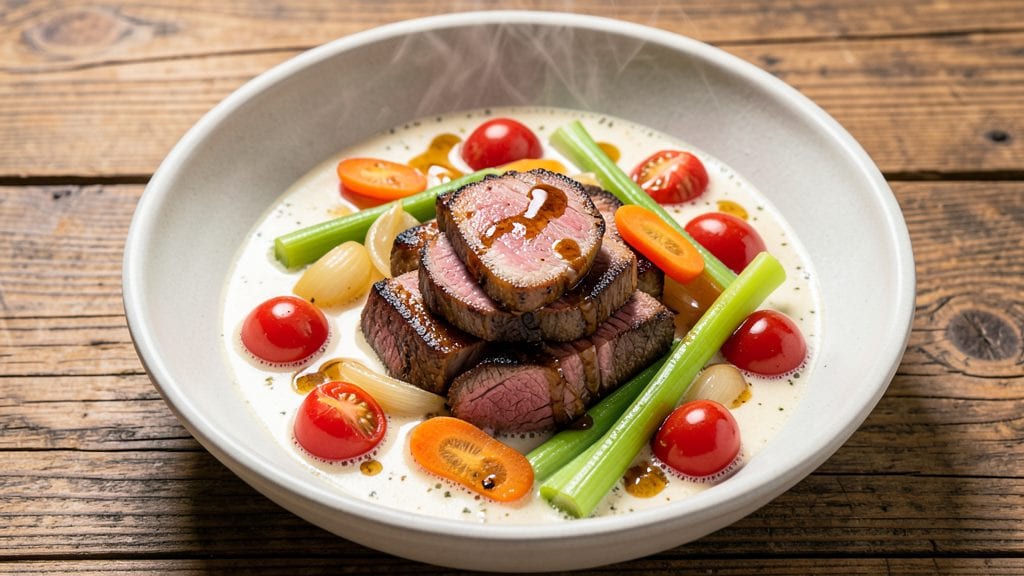
This heart soup recipe delivers the kind of soul-warming comfort that turns a simple meal into a memorable experience. The rich, savory depth comes from slow-cooked beef heart or offal, simmered with aromatic herbs and spices until tender and infused with flavor.
After years of perfecting this dish, I’ve found the secret lies in proper searing and slow simmering—transforming tough cuts into melt-in-your-mouth perfection.
The beauty of heart soup is its versatility—traditionally rooted in Eastern European and Latin American cuisines, it adapts beautifully to modern tastes. Whether you use beef heart for authenticity or mushrooms and seitan for a vegetarian twist, the result is a deeply satisfying broth with tender, flavorful pieces.
The spices—like bay leaves, thyme, and black pepper—build layers of warmth that linger long after the last spoonful.
By the time you’re done, you’ll have a steaming bowl of heart soup with a velvety broth, tender meat or substitute, and a garnish of fresh herbs that adds brightness.
It’s the kind of meal that feels like a hug in a bowl, perfect for chilly evenings or when you crave something hearty yet comforting. The aroma alone will draw everyone to the table.
Pair it with crusty bread to soak up every last drop of that rich, spice-infused broth. This recipe delivers restaurant-quality results at home—simple yet sophisticated, with a technique that’s foolproof once you master the key steps. Let’s get cooking.
Ingredients for heart soup
Simple ingredients for a deeply comforting heart soup, packed with aromatic herbs and spices.
| Ingredient | Amount | Notes |
|---|---|---|
| Beef Heart 🥩 | 1 ½ lb | Trimmed of excess fat, cubed |
| Yellow Onion 🧅 | 1 whole | Chopped, medium size |
| Carrots 🥕 | 3 medium | Peeled, chopped into chunks |
| Garlic Cloves 🧄 | 6 cloves | Peeled, smashed slightly |
| Celery Stalks 🥬 | 3 whole | Chopped, medium size |
| Tomatoes 🍅 | 4 whole | Roma or vine, crushed |
| Bay Leaves 🌿 | 2 whole | Dried, standard size |
| Fresh Thyme 🌿 | 1 tbsp | Leaves only, chopped |
| Fresh Parsley 🌿 | ¼ cup | Chopped, for garnish |
| Black Peppercorns 🌶️ | 1 tsp | Freshly cracked |
| Salt 🧂 | 1 ½ tsp | Kosher or sea salt |
| Vegetable Oil 🫒 | ½ cup | For searing |
| Beef Broth 💧 | 6 cups | Low-sodium preferred |
| Red Wine 🍷 | ½ cup | Dry red, optional |
The beef heart is the star—look for bright red, well-trimmed pieces at specialty butchers or the meat counter. Costco often carries it pre-cubed, which saves time. If you can't find beef heart, mushrooms and seitan make a great vegetarian substitute. The carrots and celery should be firm and crisp, not rubbery. For the tomatoes, Roma or vine tomatoes crush best—no need for fancy varieties. Fresh thyme and parsley add that bright, herbal note that makes this soup sing. Whole Foods or local markets usually have the freshest herbs, but grocery store bunches work too if they're not wilted.
No red wine? Substitute with extra beef broth or a splash of balsamic vinegar—it adds depth without overpowering. Short on fresh herbs? Dried thyme at one-third the amount works in a pinch, but fresh is ideal. The bay leaves are non-negotiable—they infuse that earthy, aromatic flavor. For the broth, low-sodium is key—you don’t want to over-salt the whole dish. If you’re using a vegetarian substitute, soak mushrooms in warm water first to help them absorb the flavors better. The oil for searing? Any neutral oil works, but vegetable or canola are the most common and affordable.
This soup tastes even better the next day—reheats beautifully in about 5 minutes on the stove. Store leftovers in the fridge for 4-5 days or freeze for up to 3 months. I like to portion it into containers ahead of time so it’s ready for quick lunches. The broth thickens as it cools, so add a splash of water or broth when reheating if it’s too rich. Garnish with fresh parsley right before serving—it adds that pop of color and freshness that makes the dish feel special.
Why You'll Love This Recipe
- One-Pot Magic: I swear by this recipe because it’s actually one-pot—no chopping boards cluttering the kitchen. Toss in the beef heart, onions, carrots, and celery, then let the garlic and simmering broth do the work while you stir occasionally. Minimal effort, maximum reward.
- Rich Umami Bomb: Between us, beef heart has a depth that’s hard to beat. The onions caramelize into sweetness, the celery adds that fresh crunch, and the garlic? It’s like a little flavor explosion in every spoonful. Honestly, it’s the kind of taste that lingers—and makes you want seconds.
- Meal Prep MVP: This soup keeps perfectly for four days in the fridge, and it actually tastes better the next day. I make a big batch on Sundays, freeze half, and boom—weeknight dinners are covered. (Yes, even on a Tuesday night when you’re exhausted.)
- Budget Game-Changer: Beef heart is cheaper than steak but packs just as much punch. A single heart feeds four, and the veggies stretch the flavor without breaking the bank. I’ll be real: it’s my go-to when I need hearty, satisfying meals without the grocery sticker shock.
Step-by-step instructions for heart soup recipe
This method transforms humble ingredients into a deeply comforting bowl of heart soup, rich with warm spices and tender meat.
Sear the Beef Heart for Deep Flavor
Heat 0.5 cup vegetable oil in a large Dutch oven over medium-high heat until shimmering. Pat the 1.5 lb beef heart dry with paper towels and season generously with 1.5 tsp salt and 1 tsp black peppercorns. Working in batches, add the beef heart to the hot oil and sear for 3-4 minutes per side until deep golden brown. The key here is patience—don't crowd the pan or the temperature will drop and you'll steam instead of sear.
Once browned, remove the beef heart and set it aside. You want the oil to remain hot for the vegetables coming next. If the oil smells smoky, that's perfect—it means you've built rich, caramelized flavors that will infuse the entire soup. This searing step creates the foundation for that hearty, comforting taste you're after.
Sauté the Aromatic Vegetables
In the same Dutch oven, add 1 whole yellow onion, 3 medium carrots, 3 whole celery stalks, and 6 cloves garlic cloves all chopped. Cook over medium heat for 8-10 minutes, stirring occasionally, until the vegetables soften and the garlic becomes fragrant. You're looking for a gentle browning on the edges—this adds sweetness and depth to the soup.
Here's where the magic happens: as you stir, you'll notice the vegetables release their juices. Let them caramelize slightly at the bottom of the pot before adding the next ingredients. This step builds layers of flavor that make the soup taste homemade and comforting. If the vegetables start to stick, add a splash of beef broth to deglaze and scrape up those delicious browned bits.
Simmer the Heart Soup
Pour in 0.5 cup red wine and scrape up any browned bits from the bottom of the pot. Let it simmer for 3-4 minutes until the alcohol smell dissipates. Add 4 whole tomatoes (crushed), 2 whole bay leaves, and 1 tbsp fresh thyme. Pour in 6 cups beef broth and bring to a gentle boil. Return the seared beef heart to the pot, reduce heat to low, cover, and let it simmer for 1.5-2 hours until the beef heart is fork-tender.
This long simmering time is crucial—it allows the beef heart to become melt-in-your-mouth tender while absorbing all those beautiful flavors from the vegetables and broth. I know it's tempting to rush, but trust me, the patience pays off. The soup should reduce slightly, becoming richer and more concentrated. If it looks too thin, you can always reduce it further on the stove or transfer it to a saucepan to thicken.
Finish and Garnish
Once the beef heart is tender, remove it from the soup and let it rest for 5 minutes before slicing it into bite-sized pieces. Return the sliced beef heart to the pot and stir to combine. Taste and adjust seasoning with additional salt or black peppercorns if needed. The soup should be well-seasoned but not overpowering—you want the natural flavors of the beef heart and vegetables to shine.
Remove the bay leaves and thyme stems before serving. Ladle the soup into bowls and garnish with 0.25 cup fresh parsley for a pop of color and freshness. This heart soup is best served warm, straight from the pot, with crusty bread to soak up every last drop of that comforting broth. The combination of tender beef heart, aromatic vegetables, and rich broth creates a deeply satisfying meal that warms you from the inside out.
Pro Tips For Making Heart Soup
- SEAR THE HEART FIRST: After slicing the beef heart, hit it with a dry sear in a screaming-hot pot—no oil needed. The Maillard reaction kicks in fast, and that crust locks in flavor before you even add broth. I used to skip this, and the soup always tasted like it needed more depth.
- TRIM THE SILVERSKIN: That white, stringy membrane on beef heart? It’s tough and chewy. Scrape it off with a knife before slicing—it’s not just about texture, it’s about letting the meat work, not fight you. I learned this the hard way after biting into a chunk that felt like rubber.
- SIMMER LOW AND LONG: Heart soup isn’t a rush job. Once everything’s in the pot, keep it at a gentle bubble—no rolling boil—so the meat stays tender, not tough. I used to walk away and come back to shredded beef. Patience here makes the difference.
- SOFTEN THE AROMATICS FIRST: Dice onions, carrots, and celery small, then sweat them in oil for 8-10 minutes until they’re nearly translucent. This builds flavor without burning, and it cuts down on chopping later when you’re tired. (Yes, even if you’re impatient like me.)
Essential equipment for this dish
Dutch Oven Essentials
A large Dutch oven (like the Le Creuset 6-quart) is my go-to for heart soup because it distributes heat evenly and locks in moisture during the long simmer. Look for one with two heavy-duty handles—they’re easier to maneuver when full.
If you don’t own one, a stainless steel stockpot with a tight-fitting lid works too, though flavor development may be slightly less concentrated. 🔥
Precision Thermometer
Invest in a meat thermometer (I use the Thermoworks Smoke) to check the internal temperature of your beef heart. It should reach 160°F for perfect tenderness without drying out.
This is especially important for heart meat, which can vary in thickness. A thermometer also helps monitor broth temperature if you’re reducing it later.
Sharp Knives & Cutting Board
Use a heavy chef’s knife (like the Wüsthof Ikon) and a stable cutting board (I prefer Maple or bamboo) to chop onions, carrots, and celery evenly.
Precise cuts ensure even cooking and better texture in your soup. A mandoline speeds up prep for uniform slices, but take care—it’s a sharp tool. 💪
Immersion Blender (Optional)
If you prefer a smoother broth, an immersion blender (like the Ninja BN601) lets you blend directly in the pot without transferring hot liquid. For a rustic texture, skip blending and simply stir the soup vigorously. Either way, the flavor remains rich and hearty.
Fine-Mesh Strainer
A fine-mesh strainer (such as the OXO Good Grips) helps clarify the broth if you want a cleaner presentation. Strain out any fibrous bits from the beef heart or vegetables before serving. This step is optional but elevates the soup’s visual appeal, especially when garnished with fresh parsley.
Wooden Spoon & Ladle
Use a heat-resistant wooden spoon (like the Ozeri Touch-Grip) to stir the soup without scratching your Dutch oven. A stainless steel ladle (I like the Rubbermaid Commercial) makes serving easier—its deep well ensures you capture broth and meat with each scoop.
These tools are kitchen staples that last for years. ✨
Nutrition facts
Frequently asked questions
Can I make heart soup with a vegetarian substitute?
For a meat-free version, replace beef heart with 1.5 lbs mushrooms (cremini or portobello) and 1 lb seitan for texture. Soak the mushrooms in warm water for 10 minutes first to help them absorb flavors. The seitan should be cubed and seared just like the beef heart before simmering.
How do I know when the beef heart is fully cooked?
Use a meat thermometer to check for an internal temperature of 160°F. The heart should be fork-tender with no pink center. If you don't have a thermometer, cut into a piece—it should be soft and easily pierced. Overcooking can make it tough, so aim for 1.5-2 hours of simmering.
Can I prepare heart soup ahead of time?
This soup tastes even better the next day! Store leftovers in the fridge for 4-5 days or freeze for up to 3 months. Reheat gently on the stove with a splash of water or broth to restore consistency. The flavors deepen as it sits, making it perfect for meal prep.
What if my soup tastes too salty?
If you've oversalted, add 1-2 ice cubes while stirring—they'll dilute the broth slightly. For a more dramatic fix, blend in 1/4 cup unsalted butter or 1/2 cup heavy cream to balance the flavor. Avoid adding water directly, as it can thin the soup too much.
How can I make the broth clearer?
Strain the soup through a fine-mesh strainer after simmering to remove fibrous bits. For an extra-clear broth, skim off fat while the soup cools, then chill overnight—the fat will solidify on top and can be spooned off. This works especially well if you're serving the soup as a first course.