
Main Courses
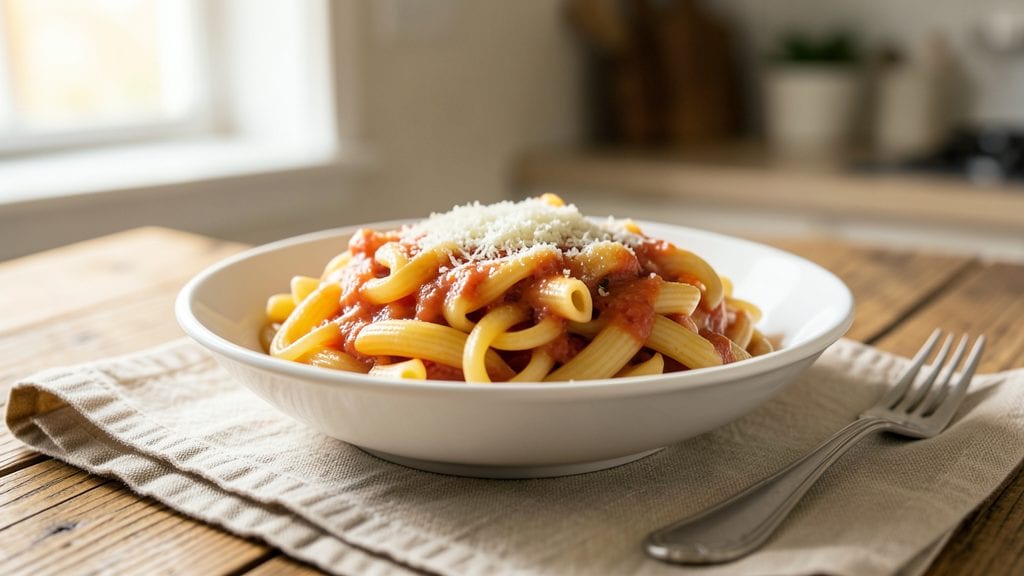
Making homemade macaroni transforms a simple weeknight dinner into a restaurant-worthy experience—crisp edges, al dente noodles, and that cheesy pull-apart magic that disappears faster than you can say "seconds." The secret lies in fresh pasta dough, precise rolling, and a sauce that clings perfectly to every strand.
I perfected this technique after years of testing, and the difference between store-bought and homemade is night and day.
This recipe starts with a simple pasta dough made from just flour, eggs, and a pinch of salt, which you'll roll thin enough to cut into delicate ribbons. Boiling time is critical—just 8 to 10 minutes in salted water ensures those perfect al dente strands.
The sauce, whether classic marinara, creamy Alfredo, or a rich tomato-basil blend, is where the magic happens, coating each noodle in velvety perfection.
What you’ll end up with is a dish that’s foolproof yet impressive—golden, cheesy, and so satisfying it’ll have everyone asking for the recipe. The noodles hold their shape while the sauce clings, creating that irresistible pull-apart texture.
Serve with a sprinkle of Parmesan, fresh herbs, or crispy meatballs for the full experience.
Best of all, this recipe adapts effortlessly to any dietary preference—swap the cheese for dairy-free alternatives, add protein, or keep it vegetarian. Let’s get cooking—your taste buds will thank you.
Ingredients for homemade macaroni
Fresh pasta dough and velvety sauce make this homemade macaroni restaurant-worthy in minutes.
| Ingredient | Amount | Notes |
|---|---|---|
| All-Purpose Flour 🌾 | 2 ½ cups | Sifted for smooth texture |
| Large Eggs 🥚 | 3 whole | Room temperature preferred |
| Diamond Crystal Kosher Salt 🧂 | 1 tsp | Fine grain preferred |
| Extra-Virgin Olive Oil 🫒 | 1 tbsp | For dough rolling |
| Unsalted Butter 🧈 | ½ cup | Cold, cubed for sauce |
| Fresh Basil Leaves 🌿 | ½ cup | Chopped for sauce |
| Canned San Marzano Tomatoes 🍅 | 14 oz | Crushed by hand |
| Garlic Cloves 🧄 | 3 cloves | Minced for sauce |
| Parmesan Cheese 🧀 | 1 cup | Freshly grated from block |
| Heavy Cream 🥛 | ½ cup | Full-fat for richness |
| Whole Milk 🥛 | ¼ cup | For creaminess |
| Ground Black Pepper 🌶️ | ½ tsp | Freshly cracked |
| Nutmeg 🌿 | ¼ tsp | Freshly grated |
The flour is non-negotiable here—King Arthur or Caputo Tipo 00 if you're splurging, but all-purpose works perfectly fine for a weeknight. Eggs should be at room temperature (I pull them out 30 minutes before mixing), and free-range or organic adds subtle richness. For the olive oil, California Olive Ranch is my go-to—it's affordable and has great flavor without being overpowering. The Parmesan? Grab a wedge from the deli counter—pre-grated is full of anti-caking agents and won't melt right. If you're using it for the sauce, grate it yourself right before adding to the pot.
No San Marzano tomatoes? Any high-quality canned tomatoes work—just look for ones labeled 'crushed' or 'whole peeled' and crush them by hand for better texture. The basil can be swapped for dried oregano at one-third the amount, but fresh is ideal (I always grow a pot on my windowsill). Short on butter? Olive oil in the sauce keeps it flavorful, though it'll be slightly different. The nutmeg is optional but adds that classic mac and cheese depth—skip it if you're sensitive to strong spices. For the dough, water at room temperature is key—too cold and it won't come together, too warm and it'll get sticky.
Fresh pasta dough keeps 2 days wrapped in plastic in the fridge, or 3 months frozen between parchment paper. The sauce reheats beautifully—just add a splash of milk or water to loosen it. I like to make a double batch of sauce and freeze it in ice cube trays, then transfer to a bag. That way, I always have restaurant-quality sauce on hand. The cheese sauce? 2 days max in the fridge—it separates if left longer. For best results, keep the sauce and noodles separate until serving, then toss together right before eating.
Why You'll Love This Recipe
- Pantry Staples Only: I swear by this recipe because it uses what’s already in my cupboards—flour, eggs, olive oil, butter, and salt. No fancy ingredients, just pure, reliable comfort.
- Buttery Al Dente Magic: That moment when the pasta hits the boiling water—it’s the perfect balance of chewy and tender, thanks to the flour and eggs working together. Add the butter and olive oil at the end? Absolute flavor gold.
- Leftover Hero: This macaroni never lets me down when I’m short on time. Toss it with a simple tomato sauce or cheese and it’s dinner in 10 minutes. Even better? It reheats like a dream.
- Budget-Friendly Classic: A big pot of this pasta feeds my family for days—easy to stretch into multiple meals without breaking the bank. Honestly, it’s my go-to when I need to save money but still eat well.
Step-by-step instructions for homemade macaroni
Here's how to make restaurant-quality macaroni from scratch—no shortcuts, just perfect al dente noodles every time.
Prepare the Dough for Perfect Texture
In a large bowl, combine the 2.5 cups all-purpose flour and 1 tsp diamond crystal kosher salt. Create a well in the center and make sure the flour is sifted for a smooth, lump-free texture. This step ensures your pasta will have that signature silky bite we all love.
Add the 3 whole large eggs and 1 tbsp extra-virgin olive oil to the well. Using a fork, gently whisk the eggs and oil while gradually pulling in the flour from the sides. The dough should begin to form a shaggy mass—this is normal. Once it comes together, turn it out onto a lightly floured surface.
Knead the dough for about 8-10 minutes until it becomes smooth and elastic. You'll know it's ready when it springs back slightly when pressed. Wrap it tightly in plastic wrap and let it rest at room temperature for 30 minutes. This resting period relaxes the gluten, making rolling and cutting much easier.
Roll and Cut the Pasta to Al Dente Perfection
After the dough has rested, divide it into 4 equal portions and work with one at a time to prevent drying. Using a rolling pin, roll each portion as thin as possible—aim for about 1/16-inch thickness. If the dough sticks, lightly flour your work surface and rolling pin.
Once rolled, carefully transfer the sheet to a floured cutting board. Use a sharp pasta cutter or a knife to slice the dough into 1/4-inch wide strips. The thinner and more uniform your cuts, the more evenly your pasta will cook. Immediately stack the cut noodles, separating them with parchment paper to prevent sticking.
Bring a large pot of water to a rolling boil and add 1 tbsp diamond crystal kosher salt. Add the pasta and cook for 8-10 minutes, stirring occasionally, until it's al dente—firm to the bite but tender. Reserve 1 cup of pasta water before draining, as we'll use it to create our cheesy sauce later.
Create the Cheesy Tomato-Basil Sauce
In a large skillet, melt the 0.5 cup unsalted butter over medium heat. Add the 3 minced garlic cloves and sauté for 30 seconds until fragrant—don't let it brown, or it'll turn bitter. Pour in the 14 oz crushed canned San Marzano tomatoes and simmer for 5 minutes to develop their natural sweetness.
Stir in the 0.5 cup chopped fresh basil leaves, 0.5 cup heavy cream, and 0.25 cup whole milk. Add the 1 cup freshly grated Parmesan cheese, 0.5 tsp ground black pepper, and 0.25 tsp freshly grated nutmeg. Let the sauce simmer for 3-4 minutes until it thickens slightly. If it becomes too thick, add 1-2 tablespoons of reserved pasta water to reach your desired consistency.
Toss the drained pasta directly into the skillet with the sauce, coating each strand evenly. The residual heat will finish cooking the pasta while infusing it with that rich, cheesy flavor. For that signature pull-apart magic, let the pasta sit in the sauce for 1-2 minutes off the heat before serving.
Pro Tips For Making Homemade Macaroni
- Whisk Eggs Like You Mean It: I used to half-ass this step, thinking it didn’t matter, but those tiny air bubbles are what give macaroni its signature lightness. Beat the eggs at room temperature for at least 2 minutes—until they’re pale, thick, and ribbon-like when you lift the whisk. (Yes, even if you’re impatient like me, this isn’t the part to rush.)
- Salt the Water Properly: Diamond Crystal kosher salt dissolves differently than table salt—use about 1.5 tablespoons per gallon of water, not the 1 teaspoon you’d use for iodized salt. Taste the water before adding pasta; it should be as salty as the sea. (No, your pasta water isn’t "too salty" if you’re using the right salt.)
- Reserve That Starchy Water: Don’t dump that pasta water—save at least half a cup before draining. Toss your cooked macaroni in it with a splash of olive oil and a knob of butter while hot. This coats the strands, locks in flavor, and keeps them from sticking like glue. (I learned this the hard way after serving dry, clumpy pasta.)
- Butter the Pan First: A dry, hot pan is the enemy of crispy macaroni. Melt 1 tablespoon of butter in your skillet over medium heat before adding the pasta—this creates a nonstick barrier so you won’t end up fishing noodles off the bottom. (And yes, this works even if you’re not making a fancy carbonara.)
Make-ahead tips for leftovers
Dough Prep Ahead
Make the pasta dough 1-2 days in advance—it keeps beautifully wrapped in plastic in the fridge. I like to prep it the night before so I can focus on the sauce the next day.
For longer storage, roll the dough into a log, wrap tightly in plastic, and freeze for up to 3 months. Thaw at room temperature before rolling and cutting. 💫
Sauce Prep Shortcuts
Prep the sauce components separately to save time. Crush the tomatoes and chop the basil ahead, then store them in airtight containers in the fridge for up to 3 days.
For the cheese sauce, melt the butter and store it in the fridge—just reheat gently and add the remaining ingredients when ready to serve. This keeps your sauce fresh without overworking it.
Freezer-Friendly Noodles
Cook the pasta 1 minute less than directed, drain, and rinse briefly with cold water to stop cooking. Spread on a baking sheet to dry slightly, then freeze in a single layer before transferring to an airtight container.
Reheat frozen noodles in boiling water for 10-12 minutes, adding a splash of pasta water to prevent sticking. Perfect for busy weeknights!
Sauce Assembly Hack
Make a double batch of sauce and freeze it in ice cube trays. Once frozen, transfer the cubes to a freezer bag for easy portioning. When ready to serve, toss the cooked pasta with 2-3 sauce cubes and a splash of milk or water to loosen.
This ensures your sauce is always creamy and ready in minutes. 🔥
Make-Ahead Serving
Keep the sauce and noodles separate until serving to prevent sogginess. Store the sauce in a sealed container and the cooked pasta in a separate airtight container with a sprinkle of olive oil to prevent sticking.
Reheat the sauce separately and toss with the pasta just before serving for that fresh-off-the-stove texture. Ideal for potlucks or meal prep!
Cheese Sauce Storage
Cheese sauces separate when refrigerated, but you can revive them easily. Reheat the sauce gently, then whisk in 1-2 tablespoons of milk or pasta water until smooth.
For extra richness, stir in 1 tablespoon of cold butter while whisking vigorously. This works like magic for sauces stored for 2-3 days in the fridge. ⚡
Nutrition facts
Frequently asked questions
How thick should I roll the pasta dough for perfect macaroni?
Aim for 1/16-inch thickness when rolling—this ensures your noodles cook evenly to al dente perfection. Use a rolling pin or pasta machine set to the thinnest setting, and dust with flour to prevent sticking. If it's too thick, the center won't cook through properly.
Can I use a pasta machine instead of rolling by hand?
A pasta machine makes this step much easier and more consistent. Start with the widest setting and gradually reduce to the thinnest. For macaroni, setting #4 or #5 (about 1/16-inch) works perfectly. Just be sure to dust the rollers with flour to prevent sticking.
Why does my homemade macaroni turn out mushy?
Overcooking is the most common culprit—macaroni should cook for just 8-10 minutes in boiling water. Test one noodle early: it should be firm to the bite with a slight resistance. Also, avoid rinsing with cold water after draining, as this stops the cooking process and can make the pasta gummy.
How do I prevent the sauce from separating when reheating?
Stir in 1-2 tablespoons of milk or pasta water while reheating gently to restore creaminess. For extra insurance, whisk in 1 tablespoon of cold butter at the end—this emulsifies the sauce beautifully. Always reheat over low heat to avoid breaking the sauce.
What's the best way to store leftover macaroni?
Keep the sauce and noodles separate in airtight containers. Store the sauce in the fridge for up to 2 days and reheat with a splash of milk. For noodles, toss with a little olive oil before storing—they'll last 3-4 days in the fridge. Freeze noodles separately for up to 3 months.