
Snacks
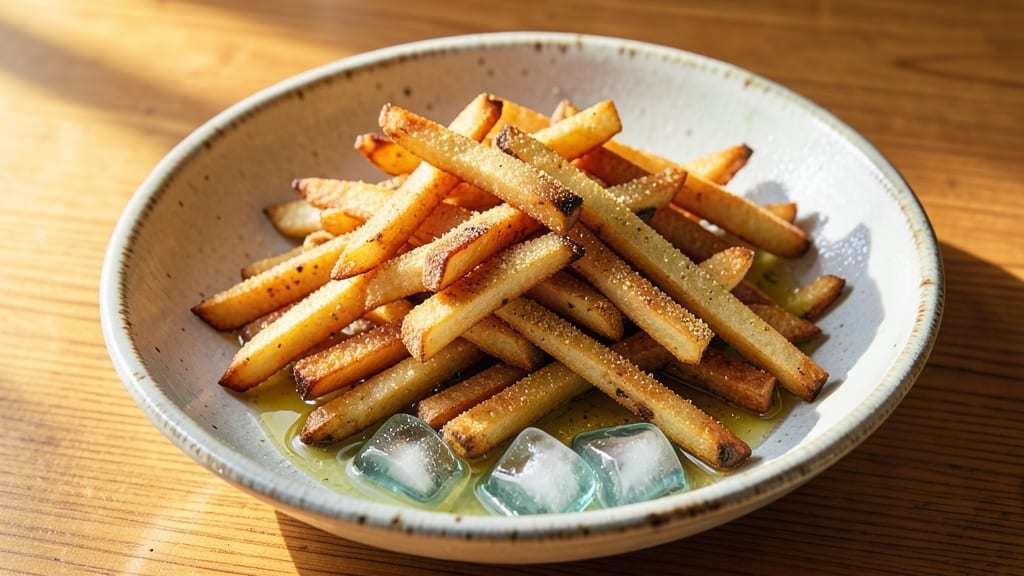
This Japanese long fries recipe delivers the perfect balance of crispy, stretchy fries that soak up sauce like a dream. The secret lies in precise cutting with a mandoline and careful frying—whether deep-fried or air-fried—to achieve that signature texture.
I've perfected this technique over countless batches, ensuring every fry is golden and satisfyingly crispy.
What sets these apart is their ability to hold sauce without falling apart, thanks to a light seasoning of salt and garlic powder that enhances their natural flavor. The key is patience during frying: medium heat and proper oil temperature make all the difference.
This isn't just a snack—it's a restaurant-quality experience you can recreate at home.
Imagine long, golden fries that stretch slightly when you bite into them, coated in rich tonkatsu sauce or creamy mayo. The contrast of crispy edges and tender centers creates a satisfying texture that pairs perfectly with any dipping sauce. Once you try these, store-bought fries won't compare.
Serve them as a standalone snack, alongside grilled meats, or as a fun appetizer for gatherings. The method is straightforward, but the results are anything but ordinary—crispy, flavorful, and impossible to resist. Let's get started on making these legendary fries!
Ingredients for japanese long fries
Perfectly crispy fries need just these 11 ingredients for restaurant-quality results at home.
| Ingredient | Amount | Notes |
|---|---|---|
| Russet Potatoes 🥔 | 2 lb | Large, uniform size preferred |
| Vegetable Oil 🫒 | 3 cups | High smoke point, like peanut oil |
| Table Salt 🧂 | 1 tbsp | Diamond Crystal preferred |
| Garlic Powder 🧄 | 1 tbsp | Freshly ground preferred |
| Ice ❄️ | 1 cup | Freshly chilled for rinsing |
| All-Purpose Flour 🌾 | ½ cup | For light dusting |
| Canola Oil 🫒 | ½ cup | For air frying option |
| Lemon Juice 🍋 | 1 tbsp | Freshly squeezed for brightness |
| White Pepper 🌶️ | ½ tsp | Substitute black pepper if needed |
| Tonkatsu Sauce 🍶 | ½ cup | For dipping, optional |
| Mayonnaise 🥛 | ¼ cup | For dipping, optional |
The potatoes are everything—Russet is non-negotiable for that signature stretch. Grab the longest, thinnest ones you can find, usually in the organic section at Whole Foods or the fresh produce aisle at Trader Joe's. Look for tubers that feel dense and heavy for their size—those are the ones that'll fry up perfectly. If you can't find long Russets, Yukon Golds work in a pinch, but they're more waxy. The ice water rinse is crucial—it removes excess starch so your fries stay crispy, not gummy. Trust me, skip it and you'll regret it later.
No vegetable oil? Peanut oil or canola oil work just as well—just make sure it's high smoke point. Running out of garlic powder? Fresh minced garlic at double the amount adds a whole new flavor dimension. The flour is just for dusting off excess moisture before frying, so any all-purpose brand will do. For the dipping sauces, tonkatsu sauce from an Asian market gives that authentic umami kick, but Worcestershire sauce mixed with ketchup works in a bind. And if you're air frying, spray with oil first—those fries won't crisp up without it.
Potatoes keep best in a cool, dark place for 2 weeks, but move them to the fridge 1 week before using for the crispiest results. The oil can be reused 2-3 times if you keep it at 350°F between uses. Store leftover fries in an airtight container with a paper towel to keep them crispy for 3 days. Pro tip: Reheat in the oven at 400°F for 5 minutes—microwaving kills all the crisp. And if you're making these for a crowd, double the batch—they disappear faster than you'd think.
Why You'll Love This Recipe
- No Chopping Needed: I just slice the potatoes into sticks—no peeling, no dicing, no fuss—then toss them straight into boiling water. The ice bath at the end keeps them crispy without any extra work.
- Garlic Crunch Magic: That simple garlic powder sprinkle? It’s the secret. The fries get this addictive, slightly nutty flavor that sticks to every bite, and honestly, it’s way better than store-bought seasoning.
- Game for Any Occasion: Serve them as a snack with a cold beer, pile them onto a burger, or turn them into a quick lunch with mayo and pickles. They’re my go-to for movie nights or lazy Sundays—no stress, just satisfaction.
- Budget Crispy Perfection: Russets are cheap, oil is cheap, and a bag of garlic powder lasts forever. You’ll get multiple meals out of one batch, and they reheat like a dream—crispy outside, warm inside, no soggy bits.
Step-by-step instructions for perfect Japanese long fries
Here's how to achieve that signature crispy-yet-stretchy texture Japanese fries are famous for.
Prepare the Potatoes for Maximum Crisp
Start by cutting the 2 lb russet potatoes lengthwise into ¼-inch thick sticks—this uniform thickness ensures even cooking. Soak the cut potatoes in cold water for 30 minutes to remove excess starch, which prevents soggy fries later. Drain thoroughly and pat completely dry with paper towels; any moisture left behind will steam instead of crisp.
Next, create a seasoning slurry by whisking together the 0.5 cup all-purpose flour, 1 tbsp garlic powder, 0.5 tsp white pepper, and 1 tbsp table salt in a large bowl. This dry blend will form a light crust that enhances flavor and texture. Toss the dried potato sticks in this mixture until they're evenly coated—you should see a fine dusting clinging to every surface.
Double-Fry for Ultimate Crispiness
Heat the 3 cups vegetable oil in a deep fryer or heavy pot to 325°F—this lower temperature cooks the interior gently without burning the exterior. Fry the potato sticks in batches for 4-5 minutes until they're soft but not browned. Remove with a slotted spoon and drain on a wire rack or paper towels. The goal here is to cook them through without developing color yet.
Increase the oil temperature to 375°F for the second fry. Working in batches again, fry the potatoes for 2-3 minutes until they achieve a golden brown color and develop that signature crispy exterior. You'll know they're perfect when they float freely in the oil—this indicates they're fully cooked through. Transfer to a paper towel-lined tray to drain excess oil.
Finish with Acidic Brightness
While the fries are still piping hot, toss them with the 1 tbsp lemon juice. This final step is crucial—it cuts through the richness of the fried potatoes, balancing flavors and adding that signature tang. The acidity also helps maintain crispness by preventing the starches from reabsorbing moisture. Work quickly so the fries don't cool down completely.
For serving, arrange the hot fries on a platter and let everyone customize their dipping sauces. Offer the 0.5 cup tonkatsu sauce for its sweet-savory balance and the 0.25 cup mayonnaise for a classic creamy option. The contrast between the crispy exterior and tender interior is what makes these fries truly exceptional.
Optional Air Fryer Method
For a lighter version, preheat your air fryer to 375°F and lightly brush the seasoned potatoes with the 0.5 cup canola oil. Arrange them in a single layer without overcrowding, then air fry for 12-15 minutes, shaking the basket every 5 minutes. The result will be crispy on the outside with a slightly softer interior—still delicious, just with less oil.
Remember, the secret to perfect Japanese long fries lies in that second fry—it's what creates that magical crispy-yet-stretchy texture that makes them so addictive. Serve immediately while they're at their peak crispness for the full experience.
Pro Tips For Making Japanese Long Fries
- CUT POTATOES LENGTHWISE: Japanese long fries rely on those signature thin, elongated strips—don’t just hack them randomly. Use a sharp knife to slice the Russets into ¼-inch thick planks first, then cut those into 2-inch-long batons. The wider surface area crisps faster and more evenly, and they hold up better in the ice bath later.
- FRY TWICE, NOT ONCE: I used to skimp on the second fry, thinking it was optional. Wrong. After the initial fry (until golden at 325°F), let them cool 5 minutes, then hit them again at 375°F for 2–3 minutes. That second pass seals the crisp and locks in that addictive crunch. (Yes, it’s extra work—but your fries will betray you if you skip it.)
- SALT BEFORE FRYING: Toss the raw potato strips with salt and garlic powder before they hit the oil—this seasoning gets baked into the starchy goodness, not just sprinkled on top. Use about 1 tsp salt per pound of potatoes, and don’t skip the garlic powder (it’s the soul of this dish). Trust me, your first bite will taste bland if you wait.
- ICE BATH IMMEDIATELY: The second you pull the fries from the oil, plunge them into an ice bath—no waiting. This stops the cooking and preserves that crisp texture while the starches set. Use enough ice to cover the fries completely, and give them 5 minutes. (Pro move: Drain in a colander for 30 seconds afterward to avoid soggy piles.)
Storing and reheating this recipe
Refrigerator Storage
Store leftover Japanese long fries in an airtight container with a paper towel layered between them to absorb moisture. Keep them refrigerated at 40°F or below for up to 3 days—this maintains their crispiness far better than plastic bags.
I always use glass containers because they don't absorb odors and allow me to see the fries clearly. 🥔
Freezer Preservation
For longer storage, freeze fries in a single layer on a parchment-lined tray for 1 hour before transferring to a freezer bag. This prevents clumping. They'll keep for 2 months—just thaw overnight in the fridge before reheating.
I avoid stacking them directly in bags because they tend to stick together like glue. ❄️
Oven Reheating
My preferred method is reheating at 400°F for 5 minutes—this restores that satisfying crunch without turning them greasy. Spread fries on a baking sheet in a single layer and toss with a light spray of canola oil before reheating.
The high heat works quickly to revive the crispy exterior while keeping the interior tender. 🔥
Air Fryer Revival
For a lighter option, air fry at 400°F for 3-4 minutes, shaking the basket halfway. This method adds minimal oil while bringing back that signature crunch. I always preheat the air fryer for 3 minutes first—this ensures even heating and prevents soggy spots.
The quick cook time makes this my go-to for last-minute reheating. ✨
Microwave Emergency
When I'm in a rush, I cover fries with a damp paper towel and microwave on high for 20 seconds, then flip and repeat. This isn't perfect—expect slightly softer results—but it's better than cold fries. For best texture, always reheat from frozen rather than thawed. 💡
Sauce Strategy
Reheat dipping sauces separately to avoid soggy fries. Warm tonkatsu sauce in a small saucepan over low heat for 2 minutes, and mayo can be gently microwaved for 10 seconds. The contrast of crispy fries with warm sauce is what makes this dish truly irresistible. 🍶
Nutrition facts
Frequently asked questions
Why do Japanese long fries have that signature stretchy texture?
The stretch comes from using long, thin russet potatoes cut to ¼-inch thickness and the double-frying method. The first fry at 325°F cooks them gently inside, while the second fry at 375°F creates a crispy exterior that stretches slightly when bitten. The starch content in russets also plays a key role in this unique texture.
Can I make these fries without a deep fryer?
Use a heavy pot with 3 cups oil and maintain the 325°F→375°F temperature shift. For an oil-free option, try the air fryer method at 375°F for 12-15 minutes, shaking every 5 minutes—just brush with ½ cup canola oil first. The texture won't be identical, but they'll still be delicious!
What's the best way to keep fries crispy after frying?
Transfer fries to a wire rack or paper towel-lined tray immediately after frying to drain excess oil. Then, toss with 1 tbsp lemon juice while hot—this prevents moisture reabsorption. Serve straight from the fryer or reheat in the oven at 400°F for 5 minutes to restore crispness. Never store them in plastic bags!
Can I use sweet potatoes instead of russets?
Sweet potatoes won't give the same texture—they're denser and less starchy, so they won't stretch or crisp as well. For the authentic experience, stick with russet potatoes. If you must substitute, try Yukon Golds (they're waxier but still work in a pinch), but expect slightly different results.
How do I prevent soggy fries?
Soggy fries happen from moisture—so pat potatoes completely dry after soaking, avoid overcrowding in oil, and never cover them while cooling. The 30-minute ice water soak removes excess starch, and the lemon juice toss at the end helps maintain crispness. Also, fry in batches to keep oil temperature stable!