
Sauces & Condiments
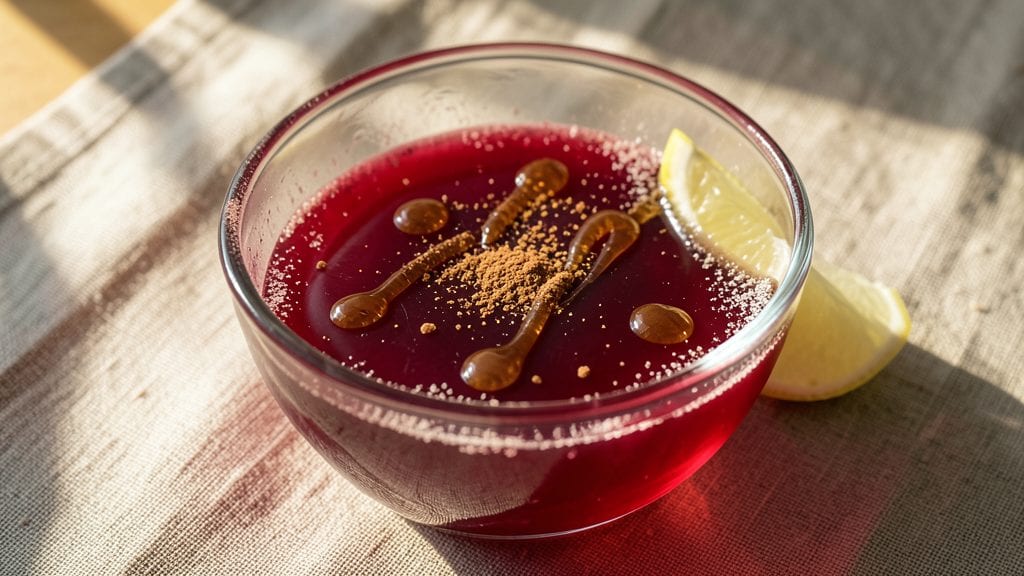
Creating a low-sugar pomegranate jelly that delivers vibrant flavor without excess sweetness is entirely possible—and this recipe proves it. The secret lies in balancing natural pomegranate tartness with just enough honey or stevia to enhance, not overpower, the ruby-red brilliance.
I developed this method after years of experimenting with fruit preserves, and the result is a spreadable jelly that’s rich in antioxidants yet guilt-free.
This recipe relies on a precise ratio of pomegranate juice to natural sweeteners, along with a touch of pectin for perfect gel consistency. Unlike traditional jellies that rely on high sugar content, this version uses honey or stevia to maintain sweetness while keeping carbs in check.
The process is straightforward: reduce the juice to intensify flavor, add your chosen sweetener, and cook with pectin until it reaches the ideal spreadable texture.
What you’ll end up with is a ruby-red jelly that’s bold in flavor, smooth in texture, and perfectly balanced in sweetness. It’s ideal for topping yogurt, drizzling over pancakes, or pairing with cheese boards.
The best part? It stores beautifully in the fridge for up to two weeks, so you can enjoy the taste of pomegranate season all year round.
Whether you’re watching sugar intake or simply craving a lighter alternative, this jelly delivers restaurant-quality results without the guilt. The key is patience—letting the flavors meld during the reduction phase ensures every spoonful is packed with natural sweetness and depth. Let’s get started!
Ingredients for low sugar pomegranate jelly
Eight simple ingredients transform tart pomegranate into vibrant, guilt-free ruby-red jelly.
| Ingredient | Amount | Notes |
|---|---|---|
| 100% Pomegranate Juice 🍇 | 2 cups | No added sugar, 100% pure |
| Raw Honey 🍯 | ½ cup | Local preferred for flavor |
| Powdered Pectin 🍎 | 2 ½ tbsp | High-methoxyl, like Ball RealFruit |
| Lemon Juice 🍋 | 1 tbsp | Freshly squeezed, for acidity |
| Pure Stevia Powder 🌿 | ½ tsp | Optional, for zero-sugar option |
| Ground Cinnamon 🌶️ | ¼ tsp | For subtle warmth (optional) |
| Diamond Crystal Kosher Salt 🧂 | ⅛ tsp | Fine grain, for balance |
| Fresh Ginger 🌿 | 1 tsp | Finely grated, for depth |
The pomegranate juice is non-negotiable—100% pure, no added sugar is key for authentic flavor. Trader Joe's and Whole Foods carry excellent brands, but check the label for hidden sweeteners. Raw honey adds natural sweetness without overpowering the tartness, though local, unprocessed honey has better flavor. For the pectin, Ball RealFruit is my go-to—it’s reliable and dissolves smoothly. Fresh lemon juice brightens the flavor, so don’t skip it. If you prefer zero sugar, stevia works well, but taste as you go—it’s potent!
No honey? Maple syrup at half the amount is a decent swap, though it adds a different depth. Skip the stevia? Use 1/4 cup more honey, but reduce the pectin by 1 tbsp to avoid gumminess. The ginger is optional but adds a lovely warmth—freshly grated is best, but powdered works in a pinch. No cinnamon? Cardamom or vanilla extract can add complexity. For the salt, Diamond Crystal kosher dissolves easily, but any fine sea salt works. Always taste before adding more sweetener—pomegranate’s natural tartness needs just enough balance, not drowning.
This jelly thickens as it cools, so test it in a chilled bowl before storing. Keeps in the fridge for 2-3 weeks in a sealed jar, or 6 months if frozen. For gifting, portion into small jars—they’re perfect for holiday presents. If it crystallizes, just warm it gently in a water bath. The flavor only gets better over time, so make extra!
Why You'll Love This Recipe
- No-Fuss Simmer Time: I swear by this recipe because it’s basically hands-off after the initial mix. Just toss the pomegranate juice, honey, and pectin into a pot, bring it to a boil, and let it work its magic—no stirring, no fuss. Even my toddler could "help" (mostly by licking the spoon).
- Tart-Sweet Magic: That bright pomegranate punch, balanced with just a whisper of honey and stevia, is ridiculously addictive. The lemon juice cuts through the sweetness so cleanly—it’s the kind of flavor that makes you reach for seconds without guilt.
- Jelly for Everything: Serve it on toast with Greek yogurt, drizzle it over cottage cheese, or even mix it into sparkling water for a fancy mocktail. Honestly, I’ve used it in everything from breakfast to dessert, and it never feels out of place.
- Lasts All Week: A single batch keeps in the fridge for ages, and it’s way cheaper than store-bought jellies packed with sugar. Plus, the pectin keeps it thick and perfect—no weird watery mess after days of sitting. My secret weapon for lazy mornings.
Step-by-step instructions for low sugar pomegranate jelly
Here's how to create a vibrant, naturally sweetened pomegranate jelly with perfect set and texture.
Prepare the Base Mixture
In a medium saucepan, combine the 2 cups 100% pomegranate juice, 0.5 cup raw honey, and 1 tsp finely grated fresh ginger. Stir gently to integrate the ginger's aromatic depth without overworking the mixture. The juice should be vibrant ruby-red, indicating its pure, unsweetened quality. Here's the thing—using raw honey preserves the natural enzymes that help with the gelling process later, while the ginger adds subtle warmth that balances the tartness of the pomegranate.
Bring the mixture to a gentle simmer over medium heat, then reduce to low heat and let it cook for 10 minutes. You'll notice the mixture begins to reduce slightly, becoming slightly more concentrated. This step is crucial for developing the jelly's intensity and ensuring proper gel formation later. Keep the heat low to prevent scorching—you want to maintain the natural color and delicate flavors.
Add Acid and Stabilizers
After the initial reduction, remove the pan from heat and carefully whisk in the 1 tbsp lemon juice, 0.5 tsp pure stevia powder, and 2.5 tbsp powdered pectin. The lemon juice provides the acidity needed for the pectin to activate properly, while the stevia offers a touch of sweetness without significantly altering the natural fruit flavor. Here's where precision matters: sprinkle the pectin directly over the mixture while whisking vigorously to prevent clumping.
Return the pan to medium heat and bring the mixture back to a full rolling boil. This is the moment that matters: you need to reach a full boil and maintain it for exactly 1 minute. The pectin requires this intense heat to fully activate and create that perfect gel structure. Use a candy or instant-read thermometer to verify it reaches 220°F—this ensures proper setting without overcooking the delicate fruit flavors.
Incorporate Seasonings and Test for Doneness
Immediately after the 1-minute boil, remove the pan from heat and whisk in the 0.25 tsp ground cinnamon and 0.125 tsp diamond crystal kosher salt. The cinnamon adds subtle warmth that complements the tart pomegranate, while the salt enhances all the flavors. Stir well to distribute these seasonings evenly throughout the mixture. Here's the thing—don't skip this step, as the cinnamon and salt are what elevate this from a simple fruit jelly to something truly special.
To test for doneness, perform the plate test: spoon a small amount of the jelly onto a chilled plate. Let it sit for 1 minute, then gently push the jelly with your finger. If it wrinkles and holds its shape, it's ready. If it spreads too much, return it to the heat and boil for another 30 seconds, then retest. This ensures you achieve that perfect gel consistency without overcooking the delicate fruit flavors. The jelly should be thick enough to coat the back of a spoon but still flow smoothly.
Jar and Set the Jelly
Quickly transfer the hot jelly to clean, sterilized 4-ounce jars, filling them to within ¼ inch of the rim. This prevents overflow during the setting process. Tap the jars gently on the counter to eliminate any air bubbles that might interfere with the gel formation. The reason we leave space is that the jelly will continue to contract slightly as it cools and sets.
Seal the jars with lids and let them cool at room temperature for 30 minutes. Then, refrigerate for at least 4 hours—or until fully set. You'll know it's properly set when the jelly holds its shape when you try to move it with a spoon. The longer it sets, the firmer the texture becomes, but it should still have that beautiful, vibrant ruby-red color and glossy finish. This low-sugar version sets beautifully while maintaining its natural fruit flavor and brilliant color.
Pro Tips For Making Low Sugar Pomegranate Jelly
- Boil Like a Pro: Hit full rolling boil for exactly 1 minute—no more, no less—after adding pectin. I learned this the hard way: under-boiling leaves jelly too weak, over-boiling burns the honey’s delicate flavor. Set a timer, and resist the urge to peek.
- Strain the Juice: Use a fine-mesh sieve or cheesecloth to strain your pomegranate juice first. Pulp turns jelly grainy, and no one wants to chew seeds in their jam. Takes 2 minutes but saves hours of frustration later.
- Measure Stevia Precisely: Stevia powder is not like sugar—use a kitchen scale for accuracy. Too much makes jelly bitter; too little leaves it flavorless. A 1:1 ratio by weight (like 1 tsp stevia per 1 cup juice) works, but taste as you go.
- Chill Before Testing: Let the jelly cool 10 minutes before checking set. I used to rush this and scraped jars of runny mess. A quick ice bath speeds it up if you’re impatient, but don’t skip the wait—it’s the only way to know for sure.
Regional styles of this dish
Persian Ruby Delight
In Iran, pomegranate jelly—called anār murabba—is a staple during Nowruz, the Persian New Year. Here, they use rose water (about ½ tsp) instead of stevia, adding floral depth. I’ve adapted this by reducing the honey to ¼ cup and adding 1 tsp rose water after the boil.
Serve it with fresh bread or as a topping for saffron rice—the contrast of tart and floral is divine. 🌹
Mediterranean Citrus Twist
Greek and Turkish cooks often infuse their pomegranate jellies with orange zest (about 1 tbsp) and a splash of orange juice (replace ½ the lemon juice). Swap the cinnamon for ½ tsp ground cardamom to echo Middle Eastern flavors.
This version pairs beautifully with feta cheese or as a glaze for grilled lamb chops. The citrus brightens the tartness, making it a refreshing spread for summer. 🍊
Indian Spiced Version
In India, pomegranate jelly (anardana achar) often includes black salt (kala namak) for a tangy kick. Use ¼ tsp kala namak instead of kosher salt, and add ½ tsp ground cumin after the boil.
The cumin adds earthiness that balances the fruit’s tartness. Serve it with samosas or as a chutney with dal makhani. The spice profile is bold but harmonious. 🌶️
Scandinavian Berry Fusion
Nordic cooks love combining pomegranate with lingonberries (about ½ cup lingonberry jam mixed into the reduced juice). Swap honey for maple syrup and add ½ tsp vanilla extract for warmth.
This jelly is perfect with smoked salmon or as a topping for cardamom buns. The berry fusion adds a rustic, slightly sweet-tart complexity. ❄️
Modern Zero-Sugar Adaptation
For a completely sugar-free version, replace honey with ½ cup monk fruit sweetener and reduce pectin to 2 tbsp. Add 1 tsp chia seeds to the jars before sealing—they naturally thicken as they absorb liquid.
This works best for keto or diabetic diets and keeps the jelly’s vibrant color. Store in the fridge for up to 3 weeks due to the absence of preservatives. 💪
Gift-Worthy Presentation
For holiday gifting, layer the jelly in mini mason jars with edible gold leaf or dried pomegranate seeds on top. Add a ribbon and a handwritten tag with the regional style (e.g., "Persian Rose Jelly").
These make stunning presents for wedding favors or housewarming gifts. The visual appeal elevates the jelly from a simple spread to a luxurious treat. 🎁
Nutrition facts
Frequently asked questions
Can I use bottled pomegranate juice instead of fresh?
Yes, but choose a 100% pure, no-sugar-added bottled juice for best results. Avoid brands with added sweeteners or preservatives, as they can interfere with the gelling process. The flavor will be slightly less vibrant, but the texture will still set properly with the same pectin ratio.
How do I adjust the sweetness for different dietary needs?
For keto diets, replace honey with ½ cup monk fruit sweetener and reduce pectin to 2 tbsp. For diabetics, use stevia or erythritol (½ tsp = 1 tbsp honey). Always taste after the boil—pomegranate's natural tartness needs just enough balance, not overpowering sweetness.
Why did my jelly turn out too runny?
This usually happens from undercooking the pectin or insufficient acidity. Reheat the jelly to a full boil for 30 more seconds, then retest with the plate method. If needed, add ½ tsp lemon juice and ½ tsp pectin, boil for another 1 minute, then jar immediately.
Can I make this jelly without a thermometer?
Yes! Watch for a rolling boil that can't be stirred down for 1 full minute. The mixture should bubble vigorously and maintain that boil without interruption. This typically reaches the needed 220°F for proper pectin activation.
What's the best way to store and preserve this jelly?
Store in a sealed jar in the fridge for up to 3 weeks. For longer storage, freeze for 6 months—leave 1-inch headspace to prevent cracking. Thaw overnight in the fridge. The flavor actually improves with time as the pomegranate's natural compounds meld.