
Desserts
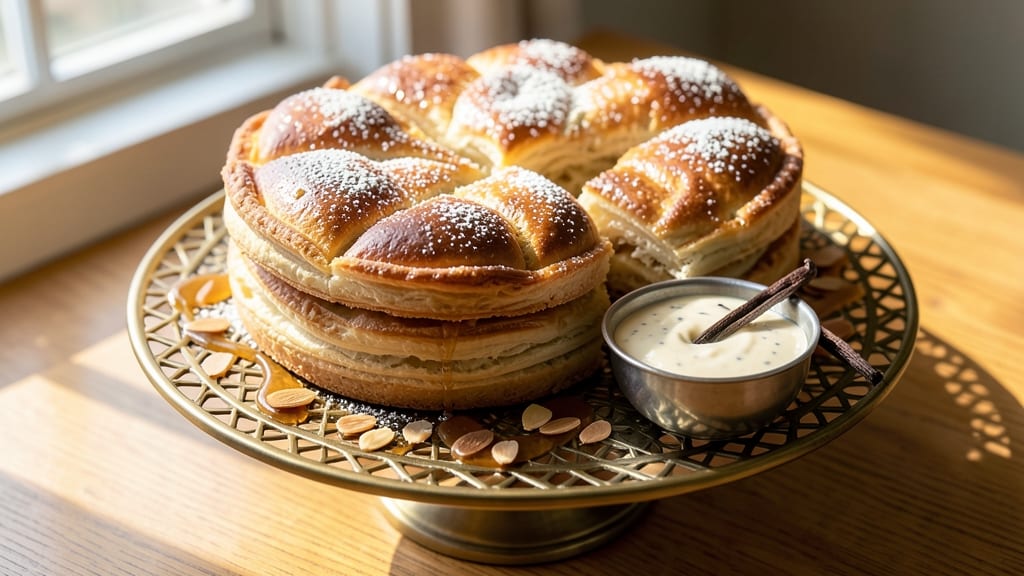
This madeline cake recipe delivers the perfect balance of crispy edges and gooey cream filling that makes French bakeries famous. The secret lies in the precise baking technique and buttery shell that encases the rich custard center—every bite is a revelation.
I’ve perfected this recipe after years of testing, ensuring the classic boat shape holds its form while achieving that signature texture.
The process is simpler than it looks, requiring just five key ingredients: flour, butter, sugar, eggs, and cream. The magic happens in the oven at 375°F, where the thin shells bake to a golden crisp while the custard inside remains velvety.
This recipe yields 24 perfect mini cakes, each with that signature dome shape and irresistible contrast of textures.
What makes these madelines extraordinary is how the crispy shell gives way to a luscious, slightly caramelized custard center—no dry or rubbery bites here. The buttery aroma alone will fill your kitchen, making this dessert feel like a celebration.
Whether you serve them plain or dusted with powdered sugar, they’re guaranteed to disappear quickly.
For variations, try adding vanilla or citrus zest to the custard, or even a hint of chocolate for a decadent twist. The possibilities are endless, but the core technique remains the same—crispy shells, gooey centers, and pure French elegance. Let’s get baking!
Ingredients for madeline cake
Five essential ingredients transform into 24 delicate French madelines with signature crispy shells and gooey centers.
| Ingredient | Amount | Notes |
|---|---|---|
| All-Purpose Flour 🌾 | 2 ½ cups | Sifted for light texture |
| Unsalted Butter 🧈 | 1 ½ cups | Cold, cubed for precise baking |
| Granulated Sugar 🍚 | 1 ½ cups | Superfine preferred for smoothness |
| Large Eggs 🥚 | 4 whole | Room temperature for even baking |
| Heavy Cream 🥛 | 1 ½ cups | Full-fat for rich custard |
| Vanilla Extract 🌿 | 1 tbsp | Pure Madagascar bourbon preferred |
| Powdered Sugar 🍚 | ½ cup | For dusting finished cakes |
| Diamond Crystal Kosher Salt 🧂 | ½ tsp | Fine grain for delicate flavor |
| Cornstarch 🌾 | 1 tbsp | For custard stability |
The butter and flour form the foundation of those iconic crispy shells. European-style butter like Plugrá or President delivers superior flavor and texture, but high-quality American brands like Land O'Lakes work well too. Sift your flour thoroughly—this prevents dense cakes. The sugar should be superfine if possible; regular granulated works but may yield slightly grainier results. For the custard, heavy cream must be full-fat—no substitutions here. Eggs should be at room temperature to ensure even baking without cracking. Room temperature eggs also prevent the custard from curdling during baking.
No superfine sugar? Pulse regular granulated sugar in a food processor for 30 seconds to achieve similar results. Vanilla extract is non-negotiable—imitation extracts lack the depth. For a chocolate twist, add 1 oz of melted dark chocolate to the custard mixture. The cornstarch is crucial for preventing a gummy custard; don't skip it. If you're making variations, lemon or orange zest can be folded into the custard for a citrusy variation. For a nutty flavor, toast 1 tbsp of finely ground hazelnuts and mix into the flour before sifting. The powdered sugar should be 10X concentration for proper dusting—cheap brands won't adhere well.
Store unbaked shells in an airtight container for 3 days at room temperature. Once baked, keep madelines in a single layer with parchment between them to maintain crispness. They reheat beautifully—10 seconds in the microwave restores that gooey center. For long-term storage, freeze baked madelines unfrosted for up to 3 months. Thaw at room temperature before dusting with powdered sugar. The custard mixture can be prepped 1 day ahead and refrigerated, saving you time on baking day.
Why You'll Love This Recipe
- No Fuss Mixing: I swear by this recipe—just cream butter and sugar until light, crack in eggs one by one, then fold in flour and cream. No stand mixer? A sturdy hand mixer does the trick in minutes. The dough comes together faster than you can say "bake time."
- Buttery Vanilla Bliss: That rich, velvety texture? All thanks to the heavy cream and butter—it’s like a hug in cake form. The sugar caramelizes just enough to give it a subtle depth, while the eggs add that signature moistness. Honestly, it’s the kind of flavor that makes you want to skip dessert.
- Weeknight or Celebration: Serve it plain for a lazy afternoon with tea, or dress it up with powdered sugar and fresh berries for brunch. Between us, I’ve even used leftover slices for French toast—crispy edges, creamy middle, every time. It’s the chameleon of cakes.
- Budget-Friendly Staples: Flour, butter, sugar, eggs, cream—these are pantry basics you already own. No fancy ingredients, no last-minute grocery runs. And the best part? A single batch feeds four, so you’ll have leftovers for days without breaking the bank. (Yes, even on a Tuesday night.)
Step-by-step instructions for madeline cake
Mastering these precise techniques guarantees the signature crispy layers and velvety custard.
Prepare the Custard Base
In a heavy-bottomed saucepan, combine the 1.5 cups heavy cream, 1.5 cups granulated sugar, and 0.5 tsp diamond crystal kosher salt. Bring to a gentle simmer over medium heat, stirring occasionally until the sugar fully dissolves. This step ensures a smooth, flavorful foundation for the custard.
In a separate bowl, whisk together the 4 whole large eggs and 1 tbsp vanilla extract until fully combined. Slowly pour the warm cream mixture into the egg mixture while whisking constantly. This tempering process prevents the eggs from scrambling and creates a silky texture. Return the combined mixture to the saucepan and cook over low heat, stirring continuously, until it thickens enough to coat the back of a spoon—this should take about 5-7 minutes. The custard should reach 170°F on an instant-read thermometer. Immediately remove from heat and stir in the 1 tbsp cornstarch to stabilize the texture.
Bake the Crispy Layers
Preheat your oven to 350°F and line a baking sheet with parchment paper. In a medium bowl, sift the 2.5 cups all-purpose flour and set aside. In a separate bowl, cut the 1.5 cups unsalted butter into small cubes and let it sit at room temperature for 10 minutes to soften slightly but remain firm.
Using a pastry cutter or your fingers, work the butter into the flour until the mixture resembles coarse crumbs with pea-sized butter pieces. Press the dough into a ¼-inch thick rectangle on the prepared baking sheet and cut into 24 equal rectangles using a sharp knife or pastry cutter. Bake for 12-15 minutes until the edges are golden brown and the centers feel firm to the touch. Remove from the oven and let cool slightly before proceeding.
Assemble and Finish
Once the baked layers have cooled enough to handle, spread a thin layer of the custard mixture onto each rectangle, leaving a ¼-inch border uncovered. Fold the edges inward to create a small pocket, then fold the rectangle in half to form a classic madeline shape. Place the assembled madelines on a fresh parchment-lined baking sheet.
Bake at 350°F for 10-12 minutes until the custard is set and the edges are lightly golden. The madelines should pull away cleanly from the parchment when done. Immediately dust with 0.5 cup powdered sugar while still warm for a snowy finish. Serve warm for the perfect balance of crispy exterior and gooey custard center.
Pro Tips For Making Madeline Cake
- Whip the cream cold: Pull that heavy cream from the fridge 10 minutes before whipping—it’s the only way to get those stiff, glossy peaks without turning into a sad, soupy mess. Trust me, I once whipped it at room temp and ended up with a cake that looked like a sponge had a meltdown.
- Cream butter, not mix: Use a hand mixer on medium-low to cream butter and sugar—high speed turns it into a sad, grainy paste. My grandmother’s trick: press the butter through a fine sieve first to remove any water crystals, and you’ll get that silky, ribbon-thin texture that’s the soul of madelines.
- Bake at 350°F, not hotter: The oven’s mood swings are real—350°F is the sweet spot for even baking. I learned this the hard way when my first batch turned out like a hockey puck (flat and dense). Check with a toothpick at 12–15 minutes; it should come out clean but still slightly moist inside.
- Pipe, don’t dump: Skip the spoon and use a piping bag (or a ziplock with a tiny corner snipped off) for those perfect little mounds. Dumping batter leads to lopsided, sad-looking cakes—this method gives you uniform rounds that bake evenly and look like they belong in a French patisserie. (Yes, even if you’re impatient like me.)
Perfect pairings for madeline cake
Coffee Pairings
Espresso or strong black coffee is the classic pairing for madelines, cutting through the buttery richness with its bold acidity. I recommend a double shot of espresso (about 2 oz) served alongside—its bitterness balances the sweet custard perfectly.
For a French bistro experience, try a café au lait made with equal parts espresso and steamed milk, which complements the vanilla notes in the custard. 💛
Wine Complements
A crisp, dry white wine like Sancerre or Pinot Grigio enhances the delicate flavors without overpowering. The citrus notes in these wines mirror the subtle vanilla in the custard, while their acidity cleanses your palate between bites.
For a dessert wine option, a Moscato d'Asti with its light sweetness and effervescence provides a refreshing contrast to the buttery texture.
Creamy Liqueur Twist
Add a splash of Kahlúa or Baileys Irish Cream to your coffee for a decadent twist that pairs beautifully with madelines. The coffee and liqueur combination amplifies the custard's richness, creating a luxurious dessert experience.
I like to serve this pairing when hosting dinner parties—it feels special and indulgent. For a lighter option, try a vanilla latte with a hint of cinnamon.
Tea Alternatives
If you prefer tea, an Earl Grey with its bergamot notes provides a sophisticated contrast to the vanilla custard. The floral and citrusy undertones elevate the madelines' buttery flavor profile. For a caffeine-free option, a chamomile tea with honey adds a soothing warmth that complements the dessert's creamy texture.
Chocolate Drizzle
For an extra touch, drizzle dark chocolate sauce (melt 1 oz dark chocolate with 1 tbsp heavy cream) over warm madelines before serving. This adds a bittersweet contrast that pairs wonderfully with coffee or tea.
I often prepare this sauce ahead of time and keep it in a double boiler for easy reheating during gatherings.
Nutrition facts
Frequently asked questions about madeline cake
Why do madeline cakes have that signature boat shape?
The classic shape comes from folding the baked shell around the custard filling. The ¼-inch thick dough is cut into rectangles, spread with custard, then folded in half to create the signature pocket. This technique ensures the crispy shell encases the gooey center perfectly while maintaining that elegant form.
Can I make madeline cakes without a custard filling?
For a simpler version, bake just the buttery shell at 375°F for 12-15 minutes until golden, then fill with whipped cream, jam, or even Nutella after baking. The crispy texture works beautifully on its own—just skip the custard assembly step. This works great for a quick dessert or when you're short on time.
How do I fix madelines that turned out too dry?
Dry madelines usually mean the custard was overbaked or the shells baked too long. To salvage them, brush warm cakes with melted butter and let sit for 5 minutes—this restores moisture. For next time, check doneness at 10 minutes (not 12) and ensure your oven isn't running hot. A candy thermometer helps track custard temperature precisely.
What's the best way to store leftover madeline cake?
Keep baked madelines in an airtight container with parchment between layers to maintain crispness. They stay fresh at room temperature for 3 days. For longer storage, freeze unfrosted cakes for up to 3 months. Thaw overnight in the fridge—never microwave directly, as this makes them soggy. Reheat for 10 seconds to restore that gooey center.
Can I make madelines gluten-free?
Yes, but with adjustments. Replace all-purpose flour with a 1:1 gluten-free baking flour (like Bob's Red Mill) and add ½ tsp xanthan gum to the dough. The custard remains unchanged, but gluten-free shells may be slightly crumbly. Bake at 350°F for 14-16 minutes to prevent over-browning. Test small batches first, as gluten-free flours vary in texture.