
Breakfast & Brunch
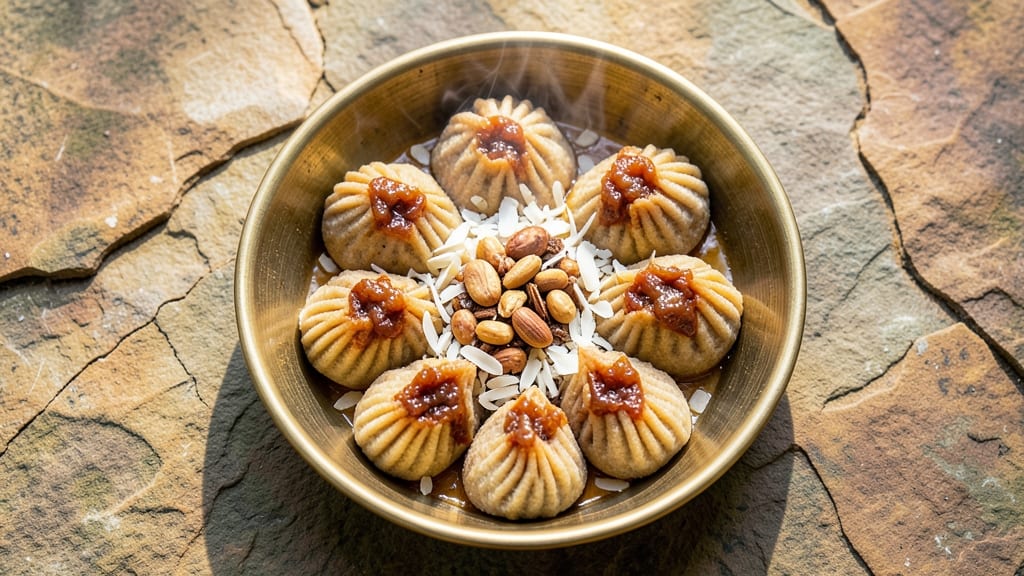
This no-cook modak recipe transforms simple ingredients into delicate, bite-sized sweet rice pockets filled with nutty cardamom goodness—no oven required. The key lies in precise measurements and layering flavors, creating a dessert that tastes freshly made yet requires minimal effort.
I developed this version after years of perfecting the traditional method, ensuring every bite delivers the perfect balance of sweetness and aromatic spices.
The beauty of this recipe is its simplicity: rice flour, coconut, jaggery, and cardamom work together to create a texture that's tender yet sturdy enough to hold its shape.
Unlike traditional modak that requires frying, this version relies on a clever binding technique that eliminates the need for heat while maintaining that signature crisp-edged, soft-centered structure. The filling's nutty flavor comes from toasted nuts and warm cardamom, which infuse the rice pockets with each bite.
What you'll achieve is a batch of no-bake modak that's ready in just 30 minutes, with no cooking required. The jaggery provides natural sweetness while keeping the texture firm, and the coconut adds a subtle richness that complements the cardamom perfectly.
These sweet bites stay fresh for up to 5 days when stored properly, making them ideal for festive occasions or quick dessert cravings.
Perfect for Diwali celebrations, temple offerings, or satisfying sweet tooth moments, this recipe delivers restaurant-quality results without the fuss. The method is foolproof, and the ingredients are easy to find, making it accessible for both beginners and experienced bakers alike. Let's get started!
Ingredients for no cook modak
Twelve simple ingredients create delicate, no-bake modak with restaurant-quality texture and aroma.
| Ingredient | Amount | Notes |
|---|---|---|
| Rice Flour 🍚 | 2 cups | Fine grind for smooth texture |
| Shredded Coconut 🥥 | 1 ½ cups | Unsweetened, finely shredded |
| Jaggery 🍯 | 1 cup | Granulated, finely chopped |
| Cardamom Pods 🌿 | 10 whole | Lightly crushed for aroma |
| Ghee 🧈 | ¼ cup | Clarified butter, room temperature |
| Toasted Cashews 🥜 | ½ cup | Chopped finely for filling |
| Toasted Almonds 🌰 | ¼ cup | Chopped finely for filling |
| Pistachios 🌿 | ¼ cup | Lightly toasted, chopped |
| Milk 🥛 | ½ cup | Warm, for binding |
| Ghee 🧈 | 1 tbsp | For sealing modak edges |
| Powdered Sugar 🍚 | ½ cup | For dusting, optional |
| Salt 🧂 | ¼ tsp | Fine sea salt for balance |
| Water 💧 | ¼ cup | For dough consistency |
The rice flour is non-negotiable—Bob's Red Mill or Millets brand yields the finest texture. Jaggery must be finely granulated; Patanjali or 24 Mantra brands work best for that authentic sweetness. Cardamom pods should be lightly crushed between palms to release aroma without turning bitter. For the nuts, toast them until golden—this enhances their flavor significantly. The ghee should be room temperature to blend smoothly; chilled ghee creates lumps. If you can't find jaggery, light brown sugar works in a pinch, though it lacks the same depth of flavor.
No cardamom? Vanilla extract at half the amount provides a similar aromatic note, though less complex. Out of ghee? Coconut oil works equally well for the dough, though it lacks the rich flavor. For the nut filling, walnuts or pecans can substitute, but toast them longer for comparable texture. The powdered sugar is optional but adds that signature finish—confectioners' sugar works best. If your dough feels too dry, add water one tablespoon at a time; too wet? Add a splash more rice flour. The key is achieving a pliable yet firm dough that holds its shape without cracking.
Store the assembled modak in an airtight container with parchment paper between layers to prevent sticking. They keep for 5 days at room temperature, though they're best enjoyed within 2 days for optimal texture. For longer storage, freeze for up to 3 months—thaw at room temperature before serving. Reheat briefly in a dry pan if they lose crispness. These delicate bites are perfect for festive platters or as a quick dessert when guests arrive unexpectedly.
Why You'll Love This Recipe
- No-Fuss Mixture: I swear by this recipe—just mix rice flour, coconut, and jaggery, then shape them. No boiling, no frying, no stress. My hands get a little messy, but the result? Worth every smudge.
- Jaggery-Cardamom Magic: That warm jaggery filling with crushed cardamom? It’s like a hug in your mouth. The ghee finish ties it all together—rich, fragrant, and just sweet enough to make you reach for another one.
- Diwali or Snack Time: I make a big batch for Diwali, but honestly? These disappear during movie nights too. The kids grab them for school lunches, and my husband sneaks them at his desk. They’re that universally loved.
- Budget Sweetness: Shredded coconut and jaggery are pantry staples, and rice flour is cheap. A single batch costs me less than store-bought sweets, but tastes like something from a temple prasadam tray. Plus, they keep for days—no waste, all flavor.
Step-by-step instructions for no-cook modak recipe
This method delivers perfectly shaped, fragrant modaks without oven or stove—ideal for warm climates or quick gatherings.
Prepare the Nutty Cardamom Filling
In a medium bowl, combine the 0.5 cup toasted cashews, 0.25 cup toasted almonds, 0.25 cup pistachios, and 10 whole cardamom pods (lightly crushed). Add the 1 cup jaggery and 0.25 tsp salt, then mix thoroughly until the jaggery dissolves completely into the nuts. The mixture should become moist and cohesive, resembling a thick paste.
For best results, use a food processor to grind the nuts into a fine, even texture before mixing with jaggery. This ensures the filling remains smooth and blends seamlessly with the rice dough later. If the mixture feels too dry, add 1 tbsp ghee to help bind the ingredients together.
Mix the Rice Dough to Perfect Consistency
In a separate large bowl, sift the 2 cups rice flour and gently fold in the 1.5 cups shredded coconut. Create a well in the center and add the 0.5 cup warm milk and 0.25 cup water. Gradually mix with a wooden spoon until the dough begins to form—it should be soft but not sticky.
If the dough feels too dry, add 1 tsp milk at a time until it reaches a pliable, slightly tacky consistency. You want it to hold its shape when pressed between fingers but still be malleable enough to form smooth modak shells. Avoid overworking the dough, as rice flour can become gummy when overmixed.
Shape the Modak Shells
Divide the dough into 16 equal portions (about 1.5 oz each) and roll each into a smooth ball. Press your thumb gently into the center of each ball to create a shallow well—this will hold the filling. The dough should be firm enough to maintain its shape without collapsing.
For even shaping, use a small bowl as a guide to create uniform wells. Place the modak shells on a plate lined with parchment paper, spacing them about 1 inch apart to prevent sticking. Cover with a damp cloth to keep the dough from drying out while you prepare the filling.
Assemble and Seal the Modaks
Spoon about 1 tsp of the nut filling into each modak well, pressing it gently into the center. The filling should adhere to the dough without spilling out. Use a small spoon to smooth the edges of the dough around the filling, creating a neat, rounded shape.
To seal, dip your finger in 1 tbsp ghee (warmed slightly) and gently press around the edges of each modak. This step ensures the filling stays contained and gives the modaks a glossy finish. Work quickly but carefully—ghee sets fast, so avoid overhandling the modaks once sealed.
Dust and Serve Immediately
Lightly dust the sealed modaks with 0.5 cup powdered sugar using a fine-mesh sieve. This step adds a delicate sweetness and enhances their presentation. Serve immediately while the ghee seal is still soft, or refrigerate for up to 4 hours if needed—though they’re best enjoyed fresh.
The modaks should be fragrant with cardamom aroma, with a crisp outer shell and a rich, nutty filling. For extra indulgence, pair with a cup of masala chai or coconut milk. If storing, keep them in an airtight container to maintain freshness.
Pro Tips For Making No Cook Modak
- Toast the Coconut: Spread shredded coconut on a dry pan over medium-low heat for 2-3 minutes—just until it smells fragrant and the edges turn golden. I learned this the hard way: raw coconut tastes flat, and toasting brings out its natural sweetness without burning. Skip this, and your modaks will lack depth.
- Mix Jaggery Slowly: Warm jaggery in a pan with 1 tablespoon water until it melts, then stir in cardamom pods before adding to the rice flour mixture. Jaggery burns fast, and cold lumps make the dough clumpy. I now pre-warm my bowl to avoid sticky hands and uneven blending.
- Knead Until Smooth: Work the rice flour, coconut, and jaggery mixture into a dough that’s firm but pliable—like soft modeling clay. If it cracks when rolled, add 1 teaspoon ghee at a time. My first batches were crumbly because I rushed; patience here means no dry, sandy modaks.
- Chill Before Shaping: Refrigerate the dough for 20 minutes before filling and sealing. Cold dough holds its shape better, and the ghee won’t leak out while you’re shaping. I used to skip this and ended up with messy, uneven modaks—now they’re neat and professional-looking.
Essential equipment for perfect results
Must-Have Tools
First, invest in a fine-mesh sieve (like the OXO Good Grips brand) for dusting powdered sugar evenly—this prevents clumping and creates that signature snowy finish. A small mixing bowl (I prefer Pyrex glass) helps contain the nut filling while keeping your workspace clean.
For shaping, a round cookie cutter (about 1.5-inch diameter) ensures uniform modak shells, though you can also use a small glass as a guide. 💫
Precision Measuring
Accurate measurements are critical for no-cook modak. Use a digital kitchen scale (like the OXO Good Grips) to weigh rice flour and nuts—this eliminates guesswork and ensures consistent texture. For jaggery, a fine grater (such as the Microplane) helps create a smooth, even granulation.
A small silicone spatula (I use OXO’s) helps scrape every last bit of filling from the bowl without wasting ingredients.
Dough Handling Tools
A wooden spoon (like Lodge’s) is ideal for mixing the rice dough—it prevents static cling from plastic utensils. For shaping, keep a small bowl of water nearby to dampen your fingers if the dough sticks.
A damp kitchen towel (not too wet) draped over the shaped modaks prevents them from drying out while you work. I also recommend a small pastry brush (like Westcott’s) for applying ghee evenly around the edges.
Filling Preparation
For the nut filling, a high-quality food processor (I use Ninja’s) is essential for achieving a smooth, even texture. A mortar and pestle works too if you prefer a traditional approach.
To crush cardamom pods, I use the flat side of a small knife—this releases the aroma without turning the spices bitter. A small spoon (like a demitasse spoon) helps portion the filling precisely into each modak shell.
Storage Essentials
Store finished modaks in an airtight container (I love Rubbermaid’s) with parchment paper between layers to prevent sticking. For freezing, use quart-sized freezer bags (like Ziploc)—they stack neatly and thaw quickly.
A fine-mesh sieve (again!) helps dust powdered sugar evenly before serving. Keep a small bowl of ghee nearby if you need to reseal any modaks that lose their crispness after storage. ❄️
Nutrition facts
Frequently asked questions
Can I make this no-bake modak recipe without jaggery?
Yes, but the texture and flavor will differ slightly. Substitute jaggery with 1 cup light brown sugar mixed with 1 tbsp honey to replicate the moisture and depth. For a vegan version, use maple syrup instead—reduce other liquids slightly since maple syrup is thinner. The modaks will still hold together, but jaggery's natural binding properties can't be fully replicated.
Why does my rice dough keep cracking when shaping?
Cracking usually happens when the dough is either too dry or overworked. Ensure your dough has a pliable, slightly tacky consistency—add 1 tsp milk at a time if it feels crumbly. Avoid rolling the dough repeatedly, as rice flour loses elasticity quickly. Work quickly and keep your hands slightly damp to prevent sticking. Let the dough rest for 5 minutes before shaping if needed.
How do I prevent the filling from leaking out?
The key is proper sealing with warm ghee. Press the ghee firmly around the edges while the dough is still soft, creating a tight seal. Avoid overfilling—use just 1 tsp per modak. Chill the assembled modaks for 30 minutes before dusting with powdered sugar to help the ghee set. If leaks occur, gently press extra ghee on the affected spots.
Can I make these modaks ahead of time for Diwali?
Store completed modaks in an airtight container with parchment between layers for up to 5 days at room temperature. For longer storage, freeze them for 3 months—thaw at room temperature before serving. Reheat briefly in a dry pan if they lose crispness. The flavors actually improve slightly after 24 hours as the spices meld. Perfect for festive prep!
What's the best way to make this recipe nut-free?
Replace nuts with 1 cup toasted coconut flakes (finely chopped) and 0.5 cup dried figs or dates (processed into a paste) for the filling. Add 1 tsp vanilla extract to enhance flavor. For the dough, keep all other ingredients the same—just omit the nuts entirely. The texture will be slightly softer but still delicious.