
Sauces & Condiments
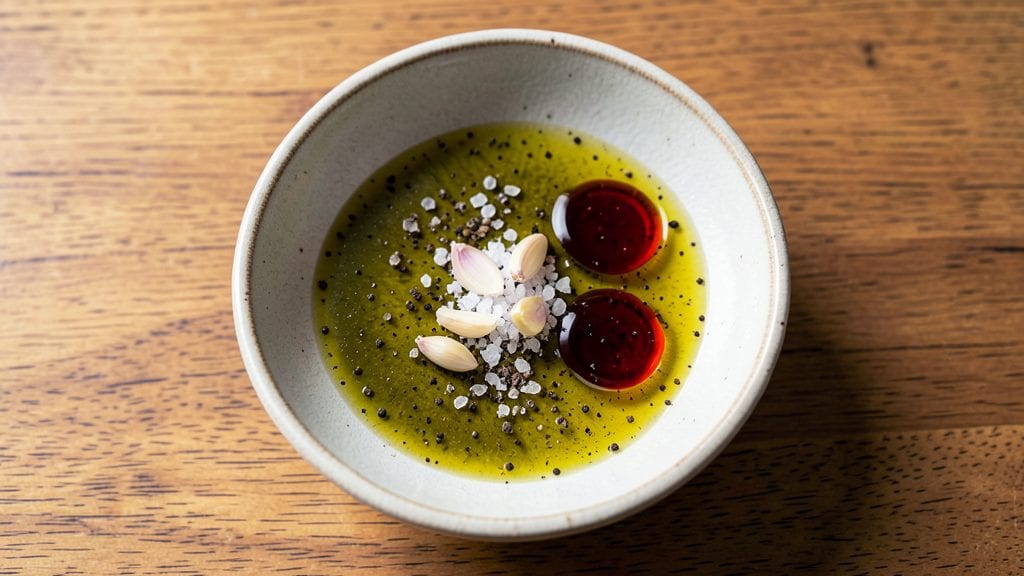
This oil and red wine vinegar dressing transforms simple salads into vibrant, restaurant-quality meals with just five ingredients and five minutes of work. The bright acidity of red wine vinegar cuts through rich ingredients while the high-quality oil creates a silky, balanced finish that clings perfectly to greens or proteins.
I developed this recipe after realizing most store-bought dressings overpower delicate flavors—this one enhances them instead.
The beauty of this dressing lies in its versatility and foolproof simplicity. You can use it as-is for a classic vinaigrette or customize it with garlic, Dijon mustard, or fresh herbs to suit any dish.
Unlike emulsified dressings, this one stays light and bright, making it ideal for everything from crisp romaine salads to marinated grilled vegetables. The ratio of oil to vinegar (3:1) ensures a perfect balance every time.
What makes this dressing truly special is how it elevates any dish without overpowering it. Drizzle it over grilled chicken or fish for instant flavor, toss it with fresh greens for a restaurant-worthy salad, or use it as a marinade for tender, flavorful meats.
The acidity tenderizes while the oil adds richness—it’s the kind of dressing that makes you reach for it again and again.
Store it in the refrigerator for up to one week in an airtight container, and double the batch when you do—you’ll want to use it constantly. Whether you’re prepping for a week of meals or adding finishing touches to a last-minute dinner, this dressing delivers professional results with minimal effort.
Let’s make it.
Ingredients for oil and red wine vinegar dressing
Five ingredients, perfect balance—this dressing turns simple greens into restaurant-worthy bites.
| Ingredient | Amount | Notes |
|---|---|---|
| Extra-Virgin Olive Oil 🫒 | ¾ cup | High-quality, fruity, and peppery |
| Red Wine Vinegar 🍷 | ¼ cup | Dry, aged variety preferred |
| Diamond Crystal Kosher Salt 🧂 | ½ tsp | Fine grain for even dissolving |
| Freshly Ground Black Pepper 🌶️ | ¼ tsp | Freshly cracked for maximum aroma |
| Garlic Cloves 🧄 | 1 whole | Minced fine for subtle flavor |
The olive oil is non-negotiable here—look for extra-virgin with a fruity, peppery finish like California Olive Ranch or Colavita. Red wine vinegar should be dry and aged (avoid the sweet balsamic-style stuff). Bragg or Annie's are solid choices, but any dry red wine vinegar works. Fresh garlic is ideal, but garlic powder at half the amount works in a pinch. The salt? Diamond Crystal kosher dissolves cleanly—no gritty aftertaste. Store your vinegar in a dark glass bottle to preserve its acidity.
No red wine vinegar? White wine vinegar or apple cider vinegar both work, though the flavor shifts slightly. Swap olive oil for avocado oil if you prefer a milder taste, or walnut oil for a richer profile. Want more depth? Add 1 tsp Dijon mustard or 1 tsp honey to balance the acidity. The garlic can be roasted for a sweeter note—simply wrap whole cloves in foil and bake at 400°F for 10 minutes before mincing. For a herb-forward version, add 1 tbsp finely chopped fresh tarragon or thyme.
This dressing keeps beautifully in the fridge for up to one week in an airtight container. For longer storage, transfer to a sterilized glass jar and it’ll last 3 months. I double the batch every time—I always run out before the week is up. Shake well before each use, as the oil and vinegar naturally separate. The flavor actually improves after 24 hours as the ingredients meld together. Perfect for meal prep, last-minute salads, or even as a marinade for grilled proteins.
Why You'll Love This Recipe
- Five-Ingredient Magic: I swear by this—just oil, vinegar, salt, pepper, and garlic. That’s it. No measuring cups, no fancy gadgets, just a quick shake in a jar. Honestly, it’s the kind of recipe that makes me feel like I’ve outsmarted grocery shopping.
- Garlic Kiss: Between us, mincing fresh garlic cloves is worth the 30 seconds it takes. That raw, punchy bite cuts through everything—salads, roasted veggies, even grilled chicken. It’s the secret weapon in this dressing, and I won’t apologize for using it liberally.
- Weeknight Workhorse: This dressing is my go-to when I’m too tired to think. Drizzle it over dinner tonight, save half for tomorrow’s lunch, then use the rest on avocado toast for breakfast. It’s the kind of pantry staple that actually earns its keep.
- Budget Brightener: Extra-virgin olive oil and red wine vinegar are cheap enough that I never feel guilty buying the good stuff. A little goes a long way, and I’ve stretched one batch into three meals without breaking the bank. Practical? Absolutely. Delicious? Ridiculously so.
Step-by-step instructions for oil and red wine vinegar dressing
This classic dressing comes together in under five minutes with just five ingredients.
Mince the Garlic Finely
Peel the 1 whole garlic cloves and place them on a cutting board. Using the flat side of your chef's knife, gently press down to flatten the cloves. This makes them easier to mince precisely.
Hold the knife at a slight angle and finely chop the garlic into a paste-like consistency. Aim for tiny, even pieces—about ¼ teaspoon total. You want the garlic to dissolve completely into the dressing rather than create distinct flecks. If you're unsure, taste a pinch: it should be smooth and aromatic, not grainy.
Whisk Together the Vinegar and Seasonings
In a small mixing bowl, combine the 0.25 cup red wine vinegar, 0.5 teaspoon diamond crystal kosher salt, and 0.25 teaspoon freshly ground black pepper. Use a fork or small whisk to stir until the salt and pepper are fully dissolved. The vinegar should look clear with no visible granules.
Here's the thing—don't rush this step. The salt needs to fully dissolve to prevent graininess in your final dressing. If you see any undissolved salt crystals, give it another quick stir. The mixture should taste tangy, slightly salty, and with a sharp pepper kick—this is your flavor foundation.
Gradually Incorporate the Olive Oil
Slowly drizzle in the 0.75 cup extra-virgin olive oil while whisking continuously. Start with just a few tablespoons at a time, letting each addition fully emulsify before adding more. This gradual approach prevents the oil from separating and creates a silky, stable dressing.
Whisk vigorously for 30-45 seconds after adding all the oil. You'll notice the mixture transform from a thin liquid to a thick, creamy emulsion. If it starts to look too thick, add 1 teaspoon of water to loosen it slightly. The texture should be smooth and pourable, clinging to the back of a spoon without dripping.
Rest and Adjust the Balance
Let the dressing sit at room temperature for 5-10 minutes. This resting period allows the flavors to meld and the emulsion to stabilize. Give it a taste—you should notice the garlic flavor has softened slightly, integrating smoothly with the vinegar's acidity.
If the dressing tastes too sharp, add another ¼ teaspoon of diamond crystal kosher salt. Too mild? Add 1 tablespoon more red wine vinegar. The goal is a perfect balance where the vinegar brightens without overpowering, and the olive oil provides a rich, velvety finish. Trust your palate—this is where the magic happens.
Pro Tips For Making Oil And Red Wine Vinegar Dressing
- Toast the Garlic: Toss 2-3 whole garlic cloves into a dry pan over medium-low heat for 2-3 minutes until fragrant and just golden—no browning. Let them cool, then crush and add to your dressing. I used to skip this, but it adds a nutty depth that cuts through the acidity like a knife.
- Measure Vinegar First: Pour the vinegar into your bowl before the oil—it emulsifies better and prevents that dreaded oil-splitting later. I learned this after watching my first batch separate like a sad salad. Trust me, it’s worth the extra 10 seconds.
- Salt the Oil: Dissolve ¼ teaspoon kosher salt directly into the olive oil before mixing—it disperses evenly and seasons every drop. I was lazy and salted the vinegar instead, and the dressing tasted like a missed spot on a steak.
- Whisk Like You Mean It: Use a fork or small whisk and actually work the dressing for 30 seconds after combining—no half-hearted swirls. The goal is to break up the garlic and salt into tiny, invisible bits. I know it’s boring, but skipping this step makes the texture gritty.
Storing and reheating this oil and red wine vinegar dressing
Fridge Storage Basics
Transfer your dressing to a clean, airtight glass container—I recommend Le Parfait 8-ounce jars for single servings or a quart-sized mason jar for larger batches. Store it in the fridge at 40°F or below, where it’ll keep for up to one week.
The flavors actually deepen after 24 hours, so make it a day ahead for maximum impact. 💡
Freezing for Long-Term Use
For longer storage, freeze individual portions in ice cube trays—each cube equals about 1 tablespoon of dressing. Once frozen, transfer cubes to a freezer bag with all air removed. This method preserves texture and flavor for up to 3 months.
Thaw overnight in the fridge before using. Perfect for meal prep when you know you’ll need quick flavor boosts!
Reheating and Reviving
If your dressing separates after refrigeration (completely normal!), simply shake vigorously for 10-15 seconds before using. For a smoother texture, place the jar in a bowl of warm water for 2-3 minutes—this gently re-emulsifies without heating the dressing itself. Never microwave, as heat breaks down the delicate emulsion. 🔥
Marinade Adaptations
Use this dressing as a marinade for grilled chicken or shrimp—it tenderizes proteins while adding bold flavor. Combine ½ cup dressing with 1 tablespoon olive oil in a ziplock bag, add your protein, and marinate for 1-2 hours (never longer than 4 hours for safety).
Always refrigerate while marinating, and discard used marinade after contact with raw meat.
Reviving Stale Dressing
If your dressing tastes flat after a few days, add 1 teaspoon of fresh lemon juice or ½ teaspoon of Dijon mustard to perk it up. For extra richness, stir in 1 tablespoon of high-quality olive oil.
The key is balancing acidity—never add more vinegar, as it’ll overpower the delicate flavors. A quick taste test ensures perfect harmony every time. ✨
Nutrition facts
Frequently asked questions
Can I use this dressing on non-salad dishes?
This versatile dressing works beautifully as a marinade for grilled chicken, shrimp, or vegetables. The acidity tenderizes proteins while the oil adds richness. For marinades, use ½ cup dressing plus 1 tablespoon extra oil per pound of meat, and marinate for 1-2 hours (never longer than 4 hours for safety). It also makes a fantastic drizzle for roasted potatoes or even as a finishing touch on pizza.
Why does my dressing separate after refrigeration?
Separation is completely normal—oil and vinegar naturally split when chilled. Simply shake vigorously for 10-15 seconds before using. For a smoother texture, place the jar in a bowl of warm water for 2-3 minutes to gently re-emulsify. Never microwave, as heat breaks down the delicate emulsion. The dressing will re-stabilize once used.
What if I don’t have red wine vinegar?
You can substitute with white wine vinegar (for a milder taste) or apple cider vinegar (for subtle sweetness). Avoid balsamic vinegar—its sweetness will overpower the balance. For a similar acidity profile, rice vinegar works too, though the flavor will differ slightly. Adjust seasoning after tasting, as vinegar strength varies by brand.
How do I make this dressing less sharp?
If the dressing tastes too acidic, add ½ teaspoon of honey or 1 teaspoon of Dijon mustard to mellow the sharpness. For extra richness, stir in 1 tablespoon more olive oil. The key is balancing acidity—never add more vinegar, as it’ll only intensify the sharpness. Always taste as you go!
Can I make this dressing spicier?
Add ½ teaspoon of red pepper flakes or 1 teaspoon of hot sauce for heat. For a smoky kick, stir in ½ teaspoon of smoked paprika. If using fresh chili (like jalapeño), mince ½ of a small chili and add it with the garlic. Always taste first—spice levels vary widely!