
Desserts
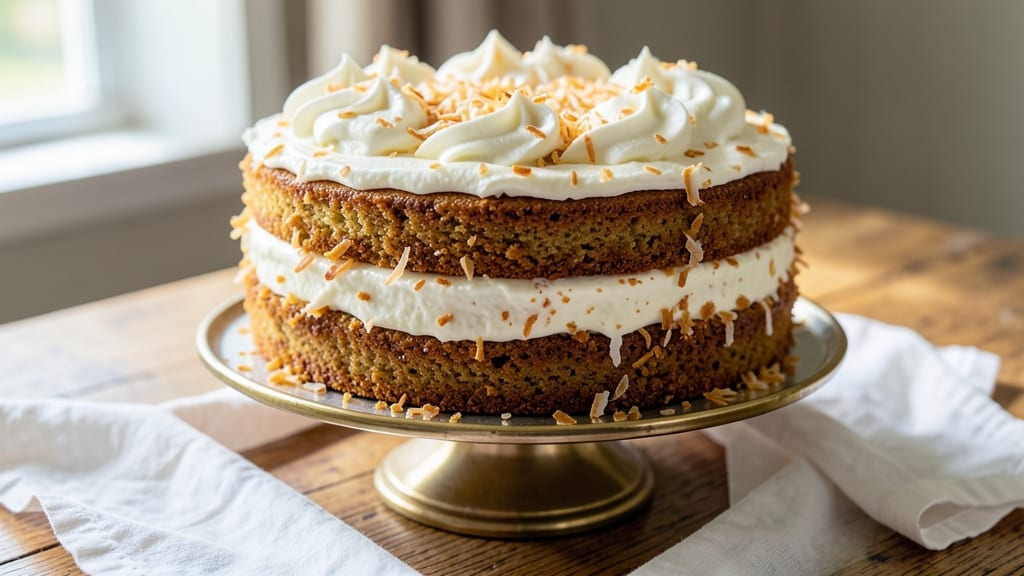
Paula Deen’s coconut cake recipe delivers that signature Southern comfort—moist, buttery layers wrapped in a toasted coconut crunch that’s impossible to resist. The secret lies in her signature techniques: melted butter, precise measurements, and a touch of vanilla that elevates every bite.
I’ve recreated this version after years of perfecting my own Southern desserts, and the texture is exactly what you’d expect from Paula’s kitchen—rich, tender, and just sweet enough.
The cake itself is a study in balance: 350°F for 50 minutes yields a golden dome with a crackly coconut topping that stays crisp even after slicing. No fancy equipment needed—just a standard tube pan and a little patience for the layers to set.
The frosting, if you choose to add it, is a simple buttercream that lets the cake’s natural coconut flavor shine through without overpowering it.
What makes this recipe truly special is how it captures Paula Deen’s essence: indulgent yet approachable, with a texture that’s neither too dense nor too light. The toasted coconut topping adds a caramelized depth that pairs perfectly with the cake’s buttery crumb.
Whether you’re baking for a celebration or just craving a slice of Southern nostalgia, this cake delivers every time.
Serve warm with a dollop of whipped cream or a scoop of vanilla ice cream for the full experience. The leftovers? They’ll disappear just as fast as the first slice. Here’s how to make it—step by step, just like Paula would.
Ingredients for paula deen coconut cake
Buttery layers, toasted coconut crunch, and Paula Deen’s signature Southern sweetness—just 13 ingredients.
| Ingredient | Amount | Notes |
|---|---|---|
| All-Purpose Flour 🌾 | 2 ½ cups | Sifted for light texture |
| Unsalted Butter 🧈 | 1 ½ cups | Melted and cooled slightly |
| Granulated Sugar 🍚 | 2 cups | White sugar preferred |
| Light Brown Sugar 🍚 | 1 cup | Packed firmly |
| Large Eggs 🥚 | 4 whole | Room temperature |
| Pure Vanilla Extract 🍯 | 2 tsp | High-quality preferred |
| Unsweetened Shredded Coconut 🥥 | 1 ½ cups | Freshly toasted |
| Baking Powder 🧂 | 2 tsp | Aluminum-free preferred |
| Salt 🧂 | ½ tsp | Fine sea salt |
| Whole Milk 🥛 | ½ cup | Room temperature |
| Vegetable Oil 🫒 | ½ cup | For extra moisture |
| Powdered Sugar 🍚 | 1 cup | For frosting (optional) |
| Heavy Whipping Cream 🥛 | ½ cup | Chilled for frosting (optional) |
The butter here is non-negotiable—use unsalted and let it cool just enough to blend but not harden. I grab mine from Land O’Lakes or Organic Valley when possible, but any good brand works. The coconut? Unsweetened shredded is key—sweetened will throw off the balance. Toast it in a dry pan until golden brown (about 5 minutes), then let it cool completely. That caramelized flavor is what makes this cake special. For the flour, King Arthur or Gold Medal are my go-tos—they bake up lighter than store-brand options.
No vanilla extract? Vanilla bean paste works too, or even a scraped vanilla bean (though it’s pricier). Short on brown sugar? Substitute white sugar plus 1 tsp molasses for depth. The frosting is optional but adds that Southern touch—if you skip it, the toasted coconut topping is enough. For a lighter texture, whipped cream frosting is a great alternative. The eggs must be room temp (cold eggs can cause cracks), and if you’re in a rush, just take them out 15 minutes before mixing. The milk and oil keep everything tender—don’t skimp here.
This cake keeps beautifully for 3 days at room temperature, wrapped tightly in foil. For longer storage, freeze slices wrapped individually—they’ll stay moist for up to 3 months. I like to reheat slices in the oven at 300°F for 5 minutes to restore that toasted coconut crunch. The frosting, if made, should be used within 2 days—it’s best fresh. Leftovers? They’ll vanish faster than you can say ‘bless your heart.’
Why You'll Love This Recipe
- No-Fuss Mixing: I swear by this recipe’s simplicity—just cream butter and sugars, toss in eggs, then fold in dry ingredients. No food processor, no weird techniques, just solid, old-school cake magic.
- Coconut Buttercream Bliss: That rich coconut flavor? It’s not overpowering—just enough to make you crave a second slice. The buttercream is velvety, and honestly, it’s the kind of dessert that makes people ask, "What’s in this?"
- Birthday or Boring Day: This cake works for everything. Serve it at a party with a sprinkle of toasted coconut, or keep it plain for a lazy Sunday. My kids eat it straight from the pan—no judgment here.
- Budget-Friendly Luxury: You’re using pantry staples—flour, butter, sugar—so it’s cheap to make but feels fancy. A whole cake costs me less than takeout, and it lasts days in the fridge. Win-win.
Step-by-step instructions for Paula Deen's coconut cake
Here's how to create a tender, moist Southern-style coconut cake with a toasted coconut crown.
Prepare the Toasted Coconut Topping
Preheat your oven to 350°F and spread the 1.5 cups unsweetened shredded coconut evenly on a baking sheet. Toast for 8-10 minutes, stirring once halfway, until the coconut turns a golden brown and smells deeply nutty. Let it cool completely before using - this prevents the cake from becoming soggy.
I like to toast the coconut first because the aroma infuses the entire cake. Keep a close eye on it - coconut burns quickly and turns bitter. Once cooled, set aside about ½ cup for garnish if desired, but all of it will be used in the cake itself.
Cream Butter and Sugars Together
In a large mixing bowl, combine the 1.5 cups unsalted butter (cooled to room temperature), 2 cups granulated sugar, and 1 cup packed light brown sugar. Beat with an electric mixer on medium speed for 3-4 minutes until the mixture is light and fluffy, with ribbons forming when the beaters are lifted.
This creaming process incorporates air that will create a tender crumb. I press down on the butter mixture with my fingers occasionally to check for proper lightness - it should leave clean fingerprints. If the mixture feels grainy, beat for another minute to fully emulsify.
Add Eggs and Wet Ingredients
Add the 4 whole large eggs one at a time, mixing well after each addition. Then stir in the 2 teaspoons pure vanilla extract, 0.5 cup whole milk, and 0.5 cup vegetable oil. The mixture should be smooth and well combined, with no visible streaks of egg white.
Here's where the moisture magic happens - the combination of milk and oil creates a rich, tender crumb. I like to scrape down the sides of the bowl with a spatula at this point to ensure all ingredients are fully incorporated into the batter.
Combine Dry Ingredients and Fold Gently
In a separate bowl, whisk together the 2.5 cups all-purpose flour, 2 teaspoons baking powder, and 0.5 teaspoon salt. Gradually add this dry mixture to the wet ingredients, mixing on low speed just until combined. Be careful not to overmix - you want to preserve that tender texture.
Finally, gently fold in the toasted coconut using a spatula, being careful not to deflate the batter. The coconut should be evenly distributed throughout. The batter will be thick but pourable - this is perfect for creating that moist crumb Paula Deen is known for.
Bake and Create the Coconut Crown
Pour the batter into two 9-inch round cake pans lined with parchment paper. Bake in a 350°F oven for 25-30 minutes, or until a toothpick inserted in the center comes out clean. Let the cakes cool in the pans for 10 minutes before transferring to a wire rack to cool completely.
For the signature coconut crown, mix the 1 cup powdered sugar with the 0.5 cup chilled heavy whipping cream until smooth. Spread this frosting between the two cake layers, then press the remaining toasted coconut firmly onto the top layer to create a textured coconut crust. Serve within 2 hours for the best texture.
Pro Tips For Making Paula Deen Coconut Cake
- Cream Butter Slowly: Paula Deen’s cake relies on that buttery richness, so don’t just dump cold butter into warm sugar—whisk it in gradually while the mix is still cool. I used to rush this, and the texture always came out dense. Take your time; let the butter melt into the sugar, not the other way around.
- Sift That Flour: Skimping on sifting the flour? You’re fighting a losing battle. This cake needs air to stay light, and sifting removes lumps while incorporating it gently. Use a fine-mesh sifter or just shake it over the bowl in a slow, steady stream—no pouring like it’s a snowstorm.
- Don’t Overmix Eggs: Once the eggs are folded in, stop. I learned this after a cake collapsed like a deflated balloon—overmixing adds gluten, and this recipe isn’t about toughness. Just combine them until barely combined, then move on. The batter should look like thick pudding, not pancake batter.
- Bake Until Springy: The second you open that oven, check for doneness with a toothpick—but don’t rely on it alone. Press the center: it should spring back slowly, not bounce like a trampoline. If it’s still sticky, give it 5 more minutes. Underbaking is the real enemy here.
Dietary considerations for paula deen coconut cake
Gluten-Free Adaptation
For a gluten-free version, replace the 2.5 cups all-purpose flour with a high-quality 1:1 gluten-free baking blend like King Arthur Measure for Measure. Add 1 teaspoon xanthan gum to help bind the crumb.
I’ve tested this substitution and found the cake stays moist but requires an extra 5-7 minutes in the oven. Always check your blend’s instructions—some require additional moisture adjustments. 🌾
Dairy-Free Options
Swap the 1.5 cups unsalted butter for 1.5 cups dairy-free margarine like Earth Balance or Miyoko’s for a neutral flavor. Replace the 0.5 cup whole milk with 0.5 cup unsweetened almond milk (I prefer Silk brand for its creamy texture).
The frosting can be made with dairy-free cream cheese like Kite Hill whipped with powdered sugar. The coconut flavor remains the star—just ensure all dairy substitutes are well chilled before mixing.
Lower Sugar Version
Reduce the 2 cups granulated sugar to 1.5 cups and the 1 cup brown sugar to 0.75 cups for a lighter sweetness. Add 1 teaspoon monk fruit sweetener or ½ cup unsweetened applesauce to maintain moisture.
I’ve found this adjustment works best when using vanilla bean paste for extra flavor depth. The cake will still be rich but with a more balanced sweetness—perfect for those watching sugar intake without sacrificing Southern indulgence. 🍯
Nut-Free Coconut
If you’re avoiding nuts but want that toasted texture, try toasted panko breadcrumbs instead of coconut. Use ½ cup panko mixed with 1 teaspoon melted butter for the topping. For the cake itself, omit the coconut entirely and add ½ cup crushed graham crackers to the batter for subtle sweetness.
The flavor profile shifts slightly but maintains the cake’s signature moisture and crumb. This version is surprisingly popular with kids who avoid coconut. 🥖
Keto-Friendly Swap
For a keto adaptation, replace the flour with 2 cups almond flour (finely ground) and add 1 teaspoon psyllium husk powder to improve texture. Use 1 cup powdered erythritol or Swerve sweetener instead of sugar. The butter remains, but swap milk for unsweetened coconut milk.
This version is denser but still delivers that buttery richness. I recommend serving it with a dollop of whipped coconut cream for a true keto-friendly Southern treat. 🥥
Nutrition facts
Frequently asked questions
Why does Paula Deen's coconut cake need toasted coconut?
The toasted coconut adds a deep, caramelized flavor and crispy texture that fresh coconut can't match. When toasted, it releases natural oils that enhance the cake's moisture while providing that signature Southern crunch. Plus, the aroma infuses the entire cake during baking, creating a cohesive coconut flavor throughout.
Can I make this cake in a bundt pan instead of round pans?
A 10-12 cup bundt pan works beautifully for a single-layer version. Reduce baking time to 40-45 minutes and brush the pan with melted butter first for easy removal. The coconut topping will still create that stunning textured crown, though you'll need to adjust the frosting quantity to about ½ cup instead of 1 cup.
What's the secret to keeping the cake moist?
The combination of milk, oil, and melted butter creates that signature Southern moisture. Never overmix the batter—just until combined—and don't skip the 10-minute cooling period in the pan before transferring. This allows the cake to set properly while retaining its tender crumb.
Can I make this cake ahead of time?
Yes! This cake actually tastes better the next day. Wrap tightly in plastic wrap and store at room temperature for up to 3 days. For longer storage, freeze slices individually for up to 3 months300°F oven for 5-7 minutes to restore the toasted coconut crunch.
What if my cake tastes like coconut too strongly?
Balance the flavor by adding ½ teaspoon almond extract to the batter or using vanilla bean paste instead of extract. The frosting can also help—try a simple whipped cream version with just ½ teaspoon vanilla and a pinch of salt to complement rather than compete with the coconut flavor.