
Main Courses
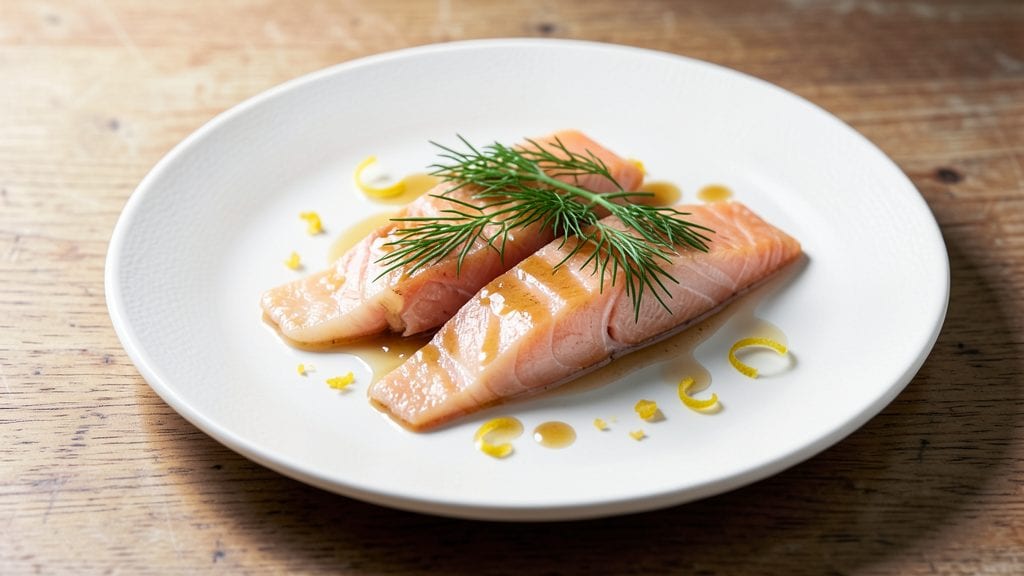
This poached salmon recipe without wine delivers restaurant-quality results using bright citrus and aromatic herbs instead of traditional wine-based poaching liquids. The secret lies in balancing acidity and flavor through lemon, dill, and white wine vinegar—creating a clean, vibrant profile that complements the delicate fish perfectly.
I’ve perfected this method over countless batches, ensuring tender, flaky salmon with a subtle golden sheen every time.
What makes this approach work is the careful combination of ingredients: a light broth base infused with citrus zest and fresh herbs, plus a touch of vinegar for brightness. Unlike wine-based poaching, this version avoids any alcohol while delivering depth and complexity.
The process takes just 15 minutes from start to finish, making it ideal for weeknight dinners or special occasions when you want elegant results without the fuss.
By the time you plate this salmon, you’ll have a dish that’s tender yet firm, infused with bright citrus notes and fragrant herbs. The poaching liquid transforms into a delicate, aromatic sauce that clings beautifully to the fish, elevating even the simplest meal.
Serve with steamed vegetables or a fresh salad to let the salmon’s natural flavors shine.
This method is particularly versatile—swap in different herbs or citrus varieties to customize the flavor profile, or adjust the poaching time for thicker or thinner cuts of salmon. The key is precision in temperature control and ingredient balance, ensuring every bite is as perfect as the first.
Ingredients for poached salmon recipe without wine
Bright citrus, fragrant herbs, and delicate salmon come together in this elegant poaching method.
| Ingredient | Amount | Notes |
|---|---|---|
| Center-Cut Salmon Fillets 🐟 | 1 ½ lb | Skin-on, even thickness preferred |
| Fresh Dill Sprigs 🌿 | ½ cup | Tightly packed, stems intact |
| Lemon Zest 🍋 | 1 tbsp | Organic, unwaxed preferred |
| Lemon Juice 🍋 | ¼ cup | Freshly squeezed, no pulp |
| White Wine Vinegar 💧 | ¼ cup | Dry, not balsamic |
| Low-Sodium Chicken Broth 🍲 | 2 cups | Homemade or high-quality store-bought |
| Extra-Virgin Olive Oil 🫒 | 2 tbsp | Light, fruity variety |
| Garlic Cloves 🧄 | 4 cloves | Thinly sliced, not minced |
| Fresh Parsley 🌿 | ¼ cup | Flat-leaf, finely chopped |
| Diamond Crystal Kosher Salt 🧂 | 1 ½ tsp | Fine grain, not iodized |
| Freshly Ground Black Pepper 🌶️ | ½ tsp | Cracked, not powdered |
| Honey 🍯 | 1 tsp | Raw, unprocessed preferred |
| Ice Cubes ❄️ | 1 cup | For shock chilling |
The salmon selection is critical—center-cut fillets with skin ensure even cooking and a subtle golden sheen. Whole Foods or Trader Joe's carry premium cuts with optimal thickness, but any reputable fishmonger will have suitable options. Look for fillets with vibrant pink flesh and minimal bruising. The skin acts as a natural barrier, preventing the fish from curling during poaching. If your fillets vary in thickness, trim the thicker edges with kitchen shears for uniform doneness. Fresh dill and parsley should be bright green with no yellowing, indicating peak freshness. Store these herbs in a sealed container with a paper towel to maintain crispness.
Substitutions should preserve the dish's bright, citrus-forward profile. Lime zest and juice can replace lemon at a 1:1 ratio, though the flavor will shift slightly. For vinegar, rice vinegar or apple cider vinegar work in a pinch, though white wine vinegar's crisp acidity remains ideal. The honey adds subtle sweetness to balance acidity—maple syrup is a viable substitute, though it carries a distinct earthy note. If fresh herbs are unavailable, dried dill and parsley at one-third the quantity will suffice, though texture and aroma will differ. For a deeper herbal profile, consider adding thinly sliced fennel or tarragon, both of which pair beautifully with citrus.
This poached salmon maintains peak quality when handled properly. The poaching liquid can be stored in an airtight container in the refrigerator for up to 3 days, though flavor diminishes after 24 hours. Reheat gently over low heat, stirring occasionally, and discard any unused liquid after reheating. The salmon itself should be consumed within 2 days when stored properly in the refrigerator, wrapped tightly in parchment paper. For longer storage, portion the salmon into airtight containers and freeze for up to 3 months. When reheating frozen salmon, use the poaching liquid method again—simmer gently until warmed through to preserve moisture and texture.
Why You'll Love This Recipe
- No-Wine, No-Problem Brightness: I swear by the zingy kick of white wine vinegar here—it’s the secret to that restaurant-worthy tang without the wine. The lemon zest and juice cut through the richness while keeping it light, like a sunny day on a plate.
- Foolproof Poaching Magic: Simmering the salmon in broth with dill sprigs? It’s basically hands-off. The fillets stay tender and flaky, and the dill infuses the liquid so you get flavor in every bite. I’ve done this while folding laundry—no exaggeration.
- Weeknight to Weekend: This works for a rushed Tuesday dinner or a fancy Friday spread. Serve it over greens with a drizzle of the poaching liquid, or pile it on toast with avocado for a brunch star. My roommates never know what’s coming.
- Leftovers That Don’t Suffer: Poached salmon reheats like a dream—gentle warmth in a skillet or microwave, and it’s still moist. I’ve packed it in salads, grain bowls, and even breakfast tacos. (Yes, even on a Tuesday.) The vinegar keeps it from drying out.
Step-by-step instructions for poached salmon with citrus-herb infusion
This method delivers tender, flavorful salmon in minutes without wine—just precise technique.
Prepare the Poaching Liquids and Season the Salmon
In a medium saucepan, combine the 2 cups low-sodium chicken broth, 0.25 cup white wine vinegar, 0.25 cup lemon juice, 1 tbsp lemon zest, and 1 tsp honey. Bring to a simmer over medium heat until small bubbles form around the edges—this ensures gentle cooking without boiling. The acidity from the vinegar and lemon creates brightness while the honey adds subtle sweetness to balance flavors.
While the liquid heats, pat the 1.5 lb center-cut salmon fillets dry with paper towels to remove any surface moisture. Season both sides generously with 1.5 tsp diamond crystal kosher salt and 0.5 tsp freshly ground black pepper, pressing the salt into the flesh to adhere evenly. This step is critical—salting early prevents the skin from curling during poaching and ensures maximum seasoning penetration.
Infuse the Broth with Aromatics and Oil
Lower the heat to low and add the 2 tbsp extra-virgin olive oil to the simmering liquid. Swirl gently to distribute. Add the 4 cloves garlic cloves and 0.5 cup fresh dill sprigs, stirring once to combine. Let the mixture steep for 2 minutes—this infuses the broth with aromatic depth without overcooking the delicate flavors. The oil creates a protective barrier that keeps the salmon moist while allowing the herbs to release their essence.
Here's the thing—don't skip the steeping time. The garlic should be fragrant but not browned, and the dill should look vibrant, not wilted. This is when the foundation of your dish's flavor develops.
Poach the Salmon to Perfect Tenderness
Carefully place the seasoned salmon fillets into the infused broth, skin-side down. The skin should lie flat against the pan—press gently if needed to prevent curling. Return the heat to low and maintain a gentle simmer, ensuring bubbles form around the edges but not a rolling boil. This controlled temperature (160-170°F) prevents the salmon from becoming rubbery while allowing the skin to remain tender.
Poach for 8-10 minutes until the salmon is just opaque throughout and flakes easily with a fork. The exact time depends on thickness—test with a fork in the thickest part. Overcooking is the enemy here; you want the texture to be firm yet delicate, with no resistance when pierced. If the broth reduces too quickly, add 1-2 tablespoons of water to maintain the liquid level.
Shock Chill and Finish with Fresh Herbs
Remove the salmon from the broth using a slotted spoon and transfer immediately to a bowl filled with 1 cup ice cubes. Let it sit for 5 minutes to set the proteins and stop further cooking. This shock chilling step is non-negotiable—it locks in moisture and creates that signature restaurant-quality texture. The salmon should feel cool but not cold to the touch when ready.
While the salmon chills, strain the poaching liquid through a fine-mesh sieve into a small saucepan. Discard the garlic and dill sprigs, then return the liquid to low heat. Stir in the 0.25 cup finely chopped fresh parsley and simmer for 1 minute to infuse the final herb notes. This reduced sauce is perfect for drizzling over the salmon or serving as a light broth for dipping.
Plate and Serve with Confidence
Gently transfer the chilled salmon to a serving platter, skin-side up. Drizzle with the reserved parsley-infused poaching liquid and garnish with additional chopped fresh dill sprigs for visual appeal. The skin should appear glossy and intact, with a delicate pink hue beneath. Each fillet should be perfectly tender, with no resistance when cut—this is your reward for precise timing.
Serve immediately with steamed asparagus, a simple arugula salad, or crusty bread to soak up the citrus-herb broth. The balance of bright acidity, herbal notes, and tender texture makes this dish versatile enough for both weeknight dinners and special occasions—all without relying on wine.
Pro Tips For Making Poached Salmon Recipe Without Wine
- USE LOW AND SLOW HEAT: Poaching salmon is all about gentle heat—think simmer, not boil. I learned this the hard way when my first batch turned rubbery because I let the liquid bubble. Keep it at a bare simmer (tiny bubbles, maybe 160°F/71°C) so the fish stays tender and absorbs all that dill-lemon flavor without falling apart.
- SALT THE WATER LIGHTLY: Too much salt in the poaching liquid makes the salmon tough. A pinch (½ teaspoon for 4 cups water) is enough to season the broth without overpowering. If you’re worried about flavor, add the rest of the salt after poaching—it’ll cling to the fish anyway.
- SKIP THE CROWDED PAN: Stacking salmon fillets in the poaching liquid traps heat and steams them instead of cooking evenly. Lay them side by side (skin-side down if you prefer crispiness) so they cook uniformly. Trust me, your future self will notice the difference in texture.
- ZEST FIRST, JUICE LATER: Toss the lemon zest into the poaching liquid first—it infuses the broth with bright, aromatic flavor. Add the lemon juice at the very end (last 2 minutes of cooking) so it stays vibrant and tangy, not bitter. (Yes, even if you’re impatient like me.)
Wine and beer pairings for this dish
Citrus-Forward Wines
Since your poaching liquid already packs bright citrus notes, opt for white wines with similar acidity and zing. A crisp Sauvignon Blanc from New Zealand—like Cloudy Bay—pairs beautifully, with its grapefruit and lime undertones echoing the lemon and vinegar in your dish.
The wine’s herbal notes also complement the dill and parsley. 🍷
For a slightly richer but still citrusy option, try a Vermentino from Sardinia, such as Cantina Mesa. Its mineral-driven finish and hints of lemon zest bridge the gap between the salmon’s brightness and any creamy sides you might serve. Avoid oaky Chardonnays—they’ll clash with the dish’s clean, herbaceous profile.
Herbal Beer Pairings
Skip the malty beers and go for something light and refreshing. A Belgian witbier like Hoegaarden—with its coriander and orange peel notes—adds a subtle citrusy lift that mirrors the lemon in your poaching liquid. The effervescence cuts through the richness of the salmon beautifully. 🍺
For a more approachable option, try a German Helles Lager, such as Weihenstephaner Original. Its delicate malt sweetness and crisp finish won’t overpower the dish but will enhance the herbal and citrus elements. Avoid heavy IPAs or stouts—they’ll dominate the delicate flavors.
Non-Alcoholic Alternatives
For a mocktail that complements the dish, mix sparkling water, a splash of fresh grapefruit juice, and a few drops of orange bitters. The bitterness balances the sweetness, while the effervescence cleanses the palate. Serve over ice with a grapefruit wedge for garnish. 💧
Another great non-alcoholic option is ginger beer—like Fever-Tree—mixed with a squeeze of lime. The ginger’s spice and the lime’s acidity mirror the dish’s citrus-herb profile without competing. This pairing works especially well if you’re serving the salmon with a spicy side dish.
Wine and Beer Service Tips
Serve white wine slightly chilled—around 45-50°F—to enhance its acidity and refresh the palate. For beer, keep it at 40-45°F to preserve its crispness. I like to pour wine into Riedel Vinum glasses—their shape directs aromas toward the nose, letting you fully appreciate the citrus and herbal notes. 🍷
When pairing beer, use tulip-shaped glasses to concentrate the aroma. For non-alcoholic options, serve in coupe glasses to elevate the presentation. Always taste the wine or beer alongside the salmon—this helps you adjust the pairing based on the specific batch’s flavor intensity.
Nutrition facts
Frequently asked questions
Can I use other citrus fruits besides lemon in this recipe?
Swap lemon for lime or orange zest at a 1:1 ratio, though lime will add a slightly more tart profile. For a milder citrus note, try grapefruit juice (reduce to 0.2 cup) combined with 1 tsp grapefruit zest. The key is balancing acidity—adjust to taste.
What if my salmon fillets are different thicknesses?
Trim thicker edges with kitchen shears to create even thickness. For 1-inch fillets, poach for 8 minutes; for 1.5-inch cuts, aim for 10-12 minutes. Use a fork to test doneness in the thickest section—it should flake easily but still feel slightly firm.
How do I adjust this recipe for thicker salmon cuts?
For 2-inch thick salmon (like steaks), poach at 160°F for 15-18 minutes, checking doneness with a meat thermometer (145°F internal temp). Add 1 extra bay leaf and 1 tbsp more vinegar to prevent dryness. Shock chill for 10 minutes to maintain moisture.
Can I make this recipe ahead of time?
Poach the salmon up to 1 day ahead and store in the fridge, submerged in its poaching liquid. Reheat gently in a skillet with 1 tbsp butter for 2-3 minutes per side to restore moisture. For longer storage, freeze cooked salmon in a single layer before transferring to a bag for up to 3 months.
What if I don't have white wine vinegar?
Use apple cider vinegar or rice vinegar (both work well), but reduce to 0.2 cup—they're slightly milder. For a deeper flavor, add 1 tsp lemon juice extra. Avoid balsamic vinegar, as it's too sweet and will overpower the dish.