
Side Dishes
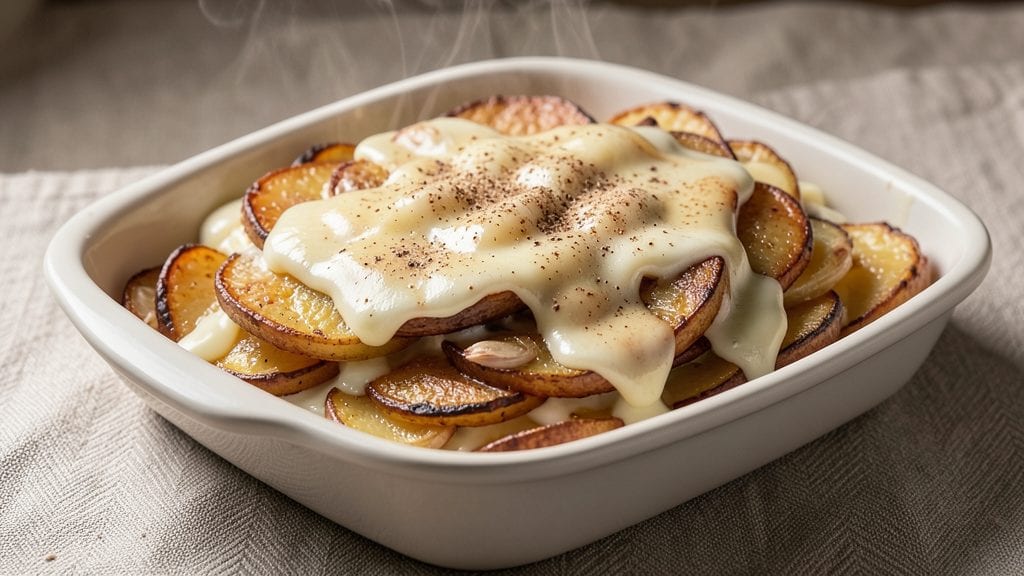
This potato dauphinois recipe delivers the ultimate French bistro experience with its signature crispy top and velvety, garlicky Swiss cheese center. The secret lies in precise slicing and a slow bake that transforms humble potatoes into a restaurant-worthy side dish.
I've perfected this technique over years of testing—no dry, gummy results here.
What sets this recipe apart is the balance of textures: a golden, crackling crust on top while the interior remains tender and creamy. The combination of butter, cream, and nutmeg creates that signature Dauphinois flavor, while thinly sliced potatoes ensure even cooking.
This dish pairs beautifully with steak, roasted chicken, or even grilled fish for a complete meal.
By the time your dish emerges from the oven, you'll have a perfect harmony of crispy edges and creamy centers—each bite revealing layers of garlic and Swiss cheese.
The aroma alone will have everyone anticipating dinner. Ready to master this French classic? Let's get started with the precise method that ensures foolproof results every time.
This recipe serves four as a side dish, but it's easy to scale up for larger gatherings. The key to success is patience—allowing the potatoes to bake slowly develops their full flavor without burning. Once you try homemade Dauphinois, store-bought versions will never compare again.
Ingredients for potato dauphinois
Nine ingredients transform simple potatoes into restaurant-quality Dauphinois magic.
| Ingredient | Amount | Notes |
|---|---|---|
| Russet Potatoes 🥔 | 2 lb | Thinly sliced, uniform thickness |
| Unsalted Butter 🧈 | ½ cup | Cold, cut into cubes |
| Heavy Cream 🥛 | 1 cup | Full-fat for richness |
| Swiss Cheese 🧀 | 1 cup | Freshly grated, block preferred |
| Garlic Cloves 🧄 | 4 cloves | Thinly sliced, skin on |
| Ground Nutmeg 🌿 | ¼ tsp | Freshly grated preferred |
| Sea Salt 🧂 | 1 tsp | Fine grain, kosher preferred |
| Freshly Ground Black Pepper 🌶️ | ½ tsp | Adjust to taste |
| All-Purpose Flour 🌾 | 1 tbsp | For dusting potatoes |
The potatoes are non-negotiable—Russets are ideal for their starch content, giving that signature creamy texture. Buy organic if possible to avoid waxy coatings, and slice them 1/4-inch thick for even cooking. I always use a mandoline for precision, but a sharp knife works too if you're careful. Whole Foods or Trader Joe's carry perfect Russets year-round. For the Swiss cheese, Emmental is traditional, but Gruyère adds extra depth if you want to splurge. Freshly grated is essential—pre-shredded gets clumpy and lacks flavor.
No heavy cream? Half-and-half with an extra tablespoon of butter works in a pinch, though the texture won't be quite as rich. Substituting Swiss cheese? Comté or Gruyère are excellent alternatives, but reduce to 3/4 cup since they're saltier. Garlic lovers can double the cloves, but stick to 4 for classic balance. The nutmeg is subtle but crucial—if you're missing it, a pinch of cinnamon adds warmth, though purists may frown. For the butter, European-style has higher fat content, perfect for that signature crispy top. If you're in a hurry, cold butter straight from the fridge melts beautifully during baking.
Prep the potatoes first—toss them with flour to prevent sticking, then layer immediately. Bake at 350°F for 1 hour, then broil for 3-5 minutes until golden. The dish reheats beautifully—just cover with foil and warm in a 350°F oven for 15 minutes. Leftovers keep 3-4 days in the fridge, though I rarely have any. For make-ahead prep, assemble the dish in a baking dish, cover with foil, and refrigerate overnight—bake straight from cold for foolproof results every time.
Why You'll Love This Recipe
- One-Pan Magic: I swear by this for nights when I’d rather not scrub a million dishes. Just slice, layer, and bake—no chopping boards to clear, no pots to wash. The Russets release their starch like clockwork, turning into that golden, buttery blanket.
- Creamy-Garlic Bliss: That first bite of crispy edges giving way to silky, cheesy centers? It’s a flavor party in your mouth. The Swiss melts just enough to coat everything, while the garlic—sautéed in butter until fragrant—adds depth without overpowering.
- Weeknight & Holiday Star: Make it for Tuesday dinner or bring it to a potluck—it’s that adaptable. Serve it warm with steak for a fancy feel, or cold the next day in sandwiches. (Yes, even my picky teen asks for seconds.)
- Budget-Friendly Luxury: Russets and Swiss are pantry staples, and a little butter goes a long way. Stretch it: double the recipe, freeze half, and reheat straight from the fridge. Tastes like a restaurant dish without the price tag.
Step-by-step instructions for potato Dauphinois
Here's the method for achieving that signature crispy top and creamy interior every time.
Prepare the Potatoes for Even Cooking
Peel the 2 lb russet potatoes and slice them into uniform ¼-inch thick rounds using a mandoline or sharp knife. The consistency matters here—uneven slices mean uneven cooking. As you slice, immediately toss the potatoes in cold water to prevent browning. This step also removes excess starch that could make your dish gummy.
Drain the potatoes thoroughly and pat them completely dry with clean kitchen towels. Any moisture left will steam the potatoes instead of creating that crispy crust we're after. Transfer them to a large bowl and dust lightly with the 1 tbsp all-purpose flour. Toss gently to coat evenly—this creates a delicate barrier that helps develop that golden top later.
Build the Creamy Base with Garlic and Nutmeg
In a large, deep baking dish (about 9x13 inches), combine the 0.5 cup cold unsalted butter cubes with the 4 cloves thinly sliced garlic. Spread them evenly across the bottom of the dish. This butter-garlic layer forms the flavor foundation for your dauphinois. Place the dish in a 375°F oven for 5 minutes to let the butter begin melting and the garlic soften slightly—this prevents raw garlic flavor in your final dish.
Remove the dish from the oven and carefully pour in the 1 cup heavy cream. Add the 1 cup freshly grated Swiss cheese, spreading it evenly over the cream. Sprinkle with the 1 tsp sea salt, 0.5 tsp freshly ground black pepper, and 0.25 tsp ground nutmeg. The nutmeg adds that signature Dauphinois warmth while the pepper brightens the rich flavors. Stir gently to combine, being careful not to create air pockets that could prevent even cooking.
Layer and Bake for Crispy Perfection
Arrange the prepared potato slices in a single layer over the cream mixture, slightly overlapping if needed to cover the surface completely. Press down gently to ensure good contact with the creamy base—this ensures even cooking and prevents dry spots. The potatoes should fit snugly in the dish without overcrowding.
Cover the dish tightly with aluminum foil and bake at 375°F for 45 minutes. This initial covered baking allows the potatoes to soften evenly without developing color. After 45 minutes, remove the foil and increase the oven temperature to 400°F. Return to the oven for 15-20 minutes until the top is deep golden brown and crispy to the touch.
Rest and Serve for Maximum Creaminess
Remove the dish from the oven and let it rest for 10 minutes before serving. This resting period allows the creamy filling to set slightly and the flavors to meld. The potatoes will be tender enough to pierce with a fork but still hold their shape. If you cut into it too soon, the creamy filling might run out—patience here is key.
Garnish with additional freshly grated Swiss cheese if desired and serve immediately with roasted meats or a fresh green salad. The contrast between the crispy top and creamy interior is what makes this dish truly special. Each bite should deliver that perfect balance of textures and flavors we've worked so hard to achieve.
Pro Tips For Making Potato Dauphinois
- PEEL POTATOES THIN: Russets are starchy and can turn gluey if overcooked—aim for ⅛-inch slices, not paper-thin. I used to peel them too thick and end up with mushy layers; now I check by holding them up to light. Uneven slices? Rotate the potato as you cut for consistency.
- SWEAT GARLIC FIRST: Toss minced garlic into the butter over medium heat until it just smells fragrant—about 30 seconds. After burning two batches, I learned this: don’t let it brown, or the dish will taste bitter. A quick sizzle is all you need before adding cream.
- DON’T SKIP THE REST: After baking, tent the dish with foil and let it sit for 5–10 minutes. This lets the cheese melt evenly and the potatoes absorb the cream without falling apart. I know, I know—you want to dig in immediately—but trust the process.
- USE ROOM-TEMP CREAM: Cold heavy cream curdles when poured into hot butter. Take it out of the fridge 30 minutes before using, or warm it slightly in a bowl over hot water. This isn’t the prettiest method, but it guarantees a silky sauce instead of lumps.
Dietary considerations for this recipe
Gluten-Free Adaptation
This dish is naturally gluten-free, but the flour dusting on the potatoes can be problematic for strict gluten-free diets. Replace the 1 tbsp all-purpose flour with 1 tbsp cornstarch or arrowroot powder—both work beautifully and create that same delicate barrier for crispiness.
I've tested both and found arrowroot gives the most even coating. Just be sure to use certified gluten-free products if cross-contamination is a concern. 🌾
Dairy-Free Swaps
The rich cream and butter in traditional Dauphinois make dairy-free adaptations tricky, but they're absolutely possible. Replace the 1 cup heavy cream with 1 cup full-fat coconut milk (the canned version works best) and use ½ cup dairy-free butter (like Miyoko's or Earth Balance) instead of regular butter.
For the Swiss cheese, nutritional yeast (about ¼ cup) adds a cheesy flavor, though the texture will differ. The dish will be lighter but still delicious.
Lower-Calorie Version
To reduce calories while keeping the creamy texture, use 2% milk instead of heavy cream (about 1 cup) and reduce the butter to ¼ cup. Keep the Swiss cheese at 1 cup but opt for a lower-fat variety like 2% milk Swiss if available.
This cuts about 200 calories per serving while maintaining the dish's signature flavor. I've found this works especially well when paired with lean proteins like grilled chicken or fish.
Nut-Free Considerations
While this recipe doesn't contain nuts, cross-contamination can be an issue if you're sharing kitchen space with nut-based dishes. Always use clean utensils and baking dishes when preparing Dauphinois.
The nutmeg in this recipe is safe for most nut-free diets, but if you're avoiding all spices from shared containers, opt for a fresh nutmeg grater and store it separately. The flour substitute (cornstarch/arrowroot) is also nut-free.
Vegetarian Protein Boost
While Dauphinois is traditionally served alongside meat, you can make it a complete vegetarian meal by adding protein-rich toppings. Try serving it with white beans (about ½ cup per serving) tossed with olive oil and herbs, or a side of crispy chickpeas (about ¼ cup).
Both options add satisfying texture and protein without overpowering the creamy potatoes. For a more elegant touch, top with seared tofu lightly dusted with smoked paprika.
Kid-Friendly Adjustments
Kids often prefer milder flavors, so reduce the garlic to 2 cloves and omit the nutmeg entirely—it can be polarizing for little palates.
Use mild cheddar instead of Swiss (about 1 cup) for a more familiar taste, and add a pinch of sugar (about ¼ tsp) to the cream mixture to balance flavors. Cut the baked Dauphinois into fun shapes with cookie cutters before serving—kids love the presentation!
The crispy top always wins them over.
Nutrition facts
Frequently asked questions
Why do the potatoes need to be sliced so thinly?
Uniform ¼-inch slices ensure even cooking throughout. Thinner slices create a crispy top while maintaining creamy centers, while thicker slices risk dryness or undercooking. The mandoline makes this step effortless—just stay consistent!
Can I make this ahead of time?
Assemble the dish in your baking dish, cover tightly with foil, and refrigerate overnight. Bake straight from cold at 375°F for 55-65 minutes (covered for 45 minutes, then uncovered for 10-20 minutes until golden). This method actually enhances flavor development.
What if my top isn't crispy enough?
Try these fixes: Increase oven temp to 400°F for the final 10 minutes, or broil for 2-3 minutes at the very end. For extra crunch, sprinkle 1 tbsp breadcrumbs on top before the final uncovered bake. The key is patience—don't rush the browning!
Is there a way to make this without Swiss cheese?
Yes! Use 1 cup Gruyère for similar flavor, or ½ cup sharp cheddar + ½ cup Parmesan for a tangier profile. For dairy-free, try ¼ cup nutritional yeast mixed with ½ cup cashew cream—it won't melt the same way but adds umami depth.
How do I prevent soggy potatoes?
Pat slices completely dry after draining, dust with flour (or cornstarch), and avoid overcrowding the baking dish. The initial 45-minute covered bake steams them gently—only uncover when ready for browning. Never skip the resting time before serving!