
Side Dishes
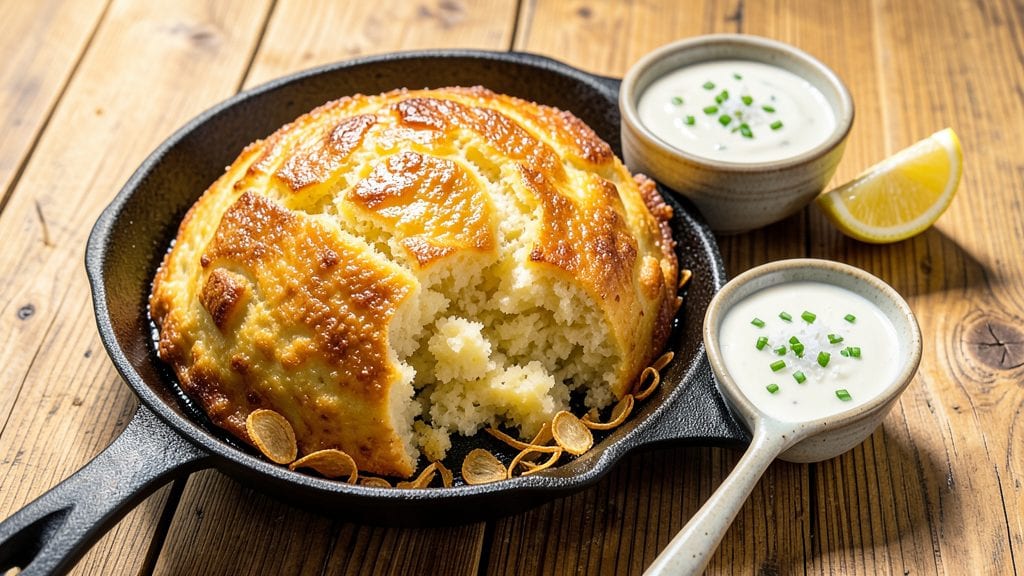
This potato pone recipe delivers the kind of flaky, golden layers that make every bite worth the effort—just like my grandmother used to make. The secret lies in a precise dough-to-potato ratio and a cold butter cut that creates those signature shatteringly crisp pockets.
I’ve perfected this Southern-style biscuit over years of trial and error, and it’s now a staple at my holiday table.
What sets this recipe apart is the two-stage baking process: first to set the structure, then to achieve that perfectly browned, crackly crust without drying out the center.
The dough is simple—just flour, baking powder, and cold butter—but the technique transforms it into something extraordinary. Even beginners can master this with the right steps.
By the time it emerges from the oven, your potato pone will be golden, flaky, and impossibly tender, with edges that crisp up just enough to hold together when sliced.
Serve warm with honey butter, jam, or even savory toppings like cheese and herbs for a breakfast or brunch showstopper. This isn’t just a side—it’s the star of the meal.
The beauty of this recipe is its versatility. Use it for breakfast with sweet toppings, as a savory side with chili, or even as a base for open-faced sandwiches.
Once you try homemade, store-bought will never compare. Let’s get started on creating your own batch of restaurant-quality potato pone right in your kitchen.
Ingredients for potato pone
Just 12 ingredients transform into golden, flaky layers that taste like Southern tradition.
| Ingredient | Amount | Notes |
|---|---|---|
| All-Purpose Flour 🌾 | 3 cups | Sifted for light texture |
| Unsalted Butter 🧈 | ½ cup | Cold, cubed for flakiness |
| Baking Powder 🍞 | 2 tbsp | Aluminum-free preferred |
| Salt 🧂 | 1 tsp | Diamond Crystal preferred |
| Russet Potatoes 🥔 | 2 medium | Peeled, boiled and mashed |
| Milk 🥛 | ¼ cup | Room temperature |
| Granulated Sugar 🍚 | 1 tbsp | Optional for sweetness |
| Honey Butter 🍯 | ¼ cup | For serving (optional) |
| Black Pepper 🌶️ | ¼ tsp | Freshly ground |
| Fresh Rosemary 🌿 | 1 tbsp | Chopped, optional garnish |
| Jam 🍓 | ¼ cup | For serving (optional) |
| Cheddar Cheese 🧀 | ½ cup | Shredded, optional savory topping |
The potatoes are the heart of this recipe—Russets give the best texture, but Yukon Golds work too. Buy them the same day you plan to cook; older potatoes make gummy pone. Peel and boil them until fork-tender, then mash until completely smooth (no lumps!). I always use King Arthur flour for the dough—it’s got that perfect protein-to-gluten ratio that makes the layers shine. The butter? European-style if you can find it; it’s higher in fat content and gives better flakiness. Keep it cold until the last minute—cut it into small cubes and let it sit in the fridge until you’re ready to mix.
No baking powder on hand? Baking soda plus cream of tartar works at a 1:2 ratio, but the flavor won’t be identical. Short on milk? Heavy cream or buttermilk both work, but adjust the sugar slightly if using buttermilk—it’s tangier. The honey butter topping? Store-bought is fine, but homemade with local honey takes it to another level. For the savory version, sharp cheddar melts beautifully, but pecorino adds a nice umami kick. If you’re feeling fancy, brush the top with a little extra milk before baking—it creates that perfect golden crust.
This dough is best used immediately, but you can shape the pone and refrigerate it for up to 24 hours before baking. Once baked, it reheats beautifully—just wrap in foil and warm in a 350°F oven for 10-15 minutes. Store leftovers in an airtight container for 3 days at room temperature, or freeze for 3 months. I always make a double batch—one for breakfast, one for brunch the next day. The flavor actually improves slightly after the first day as the layers settle. For serving, I like to slice it thick and let everyone customize their own plate with honey butter, jam, or cheese.
Why You'll Love This Recipe
- No Fuss, No Fail: I swear by this—just mash those Russets, mix in the flour and butter until it’s shaggy (not smooth, don’t overthink it), and pop it in the oven. The baking powder does all the work while you’re folding laundry or scrolling through your phone.
- Crispy-Creamy Magic: That buttery crust on the outside? Chef’s kiss. The inside stays pillowy, almost like a cross between a biscuit and a latke. Honestly, the first time I bit into one still warm, I nearly dropped the whole pan.
- Leftover Reinvention: Make a double batch—trust me, you will—and reheat slices in the oven until golden. They’re perfect for sandwiches, hash, or even crumbled over eggs the next morning. (Yes, even on a Tuesday night.)
- Budget Breakthrough: Russets and flour are cheap, and a stick of butter goes a long way. This feeds four for under $3, and the leftovers stretch into another meal. My wallet and my family thank me every time.
Step-by-step instructions for Southern-style potato pone
Here's how to create those legendary flaky layers—every bite will reveal crispy, golden pockets.
Prepare the Potato Filling
Peel the 2 medium russet potatoes and place them in a pot of cold, salted water. Bring to a boil and cook for 12-15 minutes until fork-tender. Drain thoroughly, then mash the potatoes until completely smooth with no lumps remaining. Real talk: This is where the magic starts—smooth filling equals perfect texture.
While still warm, stir in the 0.25 cup milk and 1 tablespoon granulated sugar until fully incorporated. The milk adds moisture while the sugar balances the earthy potato flavor. Let the mixture cool completely before using—this prevents steam from developing in your dough, which would ruin those flaky layers you're after.
Mix the Dough Components
In a large mixing bowl, combine the 3 cups all-purpose flour, 2 tablespoons baking powder, and 1 teaspoon salt. Whisk vigorously to aerate the flour—this creates lightness in your final pone. I always use a whisk for this step because it distributes the baking powder evenly, ensuring consistent rise throughout.
Cut the 0.5 cup unsalted butter into small cubes and add to the dry ingredients. Using a pastry cutter or your fingers, work the butter into the flour until the mixture resembles coarse crumbs with pea-sized butter pieces. This cold butter is what creates those signature flaky layers when it melts during baking. Don't overwork it—just until combined.
Combine Wet Ingredients
Make a well in the center of your dry mixture and pour in the cooled potato filling. Using a wooden spoon or silicone spatula, gently fold the filling into the dry ingredients until just combined. You'll want to see moist clumps forming, but don't overmix—this develops gluten and makes the pone tough. Here's the thing—your dough should be slightly sticky but manageable.
Add the 0.25 teaspoon black pepper and 1 tablespoon chopped fresh rosemary to the dough. The rosemary adds a fragrant depth that pairs beautifully with the potato's earthiness. Mix just until these ingredients are evenly distributed throughout. If the dough feels too dry, add 1-2 teaspoons of milk at a time until it comes together when pressed.
Shape and Layer the Pone
Turn the dough out onto a lightly floured surface and gently pat it into a 12-inch circle, about 1-inch thick. I press down gently but firmly—this creates an even base for your layers. Fold the dough in half like a book, then fold it in half again, creating a thick rectangle. This technique builds multiple layers that will separate beautifully during baking.
Unfold the dough and cut it into 4 equal rectangles. Stack them on top of each other, then fold them like an envelope, sealing the edges tightly. This creates those signature flaky layers that make potato pone so special. Place each folded piece on a parchment-lined baking sheet, spacing them about 2 inches apart—they'll expand as they bake.
Bake to Golden Perfection
Preheat your oven to 400°F while the dough rests for 10 minutes at room temperature. This resting period relaxes the gluten, making it easier for those layers to separate. Brush the tops of each folded pone with milk for a golden finish—this creates that beautiful caramelized crust we all love.
Bake for 20-25 minutes until the tops are deep golden brown and the internal temperature reaches 190°F. You'll see those layers beginning to separate and puff up—this is your visual cue that it's nearly done. For the final 2 minutes, broil on high to intensify the browning. Let them rest for 5 minutes before serving to allow the layers to fully set.
Pro Tips For Making Potato Pone
- GRATE POTATOES COLD: I learned this the hard way—warm potatoes release starch like crazy and turn your dough into glue. Keep them chilled until grating, then toss immediately with flour to absorb moisture. This keeps your pone light, not dense.
- MEASURE FLOUR RIGHT: Spoon-and-level is a myth for baking powder recipes. Scoop flour directly into your measuring cup, then level—packing it compresses the dough and makes the pone tough. Trust me, your texture will thank you.
- BAKE UNTIL GOLDEN, NOT DONE: Most recipes say "brown," but stop when the top is deep golden (not crispy). Overbaking dries out the inside while the outside turns leathery. A toothpick should come out clean, but the center stays tender.
- SALT THE BUTTER: Unsalted butter needs seasoning, and this is where it matters most. Mix ½ teaspoon salt directly into the melted butter before folding it into the dough—it’ll distribute evenly, not just sit on top. Your pone will taste richer for it.
Serving suggestions for potato pone
Sweet Breakfast Showstopper
Serve warm potato pone with a generous drizzle of homemade honey butter—mix ½ cup softened butter with 2 tablespoons local honey and a pinch of sea salt. The golden crust soaks up the sweetness perfectly, creating a contrast that’s pure comfort.
For extra indulgence, top with warm jam (I love peach or raspberry) and a sprinkle of crushed pecans for crunch. 🍯
Savory Side for Chili
Transform this into a hearty side by brushing the baked pone with garlic butter (melt 2 tablespoons butter with 1 minced garlic clove) before serving.
Add ½ cup shredded sharp cheddar> and 1 tablespoon chopped chives> on top, then broil for 2-3 minutes> until the cheese melts. The warm, cheesy layers pair beautifully with slow-cooked chili or smoked sausage.
Plating Like a Pro
Slice the pone into thick wedges (about 1-inch thick) using a serrated knife for clean cuts. Arrange on a wooden board with fresh rosemary sprigs scattered around for a rustic touch.
For a restaurant-worthy presentation, serve with a small bowl of honey butter on the side and let guests customize their own slices. The layers should be visible and golden—this is the star of your table! ✨
Holiday Brunch Centerpiece
For a festive spread, bake the pone in a cast-iron skillet (preheated) for extra crispiness. Serve with bacon strips, scrambled eggs, and sautéed mushrooms for a full Southern brunch.
The crispy edges hold up perfectly to these rich toppings, making it the perfect centerpiece for gatherings. I always make this on Thanksgiving morning—it disappears fast!
Make-Ahead Serving Tips
Bake the pone a day ahead and store in an airtight container at room temperature. Reheat in a 350°F oven for 10-15 minutes> wrapped in foil to keep it moist.
For serving, brush with a little milk before reheating to restore that golden sheen. The flavors actually deepen overnight, making it even more delicious the next day. 💡
Kid-Friendly Serving Ideas
Cut into fun shapes using cookie cutters (stars, hearts, or dinosaurs work great!) for picky eaters. Serve with chocolate hazelnut spread or strawberry jam for dipping—kids love the interactive element. The flaky layers are a hit with both little ones and adults, making it a crowd-pleaser for any occasion. 🧸
Nutrition facts
Frequently asked questions
Why does my potato pone turn out dense instead of flaky?
The key to flaky layers lies in keeping your butter cold and avoiding overmixing the dough. If your pone feels dense, it’s likely because the butter melted during mixing or you developed too much gluten. Cut the butter into small cubes and chill it until the last minute, and only fold the dough until just combined—no more than 10-12 strokes with a spatula. Also, ensure your potatoes are completely smooth before mixing!
Can I make potato pone without baking powder?
Yes, but the texture will differ slightly. Substitute 1 teaspoon baking soda with 2 teaspoons cream of tartar (mix first) to create a chemical reaction that mimics baking powder. The pone will rise but may be slightly denser. For best results, stick with baking powder for that classic Southern flakiness!
How do I prevent my potato pone from drying out?
Store baked pone in an airtight container at room temperature for up to 3 days, or freeze it for up to 3 months. To reheat, wrap in foil and warm in a 350°F oven for 10-15 minutes. Avoid microwaving, as it can make the layers soggy. For extra moisture, brush with milk before reheating.
What’s the best way to shape the dough for maximum layers?
Pat the dough into a 1-inch thick circle, then fold it like a book twice to create thickness. Unfold, cut into 4 rectangles, stack them, and fold like an envelope. This technique builds 6 distinct layers that separate beautifully during baking. Press gently but firmly—too much handling collapses the layers!
Can I use sweet potatoes instead of russets?
While russets are traditional for their starchy texture, sweet potatoes work too—but expect a slightly sweeter, moister pone. Reduce the milk by 1 tablespoon and add 1 extra tablespoon of sugar to balance the sweetness. The layers may be less crisp, but the flavor is unique and delicious!