
Snacks
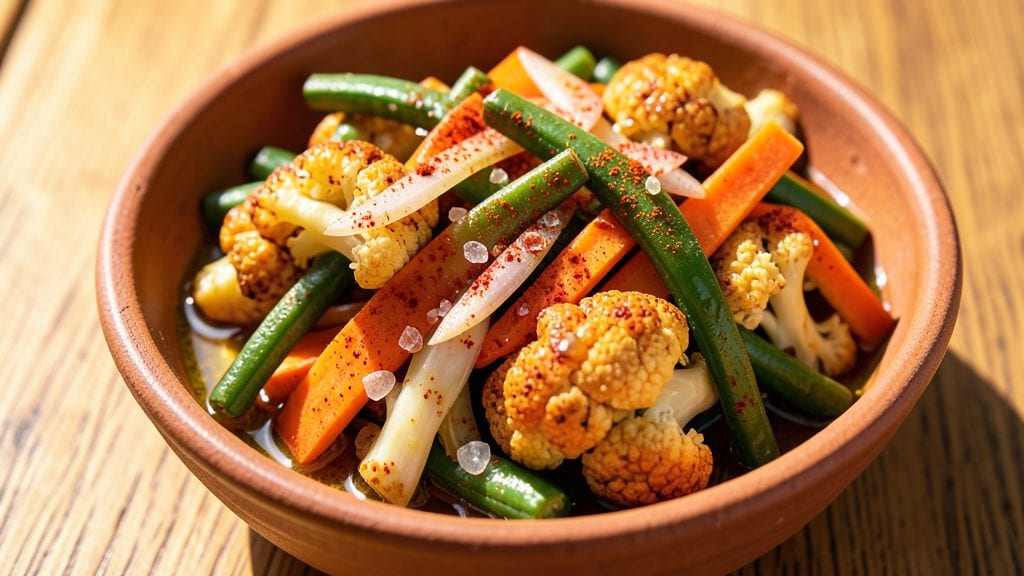
This Punjabi mix veg pickle recipe transforms simple vegetables into a tangy, spicy treasure that gets better with time—just like my grandmother’s secret.
The magic happens over seven days of fermentation, where traditional spices like mustard oil, turmeric, and fenugreek work together to create a preserve that’s both bold and balanced. I’ve perfected this method to ensure the right texture—crisp vegetables with a sharp, aromatic bite that lingers.
The process begins with sterilizing jars and preparing vegetables in a way that preserves their crunch while allowing flavors to develop. You’ll mix a spiced brine with vinegar, oil, and a blend of whole spices, then layer it carefully over the vegetables.
This isn’t just a quick pickle—it’s a labor of love that rewards patience with deep, complex flavors. The result is a pantry staple that adds a punch to meals for months.
What makes this recipe special is the balance between tradition and convenience. While traditional methods rely on fermentation, I’ve included a quicker vinegar-based option for those who want flavor without the wait.
Either way, the spices—mustard seeds, cumin, and red chili—infuse the vegetables with warmth and depth. The final product is a vibrant, tangy condiment that elevates everything from roti to rice.
Once ready, store the pickle in a cool, dark place where it will continue to mature and intensify in flavor. Serve it as a side with meals or use it to add a kick to soups and curries.
This recipe isn’t just about making a pickle—it’s about preserving tradition in every bite. Let’s get started!
Ingredients for punjabi mix veg pickle
Traditional spices and fresh vegetables create this vibrant Punjabi pickle that deepens in flavor over time.
| Ingredient | Amount | Notes |
|---|---|---|
| Mustard Oil 🫒 | ½ cup | Cold-pressed, unrefined preferred |
| White Vinegar 💧 | 1 cup | Distilled white vinegar |
| Sugar 🍚 | ½ cup | Granulated, white sugar |
| Salt 🧂 | 2 tbsp | Diamond Crystal kosher salt |
| Turmeric Powder 🌿 | 1 tbsp | Freshly ground preferred |
| Red Chili Powder 🌶️ | 1 ½ tbsp | Adjust for spice preference |
| Mustard Seeds 🌱 | 1 tbsp | Whole, yellow mustard seeds |
| Cumin Seeds 🌿 | 1 tbsp | Whole, toasted for aroma |
| Fenugreek Leaves 🌿 | ¼ cup | Fresh, finely chopped |
| Garlic Cloves 🧄 | 6 cloves | Peeled, finely minced |
| Carrots 🥕 | 1 ½ lb | Medium-sized, julienned |
| Cauliflower 🥬 | 1 head | Small, cut into florets |
| Green Beans 🌱 | 1 lb | Trimmed, whole pods |
| Onions 🧅 | 1 whole | Medium, thinly sliced |
| Asafoetida Powder 🌶️ | ½ tsp | Pure, high-quality |
The mustard oil is the heart of this recipe—look for cold-pressed, unrefined mustard oil at Indian grocery stores like Patel Brothers or Apna Bazaar. Fresh fenugreek leaves add a unique bitterness; if unavailable, dried methi leaves work at one-third the amount. For the vegetables, uniform size ensures even pickling—julienne the carrots and cauliflower into similar-sized pieces. The garlic should be freshly minced just before mixing to preserve its potency. Traditional recipes often use whole spices toasted in the oil, but for convenience, pre-ground powders work well too.
No mustard oil? Vegetable oil or sesame oil will work, though the flavor profile shifts. Substitute white vinegar with apple cider vinegar for a milder tang. Fresh fenugreek unavailable? Dried methi leaves are essential—they provide the signature flavor. For the vegetables, mix and match based on preference: add radishes or turnips if you like extra crunch. The asafoetida powder is non-negotiable—it’s the umami bomb that ties everything together. If you can’t find it, garlic powder at half the amount provides a similar depth, though not identical.
This pickle reaches peak flavor after 7-10 days, but the fermentation process continues for months. Store in sterilized glass jars with airtight lids in a cool, dark place. The oil will rise to the top—simply stir before serving. For longer storage, refrigerate after opening and use within 3 months. The vegetables will soften slightly over time, but the tangy, spiced oil remains vibrant. Portion into smaller jars for easy access—perfect for adding to dal, roti, or sandwiches whenever you need a flavor boost.
Why You'll Love This Recipe
- No-Chop Nightmare: I swear by this—just toss in whatever veggies you have (carrots, potatoes, beans, whatever) in rough chunks. The vinegar and mustard oil do the work while you sip chai. Honestly, I’ve made it with half-measured spices and it still hits.
- Tangy Crunch Magic: That first bite? The mustard oil’s sharp kick, the vinegar’s bright punch, and the turmeric’s earthy warmth—it’s like a flavor explosion in your mouth. My husband licks the jar clean, no joke.
- Party in a Jar: Serve it cold with parathas, hot with dal, or straight from the fridge as a snack. It’s my go-to for Diwali gatherings (because it lasts forever) and lazy Sundays when I don’t want to cook. Versatile? Yes. Reliable? Always.
- Lasts Months, Costs Pennies: A single batch stretches across weeks—my mom’s secret to never buying pickles again. Sugar balances the vinegar, salt keeps it safe, and mustard oil? That’s the golden ticket for shelf life. Budget-friendly? More like budget-savior.
Step-by-step instructions for Punjabi mix veg pickle
This traditional fermented pickle develops bold flavors over seven days—precision in prep ensures perfect balance.
Sterilize and Prepare the Vegetables
Begin by thoroughly washing all vegetables under cold running water. Using a sharp chef's knife, julienne the 1.5 lb carrots into even ¼-inch sticks, cut the 1 head cauliflower into uniform 1-inch florets, and trim the 1 lb green beans by snapping off the ends. Thinly slice the 1 whole onion into ⅛-inch rounds for even exposure to the marinade.
Transfer each vegetable type to separate bowls. In a large pot, bring 4 cups of water to a rolling boil and add 1 tablespoon of salt. Submerge each vegetable batch for 2 minutes—this sterilizes them and removes excess moisture. Drain immediately using a colander and spread on clean kitchen towels to air-dry completely. This step prevents mold and ensures proper fermentation.
Toast the Spice Blend
In a heavy-bottomed skillet over medium heat, dry-toast the 1 tablespoon mustard seeds and 1 tablespoon cumin seeds for 2-3 minutes until they release their aroma and turn light golden brown. Immediately transfer to a small bowl and let cool for 1 minute before grinding into a fine powder using a mortar and pestle or spice grinder.
In the same skillet, add 0.5 cup mustard oil and heat to 170°F—just until it shimmers but doesn't smoke. Remove from heat and whisk in the 1.5 tablespoons red chili powder, 1 tablespoon turmeric powder, and 0.5 teaspoon asafoetida powder. Let the mixture sit for 5 minutes to allow the spices to bloom fully in the oil. This infusion creates the pickle's signature depth of flavor.
Combine the Marinade Ingredients
In a large glass or ceramic bowl, combine the 1 cup white vinegar, 0.5 cup sugar, and 2 tablespoons salt. Stir until the sugar and salt dissolve completely, creating a clear brine solution. This balance of acidity and sweetness is critical for fermentation and flavor development.
Add the finely chopped 0.25 cup fenugreek leaves and 6 cloves minced garlic to the brine, stirring well to distribute. The fenugreek leaves will soften and release their earthy notes during fermentation, while the garlic adds aromatic complexity. Set this mixture aside while you prepare the vegetables.
Layer and Ferment the Vegetables
In a clean, airtight glass jar (preferably a quart-sized mason jar), begin by adding a thin layer of the toasted spice-oil mixture at the bottom. This creates a flavorful base. Alternate layers of vegetables, starting with the carrots, then cauliflower, followed by green beans, and finally onions. After each vegetable layer, sprinkle a small pinch of salt and drizzle with 1 tablespoon of the spice-infused mustard oil.
Pour the remaining brine mixture over the vegetables, ensuring every piece is submerged. Leave a 1-inch headspace at the top of the jar to prevent overflow during fermentation. Seal the jar tightly and store at room temperature for 3 days, then transfer to the refrigerator for an additional 4 days. This two-phase fermentation process develops the pickle's signature tang and complexity.
Test and Store for Optimal Flavor
After 7 days, open the jar and taste a small piece of each vegetable. The flavors should be tangy, spicy, and well-integrated, with no raw or overly sour notes. If the texture is still too firm, allow it to ferment for 2-3 additional days in the refrigerator. The pickle will continue to develop flavor but should not become mushy.
Once perfected, transfer the pickle to a clean, sterilized jar and store in the refrigerator for up to 3 months. The mustard oil will solidify slightly in the cold—simply stir before serving to redistribute the flavors. This pickle pairs beautifully with roti, paratha, or dal, offering a vibrant contrast to rich, spiced dishes.
Pro Tips For Making Punjabi Mix Veg Pickle
- Sterilize Jars Properly: Run your jars and lids through a quick hot-water bath (3-5 minutes) before filling—this prevents mold from sneaking in later. I learned this after a batch of pickles went bad in two weeks, and now they last months.
- Use Warm Mustard Oil: Heat the mustard oil just until it shimmers (90 seconds max) to preserve its flavor—burning it turns it bitter, and you’ll taste it in every bite. My first attempt with charred oil was a disaster.
- Balance Vinegar and Sugar: Start with 1:1 vinegar to sugar, then taste—adjust based on your veggies’ natural sweetness. Too much vinegar? Add a pinch more sugar. Too sweet? A splash of extra vinegar fixes it.
- Pack Veggies Tightly: Press the mixed veggies down firmly in the jar to eliminate air pockets—this keeps them submerged in the pickle liquid and prevents spoilage. Sounds tedious, but it’s the thing that matters most for shelf life.
Flavor customization for this dish
Spice Level Control
Adjust the red chili powder to suit your heat tolerance—start with 1 tablespoon for mild, 1.5 tablespoons for medium, or 2 tablespoons for fiery kick. For extra heat, add ½ teaspoon cayenne pepper directly to the oil infusion.
I’ve found that toasting the chili powder in the oil for 30 seconds before mixing deepens the flavor without extra spice. 🌶️
Sweet-Tangy Balance
The sugar-vinegar ratio is key—reduce sugar by 1 tablespoon if you prefer sharper tang, or add 1 extra tablespoon for a sweeter profile. For a fruity twist, stir in 1 tablespoon finely chopped mango or pineapple with the fenugreek leaves.
This works surprisingly well with the mustard oil’s boldness. 🍍
Oil Infusion Variations
Swap mustard oil for sesame oil (toasted) for a nutty depth, or use vegetable oil if avoiding mustard. For a smoky profile, add ½ teaspoon smoked paprika to the oil blend. I’ve also experimented with coconut oil (melted) for a tropical contrast—it pairs well with the fenugreek’s earthiness. 🌿
Vegetable Customization
Swap cauliflower for radishes (thinly sliced) or turnips (cubed) for extra crunch. Add 1 cup sliced bell peppers for color and mild sweetness, or 1 cup chopped cucumber for a refreshing twist. The onions can be replaced with green chilies (sliced) if you want built-in heat. 🥕
Quick Fermentation Hack
For a 3-day shortcut, skip the room-temperature fermentation and refrigerate immediately. Add 1 extra tablespoon of vinegar to compensate for the shorter acidification time. This method works well for small batches or when you’re short on time. The flavor won’t be as complex, but it’s still delicious. ⏰
Herb and Aroma Boosters
Add 1 teaspoon fresh coriander leaves or 1 teaspoon mint leaves to the brine for brightness. For a garlicky punch, double the garlic to 12 cloves. I’ve also experimented with 1 teaspoon grated ginger in the oil blend—it adds warmth that complements the fenugreek beautifully. 🧄
Nutrition facts
Frequently asked questions
Why does Punjabi mix veg pickle need fermentation time?
The 7-day fermentation develops the signature tangy, complex flavors by allowing the spices to infuse deeply into the vegetables. The mustard oil and fenugreek leaves release their full aroma during this time, creating a rich, aromatic profile that quick methods can't replicate. Patience is key for that authentic Punjabi taste!
Can I make this pickle without mustard oil?
Yes! Use sesame oil for a nutty flavor or vegetable oil for a neutral base. Toast the oil with spices first to enhance flavor. The mustard oil's signature kick comes from its pungency, but other oils will still create a delicious pickle with proper spice infusion.
How do I know when the pickle is ready?
After 7 days, the vegetables should be tender but still crisp, with a vibrant tangy aroma. Taste a piece—it should be well-seasoned with no raw flavor. If too firm, let it ferment 2-3 more days in the fridge. The mustard oil will also turn cloudy, signaling proper fermentation.
What if mold appears during fermentation?
Discard any jars with mold immediately—it can ruin the entire batch. To prevent this, always use sterilized jars, ensure vegetables are completely submerged in brine, and store at room temperature for only 3 days before refrigerating. Proper prep keeps your pickle safe and delicious.
Can I adjust the spice level for kids?
Reduce the red chili powder to ½ tablespoon and skip cayenne. For extra mildness, strain the oil through a fine sieve before pouring to remove some spice particles. The fenugreek and garlic still add great flavor without heat!