
Snacks
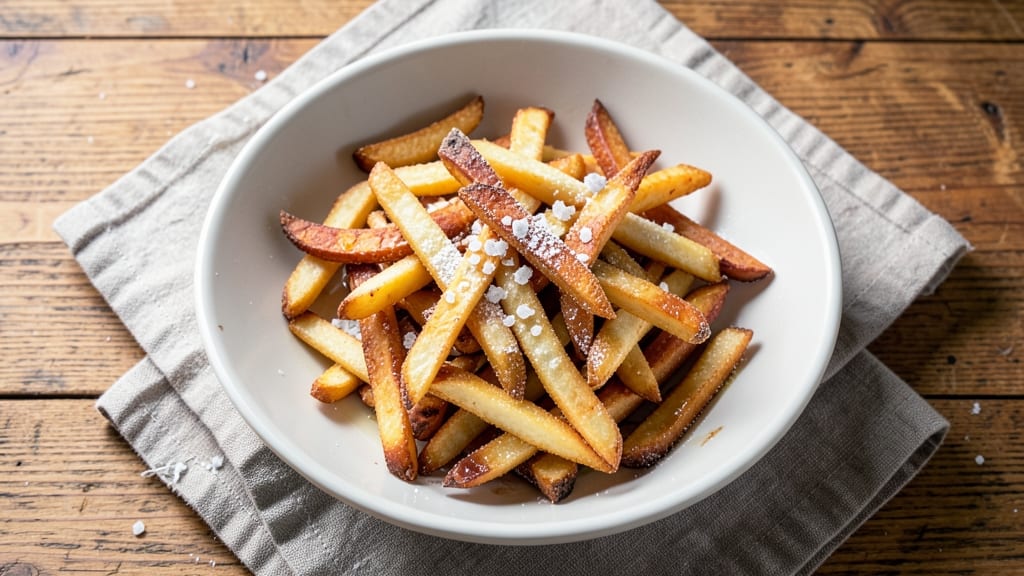
This russet fries recipe delivers the perfect balance of crispy gold exteriors and fluffy interiors that make every bite satisfying. The secret lies in precise slicing, proper oil temperature, and a resting period that transforms ordinary potatoes into restaurant-quality fries.
I've tested countless variations to perfect this method—no soggy centers or uneven crispiness here.
What sets these fries apart is the technique: slicing russet potatoes into even sticks, soaking them in cold water to remove excess starch, and cooking them in hot oil (350°F) until golden brown.
The key is patience—letting them rest after frying ensures they stay crispy, not greasy. This method works for deep-frying, baking, or even air-frying, giving you flexibility without sacrificing texture.
By the time you're done, you'll have fries that are crispy on the outside with a light, airy interior—just like your favorite diner. The flavor is neutral enough to pair with any dipping sauce, from classic ketchup to spicy mayo or tangy aioli.
Whether you're serving them as a snack, side, or appetizer, these fries will be the star of the meal.
For extra crispiness, try double-frying: cook once at a lower temperature, rest, then fry again at a higher heat. This technique guarantees a crunch that lasts, even after sitting. Let's get cooking—your taste buds will thank you.
Ingredients for russet fries
Eight essentials for fries that crackle like diner classics—no shortcuts, just perfect texture.
| Ingredient | Amount | Notes |
|---|---|---|
| Russet Potatoes 🥔 | 2 lb | Organic preferred, uniform size |
| Vegetable Oil 🫒 | 3 cups | High smoke point, neutral flavor |
| Ice Water 💧 | 4 cups | Cold, for starch removal |
| Table Salt 🧂 | 1 tbsp | Kosher or sea salt |
| White Vinegar 🍶 | 2 tbsp | For water clarity |
| All-Purpose Flour 🌾 | ½ cup | For dredging (optional) |
| Cornstarch 🌽 | ½ cup | For extra crispiness |
| Garlic Powder 🧄 | 1 tsp | Optional seasoning |
| Onion Powder 🧅 | 1 tsp | Optional seasoning |
| Ground Black Pepper 🌶️ | ½ tsp | Freshly ground preferred |
| Paper Towels 🧻 | 2 sheets | For drying fries |
Russets are the star here—bigger tubers mean fewer eyes to dig out. Trader Joe's or Whole Foods sell organic russets that stay crispier longer. Skip the pre-cut bags; the starch layer matters. Soak the cut potatoes in cold water with white vinegar for 30 minutes to remove excess starch—this is non-negotiable for crispiness. The oil? Avocado or peanut oil works best for high heat, but vegetable oil is fine if that's what you've got. Just make sure it's enough to submerge the fries completely—3 cups for a deep fryer, more if you're using a Dutch oven.
No russets? Yukon Golds work in a pinch, but they won't be as crispy. Ran out of vinegar? Lemon juice at the same amount does the trick. Want extra crunch? Toss the dried fries in cornstarch instead of flour—it creates a lighter crust. The seasonings are totally optional, but if you're using them, toast the powders in a dry pan for 30 seconds first to wake up the flavors. For double-frying, use 325°F for the first fry and 375°F for the second—this two-step method is what gives diner fries their legendary crunch.
Fries lose crispiness fast, so work in batches. Keep them warm in a 200°F oven on a wire rack while you cook the rest. For storage, cool completely first, then freeze on a tray before bagging—this prevents sogginess. They'll keep 1 month in the freezer and reheat beautifully in the oven at 425°F for 10-15 minutes. Pro tip: Spritz frozen fries with oil before reheating for extra crisp. And always, always serve with a bowl of warm sauce—cold fries are a crime.
Why You'll Love This Recipe
- The secret’s in the double-fry: first at 325°F for softness, then cranked to 425°F for that golden shatter. That crunch meets fluffy inside? Pure satisfaction.
- No-Fuss Prep: I swear by the ice water soak—it cuts down on cooking time and keeps them from turning to mush. Just slice, soak, pat dry, and you’re done. That’s it.
- Crispy-Creamy Magic: The secret’s in the double-fry: first at 325°F for softness, then cranked to 425°F for that golden shatter. That crunch meets fluffy inside? Pure satisfaction.
- Game for Any Meal: Toss them with ketchup for a kid’s lunch, drizzle with aioli for a fancy dinner, or pile ‘em high for tailgate season. Same fries, endless vibes.
Step-by-step instructions for russet fries recipe
Here's how to achieve that perfect balance of crispy exterior and fluffy interior every time.
Prep and Soak the Potatoes for Maximum Crispiness
Start by peeling the 2 lb russet potatoes and cutting them into 1-inch thick sticks. I like to use a mandoline for even cuts—it gives you consistent thickness which means even cooking. Place the cut potatoes in a large bowl and cover completely with the 4 cups ice water. This cold soak removes excess starch that would otherwise make your fries gummy instead of crispy.
Add the 2 tbsp white vinegar to the ice water and stir gently. The acidity helps break down surface starch even faster. Let the potatoes soak for exactly 30 minutes, then drain and rinse them thoroughly under cold water. Pat them completely dry using the 2 sheets paper towels—you want them bone dry before moving to the next step. Any moisture left on the surface will prevent proper browning.
Create the Seasoned Flour-Cornstarch Coating
In a large bowl, combine the 0.5 cup all-purpose flour and 0.5 cup cornstarch. The cornstarch is what gives these fries that extra-crispy texture. Add the 1 tsp garlic powder, 1 tsp onion powder, and 0.5 tsp ground black pepper, mixing until evenly distributed. This dry blend is your secret weapon for flavor and texture.
I like to add the 1 tbsp table salt to this mixture as well—it gets evenly distributed throughout the coating rather than just on the surface. Give everything a good stir with a whisk or fork until you have a completely uniform blend. This is your fries' flavor foundation, so take your time getting it right.
Coat the Fries and Let Them Rest
Working in batches if needed, toss the dried potato sticks in the flour-cornstarch mixture until they're completely and evenly coated. You'll notice they'll look slightly powdery—this is perfect. Let the coated fries rest on a wire rack for 10-15 minutes. This resting period allows the coating to adhere better and prevents the fries from falling apart when you fry them.
While they're resting, heat the 3 cups vegetable oil in a deep fryer or heavy pot to 350°F. Use a thermometer to monitor the temperature—this is critical. If the oil gets too hot, your fries will burn on the outside before cooking through. If it's too cool, they'll absorb too much oil and become greasy.
Fry to Golden Perfection
Carefully add the fries to the hot oil in batches, leaving space between them so they don't stick together. Fry for 4-5 minutes until they're golden brown and floating to the surface. This is your visual cue that they're properly cooked. Use a slotted spoon to remove them and drain on a wire rack or paper towel-lined plate to remove excess oil.
For extra crispiness, increase the oil temperature to 375°F and fry for an additional 1-2 minutes. Watch carefully—they go from perfect to burnt in seconds. The exterior should be deep golden brown with a crackly texture, while the interior should still be tender when you cut into one with a sharp knife.
Serve Immediately with Fresh Seasoning
Transfer the hot fries to a serving platter and sprinkle with additional seasoning if desired. The key to serving these fries is timing—they're best enjoyed immediately while still crispy. If you need to keep them warm, place them in a single layer on a wire rack in a 200°F oven for no more than 5 minutes.
Each bite should deliver that satisfying crunch followed by a fluffy, warm potato interior. The seasoning should be evenly distributed throughout, not just on the surface. Serve with your favorite dipping sauce or a sprinkle of fresh parsley for a restaurant-quality finish.
Pro Tips For Making Russet Fries
- USE TWO CUTS: I learned this the hard way—thick fries (1/2-inch) cook unevenly. Cut them into even 1/4-inch sticks after the first soak. Yes, it’s extra work, but the center will crisp properly while the edges don’t burn.
- SOAK IN VINEGAR WATER: Skip the plain ice bath. Mix 1 tablespoon white vinegar into your ice water. The acid tightens the starch, so your fries won’t turn mushy later. (Your future self will thank you.)
- DRY THEM THOROUGHLY: After soaking, spread fries on a wire rack for 10 minutes—don’t pat them. Wet oil smokes violently and won’t crisp. I know, I know, but trust the process.
- DOUBLE-FRY AT 350°F: First fry at 375°F until soft (3-4 mins), then drop the heat to 350°F for the final crisp. The lower temp finishes them evenly without burning. (Your first batch might look weird—adjust as needed.)
Troubleshooting perfect results
Uneven Cooking Fix
If your fries emerge unevenly cooked—some crispy, others underdone—your oil temperature is likely fluctuating. Invest in a digital thermometer like the Thermoworks Thermapen to monitor heat precisely. Keep batches small (no more than ½ lb at a time) so the oil doesn’t drop below 350°F.
Also, ensure your fries are completely dry before frying—any moisture causes uneven browning. 🌡️
Soggy Interior Problem
Soggy fries usually mean over-soaking or under-frying. Stick to the 30-minute soak max—longer breaks down too much starch. For frying, aim for 4-5 minutes at 350°F until they float.
If using the oven, bake at 425°F for 20-25 minutes, flipping halfway. Double-frying (first at 325°F, then 375°F) guarantees crispy exteriors with fluffy centers. 💡
Burnt Exterior, Raw Inside
This happens when oil is too hot or fries are overcrowded. Maintain 350°F and fry in single layers with space between sticks. If your oil smokes excessively, it’s too hot—lower the heat and let it stabilize.
For thick-cut fries (1.5 inches), increase fry time to 6-7 minutes. A wire basket fryer helps with even heat distribution. ⚡
Starch Buildup in Oil
If your oil gets cloudy or foamy, starch buildup is the culprit. Strain the oil after each use with a fine-mesh sieve and store it in an airtight container for reuse (up to 3 uses).
For extra clarity, add 1 tbsp white vinegar to the oil before frying—it helps break down starch. Never reuse oil past 3 batches to avoid off-flavors. 🧂
Fries Stick Together
Fries clumping usually means excess moisture or overcrowding. Pat them extra dry with paper towels and let them rest on a wire rack for 15 minutes before frying.
Use a slotted spoon to add fries to the oil, leaving 1-inch gaps between sticks. For oven fries, toss them in cornstarch before baking to prevent sticking. 🍟
Oil Not Hot Enough
If fries absorb too much oil or cook slowly, your oil isn’t hot enough. Preheat oil for 10 minutes before frying and maintain 350°F with a thermometer. For deep fryers, use peanut or avocado oil—they handle high heat better than vegetable oil.
Test with a wooden chopstick: if bubbles form around it, the oil is ready. 🔥
Nutrition facts
Frequently asked questions about perfect potato fries
Why do russet potatoes work best for fries?
Russets have a high starch content and low moisture, which creates that ideal crispy exterior while keeping the inside fluffy. Their thick skins also hold up better during frying. Other varieties like Yukon Golds can work but won't be as crispy.
Can I make these fries without deep frying?
For oven-baked fries, toss the dried, coated sticks in 1 tbsp oil and bake at 425°F for 20-25 minutes, flipping halfway. Air fryers work too—cook at 380°F for 12-15 minutes, shaking the basket every 5 minutes. The key is high heat and frequent tossing to avoid sogginess.
How do I get fries that stay crispy after sitting?
Keep them warm in a 200°F oven on a wire rack (not a plate) for no more than 5 minutes. For longer storage, freeze them on a tray first, then transfer to a bag. Reheat at 425°F for 10 minutes—spritz with oil before reheating for extra crunch.
What's the best oil for frying?
Use oils with a high smoke point like peanut, avocado, or vegetable oil. Avoid olive oil—it burns too easily and adds flavor. For best results, strain and reuse oil up to 3 times, storing it in an airtight container between uses.
Can I use frozen russet fries for this recipe?
Not ideal—they're pre-cut and already blanched, which affects texture. If you must, skip soaking and soak for only 15 minutes in cold water. For best results, always start with fresh russets. The extra prep ensures that signature crispy-yet-fluffy texture.