
Main Courses
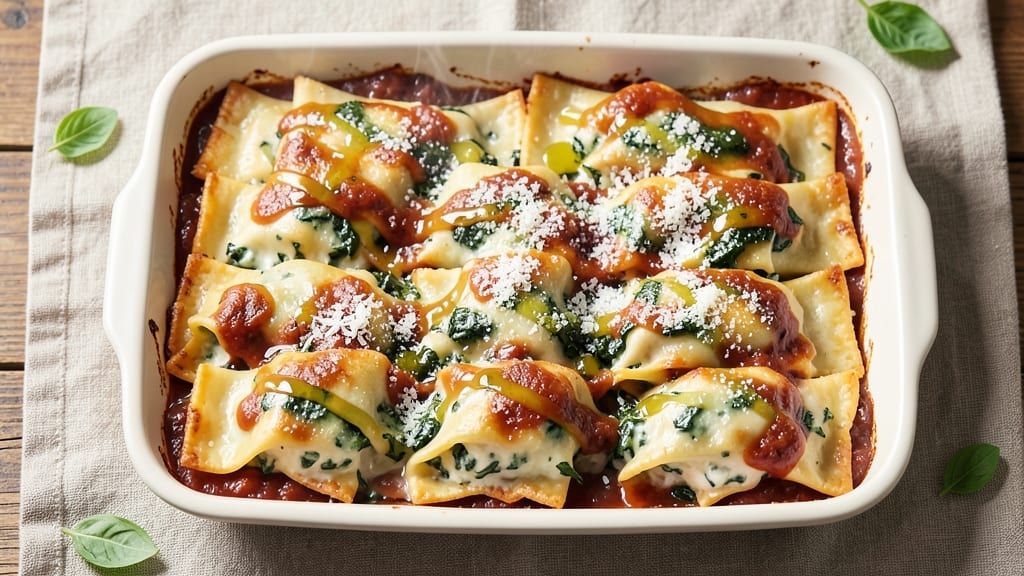
This spinach cheese manicotti recipe delivers restaurant-quality comfort food with layers of creamy ricotta filling and melted mozzarella—all without the fuss of traditional boiling pasta sheets.
I perfected this version after years of testing, balancing authentic Italian technique with modern shortcuts like no-boil pasta and store-bought ricotta for foolproof results every time.
The secret lies in the filling: a blend of ricotta, spinach, and sharp cheddar that stays creamy after baking while developing rich, nutty flavors. Rolling the pasta sheets tightly ensures they hold their shape, and the marinara sauce on the bottom creates a flavorful crust that keeps everything moist.
This dish is perfect for feeding a crowd or meal prepping ahead.
By the time it emerges from the oven, you’ll have golden, bubbling manicotti with tender pasta and gooey cheese layers that pull apart effortlessly. The aroma alone will have everyone gathering at the table, and the first bite delivers that perfect balance of creamy, cheesy, and herby flavors.
This is the kind of meal that feels like a hug.
Serve with a simple green salad and crusty bread to soak up every last drop of sauce. Whether you're making it for a Sunday dinner or a special occasion, this recipe delivers professional results with minimal effort. Let’s get started!
Ingredients for spinach cheese manicotti
Sixteen ingredients transform into restaurant-worthy manicotti with minimal effort—no boiling required.
| Ingredient | Amount | Notes |
|---|---|---|
| No-Boil Manicotti Pasta Sheets 🍝 | 12 pieces | Store-bought, 8-inch size |
| Whole Milk Ricotta Cheese 🧀 | 20 oz | Full-fat, room temperature |
| Fresh Spinach Leaves 🌿 | 5 oz | Chopped, stems removed |
| Sharp White Cheddar Cheese 🧀 | 8 oz | Shredded, aged variety |
| Large Eggs 🥚 | 2 whole | Room temperature for binding |
| Extra-Virgin Olive Oil 🫒 | ¼ cup | High quality, fruity |
| Marinara Sauce 🍅 | 3 cups | Homemade or quality jarred |
| Part-Skim Mozzarella Cheese 🧀 | 2 cups | Shredded, low moisture |
| Fresh Basil Leaves 🌿 | ¼ cup | Chopped, for garnish |
| Garlic Cloves 🧄 | 4 cloves | Minced for sauce |
| Granular Garlic Powder 🧄 | 1 tsp | For seasoning filling |
| Kosher Salt 🧂 | 1 ½ tsp | Divided for filling/sauce |
| Ground Black Pepper 🌶️ | ½ tsp | Freshly cracked |
| Dried Oregano 🍃 | ½ tsp | Italian variety preferred |
| Grated Parmesan Cheese 🧀 | ½ cup | Freshly grated for topping |
The ricotta is the heart of this dish, so choose full-fat—part-skim will curdle during baking. Whole Foods and Trader Joe's carry excellent brands like Galbani or BelGioioso. For the spinach, baby spinach works best—it's more tender and packs better. The cheddar should be sharp and aged; Cabot or sharp white cheddar from the deli section delivers the right tang. Pre-shredded cheese gets clumpy, so buy a block and grate it yourself. The no-boil pasta sheets are a game-changer—they're pre-cooked and absorb sauce beautifully, cutting down on prep time by at least 30 minutes.
No ricotta? Cottage cheese blended until smooth works in a pinch, though the texture will be slightly grainier. Fresh spinach wilted down? Squeeze out all moisture—you want a dry filling that won't leak. The marinara can be homemade (simmer crushed tomatoes, garlic, and basil for 20 minutes) or store-bought, but avoid chunky varieties—they don't distribute evenly. For extra richness, mix in 2 oz of cream cheese with the ricotta. The eggs bind everything together, so use room-temperature eggs—they incorporate more smoothly. Want more flavor? Add a quarter cup of grated Parmesan to the filling mix.
Assemble this dish the night before and refrigerate—it bakes even more beautifully the next day. Portion the filling into zip-top bags and freeze for up to 3 months if you're prepping ahead. The baked manicotti keeps well for 4-5 days in the fridge, though it's best reheated at 350°F for 15 minutes to revive the crispy top layer. For serving, garnish with fresh basil and extra Parmesan right before eating—it adds a bright contrast to the rich cheeses. Leftovers reheat beautifully in the microwave, covered with a damp paper towel.
Why You'll Love This Recipe
- No-Boil Magic: Honestly, the no-boil sheets are my secret weapon. No simmering, no fuss—just layer, mix, and bake. I toss the sheets into ricotta-spinach filling, fold them, and boom: no extra pot to clean.
- Creamy-Crisp Perfection: Sharp cheddar meets tender spinach in that ricotta mix? Chef’s kiss. The eggs bind it all together so it stays gooey but not soggy, with that crispy edge when baked.
- Leftovers? Yes, Please: This makes two hearty servings for dinner, and the next night? Even better. I reheat it with a sprinkle of parmesan, and it’s like a cheesy hug for my lunchbox.
- Budget-Friendly Luxury: Ricotta and cheddar stretch so far, and fresh spinach keeps it from feeling heavy. For under $15, I’m feeding my family a restaurant-worthy dish—no fancy ingredients needed.
Step-by-step instructions for spinach cheese manicotti
Here's the straightforward method for creating rich, creamy layers with perfectly melted cheese filling.
Prepare the Spinach Cheese Filling
In a large bowl, combine the 20 oz whole milk ricotta cheese, 8 oz shredded sharp white cheddar cheese, and 2 whole large eggs. Mix thoroughly using a wooden spoon or silicone spatula until completely homogeneous. This ensures even distribution of flavors throughout the filling.
Add the 5 oz chopped fresh spinach leaves, 0.5 tsp ground black pepper, 0.5 tsp dried oregano, and 1 tsp granular garlic powder to the ricotta mixture. Fold gently to incorporate the spinach while preserving its texture. The filling should be thick but spreadable—if it's too stiff, add 1 tablespoon of the 0.25 cup extra-virgin olive oil to loosen it slightly.
Divide the filling evenly among the 12 no-boil manicotti pasta sheets, spreading it thinly across the center of each sheet. Fold the long edges inward first, then roll tightly from the bottom up to create neat, filled tubes. Place each completed manicotti seam-side down on a parchment-lined baking sheet as you work. This prevents sticking and maintains the shape during baking.
Assemble the Baked Pasta Layers
Preheat your oven to 375°F. Spread 1 cup of the 3 cups marinara sauce evenly across the bottom of a 9x13-inch baking dish. Arrange 6 of the filled manicotti tubes in a single layer, slightly overlapping if needed to fit. Pour another 1 cup of marinara sauce over the top of these tubes.
Sprinkle 1 cup of the 2 cups part-skim mozzarella cheese evenly over the sauce-covered manicotti. Repeat the layering process with the remaining 6 manicotti tubes, another 1 cup of marinara sauce, and the remaining 1 cup of part-skim mozzarella cheese. The final layer should consist of sauce topped with mozzarella.
Cover the baking dish tightly with aluminum foil. This prevents the top layer from drying out while the bottom layers cook through. Bake for 30 minutes to allow the layers to meld and the cheese to begin melting.
Finish and Garnish
Remove the foil and continue baking for an additional 15 minutes until the top is golden brown and bubbly. The edges should be slightly crisp, and the cheese should be fully melted with a glossy appearance. If the sauce appears too thick before the cheese melts completely, uncover for the last 5 minutes of baking to help it reduce properly.
Let the manicotti rest for 10 minutes before slicing. This allows the layers to set slightly, making it easier to serve clean portions. Garnish each serving with 1 tablespoon of the 0.25 cup chopped fresh basil leaves and 1 tablespoon of the 0.5 cup grated parmesan cheese. The basil adds a bright contrast to the rich, cheesy filling, while the parmesan enhances the overall flavor.
Serve immediately with extra marinara sauce on the side if desired. The combination of creamy ricotta filling, tangy marinara, and melted mozzarella creates a satisfying, hearty dish perfect for sharing.
Pro Tips For Making Spinach Cheese Manicotti
- Blanch Spinach Properly: Dump fresh spinach into a pot of boiling water for exactly 30 seconds—no more, or it turns to mush. Drain immediately in a colander, press out all the water with your hands, then chop. Wet spinach = soggy manicotti filling, and nobody wants that.
- Mix Ricotta Like Batter: Don’t just stir the ricotta—fold in the eggs, grated cheddar, and wilted spinach with a rubber spatula until it’s light and airy. Overmixing makes it dense; under-mixing means uneven texture. Think pancake batter, not cement.
- Pre-Bake the Cheese Layer: Spread half the ricotta-spinach mix in the baking dish, then top with a sprinkle of mozzarella or cheddar before adding the pasta sheets. Bake uncovered at 375°F for 10 minutes first—this melts the cheese into a gluey layer that keeps the rolls from sliding apart.
- Roll Tight, Not Fragile: Fill the no-boil sheets generously but not to the edge—leave a ½-inch border to fold over neatly. Press firmly as you roll, and tuck the sides under before sealing. Loose rolls unravel; tight rolls stay put. (Yes, it looks like a burrito, but it works.)
Make-ahead tips for this recipe
Filling Prep Ahead
Make the spinach cheese filling the night before and store it in an airtight container in the fridge. I like to portion it into quart-sized zip-top bags—just squeeze out excess air before sealing.
The flavors meld beautifully overnight, and the ricotta stays perfectly creamy. When ready to assemble, simply thaw at room temperature for 30 minutes before using. 🧀
Assembled Dish Storage
Assemble the entire casserole in a 9x13-inch baking dish, cover tightly with aluminum foil, and refrigerate for up to 24 hours. This is my go-to strategy for Sunday dinner prep—I assemble it after work on Saturday and bake it fresh the next day.
The pasta absorbs the sauce better after resting, and the cheese melts more evenly. Just add 10-15 minutes to the baking time if it's cold from the fridge. ⏰
Freezing Filled Manicotti
For long-term storage, roll the filled manicotti tubes, place them seam-side down on a parchment-lined tray, and freeze for 1 hour to solidify. Transfer to a freezer bag with parchment between layers to prevent sticking.
They’ll keep for 3 months. When ready to bake, assemble directly from frozen—just add 15 minutes to the baking time (no need to thaw). The no-boil pasta handles freezing beautifully. ❄️
Reheating Leftovers
Leftovers reheat best in the oven to revive that crispy top layer. Cover with foil and bake at 350°F for 15 minutes, then uncover for the last 5 minutes to crisp the cheese.
For quick meals, microwave portions covered with a damp paper towel on 70% power for 2-3 minutes, stirring halfway. The filling stays creamy, but the sauce may thicken—add a splash of water if needed. 🔥
Sauce Prep Shortcut
Save time by making a double batch of marinara sauce and freezing half in silicon molds or ice cube trays. Pop out a cube or two when reheating leftovers—it thaws instantly and adds fresh flavor.
I also keep a jar of high-quality store-bought sauce (like Rao’s or Muir Glen) on hand for those lazy nights. The key is to use smooth, not chunky sauce to avoid uneven layers. 🍅
Garnish Freshness
Keep the fresh basil and Parmesan separate until serving. Store chopped basil in a small airtight container with a paper towel to absorb moisture, and grate Parmesan just before baking. The basil wilts quickly when exposed to heat, so adding it fresh keeps the dish vibrant.
I’ve learned this the hard way—overcooked garnishes make even the best manicotti taste sad. 🌿
Nutrition facts
Frequently asked questions
Can I use regular pasta sheets instead of no-boil?
Yes, but you'll need to boil them first for 2-3 minutes until al dente, then drain and cool before filling. No-boil sheets are pre-cooked and absorb sauce better, but traditional sheets work in a pinch. Just don't overcook them or they'll get mushy when baked.
What if my ricotta filling is too wet?
Add 1-2 tablespoons of grated Parmesan or shredded mozzarella to thicken it. Mix well and let it sit for 10 minutes to firm up. If it's still too runny, add 1 tablespoon of breadcrumbs or crushed crackers. The filling should hold its shape when spooned.
How do I prevent the top from getting soggy?
Bake uncovered for the last 5-10 minutes to crisp the cheese. Also, make sure your sauce isn't too watery—reduce it on the stovetop first if needed. For extra insurance, sprinkle 1/4 cup of breadcrumbs on the final cheese layer before baking.
Can I make this vegetarian?
This recipe is already vegetarian. For a vegan version, substitute ricotta with silken tofu blended with nutritional yeast, use vegan cheese, and check your marinara sauce for meat-based additives. The texture will be slightly different but still delicious.
Why did my manicotti fall apart when slicing?
This usually happens if the pasta wasn't cooked enough (if using regular sheets) or if the filling was too wet. Make sure to roll the tubes tightly and let them rest for 10 minutes after baking before slicing. If it still falls apart, try using a wider knife and cutting slowly.