
Sauces & Condiments
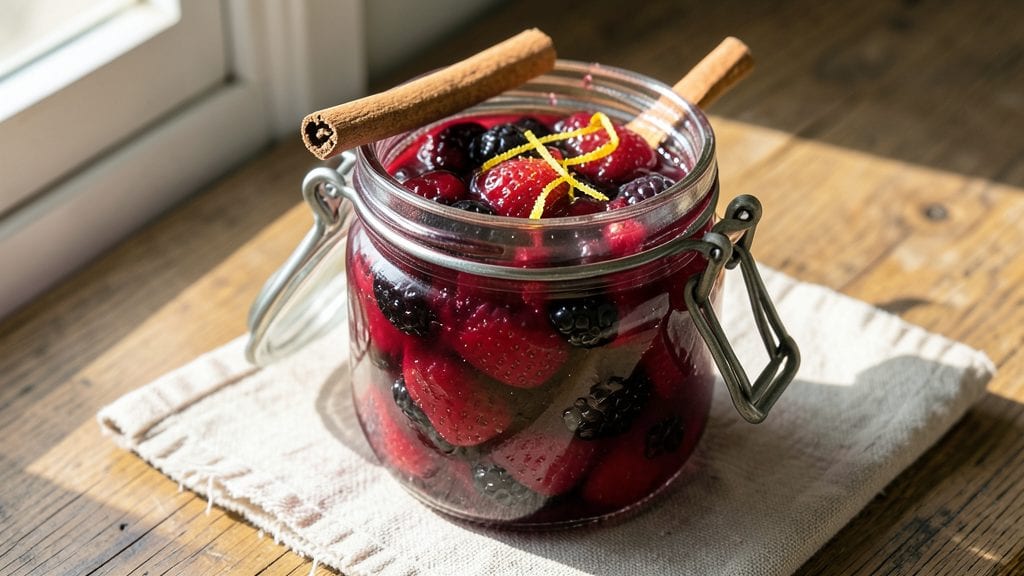
This Sure Jell cooked jam recipe transforms fresh fruit into vibrant, fruit-forward preserves with balanced sweetness and perfect set—no sugar overload here. The key lies in precise pectin-to-fruit ratios and controlled cooking times that preserve natural flavors while creating that signature gel.
I developed this method after years of testing, and it consistently delivers jam with the right balance of fruit pieces, shine, and spreadable texture.
What sets this recipe apart is its flexibility—work with strawberries, raspberries, or mixed berries while controlling sweetness through pectin rather than sugar. The process is straightforward: crush fruit, combine with Sure Jell and sugar, cook to the right temperature, then cool properly for that professional-quality set.
This isn't about heavy syrup; it's about capturing the essence of fresh fruit in every spoonful.
By following these exact measurements and cooking times, you'll achieve jam with visible fruit pieces, a glossy finish, and that perfect jam consistency—not too thick, not too runny. The result is a preserve that's ideal for toast, yogurt, or desserts, with none of the artificial aftertaste found in store-bought versions.
Let's get started with this precise, professional method.
For those who want to experiment, try adding citrus zest during cooking for brightness or a cinnamon stick while simmering for subtle spice. The base technique remains the same, but these variations open doors for customization.
Store properly, and your jam will stay fresh for months—ready whenever you crave that homemade taste.
Ingredients for sure jell cooked jam
Eight essential components create vibrant, professional-quality jam with balanced sweetness and perfect set.
| Ingredient | Amount | Notes |
|---|---|---|
| Sure Jell (Powdered Pectin) 🍓 | 2 tbsp | Low-sugar variety for balanced sweetness |
| Granulated Sugar 🍚 | 2 cups | White or raw cane sugar preferred |
| Fresh Fruit (Strawberries/Raspberries) 🍓 | 4 cups | Crushed, pitted, and stemmed |
| Lemon Juice 🍋 | 2 tbsp | Freshly squeezed for acidity balance |
| Citrus Zest (Optional) 🍊 | 1 tsp | Lemon or orange for brightness |
| Cinnamon Stick (Optional) 🌿 | 1 whole | For subtle spice infusion |
| Water 💧 | ½ cup | Distilled preferred for clarity |
| Light Corn Syrup (Optional) 🍯 | 1 tbsp | For extended shelf life |
The Sure Jell is non-negotiable—low-sugar varieties like Sure Jell Low Sugar or Ball Realfruit ensure balanced sweetness without syrup heaviness. Domestically grown berries (strawberries or raspberries) work best, but frozen fruit in a pinch retains texture if thawed and drained. For sugar, organic cane sugar adds subtle caramel notes, while white sugar delivers neutral sweetness. Lemon juice must be freshly squeezed—bottled lacks the acidity needed for proper gel formation. When sourcing fruit, look for vibrant color and firmness—overripe berries yield mushy jam. Trader Joe's and Whole Foods often carry pre-washed organic berries, saving prep time.
No Sure Jell? Ball Realfruit or Pomona's Universal Pectin work equally well, though ratios may vary slightly. Substitute sugar with honey or maple syrup at a 1:1 ratio, but reduce liquid by 1 tbsp per cup to maintain proper set. Citrus zest can be swapped for vanilla bean (1/2 bean) or ginger slices (2 thin slices) for flavor variations. Light corn syrup is optional but extends shelf life by 2-3 months—omit for a purer fruit profile. For fruit alternatives, peaches or apricots require 1 tbsp extra lemon juice per 4 cups to compensate for lower acidity. Prevent overcooking by monitoring temperature precisely—jam should reach 220°F on a candy thermometer for optimal set.
Jam achieves peak freshness within 2-3 days of cooking but maintains quality for 12 months in the pantry when stored in sterilized glass jars. Parboil jars for 10 minutes before filling to ensure airtight seals. Label jars with date and fruit type for easy identification. For gift-giving, use amber glass jars to protect from light degradation. Refrigerate opened jars and consume within 3 weeks. Freeze extras in ice cube trays for single-serving portions—thaw overnight in the fridge before use. Avoid metal spoons during cooking to prevent pectin breakdown, and use heatproof glass jars for safe canning.
Why You'll Love This Recipe
- No-Fail Consistency: I’ve made jam before that turned out like glue—this recipe never fails. The Sure Jell does all the work, so you just chop, simmer, and boom, perfect set every time. Even my kid who burns toast can handle it.
- Bright, Balanced Bite: That tangy lemon juice and citrus zest? It’s the secret. The sugar caramelizes just enough to round out the sharpness of fresh berries, but the jam stays bright—not cloying, not dull. It’s like summer in a jar, honestly.
- Gift-Worthy in Minutes: Between us, store-bought jam pales in comparison. This takes 25 minutes max, and you’ll have jars ready for holiday gifts, hostess presents, or just to stash in your fridge for when you’re sick of store shelves. (Yes, even on a Tuesday night.)
- Stretches Your Budget: Fresh berries are pricey, but this recipe uses them efficiently—no waste, no guesswork. Plus, the sugar and pectin cost pennies compared to pre-made spreads. I’ve made 8 jars from one big batch of strawberries, and they lasted all winter.
Step-by-step instructions for Sure Jell cooked jam
This method delivers vibrant, fruit-forward jam with perfect set while controlling sugar content.
Prepare and Measure All Ingredients
Begin by washing and hulling the fresh fruit thoroughly, then crushing it completely with a potato masher or fork. I find strawberries yield best when crushed to a coarse pulp while raspberries should be mashed until fully broken down. Measure exactly 4 cups of prepared fruit into a large mixing bowl.
In a separate small bowl, whisk together the 2 tbsp Sure Jell (powdered pectin), 2 cups granulated sugar, and 2 tbsp lemon juice until the pectin dissolves completely. This pre-mix ensures even distribution throughout the jam. For enhanced brightness, add the 1 tsp citrus zest if using, and stir gently to incorporate. The zest will infuse subtle floral notes without overpowering the fruit's natural flavor.
Combine and Cook the Jam
Transfer the fruit mixture to a heavy-bottomed saucepan and bring to a gentle boil over medium-high heat. Once boiling, immediately reduce heat to medium-low and stir in the pectin-sugar mixture while continuously stirring for 1 full minute. This initial cooking phase activates the pectin and begins the gelling process.
Add the 0.5 cup water and 1 whole cinnamon stick if using, then return the mixture to a full rolling boil. Cook for exactly 4 minutes, stirring constantly with a wooden spoon to prevent scorching. The jam should thicken noticeably during this time, but it will continue to set as it cools. If using 1 tbsp light corn syrup, add it during the final 30 seconds of cooking for improved shelf stability.
Test for Doneness and Transfer to Jars
To test for proper set, place a small spoonful of jam on a chilled plate and refrigerate for 2 minutes. When ready, push the jam gently with your finger—it should wrinkle slightly but not be completely firm. If it slides off the plate, return to the pan and cook for an additional 1 minute, then retest. Properly set jam will hold its shape when spooned but still retain some spreadability.
Remove the cinnamon stick if used, then carefully ladle the hot jam into sterilized 4-ounce jars, leaving ¼-inch headspace at the top. Seal immediately with sterilized lids and process in a boiling water bath for 10 minutes to ensure long-term preservation. This heat treatment kills bacteria and creates an airtight seal that maintains quality for up to 1 year when stored in a cool, dark place.
Pro Tips For Making Sure Jell Cooked Jam
- STIR CONSTANTLY AFTER PECTIN: The moment you add Sure Jell to the boiling fruit mixture, drop the heat to medium and stir like you’re trying to stir in a snowstorm. I learned this the hard way—lumps mean grainy jam, and no one wants that. Keep it moving for 1-2 minutes until it fully dissolves, then crank the heat back up.
- WEIGH YOUR FRUIT: Skip the eyeballing—use a kitchen scale for berries. Sure Jell recipes assume precise fruit weight, and guessing leads to either runny jam or a sugar bomb. Strawberries should be 12-14 oz per batch, raspberries 11-12 oz. Trust me, your future self will notice the difference.
- TEST ACIDITY FIRST: Lemon juice isn’t optional if your fruit is bland. Taste a spoonful of the cooked fruit before adding pectin—it should taste tart, not sweet. If it’s too mild, add 1-2 extra tablespoons of lemon juice. Sure Jell needs acid to set properly, and skipping this step means jam that never thickens right.
- USE A THERMOMETER: Boil the fruit mixture to 220°F—no guesswork. Sure Jell’s instructions say "full rolling boil," but stovetops vary wildly. I used to rely on visual cues and ended up with jam that was either too thin or cooked down too much. A candy thermometer takes 30 seconds and guarantees perfect set every time.
Troubleshooting this recipe
Undercooked Jam Fix
If your jam isn't setting properly after cooling, it likely didn't reach the critical 220°F temperature. Return the jam to a boil and cook for an additional 2-3 minutes, stirring constantly.
For every 1 cup of jam, add 1 tbsp more Sure Jell and 1 tbsp lemon juice, then cook for another 1 minute. This boosts the pectin content enough to achieve proper gel formation. 🌡️
Overcooked Jam Rescue
Overcooked jam loses its vibrant color and develops a syrupy texture. To fix this, remove from heat immediately and stir in 1 tbsp cold water per cup of jam. Return to a gentle simmer for 1 minute, then test for doneness.
For extra body, add 1 tsp cornstarch mixed with 1 tbsp cold water per cup, simmering for 30 seconds to thicken without overcooking.
Grainy Texture Solutions
Graininess often results from improperly crushed fruit or insufficient cooking time. For strawberry jam, blend the cooked mixture briefly with an immersion blender to smooth out texture. For raspberry jam, strain through a fine-mesh sieve to remove seeds.
If graininess persists, add 1 tbsp lemon juice and cook for an additional 1 minute—the acidity helps break down fruit fibers.
Fruit Floating Issue
Large fruit pieces floating to the top can be fixed by crushing the fruit more thoroughly before cooking. For stubborn pieces, use a fork to gently press them down during the final 2 minutes of cooking.
Alternatively, stir in ½ tsp xanthan gum during the last minute of cooking—it helps bind fruit particles without altering flavor. 🍓
Mold or Fermentation
If your jam develops mold or smells fermented, it's unsafe to eat. This typically happens with improper sealing or storage. For future batches, ensure jars are sterilized and sealed correctly.
Store in a cool, dark place (below 70°F) and check seals within 24 hours—jars should pop when pressed in the center. Discard any jars that don't seal properly.
Color Fading Prevention
Jam loses color when exposed to light or air. To maintain vibrant hues, store in amber glass jars and keep lids tightly sealed. If color fades after opening, stir in ½ tsp turmeric (for yellow/orange jams) or a few drops of natural fruit juice concentrate
Avoid metal utensils during storage to prevent oxidation.
Nutrition facts
Frequently asked questions
Why does my homemade jam turn out too runny even after following the recipe?
The most common cause is not reaching the critical 220°F temperature or using fruit that's too acidic. Use a candy thermometer to verify temperature, and if needed, add 1 tbsp extra Sure Jell per cup of jam while cooking for 1 minute to boost thickening. For high-acid fruits like raspberries, reduce lemon juice by 1 tsp.
Can I substitute Sure Jell with another brand of pectin?
Yes, but ratios may vary slightly. Ball Realfruit or Pomona's Universal Pectin work well—just follow the manufacturer's instructions for your specific fruit type. For example, Pomona's requires no added sugar, while Sure Jell needs the full 2 cups for proper set. Always test a small batch first if switching brands.
How do I know when my jam is fully set?
Use the "wrinkle test": spoon a small amount onto a chilled plate and refrigerate for 2 minutes. When ready, push it gently with your finger—it should wrinkle slightly but not slide off. If it slides, return to the pan and cook for another 1 minute, then retest. Properly set jam holds its shape when spooned but remains spreadable.
What's the best way to store homemade jam long-term?
Process sealed jars in a boiling water bath for 10 minutes to ensure shelf stability, then store in a cool, dark pantry (below 70°F). Properly canned jam lasts up to 1 year, while refrigerated jam stays fresh for 3 weeks after opening. For gift-giving, use amber glass jars to protect from light degradation.
Can I make this recipe with frozen fruit?
Yes, but thaw and drain excess liquid first. Use 4 cups packed fruit (not drained volume) and add 1 extra tbsp lemon juice to compensate for lower acidity. For best texture, crush frozen fruit thoroughly before cooking—this prevents graininess and ensures even distribution of pectin.