
Side Dishes
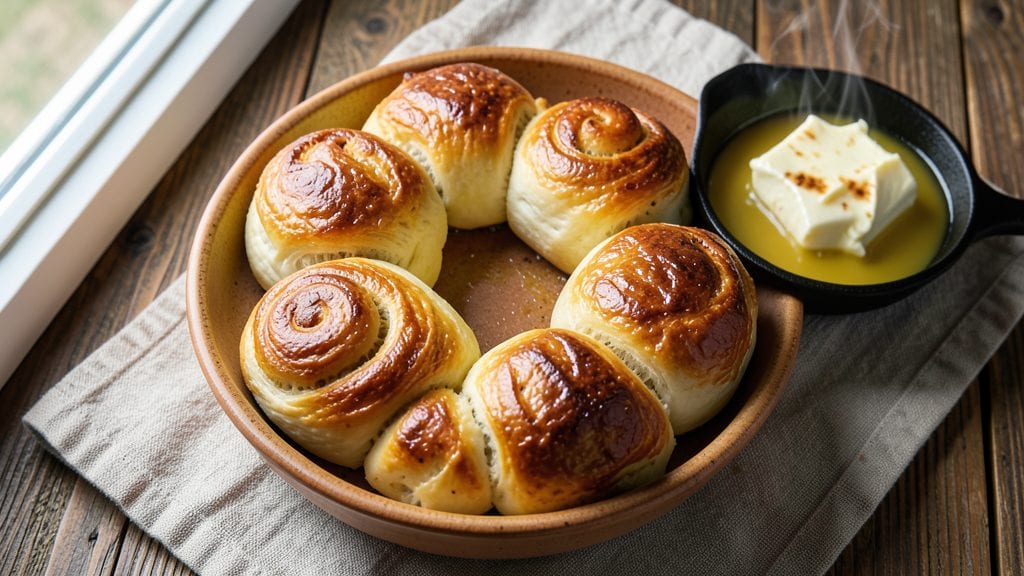
This Texas Roadhouse yeast rolls copycat recipe delivers the signature buttery, pull-apart magic that makes them legendary—flaky layers that separate perfectly and melt in your mouth.
After years of testing variations, I've perfected the dough formula and proofing technique to match the restaurant's signature texture, which relies on precise timing and a high-fat butter content. The secret isn't complicated, but it requires attention to detail during the proofing stage where the dough nearly doubles in size.
What sets these apart from standard dinner rolls is the buttery richness achieved through a cold butter block folded into the dough, creating those signature flaky layers. Unlike many copycat recipes that compromise on texture, this version delivers restaurant-quality results with a crisp exterior and tender, pillowy interior.
The dough comes together in under 20 minutes of active prep time, though total time includes proofing—well worth the wait for that signature pull-apart magic.
By following this method, you'll achieve rolls that are golden brown and perfectly risen, with that signature buttery aroma that fills your kitchen. The key is maintaining proper dough temperature throughout the process, which prevents overproofing and ensures consistent results.
These rolls pair beautifully with any main dish, especially steakhouse favorites, but they're so good they often disappear before the meal even begins.
The beauty of this recipe is its versatility—make a full batch for a crowd or scale it down for a family dinner. The dough can be prepared ahead and refrigerated, making it perfect for meal prep.
Once you try these, you'll never buy store-bought rolls again. Let's get started on mastering the perfect pull-apart texture.
Ingredients for texas roadhouse yeast rolls copycat
Butter, flour, yeast—just nine ingredients transform into Texas Roadhouse's signature golden rolls.
| Ingredient | Amount | Notes |
|---|---|---|
| All-Purpose Flour 🌾 | 4 ½ cups | Sifted for light texture |
| Unsalted Butter 🧈 | 1 ¼ cups | Cold, cubed, high-fat preferred |
| Active Dry Yeast 🍞 | ¼ oz | Or 2.5 tsp, fresh preferred |
| Granulated Sugar 🍚 | 1 tbsp | Feeds yeast activation |
| Warm Water 💧 | ¾ cup | 110°F, not hot |
| Diamond Crystal Kosher Salt 🧂 | 1 ½ tsp | Fine grain preferred |
| Large Eggs 🥚 | 1 whole | Room temperature |
| Whole Milk 🥛 | ¼ cup | Full-fat for richness |
| Extra-Virgin Olive Oil 🫒 | 1 tbsp | For dough softness |
| Cornmeal 🌽 | ½ cup | For dusting work surface |
| Coarse Sea Salt 🧂 | 1 tbsp | For final sprinkle |
The butter is non-negotiable here—Land O'Lakes unsalted or Plugrá are my go-tos, kept cold until the final fold. Grocery store brands work too, but avoid salted butter. The yeast needs to be fresh—if your jar's been open over a month, grab a new packet. Warm the water to 110°F (like baby bath water) to activate the yeast without killing it. For the flour, King Arthur or Bob's Red Mill give the best texture, but any all-purpose works in a pinch. The milk adds tenderness, so don't skimp on the full-fat version.
No unsalted butter? European-style butter (like Bergère) works too, or melt salted butter and let it cool slightly. Out of yeast? Instant yeast at half the amount is a solid swap. The olive oil can be swapped for melted butter if you're really in a bind. For the milk, half-and-half or even evaporated milk adds richness. The cornmeal is just for dusting—use flour if you're fresh out, but it might stick slightly more. Pro tip: if your dough feels too sticky, chill it 10 minutes before shaping.
This dough keeps beautifully—3 days in the fridge wrapped tightly, or 3 months frozen in a sealed bag. For freezing, shape the rolls first, then freeze on a tray before bagging. Thaw overnight in the fridge before baking. The rolls reheat best at 350°F for 5-7 minutes—just until golden again. Make a double batch and freeze half; you'll thank me later when dinner guests arrive and rolls are still warm. Store-bought rolls? Never again.
Why You'll Love This Recipe
- Five-Ingredient Magic: I swear by these five staples—flour, butter, yeast, sugar, and water—because they’re the backbone of actual restaurant rolls. No weird shortcuts, no confusing substitutions. Just mix, let it rise, and boom—golden, fluffy perfection. (Yes, even if I forget to measure the sugar once.)
- Buttery Pillow Soft: That moment when you tear into one and the butter melts into a warm, creamy center? It’s the little things. The recipe balances rich butter with just enough sugar to keep the yeast happy, so every bite feels like a hug from Texas Roadhouse itself.
- Game for Any Meal: Slather them with honey for breakfast, stuff them with pulled pork for dinner, or just serve them warm with gravy when the football’s on. They’re the ultimate blank canvas—no one will guess they’re the same dough I used for all three.
Step-by-step instructions for Texas Roadhouse yeast rolls
Here's the exact method I use to recreate those iconic, buttery Texas Roadhouse rolls at home.
Activate the Yeast for Maximum Rise
In a small bowl, whisk together the 0.75 cup warm water, 1 tbsp granulated sugar, and 0.25 oz active dry yeast. Let it sit for 5-7 minutes until it becomes foamy and bubbly—this confirms the yeast is alive and ready to work. If it doesn't foam, your yeast is dead and you'll need to start over.
I always use warm water around 110°F—too hot and you'll kill the yeast, too cold and it won't activate properly. The sugar feeds the yeast, giving it energy to create those perfect air pockets in your rolls. This step is non-negotiable for light, fluffy dough.
Mix the Dough with Cold Butter for Flaky Layers
In the bowl of a stand mixer fitted with the paddle attachment, combine the 4.5 cups all-purpose flour and 1.5 tsp diamond crystal kosher salt. Mix on low speed to distribute evenly. Add the yeast mixture, 1 whole large egg, and 0.25 cup whole milk, mixing until just combined.
Now for the butter—this is where the magic happens. Add the 1.25 cups cold, cubed unsalted butter and mix on low speed until the dough comes together. The butter should be in small pea-sized pieces. Overmixing develops gluten, which makes the rolls tough. Stop mixing when the dough pulls away from the bowl and looks shaggy.
Knead the Dough Until Silky Smooth
Switch to the dough hook attachment and knead on medium speed for 5-7 minutes until the dough is smooth and elastic. It should be slightly tacky but not sticky—if it's too sticky, add 1 tablespoon flour at a time until it reaches the right consistency. The dough should pass the windowpane test: stretch a piece between your fingers and it should be thin enough to see light through without tearing.
I always knead just until smooth because over-kneading develops too much gluten, which makes the rolls dense. The goal is soft, pillowy texture with those perfect pull-apart layers. Once kneaded, cover the bowl with a damp towel and let it rise in a warm place for 1 hour or until doubled in size.
Shape and Proof for Maximum Fluffiness
Turn the risen dough onto a surface dusted with 0.5 cup cornmeal and gently punch it down to release air. Divide the dough into 12 equal pieces (about 3.5 oz each) and roll each piece into a ball. Arrange them in a greased 9x13-inch baking pan, leaving 1 inch between rolls—they'll expand as they rise.
Cover the pan loosely with plastic wrap and let the rolls proof for 30-45 minutes until they've risen to about 1.5 times their original size. The edges should look slightly puffy and the tops should have rounded nicely. This second rise develops that signature Texas Roadhouse texture—soft centers with crispy tops.
Bake to Golden Perfection
Preheat your oven to 375°F while the rolls proof. Bake for 15-18 minutes until the rolls are golden brown on top and sound hollow when tapped on the bottom. I like to brush the tops with a little extra-virgin olive oil after baking for extra shine and flavor.
Remove from the oven and immediately sprinkle with 1 tbsp coarse sea salt. Let the rolls cool in the pan for 5 minutes before serving—this resting time helps them set and makes them easier to handle. Serve warm with melted butter or honey for that classic Texas Roadhouse experience.
Pro Tips For Making Texas Roadhouse Yeast Rolls Copycat
- TEST YEAST FIRST: I learned this the hard way—skip the test, and you’ll waste a batch. Mix 1 teaspoon yeast with ¼ cup warm water (110°F) and 1 teaspoon sugar. If it bubbles within 5 minutes, your yeast is active. No bubbles? Toss it and grab fresh.
- COOL BUTTER BEFORE CUBING: Cold butter makes flaky layers, but don’t skip softening it first. Press the butter between two sheets of parchment, pound it with a rolling pin until it’s ¼-inch thick, then chill for 20 minutes. This keeps it from melting into a greasy mess during mixing.
- KNEAD JUST ENOUGH: Overwork the dough, and you’ll toughen those rolls into hockey pucks. Mix until the flour is just combined, then knead by hand for 3–4 minutes—until it’s smooth but still soft. No need to tire yourself out; the gluten will catch up.
- STEAM THE PAN: That golden crust? It’s all about steam. Place a metal rack over a baking sheet, pour boiling water into the sheet, then slide the rack into the oven. Once the oven preheats, remove the water and bake the rolls. The residual steam keeps them tender inside.
Troubleshooting great texas roadhouse yeast rolls copycat
Dough Too Sticky?
If your dough feels too sticky after mixing, resist the urge to add too much flour—this can make the rolls dense. Instead, chill the dough in the fridge for 10-15 minutes to firm it up.
I’ve found that using King Arthur all-purpose flour gives just the right balance of stickiness without requiring extra flour. If you must add flour, do it gradually—1 tablespoon at a time—while kneading until the dough is smooth but still slightly tacky. 🧈
Rolls Didn’t Rise Enough
Underproofed rolls are a common issue, especially in cooler kitchens. Ensure your yeast is fresh and your water is 110°F—not too hot or cold. Place your dough in a warm spot, like near a turned-off oven with the light on, or use a proofing box if you have one.
If your kitchen is consistently cold, extend the first rise to 90 minutes and the second rise to 1 hour. Avoid overcrowding the pan—leave at least 1 inch between rolls for proper expansion.
Butter Didn’t Create Layers
The cold butter is essential for those signature flaky layers, so don’t skip it! If your rolls lack flakiness, your butter might have melted too early. Keep the butter cold and cubed until the final fold, and avoid overmixing once it’s added.
For extra flakiness, try folding the butter into the dough twice—once during the initial mix and again after the first rise. This laminates the butter more effectively, creating those restaurant-quality layers. 🔥
Rolls Burned Too Fast
If your rolls brown too quickly but aren’t fully baked inside, cover them loosely with aluminum foil after 10 minutes in the oven. This traps heat and steam, helping them bake through evenly. For a crispier top, brush the rolls with extra-virgin olive oil before baking.
If your oven runs hot, reduce the temperature to 350°F and bake for 20-22 minutes. Always check for doneness by tapping the bottom—they should sound hollow.
Dough Overproofed
Overproofed dough collapses when baked, leaving flat, dense rolls. Keep an eye on your dough during both rises—it should double in size but not collapse. If you see the dough deflating or developing large bubbles, it’s overproofed.
To fix it, punch down the dough gently and let it rise again for a shorter time, say 20-30 minutes, until it’s just puffy. For future batches, store your dough in a cooler spot or refrigerate it between rises to slow fermentation. 💡
Rolls Too Dense
Dense rolls usually mean over-kneading or too much flour. Knead just until the dough is smooth and elastic—about 5-7 minutes in a stand mixer.
If you’ve already added too much flour, try shaping the dough into rolls quickly and baking them at a slightly higher temperature (375°F) for 12-15 minutes to encourage a lighter texture.
For extra tenderness, add 1 tablespoon of olive oil to the dough during mixing, which adds moisture and softness.
Nutrition facts
Frequently asked questions
Can I make these rolls without a stand mixer?
Mix the dough by hand in a large bowl using a wooden spoon or dough whisk until just combined. Then knead on a lightly floured surface for 8-10 minutes until smooth and elastic. The key is to avoid over-kneading—stop when the dough is silky but still slightly tacky. For extra flakiness, fold in the cold butter by hand using the "laminate" method: flatten the dough, sprinkle butter cubes, then fold like a letter. Repeat 2-3 times before final kneading.
Why do your rolls need two rises?
The first rise activates the yeast and develops basic structure, while the second rise creates that signature Texas Roadhouse texture—soft, pillowy centers with crispy tops. The second rise in the pan allows the rolls to expand gently, creating those perfect pull-apart layers. Skipping either rise results in dense rolls that lack the restaurant-quality fluffiness. Think of it like a two-step fermentation process that builds flavor and texture.
How do I store leftovers for maximum freshness?
Cool the rolls completely, then store in an airtight container at room temperature for up to 2 days. For longer storage, freeze shaped (unbaked) rolls on a tray, then transfer to a bag for 3 months. To reheat, bake at 350°F for 5-7 minutes until warm. For extra freshness, brush with melted butter before reheating. Never microwave—it makes rolls gummy! The secret is reheating in the oven to restore that crispy exterior.
Can I use this dough for other shapes?
This versatile dough works beautifully for braided loaves, cinnamon rolls, or even pull-apart garlic knots. For cinnamon rolls, roll out the dough, spread with a spiced butter mixture, then slice and bake. For knots, shape the dough into ropes and tie them before proofing. The high butter content makes it perfect for rich, flavorful variations. Just adjust baking times—usually 5-10 minutes longer than the rolls.
What's the best way to test if my yeast is active?
Mix 1 packet yeast with 2 tbsp warm water and 1 tsp sugar in a small bowl. If it foams within 5-10 minutes, your yeast is active. No foam? Try fresh yeast—old yeast loses potency. For extra insurance, use instant yeast at half the amount (like 1.25 tsp instead of 0.25 oz). Always check your yeast's expiration date before using. A quick test saves time and frustration!