
Sauces & Condiments
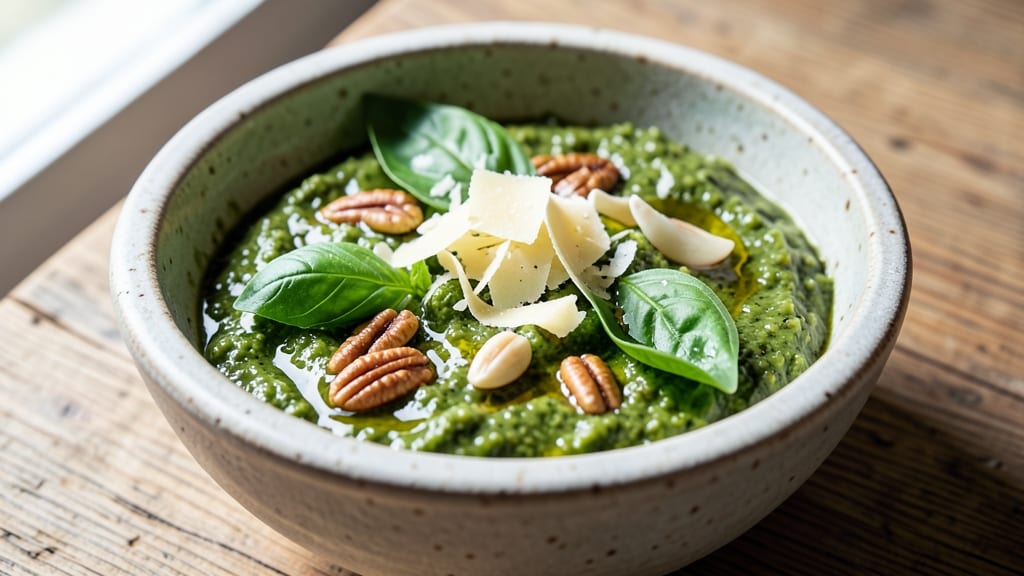
This basil-pine nut pesto recipe delivers the world's best balance of vibrant herbaceousness and nutty richness, with a bright lemon twist that elevates every dish. The secret lies in precise ingredient ratios and a food processor technique that creates a perfectly emulsified sauce—no clumps, no oil separation.
I've perfected this over years of testing, and it's now my go-to for everything from pasta to dips.
The foundation begins with fresh basil leaves, garlic, and pine nuts (or walnuts for a budget-friendly alternative), all pulsed until finely chopped but still retaining texture. A splash of lemon juice and zest adds that signature brightness while balancing the richness of the olive oil and grated parmesan.
What makes this stand out is the emulsification process—just a few seconds of blending with the oil transforms it from a chunky paste into a silky, spreadable sauce.
What you'll end up with is a restaurant-quality pesto that stays vibrant for days, not the dull, oily version that separates after an hour. The lemon zing cuts through the richness, making it versatile enough for pasta, sandwiches, or as a dip for roasted vegetables.
Store it in an airtight container with a thin layer of olive oil on top to preserve freshness for up to a week in the refrigerator.
For variations, swap basil for spinach or sun-dried tomatoes, or use nutritional yeast for a vegan version. The technique remains the same—just adjust the herbs to taste. Let's make the best pesto you've ever tasted.
Ingredients for world's best pesto
Nine ingredients transform into the world's most vibrant, emulsified basil-pine nut pesto with lemon's signature zing.
| Ingredient | Amount | Notes |
|---|---|---|
| Fresh Basil Leaves 🌿 | 3 cups | Bright green, stems removed |
| Pine Nuts 🥜 | ¾ cup | Toasted for nutty depth |
| Garlic Cloves 🧄 | 4 cloves | Peeled, roughly chopped |
| Extra-Virgin Olive Oil 🫒 | 1 cup | High-quality, fruity variety |
| Parmesan Cheese 🧀 | 1 cup | Freshly grated, block preferred |
| Fresh Lemon Juice 🍋 | 2 tbsp | Bright, freshly squeezed |
| Lemon Zest 🍋 | 1 tsp | Fine, vibrant zest only |
| Diamond Crystal Kosher Salt 🧂 | ½ tsp | Fine grain for balance |
| Freshly Ground Black Pepper 🌶️ | ¼ tsp | Freshly cracked for aroma |
The basil is non-negotiable—farmers market leaves have the most vibrant flavor, but grocery store basil works in a pinch (just pick the freshest bunch). Pine nuts can be pricey, so Trader Joe's or Costco offer the best bulk prices. Toast them in a dry pan for 2-3 minutes until fragrant—this deepens their nutty flavor dramatically. For the Parmesan, buy a wedge and grate it yourself—pre-grated cheese lacks the same punch and melts unevenly. The olive oil should be the kind you'd drizzle on bread without hesitation—California extra-virgin brands like Corto or Colavita deliver that fruity, peppery note that makes this pesto sing.
No pine nuts? Walnuts or cashews work beautifully—just toast them first for that same nutty depth. Swapping basil for spinach or arugula gives a slightly different flavor profile, but the technique stays identical. Running low on Parmesan? Pecorino Romano is a fantastic substitute, though it's saltier so adjust the kosher salt accordingly. The lemon juice and zest are where the magic happens—Meyer lemons add a subtle sweetness, but regular lemons work perfectly fine. If you're making this ahead, store the dry ingredients (basil, nuts, cheese) separately from the wet (oil, lemon) until ready to blend—this preserves the basil's freshness for up to 2 days in the fridge.
This pesto keeps beautifully—1 week in the fridge if stored properly. The secret is pouring a thin layer of extra-virgin olive oil over the top before sealing, which creates a protective barrier that preserves the vibrant green color and prevents oxidation. For longer storage, freeze in ice cube trays—3 months with no loss of flavor. The emulsified texture makes it perfect for drizzling, tossing, or dolloping—just remember, a little goes a long way. Double the batch and freeze half; you'll be glad you did.
Why You'll Love This Recipe
- Five-Ingredient Magic: I swear, this is the only pesto I make—no weird blends, no overcomplicating. Fresh basil, toasted pine nuts, garlic, olive oil, and Parmesan? That’s it. The kind of simplicity that makes you question why you ever bought jarred stuff.
- Garlic-Basil Bomb: Between us, the garlic and basil combo here is chef’s kiss—bright, punchy, and just enough heat to linger. I add an extra clove when I’m feeling bold (yes, even on a Tuesday night), and the nutty crunch from those pine nuts? Pure satisfaction.
- Pasta Party Starter: This pesto turns into everything—toss it with pasta, spread it on sandwiches, or drizzle it over roasted veggies. Honestly, I’ve even used it as a marinade for chicken. The olive oil keeps it rich, so it sticks to anything without falling apart.
- Fridge-Friendly Flex: Make a big batch—it keeps for weeks in the fridge, and the flavor only gets deeper. I freeze half in ice cube trays, then pop one cube into sauces or soups later. Budget win? Absolutely. Time win? Even better.
Step-by-step instructions for world's best pesto recipe
Here's my foolproof method for crafting the most vibrant, balanced pesto you'll ever make.
Toast the Pine Nuts for Maximum Flavor
Heat a dry skillet over medium-low heat and add the 0.75 cup pine nuts. Toast them for 3-4 minutes, stirring constantly, until they turn a rich golden brown and release their nutty aroma. Watch them closely—they burn quickly and become bitter if left unattended. Remove from heat immediately once toasted and let cool for 2 minutes. This step develops their natural oils and creates that signature nutty depth that makes this pesto exceptional.
Here's the thing—using pre-toasted pine nuts from a jar misses this crucial step. The fresh toasting brings out flavors that store-bought versions can't match. Transfer the toasted nuts to a cutting board and let them cool completely before processing.
Pulse the Basil, Garlic, and Toasted Nuts
Place the 3 cups fresh basil leaves, 4 cloves garlic cloves, and toasted pine nuts in a food processor. Pulse them together for 15-20 seconds until you achieve a finely chopped consistency—think somewhere between a coarse paste and tiny flecks. You want to preserve some texture so each bite offers that perfect balance of fresh basil and nutty crunch. Don't over-process or you'll end up with a smooth, paste-like consistency that lacks dimension.
This is where the magic begins. The basil should be bright green with just a hint of white stems visible. If your processor isn't powerful enough, do this in batches to ensure even chopping. The garlic should be completely broken down but not puréed into oblivion—you should still see tiny specks when you taste test.
Gradually Incorporate the Olive Oil
With the processor running on low speed, slowly drizzle in the 1 cup extra-virgin olive oil through the feed tube. This gradual addition prevents the mixture from becoming too thick and ensures the oil is evenly distributed. Process for an additional 30-45 seconds until the mixture becomes smooth but still maintains some texture. The oil should coat all the ingredients completely, creating that signature silky consistency we're after.
Real talk: Don't rush this step. The oil needs time to fully emulsify with the other ingredients. If the mixture looks too thick, add 1-2 teaspoons of water to help it come together. You're aiming for a texture that's thick enough to cling to pasta but still spreadable. Taste at this point—you should detect the bright basil, nutty pine nuts, and subtle garlic without any bitterness.
Add the Cheese and Seasonings
Add the 1 cup freshly grated parmesan cheese, 2 tablespoons fresh lemon juice, 1 teaspoon lemon zest, 0.5 teaspoon diamond crystal kosher salt, and 0.25 teaspoon freshly ground black pepper to the processor. Pulse everything together for 10-15 seconds until completely combined. The lemon juice and zest brighten the flavors and prevent the pesto from becoming too heavy. The parmesan should melt into the mixture, creating that rich, cheesy backbone that makes this pesto truly exceptional.
This is the moment that matters: The lemon zest adds a subtle citrus aroma that elevates the entire dish. The freshly ground black pepper provides a gentle heat that balances the richness. Taste again now—you should experience a perfect harmony of flavors where no single ingredient overpowers the others. If needed, adjust the seasoning with a pinch more salt or a splash of lemon juice, but trust your initial measurements first.
Test and Store Properly
Transfer the pesto to a bowl and taste immediately. The fresh basil should sing, the pine nuts should provide nutty depth, and the lemon should add that bright, hidden zing promised in the title. This pesto should be vibrant green with just a hint of white from the parmesan. If it's too thick, thin it with 1-2 teaspoons of water or a splash of pasta water until it reaches your desired consistency. For best results, serve immediately over hot pasta with a sprinkle of additional parmesan.
To store, transfer to an airtight container and cover the surface with a thin layer of extra-virgin olive oil—this prevents oxidation and keeps the pesto fresh. Refrigerate for up to 5 days or freeze for up to 3 months. When reheating, add a splash of water or olive oil to restore the original texture. The key to maintaining that "best" quality lies in this proper storage technique—don't skip the oil barrier.
Pro Tips For Making World'S Best Pesto
- STORE THE BASIL RIGHT: Toss fresh basil leaves in paper towels, wrap them loosely in a damp towel, and stash them in a plastic bag with a few ice cubes. I used to just toss it in the fridge, and by day two, it’d turn to sad, wilted mush—this keeps it crisp for days. (Yes, even if you’re impatient like me.)
- TOAST PINE NUTS LOW: Heat a dry pan over low heat and add pine nuts in a single layer—no crowding. Stir constantly or they’ll burn in seconds. I learned this the hard way after scraping charred bits out of three batches. A minute max, until they’re just golden, not crisp.
- PULSE DON’T PUREE: Use a food processor, but stop before it turns into soup. You want texture—thick, chunky, with visible basil and nuts. Hit pulse 4-5 times, then drizzle in oil while running. Over-blending kills the pesto’s soul; this keeps it vibrant.
- GRATE PARMESMAN FRESH: Skip the pre-grated stuff—it’s powdery and dull. Use a microplane or fine grater and work fast; the cheese starts to dry out within minutes. Add it last, right before serving, so it stays sharp and melty. (Your future self will thank you.)
Storing and reheating this recipe
Fridge Storage Secrets
After making your pesto, transfer it to an airtight glass container—I swear by Pyrex—and cover the surface with a thin layer of extra-virgin olive oil (about 1 tablespoon).
This oil barrier prevents oxidation and keeps the vibrant green color intact for up to 5 days. The oil also acts as a natural preservative, locking in freshness. 💫
Freezing for Long-Term
For longer storage, freeze your pesto in ice cube trays—yes, really! Fill each compartment with pesto, then transfer the frozen cubes to a ziplock bag once solid. This method works perfectly because each cube is a single serving.
It stays fresh for 3 months without losing flavor or texture. Just thaw in the fridge overnight before using.
Reviving Stored Pesto
When you're ready to use stored pesto, add 1 teaspoon of water or a splash of high-quality olive oil to help restore its original consistency. Stir well and taste—you might need to adjust seasoning with a pinch of salt or a squeeze of lemon.
The texture will be slightly thicker after freezing, but that’s easy to fix with a little liquid.
Thawing Tips
If you froze your pesto in a larger batch, transfer it to the fridge 24 hours before using to thaw evenly. Never microwave—it disrupts the emulsification and can make the pesto grainy.
For quick use, let it sit at room temperature for 30 minutes before mixing to bring it back to its silky state.
Reheating for Cooking
If you’re using pesto in a hot dish like pasta or soup, gently warm it in a small saucepan over low heat while stirring. Add 1 tablespoon of pasta water or broth to help it re-emulsify.
Avoid high heat—it can cause the oil to separate and the basil to wilt. This works beautifully for sauces or marinades too!
Nutrition facts
Frequently asked questions
Why does your pesto recipe use lemon juice and zest?
The lemon juice and zest are the secret to balancing the richness of the olive oil and cheese. The acidity brightens the basil flavor while preventing the pesto from becoming too heavy. The zest adds a subtle citrus aroma that elevates every bite—especially when paired with pasta or grilled vegetables.
Can I make this pesto without a food processor?
Use a mortar and pestle for the basil, garlic, and nuts first, then gradually mix in the olive oil by hand. For the cheese and seasonings, stir everything together in a bowl until fully combined. It'll take more effort, but the texture will still be delicious—just slightly chunkier.
What's the best way to use leftover pesto?
Beyond pasta, this pesto shines as a sandwich spread (try it on ciabatta with prosciutto), a dip for crusty bread or roasted veggies, or even a marinade for chicken or fish. For extra flavor, toss it with cooked quinoa or mix into soups at the end. The lemon zing makes it incredibly versatile!
How do I fix pesto that's too thick?
Add 1 teaspoon of water or pasta water at a time while stirring until you reach your desired consistency. For a smoother texture, blend it briefly in a food processor with an extra splash of olive oil. Never add too much liquid at once—you want to maintain that rich, emulsified quality.
What are the best substitutes for pine nuts?
Toasted walnuts or cashews work perfectly—just toast them first to enhance their flavor. For a budget-friendly option, use pepitas (pumpkin seeds), but they add a slightly earthier taste. The key is toasting to maximize flavor depth in the pesto.