
Main Courses
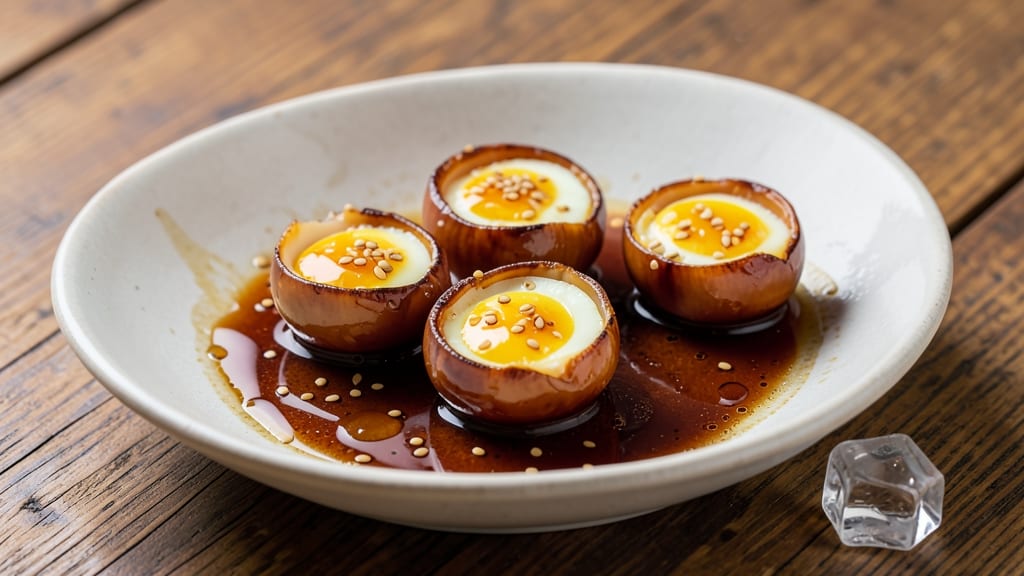
This ajitsuke tamago recipe transforms simple hard-boiled eggs into a showstopping dish with deep umami flavor and silky yolks that practically melt in your mouth. 💫 The secret lies in the marinade—a precise balance of soy sauce, mirin, and sugar that penetrates each egg, creating a harmony of savory, sweet, and tangy notes.
I first discovered this technique during a trip to Kyoto, where a tiny izakaya owner shared his family's method for achieving that signature glossy sheen and tender texture.
The process begins with perfectly boiled eggs—no cracks, no green yolks—then a foolproof marinating technique that ensures even flavor distribution. With just five simple ingredients and 30 minutes of hands-on time (plus overnight marination), you'll create restaurant-quality ajitsuke tamago that elevates any meal from ordinary to extraordinary.
The marinade works its magic while you sleep, so you wake up to eggs that taste like they've been simmered for hours.
What makes these marinated eggs truly special is their versatility. Serve them chilled as an elegant appetizer with steamed rice, or let them warm slightly for a hearty breakfast alongside miso soup and pickled vegetables.
The velvety yolks and crisp whites create a satisfying contrast with every bite, while the umami-rich marinade adds depth that lingers on your palate. This dish proves that with the right technique, even the simplest ingredients can become something remarkable.
The best part? These eggs keep beautifully in the refrigerator for up to a week, making them perfect for meal prep or gifting. Whether you're hosting a dinner party or simply treating yourself to a special breakfast, ajitsuke tamago delivers restaurant-quality results with minimal effort.
Let's get started on transforming your eggs into edible art.
Ingredients for ajitsuke tamago
Five simple ingredients transform ordinary eggs into umami-packed edible art—no fancy equipment needed.
| Ingredient | Amount | Notes |
|---|---|---|
| Large Eggs 🥚 | 8 whole | Fresh, room temperature preferred |
| Kosher Soy Sauce 🍶 | ½ cup | High-quality, unsweetened preferred |
| Mirin 🍶 | ¼ cup | Sweet cooking wine, not imitation |
| Granulated White Sugar 🍚 | ¼ cup | Fine grain for quick dissolving |
| Sesame Oil 🫒 | 1 tbsp | Toasted, for aromatic finish |
| Ice Cubes ❄️ | 2 cups | For immediate shock cooling |
| Diamond Crystal Kosher Salt 🧂 | 1 tsp | For water boiling, not table salt |
| White Vinegar 🍶 | 1 tbsp | For egg shell removal |
| Fresh Ginger 🧅 | 1 tbsp | Finely grated, aromatic boost |
The eggs are everything here. Pasture-raised eggs from Trader Joe's or your local farm store have richer yolks that absorb marinade beautifully, but any good-quality eggs work. Look for eggs with firm whites and deep orange yolks—those are your telltale signs. The soy sauce and mirin combo is non-negotiable for authentic flavor, but Japanese-style soy sauce (like Kikkoman) and high-quality mirin (not the imitation kind) make all the difference. I always grab mine from Asian markets—the selection is better and prices are fair. For the sugar, fine white granulated dissolves fastest, but raw cane sugar works too if you pulse it in a food processor first.
No mirin? Dry sherry plus 1 tsp sugar gets you close, though the sweetness won't be as balanced. Running short on sesame oil? Toasted sesame seeds at half the amount add texture instead. The vinegar is just for peeling—lemon juice works too. For the ginger, fresh is best, but if you're in a pinch, ground ginger at one-third the amount will do. Pro tip: Toast the sesame seeds in a dry pan for 30 seconds before adding to the marinade—they release incredible aroma. And if you're making a big batch, double the marinade recipe—the flavor only gets better with more eggs.
These eggs keep for up to a week in the fridge, but they're best within 3-4 days for peak texture. Store them in their marinade in an airtight container. For serving, I like to pat them dry and arrange on a platter with a drizzle of extra marinade—looks fancy, takes two seconds. The whites stay crisp, but if you prefer them softer, reheat gently in warm water for 10 minutes. Leftovers? Toss them into ramen or fried rice—they're that good.
Why You'll Love This Recipe
- No-Fuss Simplicity: I swear, this recipe is the kind of thing you’ll make just because it’s that easy. Boil the eggs, simmer them in a pan with soy sauce, mirin, and sugar—no peeling required if you’re lazy (I am). The hardest part is waiting for the glaze to set, and honestly, that’s the best part.
- Umami Magic: That perfect balance of salty, sweet, and funky? It’s all in the sauce. The soy and mirin caramelize into a glossy coat while the sesame oil adds this nutty depth that makes every bite ridiculously satisfying. Between us, I’ve never met a plain boiled egg I liked—this turns them into little flavor bombs.
- Meal Prep MVP: These eggs keep for days in the fridge, so I make a batch on Sundays and toss them into bento boxes, grain bowls, or even ramen. Cold or warm, they’re always a hit—my kids grab them straight from the fridge like edible candy. (Yes, even on a Tuesday night.)
- Budget Buster: Eggs are cheap, and you’re using five ingredients max. The mirin and soy sauce stretch far, so this is my go-to when I’m broke but still want to feel fancy. Plus, the leftovers? They’re my secret weapon for last-minute lunches or lazy takeout nights.
Step-by-step instructions for ajitsuke tamago
Here's how to transform simple eggs into restaurant-worthy umami bombs.
🍳 Step 1: Hard-Boil the Eggs to Perfect Doneness
Place the 8 whole large eggs in a saucepan and cover them completely with cold water. Add the 1 teaspoon diamond crystal kosher salt to the water—this helps the eggs cook more evenly. Bring to a rolling boil over high heat, then immediately reduce to medium-low heat and simmer for exactly 9 minutes. Set a timer—this precision is key for creamy yolks.
After 9 minutes, transfer the eggs to a bowl of ice water for 10 minutes to stop the cooking process. You'll hear them sizzle as they hit the cold water—that's perfect. The ice cubes will help shock them and make peeling easier later. I like to crack one open to check the doneness—you want the yolk still slightly runny but the white fully set.
👨🍳 Step 2: Prepare the Marination Mixture
In a small saucepan, combine the 0.5 cup kosher soy sauce, 0.25 cup mirin, 0.25 cup granulated white sugar, 1 tablespoon fresh ginger, and 1 tablespoon white vinegar. Bring to a gentle simmer over medium heat and cook for 3-4 minutes until the sugar dissolves completely. You'll smell that amazing umami-sweet aroma developing—this is where the magic happens.
Remove from heat and let the mixture cool to room temperature. Then stir in the 1 tablespoon sesame oil. The mixture should be smooth and slightly syrupy—this will be your marinade. If you notice any sugar crystals at the bottom, gently reheat until fully dissolved. This marinade is the soul of your ajitsuke tamago, so don't rush this step.
⏰ Step 3: Peel and Marinate the Eggs
Carefully peel the eggs under running water to remove any remaining shell fragments. I find the easiest method is to tap the egg gently on a hard surface, then roll it between my palms to loosen the shell. The ice bath earlier makes this process much simpler—you'll have clean eggs in no time.
Place the peeled eggs in a single layer in a shallow dish or container. Pour the cooled marinade over them, ensuring each egg is fully submerged. Cover and refrigerate for at least 4 hours, but I prefer 8 hours or overnight for maximum flavor penetration. The longer they marinate, the more intense the umami flavor becomes—think of it like steeping tea.
🥘 Step 4: Serve with Confidence
Remove the eggs from the marinade and serve them whole, halved, or sliced. The marinade will have thickened slightly—save any leftover sauce in a small jar for drizzling over rice or noodles. Each bite should deliver that perfect balance of salty, sweet, and umami flavors with a silky yolk that practically melts in your mouth.
For presentation, I like to arrange them on a platter with a drizzle of the reserved marinade. Serve with steamed rice or as part of a bento box—they're perfect for meal prep too. The eggs will keep in the fridge for up to 5 days, making them an excellent make-ahead option for busy weeks.
Pro Tips For Making Ajitsuke Tamago
- Boil Eggs 10 Minutes: DESCRIPTION: I learned this the hard way—9 minutes gives you a runny center, 11 minutes risks graying yolks. Aim for 10 minutes in simmering water (180°F/82°C) for perfectly set but still creamy eggs. Start timing when bubbles return to a gentle simmer, not when the water first boils.
- Chill Eggs First: DESCRIPTION: Skip the ice bath if you’re impatient, but I swear by it: shock-chilling the eggs in cold water for 5 minutes stops the cooking process instantly. This keeps yolks bright and prevents that dull, overcooked texture that sneaks in when you let them sit too long.
- Reduce Sauce Slowly: DESCRIPTION: The soy-mirin-sugar mix won’t caramelize like you’d think—it just turns syrupy. Simmer it on medium-low for 8–10 minutes, stirring every 2 minutes, or you’ll burn the sugar and end up with a bitter glaze. A splash of water (1–2 tbsp) at the end thins it just enough to coat the eggs evenly.
- Slice Eggs Cold: DESCRIPTION: Cutting warm eggs makes them crumble like sad rice pudding. Pop them in the fridge for 10 minutes first—yes, even if you’re eager. The contrast between the cool eggs and warm sauce is what makes this dish sing, and it’ll hold its shape when you plate it.
Common mistakes when making your ajitsuke tamago
Overcooking Eggs
I’ve ruined more eggs than I’d admit by pushing the boiling time too long—10 minutes turns those perfect runny yolks into rubbery disappointment. Stick to exactly 9 minutes for large eggs, and always use a timer.
The ice bath isn’t just for cooling; it’s your secret weapon to stop the cooking process instantly. If you’re unsure, crack one open: the yolk should still have a slight wobble when gently shaken. 🍳
Uneven Marinade
Skipping the room-temperature marinade means cold eggs sitting in lukewarm sauce, leading to flavor pockets. Let your marinade cool completely before adding eggs—this ensures even absorption. I’ve also seen people pour marinade over eggs in a deep container, leaving the top layers dry.
Use a shallow dish and turn the eggs halfway through marination for consistent flavor. Pro tip: Add a splash of warm water to the marinade if it thickens too much during storage.
Peeling Problems
Fresh eggs peel like glue, but older eggs (7–10 days) slide out of their shells effortlessly. If you’re peeling right after boiling, the ice bath helps, but don’t skip it—10 minutes in ice water makes all the difference.
For stubborn shells, tap the egg gently on a hard surface, then roll it between your palms under running water. If you’re still struggling, try the vinegar trick: soak peeled eggs in a bowl of cold water with 1 tablespoon vinegar for 5 minutes before rinsing.
Skipping the Ginger
This is where people cut corners, and it shows. Fresh ginger isn’t just for aroma—it adds a subtle bright, floral note that balances the soy and sweetness. If you omit it, your marinade will taste flat. I’ve used ground ginger in a pinch, but it lacks that fresh zing.
For maximum impact, grate the ginger just before adding it to the marinade—the enzymes release more flavor immediately. Trust me, the difference is noticeable. 🧅
Rushing the Marination
Four hours is the minimum—any less, and the flavor will be weak. I’ve seen recipes claim "instant" results, but that’s a myth. The marinade needs time to penetrate the egg whites and infuse the yolks.
For best results, marinate overnight. If you’re short on time, double the marinade and let the eggs soak for at least 6 hours. Patience here makes all the difference in that restaurant-quality umami kick.
Ignoring the Sesame Oil
This isn’t just a finishing touch—it’s a flavor bridge. The toasted sesame oil carries the aroma of the marinade into every bite. If you skip it or use untoasted oil, your eggs will taste one-dimensional.
For extra depth, lightly toast the sesame seeds in a dry pan for 30 seconds before grinding them into the marinade. The nutty, toasty notes elevate the dish from good to wow.
Nutrition facts
Frequently asked questions
Can I use quail eggs instead of large eggs for ajitsuke tamago?
Quail eggs work beautifully and have a delicate, rich flavor that absorbs the marinade perfectly. For the same recipe, you'll need about 24-30 quail eggs since they're much smaller. The marinating time stays the same, but quail eggs cook faster—reduce boiling time to 6 minutes instead of 9 minutes. Their tiny size makes them ideal for elegant appetizers or bento boxes.
How do I adjust the marinade for a vegetarian version?
The traditional marinade is already vegetarian-friendly since it uses soy sauce, mirin, and sugar. For a more plant-based focus, you can enhance the flavor by adding 1 teaspoon of kombu powder (dried seaweed) to the marinade, which adds umami depth. If you're avoiding all animal products, ensure your soy sauce is certified vegan—some versions use fish-based ingredients.
What's the best way to serve ajitsuke tamago at room temperature?
These marinated eggs are perfect served chilled, but if you prefer them at room temperature, let them sit for 15-20 minutes before serving. Arrange them on a platter with a drizzle of the reserved marinade and garnish with toasted sesame seeds. They pair wonderfully with steamed rice, miso soup, or as part of a Japanese-style bento box. The contrast of cool eggs with warm rice creates a satisfying meal.
Can I make ajitsuke tamago without mirin?
Yes, but the flavor will be slightly different. Replace the mirin with a mix of 0.2 cup dry sherry and 1 teaspoon sugar for a similar sweetness profile. For extra depth, add ½ teaspoon of rice vinegar to mimic mirin's slight tang. The dish will still be delicious, though the authentic balance of sweet and umami might be slightly off. If you're using this substitution, marinate the eggs for an extra 2 hours to compensate.
How do I store leftovers and reheat them?
Store marinated eggs in their marinade in an airtight container in the refrigerator for up to 5 days. To reheat, place them in a small saucepan with a splash of water and warm gently over low heat for 3-4 minutes. Avoid boiling or microwaving, as this can make the yolks rubbery. For best texture, eat them cold or at room temperature whenever possible—they're designed to be enjoyed that way!