
Breakfast & Brunch
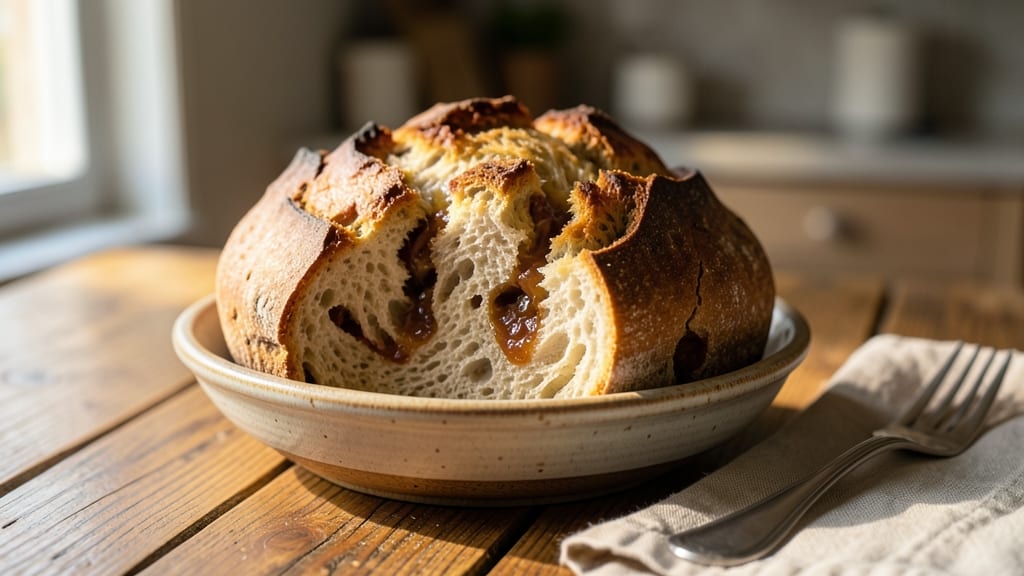
This apricot sourdough bread recipe transforms your morning toast into a gourmet experience with its jam-infused crust and sweet-tart fruit pockets. The secret lies in blending ripe apricot jam into the dough, creating a crust that crackles with golden perfection while revealing bursts of fruity flavor in every bite.
I developed this recipe after years of perfecting sourdough techniques, ensuring the apricot enhances—not overpowers—the bread's natural tang.
The process begins with a robust sourdough starter, which adds depth to the flavor profile while keeping the bread digestible.
You'll mix the dough, incorporate the apricot jam in a way that creates pockets of sweetness, and let it ferment for 12-14 hours—this slow rise develops the bread's signature texture and flavor. The result? A loaf with a crisp, caramelized crust and a tender crumb studded with jammy surprises.
Baking at 375°F for 35-40 minutes delivers a loaf that's both rustic and refined, with a rich aroma that fills your kitchen. The apricot jam swirls caramelize beautifully, creating pockets of jammy goodness that contrast perfectly with the bread's tangy undertones.
This isn't just breakfast—it's a centerpiece for brunch, charcuterie boards, or a simple snack with butter.
Perfect for sourdough enthusiasts or anyone craving a bread with unexpected depth, this recipe delivers restaurant-quality results at home. The apricot infusion adds a touch of elegance without sacrificing the bread's classic sourdough character. Let's get started on creating your own jam-infused loaf!
Ingredients for apricot sourdough bread
Fourteen simple ingredients blend to create a loaf where apricot and sourdough dance perfectly.
| Ingredient | Amount | Notes |
|---|---|---|
| Active Sourdough Starter 🍞 | ½ cup | Unfed, bubbly, and active |
| All-Purpose Flour 🌾 | 4 cups | Bread flour preferred for better structure |
| Ripe Apricot Jam 🍑 | ½ cup | High-quality, chunk-free preferred |
| Granulated Sugar 🍚 | 1 tbsp | For subtle sweetness balance |
| Instant Yeast 🍞 | ¼ tsp | Ensures proper fermentation |
| Diamond Crystal Kosher Salt 🧂 | 1 ½ tsp | Fine grain for even distribution |
| Unsalted Butter 🧈 | ¼ cup | Cold, cubed for dough enrichment |
| Whole Milk 🥛 | ¼ cup | Warmed to room temperature |
| Large Egg 🥚 | 1 whole | Room temperature for better mixing |
| Cornmeal 🌽 | ¼ cup | For dusting and crisping crust |
| Water 💧 | 1 ½ cups | Room temperature for hydration |
The sourdough starter is non-negotiable here—it's what gives this bread its signature tang. Whole Foods or local bakeries often have high-quality starters if you don't maintain your own. Look for one that's bubbly and active, not flat or sluggish. The apricot jam should be ripe and high-quality—Smucker's or Bonne Maman are reliable brands, but avoid those with large fruit chunks if you prefer smooth pockets. For the flour, King Arthur or Caputo Tipo 00 elevate the texture, though all-purpose works in a pinch. The butter matters too—use Plugrá or Land O'Lakes unsalted for richness. If you're feeling adventurous, try a mix of butter and olive oil for a Mediterranean twist.
No apricot jam? Peach or plum jam works beautifully, though the flavor will shift slightly. Running out of bread flour? All-purpose plus 1 tbsp vital wheat gluten mimics its structure. The milk can be swapped for plant-based milk like oat or almond, but the dough may be slightly less tender. For a vegan version, use flax eggs (1 tbsp ground flax + 3 tbsp water per egg) and vegan butter. The egg is optional but adds richness—skip it if you prefer a lighter crumb. If your jam is particularly thick, warm it slightly to make it easier to incorporate into the dough. And trust me, don't skip the cornmeal—it's what gives that perfect crispy crust.
This dough needs time—12-14 hours at room temperature for the best flavor. Store it in a lightly oiled bowl covered with a damp towel to prevent drying. The shaped loaf keeps well for 3 days at room temperature, wrapped in a clean kitchen towel. For longer storage, freeze the baked loaf for up to 3 months. To reheat, wrap in foil and warm in a 350°F oven for 10 minutes. The jam pockets caramelize beautifully when reheated, so it's worth the extra step. And if you make extra dough, freeze it for up to 2 weeks—just let it come to room temperature before shaping.
Why You'll Love This Recipe
- I’ll be real: spreading that jam-studded dough onto a baking sheet takes about 10 minutes. The sourdough starter does the heavy lifting, so I’m just shaping, swirling, and baking—no kneading, no fuss.
- Sweet Swirl Magic: I’ll be real: spreading that jam-studded dough onto a baking sheet takes about 10 minutes. The sourdough starter does the heavy lifting, so I’m just shaping, swirling, and baking—no kneading, no fuss.
- Fruit-Filled Crunch: That first bite? Warm, pillowy bread with bursts of jam-soaked sweetness—like dessert had a bread baby. The sugar caramelizes just enough to make it taste homemade, even if I’m using store-bought jam.
- Breakfast or Snack Hero: I swear, this bread is my go-to for lazy mornings or after-school pick-me-ups. Toast it for a quick breakfast, pack slices for lunch, or serve it with butter at brunch—no one will guess it’s this easy.
Step-by-step instructions for apricot sourdough bread
This method delivers a crust infused with jam and a tender crumb—every bite balances sweetness with sourdough tang.
Prepare the Dough with Jam and Hydration
In a large mixing bowl, combine the 0.5 cup active sourdough starter, 1.5 cups water, and 1 tbsp granulated sugar. Let this sit for 10 minutes until the sugar dissolves completely and the starter becomes slightly frothy. This activates the yeast and creates a flavor base.
Next, add the 1 whole large egg, 0.25 cup whole milk, and 0.5 cup ripe apricot jam to the bowl. The jam will create pockets of sweetness throughout the dough, so don't worry about fully dissolving it—small chunks will enhance texture and flavor. Mix these ingredients together until smooth, then gradually incorporate the 4 cups all-purpose flour and 1.5 tsp diamond crystal kosher salt. Use a wooden spoon or dough whisk to avoid developing too much gluten at this stage.
Once combined, knead the dough by hand for 5-7 minutes until it forms a shaggy, slightly sticky ball. The dough should be soft but not wet—if it feels too sticky, add 1-2 tablespoons of flour at a time until it comes together. This step ensures proper gluten development for a light, airy crumb.
Incorporate Butter and Begin Fermentation
Cut the 0.25 cup unsalted butter into small cubes and distribute them evenly over the surface of the dough. Fold the butter into the dough using a dough scraper or your hands, pressing gently to encourage even distribution. The butter will create pockets of richness that melt during baking, contributing to a tender crumb.
Transfer the dough to a lightly oiled bowl, cover it tightly with plastic wrap or a damp kitchen towel, and let it ferment at room temperature for 1-2 hours. You'll know it's ready when the dough has nearly doubled in size and exhibits small bubbles along the surface. This fermentation step develops flavor and structure—don't rush it, even if the dough seems slow to rise.
After the initial fermentation, perform a "fold and turn" to strengthen the gluten. Wet your hands and gently deflate the dough, then fold it over itself two or three times. Rotate the bowl a quarter turn after each fold to ensure even tension. Cover and let it rest for another 30-45 minutes before shaping.
Shape and Proof the Dough
Lightly dust a clean work surface with 0.25 cup cornmeal to prevent sticking. Turn the dough out onto the surface and shape it into a round loaf or a free-form boule. For a jam-infused crust, gently press the 0.5 cup ripe apricot jam into the outer surface of the dough, spreading it evenly. This step ensures the jam is evenly distributed and creates that signature sweet-tart crust.
Place the shaped dough into a lightly greased loaf pan or onto a parchment-lined baking sheet, seam-side up. Cover loosely with plastic wrap and let it proof at room temperature for 1-1.5 hours, or until the dough has risen by about 50%. The dough should feel springy when pressed gently with a finger—this indicates it's ready for baking.
Bake to Golden Perfection
Preheat your oven to 375°F. If using a loaf pan, bake the bread for 35-40 minutes until the crust is deep golden brown and the internal temperature reaches 190°F. If baking free-form, place a tray of water in the oven to create steam, which helps develop a crispy crust. Bake for 30-35 minutes, rotating the pan halfway through for even browning.
You'll know the bread is fully baked when it sounds hollow when tapped on the bottom. Remove it from the oven and let it cool on a wire rack for at least 30 minutes before slicing. This resting period allows the crumb to set and prevents the bread from becoming gummy.
Serve Warm for Maximum Flavor
Slice the bread into thick slices and serve warm for the best texture and flavor. The jam-infused crust will be slightly sticky and aromatic, while the interior remains soft and pillowy. Pair it with butter, honey, or a smear of cream cheese for an elevated breakfast or snack.
This apricot sourdough bread keeps well at room temperature for 2-3 days in an airtight container, though it's best enjoyed fresh. For longer storage, slice and freeze individual portions—just thaw at room temperature before serving.
Pro Tips For Making Apricot Sourdough Bread
- Test Your Starter First: Your sourdough starter should float in water like a buoy before baking—if it sinks, give it another 1-2 hours of feeding. I’ve ruined a batch by skipping this step and ended up with dense, flat bread that tasted more like a sad pancake than artisanal sourdough.
- Swirl the Jam In: Don’t just dump apricot jam in the center—spread it in a thin, even layer and fold it into the dough like you’re tucking in a blanket. This guarantees every slice gets that jammy burst without a gooey, uneven mess. (Yes, even if it looks messy mid-fold.)
- Skip the Overproofing: Sourdough loves patience, but apricot jam speeds up fermentation—stop shaping when the dough rises just past the bowl’s rim, not double. Overproofed dough with jam turns gummy and collapses like a sad soufflé. Trust your eyes, not your watch.
- Brush with Water: Before scoring, wet your blade with water and swipe it lightly over the dough’s surface. The jam will caramelize faster, creating a glossy, crackly crust instead of a dry, jam-crusted exterior. (I know, it sounds counterintuitive—but it works.)
Regional styles of this recipe
French Baguette Twist
Inspired by Parisian bakeries, transform this recipe into apricot sourdough baguettes by dividing the dough into three equal portions. Shape each into a long, tapered loaf (about 12 inches) and brush the tops with a mix of 1 egg yolk + 1 tbsp water before baking.
For extra flair, sprinkle coarse sea salt and 1 tsp apricot jam on the crust before baking at 425°F for 20-25 minutes. The high heat creates a crispy, golden crust with jam pockets that burst when sliced. 🥖
Italian Focaccia Style
For a Mediterranean twist, press the dough into a 9x13-inch pan, dimpling the surface with your fingers. Drizzle 3 tbsp olive oil over the top, then spread ¼ cup apricot jam in a lattice pattern.
Add cherry tomatoes and fresh rosemary for color and aroma. Bake at 375°F for 25-30 minutes until the crust is golden and fragrant. This version is perfect for brunch or antipasto platters.
Swedish Cardamom Bread
Infuse the dough with 1 tsp ground cardamom and ½ tsp vanilla extract for a Scandinavian-inspired loaf. Shape into a round boule and press 2 tbsp apricot jam into the crust before baking. The cardamom adds a warm, aromatic depth that pairs beautifully with the apricot’s sweetness.
Bake at 375°F for 30 minutes until the crust is deep golden. Serve with Swedish butter or jam for a cozy breakfast. 🌟
German Pretzel Variation
Create apricot sourdough pretzels by shaping the dough into 4 pretzel sticks (about 8 inches long). Boil in 1 quart water with ½ cup baking soda and 1 tbsp salt for 30 seconds, then bake at 400°F for 12-15 minutes.
Brush with 1 egg wash and sprinkle coarse salt before baking. For extra flavor, drizzle 2 tbsp apricot jam over the baked pretzels. These are perfect for snacking or pairing with German mustard.
Moroccan Orange-Blossom Bread
Add 1 tsp orange blossom water and ½ tsp ground cinnamon to the dough for a fragrant North African twist. Shape into a round loaf and press 2 tbsp apricot jam mixed with 1 tsp honey into the crust.
Bake at 375°F for 30 minutes until the crust is golden and aromatic. This version is ideal for serving with Moroccan tea or as a sweet snack with dates and nuts.
American Cinnamon Swirl
For a classic American touch, mix 1 tbsp cinnamon and ½ cup brown sugar into the dough before shaping. Roll the dough into a log, then spread ¼ cup apricot jam over the surface and roll it up tightly.
Slice into 1-inch rounds and bake at 350°F for 15-20 minutes until golden. These apricot cinnamon rolls are perfect for breakfast or dessert—just drizzle with glaze after baking. 🍯
Nutrition facts
Frequently asked questions
Can I substitute apricot jam for another fruit preserve?
Peach, plum, or even raspberry jam work beautifully—just adjust the sweetness to taste. For a bolder flavor, try mango or passionfruit preserves. The key is using a smooth, seedless jam that won't disrupt the dough's texture. If using chunky preserves, strain them first to avoid uneven distribution.
Why does my sourdough starter need to be "active" for this recipe?
An active starter (bubbly and doubled in 4-6 hours) ensures proper fermentation, which develops the bread's signature tang and light texture. A sluggish starter won't rise enough, resulting in a dense loaf. If your starter is weak, feed it daily with 1:1:1 flour/water/starter ratio for 24 hours before baking.
How do I fix a dough that's too sticky after mixing?
Add flour 1 tablespoon at a time until the dough pulls away from the bowl but doesn't crumble. Overworking it will toughen the crumb, so keep kneading gentle. For extra insurance, chill the dough for 30 minutes before shaping—this firms up gluten strands naturally.
Can I make this bread without a loaf pan?
Yes! Shape the dough into a free-form boule or batard, then bake on a parchment-lined tray. For extra crust color, preheat a baking stone or cast-iron skillet in the oven. Brush the dough with water before baking to create steam, which helps develop that crispy crust. Bake for 30-35 minutes at 375°F.
What's the best way to reheat sliced apricot sourdough?
Wrap slices in foil and warm in a 350°F oven for 5-7 minutes to restore crispiness. For a quick fix, toast in a dry skillet over medium heat for 1-2 minutes per side. The jam pockets caramelize beautifully when reheated—perfect for a gourmet toast!