
Soups & Stews
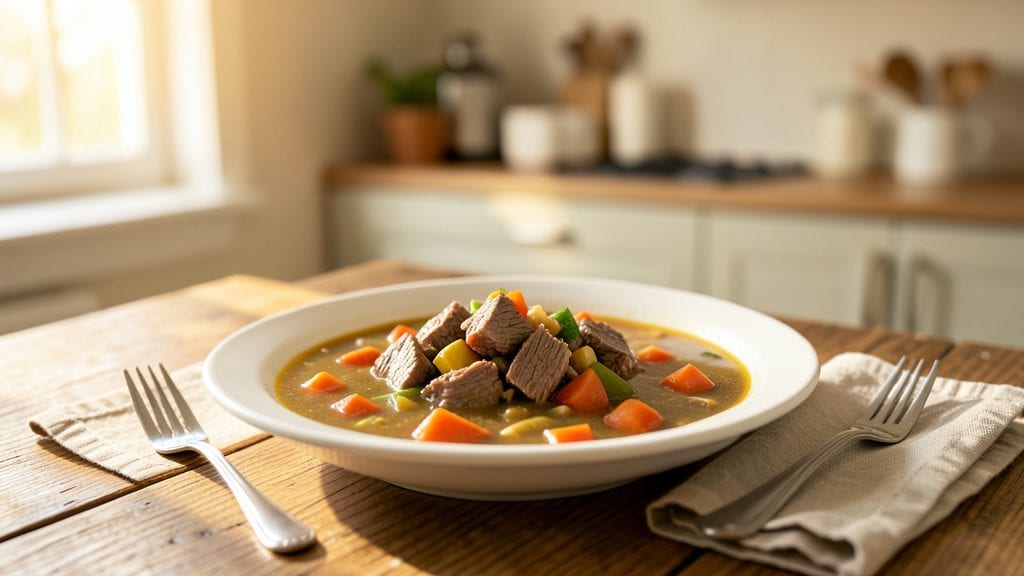
This beef brisket vegetable soup transforms tough cuts into melt-in-your-mouth perfection through slow-simmered technique. The key lies in low-and-slow cooking, where brisket becomes fork-tender while absorbing rich, savory flavors from aromatic vegetables and herbs.
I developed this recipe after years of perfecting the balance between hearty texture and delicate broth—no shortcuts here, just restaurant-quality depth at home.
The secret weapon is a long marinade that tenderizes the brisket before it even hits the pot, while vegetables like carrots, celery, and potatoes release their natural sweetness into the broth.
This isn't just soup—it's a complete meal in one bowl, packed with protein, fiber, and warming spices that make every spoonful satisfying. The result? A velvety broth with substantial chunks of beef that practically fall apart when you stir.
What makes this recipe professional-grade is the precision in timing and technique—no overcooked vegetables or dry meat here. We'll use a Dutch oven to maintain even heat distribution, and the final touch of fresh herbs brightens the rich flavors without overpowering them.
Whether you're feeding a family or meal prepping for the week, this soup delivers comfort in every bite.
Perfect for chilly evenings or when you crave something substantial yet simple to prepare. The beauty of this recipe lies in its versatility—use any seasonal vegetables you have on hand, and adjust the spice level to your preference.
Let's create a bowl of warmth that feels like a hug in soup form.
Ingredients for beef brisket vegetable soup
Six hearty ingredients transform tough brisket into velvety, restaurant-worthy soup.
| Ingredient | Amount | Notes |
|---|---|---|
| Beef Brisket 🥩 | 2 ½ lb | Flat cut, trimmed of excess fat |
| Yellow Onion 🧅 | 1 whole | Medium size, roughly chopped |
| Carrots 🥕 | 1 ½ lb | Whole, peeled, cut into chunks |
| Celery Stalks 🧅 | 4 whole | Fresh, cut into 1-inch pieces |
| Russet Potatoes 🥔 | 2 lb | Peeled, cut into 1-inch cubes |
| Garlic Cloves 🧄 | 6 cloves | Fresh, peeled, lightly crushed |
| Tomato Paste 🍅 | ½ cup | High-quality, no sugar added |
| Dry Red Wine 🍷 | 1 cup | Bold Cabernet Sauvignon preferred |
| Beef Broth 💧 | 4 cups | Homemade or low-sodium store-bought |
| Bay Leaves 🌿 | 2 whole | Fresh or dried, removed before serving |
| Thyme Sprigs 🌿 | 4 whole | Fresh, stems removed |
| Black Peppercorns 🌶️ | 1 tsp | Freshly cracked, coarse grind |
| Salt 🧂 | 1 ½ tsp | Diamond Crystal kosher salt |
| Olive Oil 🫒 | 2 tbsp | Extra-virgin, for searing |
| Fresh Parsley 🌿 | ¼ cup | Chopped, for garnish |
The brisket is non-negotiable here—flat cut gives you that perfect balance of tenderness and texture. Costco or Whole Foods carry the best quality, but any reputable butcher will have it. Look for bright red meat with good marbling, not gray or slimy. I always buy mine a day ahead and let it sit uncovered in the fridge—this helps it tenderize faster. The 2.5 lb serves six generously, with leftovers that taste even better the next day. For the vegetables, organic is ideal (especially carrots and celery), but conventional works fine if you give them a good rinse.
No red wine? Beef broth with an extra splash of balsamic vinegar works just as well. Fresh thyme is ideal, but dried thyme at one-third the amount gets you close. The tomato paste can be the squeeze-tube kind from Trader Joe's—it's perfect for this recipe. For the broth, homemade is best, but Swanson or Pacific Foods low-sodium versions are solid shortcuts. If you're using dried bay leaves, toast them lightly in a dry pan for 30 seconds first—worth the extra minute for deeper flavor. The potatoes should be waxy (like Yukon Gold) for the best texture, but russets work too if that's what you've got.
This soup tastes even better the next day, so make a double batch if you can. Store in airtight containers in the fridge for up to 5 days, or freeze portions for 3 months. I like to portion it into individual containers for easy lunches—just reheat with a splash of water or broth. The brisket reheats beautifully, but if it feels dry, add a little extra broth when warming. Fresh parsley wilts fast, so store it in a damp paper towel in a sealed container. The soup's flavor actually improves after a day as everything melds together.
Why You'll Love This Recipe
- One-Pot Wonder: I swear by this recipe—just toss everything into a big pot, add water, and let it simmer. No fancy techniques, no extra bowls, and honestly? The brisket practically melts into the broth on its own.
- Deep, Rich Flavor: That beef brisket doesn’t just add protein—it infuses the soup with a slow-cooked richness you won’t find anywhere else. The onions and carrots caramelize right in the broth, giving it a depth that feels like a hug in a bowl.
- Meal Prep MVP: Between us, this is my go-to for busy weeks. Make a double batch on Sunday, and you’ve got hearty lunches for days. The potatoes stay tender, the brisket stays juicy, and it tastes just as good reheated as it does fresh.
- Budget-Friendly Luxury: You’re getting a full meal for pennies—brisket is cheaper than steak, and the veggies stretch it into four servings. Plus, leftovers taste even better the next day, so you’re basically getting two meals for the price of one.
Step-by-step instructions for beef brisket vegetable soup
Here's how to build a deeply flavorful brisket soup with rich, tender meat and vibrant vegetables.
Sear the Beef Brisket for Deep Flavor
Pat the 2.5 lb beef brisket completely dry with paper towels. Heat 2 tbsp olive oil in a large Dutch oven over medium-high heat until shimmering. Add the brisket and sear on all sides for 8-10 minutes, pressing down gently with a spatula to ensure even contact. You're building flavor through the Maillard reaction here—don't rush this step.
Once the brisket develops a deep golden-brown crust, remove it from the pot and set aside. The rendered fat in the pot will form the base of your soup, so don't wipe it clean. This step is what transforms ordinary broth into something extraordinary.
Sauté Vegetables and Develop the Base
In the same Dutch oven, add the 1 whole yellow onion and 4 whole celery stalks cut into 1-inch pieces. Cook for 5-6 minutes until softened and slightly golden. Add the 1.5 lb carrots cut into chunks and continue cooking for another 4-5 minutes until the vegetables release their natural juices and begin to caramelize.
Stir in the 6 cloves garlic cloves and cook for 30 seconds until fragrant. Add the 0.5 cup tomato paste and cook for 2 minutes, stirring constantly to prevent burning. This step creates the flavor foundation that will infuse the entire soup.
Deglaze and Simmer with Wine and Broth
Pour in the 1 cup dry red wine, scraping up any browned bits from the bottom of the pot. Let it simmer for 3-4 minutes until the wine reduces by half and the alcohol burns off. Add the 4 cups beef broth, 2 whole bay leaves, 4 whole thyme sprigs, 1 tsp black peppercorns, and 1.5 tsp salt. Bring to a gentle boil.
Return the brisket to the pot, along with the 2 lb russet potatoes cut into 1-inch cubes. Reduce heat to low and let it simmer uncovered for 2 hours. This slow cooking time is essential—it allows the brisket to become fork-tender while the vegetables absorb all that rich flavor.
Finish and Adjust Seasoning
After 2 hours, remove the brisket and shred it using two forks. Return the shredded meat to the pot and stir gently to combine. Taste and adjust seasoning if needed—this is where you can add a pinch more salt or pepper if desired. The soup should be rich and well-seasoned at this point.
Simmer for an additional 15 minutes to allow all the flavors to meld together. Remove the bay leaves and thyme sprigs before serving. The soup should have a deep, meaty aroma with the vegetables tender but still holding their shape.
Serve with Fresh Parsley
Ladle the soup into bowls and garnish each serving with 0.25 cup fresh parsley. The parsley adds a bright, fresh contrast to the rich, hearty flavors of the soup. Serve immediately while the brisket is still tender and the vegetables are hot.
This soup tastes even better the next day as the flavors continue to develop, so consider making extra portions. The brisket should be fork-tender with just a hint of chewiness, and the vegetables should be perfectly cooked but still maintain their texture.
Pro Tips For Making Beef Brisket Vegetable Soup
- Brown the Brisket First: I learned this the hard way—skipping the sear means bland soup. Sear the brisket in 2-inch chunks over high heat until deeply browned (5-7 minutes per side). That crust locks in flavor and prevents the meat from turning mushy later. (Yes, even if you're impatient like me.)
- Cut Potatoes Small: Russet potatoes take forever to soften if they're big. Dice them into 1-inch cubes before adding them to the pot—this cuts cooking time by half and guarantees they’ll be tender without falling apart. I used to forget, and the soup always tasted uneven.
- Don’t Crowd the Pot: After burning three batches, I finally figured out: simmering brisket and veggies in a packed pot steams instead of cooks. Keep the liquid at a gentle simmer, not a boil, and give the ingredients space to breathe. If it’s too crowded, the brisket stays tough and the carrots stay crunchy.
- Add Potatoes Late: My grandmother swore by this, and she was right: potatoes soak up broth like sponges. Toss them in only 15-20 minutes before serving so they absorb flavor without turning to mush. (Your future self will thank you.)
Dietary considerations for these flavors
Gluten-Free Adaptations
This soup is naturally gluten-free, but always double-check your broth and tomato paste labels. I use Pacific Foods gluten-free beef broth and Trader Joe's sugar-free tomato paste to ensure no hidden gluten.
The wine and spices are also safe, so you won’t need to make any substitutions—just verify the ingredients before you start cooking. 🌱
Low-Carb Options
For a lower-carb version, reduce the potatoes to 1 lb or swap them for zucchini and cauliflower cut into similar-sized chunks. The carrots can stay in moderation, but I’d skip the onion if you’re strict about carbs.
The brisket remains the star, so focus on maximizing its flavor through proper searing and slow cooking. 🥩
Dairy-Free Considerations
This recipe doesn’t contain dairy, but if you’re serving it with a side of crusty bread, opt for a gluten-free baguette or corn tortillas for dipping. The soup’s richness comes from the beef and vegetables, so no dairy adjustments are needed.
Just ensure your garnish (like fresh parsley) is free from any dairy-based seasoning blends. 🌿
Protein Boost
Want extra protein? Stir in 1 cup cooked lentils or ½ cup quinoa during the final 15 minutes of simmering. These additions blend seamlessly into the soup and add fiber too.
For a smoky twist, add ½ cup cooked black beans—just drain and rinse them first to avoid excess liquid. 💪
Vegetarian Swap
For a vegetarian version, replace the brisket with 2.5 lb extra-firm tofu or portobello mushrooms (sliced thick). Press the tofu to remove moisture, then marinate it in 1 tbsp soy sauce, 1 tbsp balsamic vinegar, and 1 tsp smoked paprika for 30 minutes before cooking.
Sear it just like the brisket for depth of flavor. 🌱
Allergen-Friendly Tips
If allergies are a concern, use nut-free broth and check all spices for cross-contamination warnings. For nut allergies, avoid garnishes like toasted almonds or pecans. The recipe as written is safe for common allergens, but always verify ingredient sources—especially if you’re cooking for guests with specific dietary needs. ✨
Nutrition facts
Frequently asked questions
Can I use a slow cooker instead of a Dutch oven?
Transfer all ingredients to a 6-quart slow cooker after searing the brisket. Cook on low for 8 hours or high for 5 hours, then shred the meat and finish with 15 minutes on high heat. The slow cooker method actually enhances tenderness, making it ideal for busy schedules.
How do I prevent the brisket from becoming dry?
Never skip the sear—it locks in moisture. Use a meat thermometer and remove the brisket when it reaches 195°F internal temp. If it feels dry after shredding, add ½ cup extra broth and simmer for 10 minutes to restore juiciness. The slow cook method naturally keeps it moist.
What vegetables can I substitute if I don't have carrots or potatoes?
Swap carrots for turnips or parsnips, and potatoes for sweet potatoes or butternut squash. For extra heartiness, add green beans or kale in the last 15 minutes of cooking. Keep total vegetable weight similar to maintain balance. The key is using firm, starchy vegetables that hold up to long simmering.
Can I make this soup ahead of time?
Yes! This soup tastes even better the next day. Store in an airtight container in the fridge for up to 5 days or freeze for 3 months. Reheat gently on the stove with a splash of water or broth. The flavors deepen overnight as everything melds together. Perfect for meal prep!
What's the best way to reheat leftovers?
Reheat in a pot over medium-low heat until steaming hot (165°F). For microwave reheating, cover and heat in 1-minute intervals, stirring between each. Add 1-2 tbsp broth or water if the soup appears too thick. Never reheat to a boil to prevent drying out the brisket.