
Sauces & Condiments
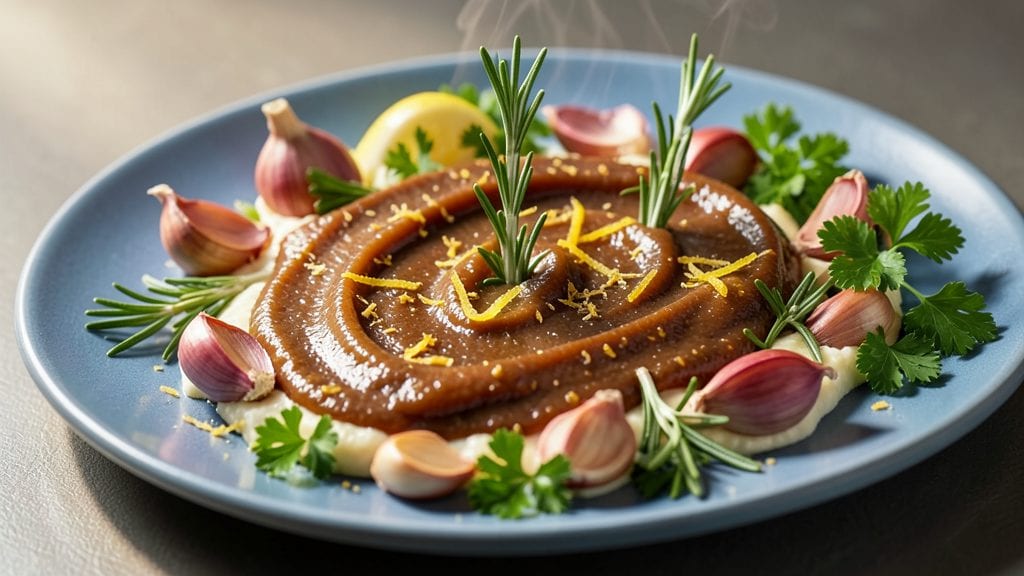
This compound garlic butter recipe transforms simple butter into a flavor powerhouse that elevates everything from steak to vegetables. The secret lies in infusing softened butter with fresh garlic, herbs, and a touch of acidity—creating a versatile sauce perfect for roasting, searing, or basting.
I developed this after years of testing, and it never fails to deliver restaurant-quality richness at home.
The beauty of this recipe is its simplicity: just five ingredients combine to create a deeply flavorful butter that stays spreadable yet packed with aroma. The garlic infuses without burning, while a splash of lemon juice brightens the richness.
It’s foolproof for beginners but impressive enough for professional cooks, making it a staple in my kitchen.
What you’ll end up with is a golden, fragrant compound butter that melts into every bite, adding layers of savory depth to roasted meats, grilled fish, or even mashed potatoes. The flavor develops as it sits, so making a batch ahead ensures you’re always ready for last-minute cooking.
Store it in the fridge for up to two weeks or freeze for months.
Use it as a finishing touch for steak, a basting sauce for chicken, or a spread for warm bread. The possibilities are endless, and the results are always impressive. Let’s get started—your meals will never taste the same again.
Ingredients for compound garlic butter
Five simple ingredients create restaurant-quality richness for roasting, searing, and basting.
| Ingredient | Amount | Notes |
|---|---|---|
| Unsalted Butter 🧈 | 1 lb | Cold, cubed for even melting |
| Fresh Garlic Cloves 🧄 | 6 whole | Peeled, thinly sliced lengthwise |
| Fresh Parsley Leaves 🌿 | ¼ cup | Chopped, tightly packed |
| Fresh Rosemary Sprigs 🌿 | 2 whole | Needles only, finely chopped |
| Lemon Juice 🍋 | 1 tbsp | Freshly squeezed, strained |
| Sea Salt 🧂 | ½ tsp | Fine grain, adjust to taste |
| Freshly Ground Black Pepper 🌶️ | ¼ tsp | Freshly cracked preferred |
The butter is the foundation—unsalted, cold, and cubed so it melts evenly. I grab Plugrá or Land O’Lakes from the store, but any good-quality unsalted works. The garlic? Fresh is non-negotiable—jarred minced loses all its punch. Thinly slicing the cloves lengthwise ensures maximum surface area for infusion without burning. For the herbs, farmers market parsley and rosemary have the best flavor, but grocery store stuff works too. Just make sure the rosemary needles are fresh and green, not woody or brown.
No fresh rosemary? Dried works at half the amount, but it won’t have the same depth. Short on parsley? Fresh thyme or tarragon can stretch it out. The lemon juice is key for brightness—bottled works in a pinch, but fresh is always better. Too much garlic? Reduce to 4 cloves. Too little? Add 2 more. The sea salt should be fine grain—Diamond Crystal is my go-to, but any kosher salt works. Want extra richness? Add 1 tbsp heavy cream to the mix.
This keeps beautifully in the fridge for up to 2 weeks if wrapped tightly in parchment and stored in an airtight container. For longer storage, freeze in 2-tbsp portions—perfect for single use. The flavor actually improves as it sits, so making a batch ahead is always worth it. I keep a jar in my freezer for last-minute steak nights. Thaw at room temp for 10 minutes before using—never microwave, or it’ll melt into a sad puddle.
Why You'll Love This Recipe
- No-Chop Necessary: I swear by this—just smash the garlic cloves with the flat side of my knife, then let the butter do the work. No mincing, no mess, just that golden, fragrant paste that melts into everything like a dream.
- Herb-Packed Punch: That first bite? Pure brightness—rosemary’s piney kick, parsley’s fresh crunch, and lemon cutting through the richness. It’s like someone took all the good parts of garlic butter and turned them into a flavor bomb.
- Pantry to Party: I keep a jar in my fridge for everything: grilled steak, roasted potatoes, even toasted baguettes. Need to impress guests? Slather it on shrimp or drizzle it over pasta—suddenly, you’re the host with the most.
- Make-Ahead Magic: Between us, this stuff gets better over time. I make a big batch on Sundays, store it in the fridge, and pull it out all week. Cheaper than takeout, zero stress, and always ready when I am. (Yes, even on a Tuesday night.)
Step-by-step instructions for compound garlic butter
Here's how to make this aromatic, flavor-packed butter that elevates everything from steaks to vegetables.
Prepare the Cold Butter Cubes
Take the 1 lb unsalted butter from the refrigerator and cut it into ½-inch cubes. I use a sharp chef's knife for clean cuts that melt evenly. The butter should be completely cold—press a cube between your fingers and it should hold its shape. If it's too soft, chill it for another 10 minutes. Cold butter melts gradually during infusion, creating a smoother compound.
Transfer the cubes to a medium saucepan and place it over low heat. The goal is to gently melt the butter without browning. Watch carefully as the butter begins to soften—you'll see the cubes shrink slightly before becoming liquid. Remove the pan from heat once the butter is completely melted but still slightly thickened. This usually takes about 5 minutes. Don't let it simmer or the garlic will burn before the butter melts.
Infuse with Garlic and Herbs
Add the 6 whole fresh garlic cloves (thinly sliced lengthwise) to the melted butter. I like to press them down gently with a wooden spoon to ensure they're fully submerged. Add the needles from 2 whole fresh rosemary sprigs (finely chopped) and the 0.25 cup fresh parsley leaves (chopped). Sprinkle over the 0.5 tsp sea salt and 0.25 tsp freshly ground black pepper. Stir everything together gently to distribute the seasonings.
Return the pan to low heat and let the mixture simmer very gently for 8-10 minutes. You're looking for the butter to infuse with the flavors—not to cook the garlic. Watch for the butter to become slightly golden around the edges and for the garlic to turn just barely translucent at the edges. If it starts to brown too quickly, remove the pan from heat. The butter should smell intensely aromatic but not burnt.
Finish with Lemon and Cool
Remove the pan from heat and stir in the 1 tbsp lemon juice. This brightens the flavors and balances the richness of the butter. Let the mixture cool slightly for 2-3 minutes, then transfer it to a heatproof bowl. Place this bowl over a larger bowl filled with ice water to rapidly cool the butter. This step is crucial—it stops the cooking process and prevents the garlic from becoming bitter.
Stir the butter occasionally as it cools. Once it reaches room temperature (about 15 minutes), it will begin to thicken. Use a silicone spatula to press the butter against the sides of the bowl, helping it set into a smooth, spreadable consistency. The finished compound should have a rich golden color and a fragrant aroma that combines garlic, herbs, and citrus.
Store for Maximum Flavor
Transfer the cooled compound butter to an airtight container. I like to use a small glass jar with a lid that seals tightly. Press the butter down gently to remove any air bubbles. Store it in the refrigerator for up to 2 weeks or freeze it for up to 3 months. The flavors actually deepen over time, making this a perfect make-ahead ingredient.
When ready to use, let the compound butter soften at room temperature for 10-15 minutes before spreading or melting. It's perfect for basting roasted meats, topping grilled vegetables, or melting over hot pasta. The texture should be smooth and spreadable, with visible flecks of garlic and herbs throughout.
Pro Tips For Making Compound Garlic Butter
- Mince Garlic Like a Chef: I learned this the hard way—chopping garlic cloves whole or even roughly mincing them just doesn’t cut it for compound butter. Use a chef’s knife and smash the cloves flat with the heel of your knife first, then make tiny, even cuts. This releases more flavor and blends better into the butter without turning it into a chunky mess.
- Keep Butter Cold: Don’t let that butter soften too much before mixing—it’s a recipe for greasy clumps. Work in a chilled bowl or even a metal one (they stay cooler longer), and keep your hands damp if you’re kneading it. Cold butter incorporates herbs and garlic evenly and stays firm enough to slice nicely later.
- Toast Rosemary First: Skip the raw rosemary—it’s bitter and won’t shine. Lightly crush the sprigs between your fingers, then warm them in a dry pan over medium-low heat for 30 seconds until fragrant. This step unlocks their piney aroma and makes the butter taste like it was made by a pro, not a beginner.
- Strain the Butter: I was skeptical until I tried it—straining the finished compound butter through a fine-mesh sieve removes any herb bits that might make it look unappetizing. It also guarantees a silky texture when you spread it on toast or melt it over steak. Takes 10 seconds and makes a real difference.
Make-ahead tips for this dish
Fridge Prep Essentials
Store your finished compound butter in an airtight glass jar (like Le Parfait) or a vacuum-sealed bag to preserve freshness. I press a piece of parchment paper directly on the surface before sealing to prevent oxidation.
Label with the date—it keeps for 2 weeks in the fridge, with flavors intensifying over time. 🧈
Freezer Portioning
For long-term storage, divide the butter into 2-tablespoon portions using silicone molds or ice cube trays. Wrap each portion tightly in plastic wrap, then place in a freezer bag with all air removed. These single-serving portions thaw in 10 minutes at room temperature—perfect for last-minute searing or basting. ❄️
Thawing Techniques
Never microwave your compound butter—it turns greasy and loses texture. Instead, transfer frozen portions to the fridge 6-8 hours before use. For quicker thawing, place the sealed container in a bowl of lukewarm water for 5-7 minutes. The butter should soften to a spreadable consistency without melting completely. 💧
Flavor Development
The magic happens during storage—garlic and herbs continue infusing, creating deeper complexity. I make a batch every Sunday so it’s ready for weeknight meals. For extra depth, add ½ tsp smoked paprika or 1 tsp honey before storing. The flavors meld beautifully over time. 🌟
Reusing Leftovers
If your butter separates or hardens in the fridge, simply press it through a fine-mesh sieve to restore smoothness. Any leftover melted butter can be reused in sauces or roasted vegetables—just strain out the solids. I never waste a drop of this flavor-packed goodness! 💡
Travel-Friendly Packing
For road trips or camping, pack compound butter in a small, insulated cooler with an ice pack. It stays spreadable for 12 hours at room temperature. Alternatively, freeze in a thermos-style container—it’ll thaw slowly during your trip without melting completely. 🚗
Nutrition facts
Frequently asked questions
Can I make this compound butter without fresh herbs?
If you don't have fresh rosemary or parsley, substitute with ½ teaspoon dried rosemary and ½ teaspoon dried parsley. For extra depth, add ½ teaspoon dried thyme or ½ teaspoon smoked paprika. The flavor won't be identical, but it'll still taste amazing.
Why does my garlic butter turn grainy or separate?
This usually happens if the butter melts too quickly or if the garlic burns. Always melt butter over low heat and remove it from the pan as soon as it's fully melted but still thick. Cool it rapidly in ice water to prevent separation. If it happens, press it through a fine-mesh sieve to restore smoothness.
How do I use compound garlic butter on vegetables?
Toss roasted or grilled vegetables like asparagus, Brussels sprouts, or green beans with 1-2 tablespoons of softened compound butter after cooking. The heat will melt it perfectly, creating a rich, garlicky coating. For extra flavor, sprinkle with grated Parmesan cheese or toasted pine nuts.
Can I make this with salted butter instead of unsalted?
Yes, but reduce the added sea salt to ¼ teaspoon since salted butter already contains salt. The flavor will still be delicious, but the saltiness will be more balanced. If you're unsure, taste as you go and adjust.
What’s the best way to reheat or melt compound butter?
Never microwave—it turns greasy! Instead, place the butter in a small bowl and set it over a pot of simmering water (double boiler) for 1-2 minutes until melted. For basting, use a spoon to drizzle it over hot foods. If it hardens in the fridge, let it sit at room temperature for 10 minutes before using.