
Main Courses
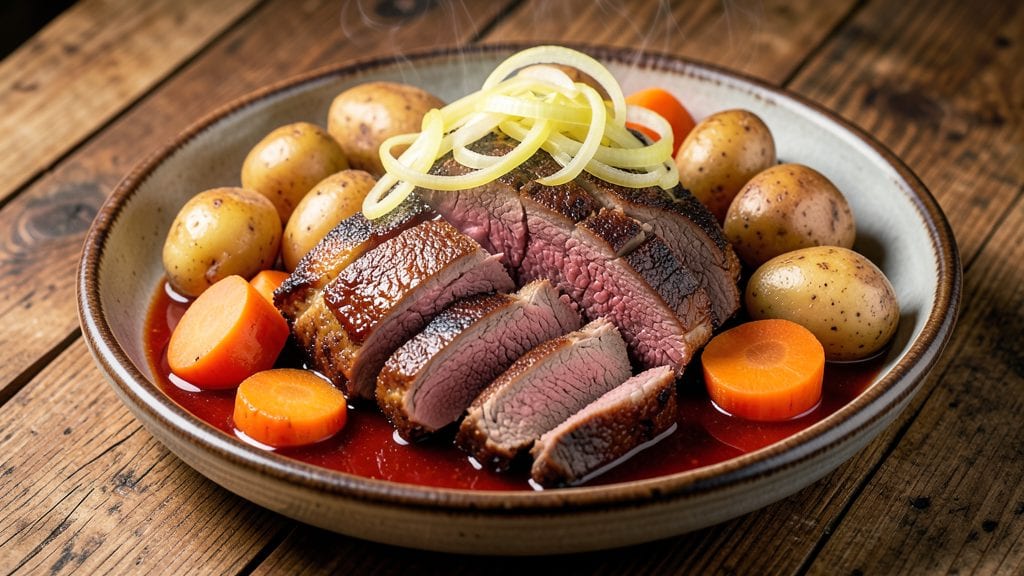
This corned beef brisket recipe with potatoes and carrots transforms a simple Sunday dinner into a hearty, slow-cooked masterpiece that smells like home.
The secret lies in layering flavors through hours of simmering—tender beef infused with spices, crisp carrots caramelized in the broth, and fluffy potatoes that soak up every savory drop.
After years of perfecting this method, I can confidently say this is the only corned beef recipe you'll ever need for gatherings or cozy weeknight meals.
The beauty of this dish is in its simplicity: a brisket brimming with bold spices, potatoes that stay perfectly tender, and carrots that glaze naturally in the rich cooking liquid. Unlike quick meals, this recipe rewards patience with deep, complex flavors that develop as it slow-cooks.
The result is a meal that feeds a crowd while feeling special enough for a holiday table—no fuss, just pure, satisfying comfort food.
By the time you're ready to serve, you'll have perfectly tender corned beef that shreds easily, potatoes that melt in your mouth, and carrots with a glossy sheen from the reduced gravy.
The aroma alone will draw everyone to the table, and the first bite delivers on that promise of a traditional, home-cooked Sunday feast. This isn't just dinner; it's an experience.
The gravy, thickened naturally by the cooking process, ties everything together, making every bite richer and more flavorful. Whether you're serving it to family, friends, or just treating yourself, this recipe delivers restaurant-quality results with minimal effort. Let's get started on creating your perfect Sunday meal.
Ingredients for corned beef brisket recipe with potatoes and carrots
Gather these hearty ingredients for a Sunday feast that smells like home all day.
| Ingredient | Amount | Notes |
|---|---|---|
| Beef Brisket 🥩 | 4 lb | Whole packer cut, trimmed of excess fat |
| Yellow Onions 🧅 | 2 whole | Medium size, sliced into wedges |
| Carrots 🥕 | 1 ½ lb | Whole, peeled, cut into 2-inch pieces |
| Russet Potatoes 🥔 | 3 lb | Medium size, halved lengthwise |
| Water 💧 | 8 cups | For initial liquid base |
| Beef Broth 🍲 | 2 cups | Low-sodium preferred |
| Bay Leaves 🌿 | 4 whole | Fresh or high-quality dried |
| Black Peppercorns 🌶️ | 1 tbsp | Whole, lightly crushed |
| Salt 🧂 | 2 tbsp | Kosher or sea salt |
| Garlic Cloves 🧄 | 8 cloves | Smash lightly with side of knife |
| Mustard Seeds 🌶️ | 1 tsp | Yellow or brown preferred |
| Allspice Berries 🌿 | 1 tsp | Whole, lightly crushed |
| Cloves 🌿 | 4 whole | Whole, lightly crushed |
| Apple Cider Vinegar 🍎 | ½ cup | For traditional tang |
| Brown Sugar 🍚 | ½ cup | Light or dark preferred |
The brisket is where the magic happens—look for a 4-pound packer cut at your butcher or grocery store's meat department. Costco and Whole Foods often have great deals on brisket, but don't skip the local butcher if they offer it. Trim off any thick fat caps (leave a thin layer for flavor), but don't stress about perfection—this is a forgiving cut. The onions and carrots should be fresh, with vibrant color. Baby carrots work too, but whole carrots caramelize better. For the potatoes, Russets or Yukon Golds hold up best during slow cooking—they'll turn fluffy and soak up all the flavorful broth.
No beef broth? Water plus 2 tbsp soy sauce gets you close, but the depth of flavor won't be the same. Short on apple cider vinegar? White vinegar or lemon juice works in a pinch, but the apple cider gives that classic corned beef tang. The spices? Penzeys or Spicewalla have great whole spices, but your grocery store's bulk section works fine. If you can't find allspice berries, 1/2 tsp ground allspice is a decent swap. For the sugar, demerara or turbinado adds a nice caramel note, but brown sugar is perfect. The mustard seeds and cloves should be lightly crushed—just enough to release their aroma, not ground into powder.
This dish tastes even better the next day, so make it ahead if possible. Store the cooked brisket and vegetables in the broth in a sealed container for up to 5 days, or freeze for 3 months. The potatoes and carrots reheat beautifully—just warm everything through gently. For serving, skim off any hardened fat from the top of the broth before reheating. The gravy thickens as it cools, so add a splash of water if it's too thick when reheating. Leftovers make amazing sandwiches or hash—just don't skip the gravy!
Why You'll Love This Recipe
- One-Pot Magic: I swear by this recipe because it’s actually one-pot—no chopping boards, no extra pans, just the brisket, onions, carrots, and potatoes all simmering together. The onions caramelize right in the pot, and the potatoes soak up that rich corned beef juice like sponges. (Yes, even on a Tuesday night.)
- Deep Umami Bomb: That slow-cooked brisket? It falls apart at the touch, with a crust so dark and savory it’s practically singing. The carrots stay tender-crisp, and the potatoes develop this buttery, melt-in-your-mouth softness—like a hug in a bowl. Honestly, the first bite makes me forget I’m not at my grandma’s table.
- Leftovers for Days: This recipe begs to be made in bulk—it tastes even better the next day, if you can believe it. I make a double batch, then repurpose the leftovers: brisket sandwiches, loaded potato hash, or even brisket tacos with the shredded meat. (Between us, the fridge never empties fast enough.)
- Budget-Friendly Feast: A whole brisket feeds a crowd for less than $20, and the veggies stretch the meal without breaking the bank. The potatoes and carrots bulk it up, so you’re not just paying for beef—you’re getting a full, satisfying spread. My college roommates called it “poor man’s fancy dinner,” and they weren’t wrong.
Step-by-step instructions for slow-cooked corned beef brisket
Here's how to transform a simple brisket into a tender Sunday centerpiece with rich gravy.
Prepare the Brisket and Vegetables
Begin by trimming any excess fat from the 4 lb beef brisket, leaving about ¼-inch thickness. This helps the meat cook evenly without becoming greasy. Place the brisket in a large Dutch oven or heavy pot that can hold all ingredients comfortably.
Peel and cut the 1.5 lb carrots into 2-inch pieces, then slice the 2 whole yellow onions into wedges. Halve the 3 lb russet potatoes lengthwise. Arrange the vegetables around the brisket in the pot, creating a single layer that will cook evenly when submerged.
Add the 8 cloves garlic (lightly smashed with the side of your knife), 1 tbsp black peppercorns (lightly crushed), 1 tsp mustard seeds, 1 tsp allspice berries (lightly crushed), and 4 whole cloves to the pot. These whole spices will infuse flavor without needing to be removed later.
Build the Flavorful Liquid Base
Pour the 8 cups water and 2 cups beef broth into the pot, ensuring the brisket and vegetables are completely submerged. The liquid should cover everything by about 1 inch. Add the 4 whole bay leaves, 2 tbsp salt, 0.5 cup apple cider vinegar, and 0.5 cup brown sugar.
Here's the thing—stir everything gently but thoroughly to distribute the spices and dissolve the brown sugar completely. The vinegar and brown sugar create a perfect balance of tangy sweetness that tenderizes the meat while adding depth to the gravy. Bring the mixture to a boil over medium-high heat.
Once boiling, reduce the heat to low, cover the pot, and let it simmer gently. You'll know it's simmering properly when you see small bubbles breaking the surface occasionally, but not a rolling boil. This low-and-slow approach is key to achieving tender, fork-friendly brisket.
Cook Until Fork-Tender
Let the brisket simmer uncovered for about 3 hours. Here's what you're aiming for: the meat should be so tender that a fork slides in and out with minimal resistance. If you check after 3 hours and it's not quite there, continue cooking for another 30 to 60 minutes.
During this time, the vegetables will soften beautifully, absorbing all the rich flavors from the cooking liquid. The potatoes should be tender enough to pierce easily with a fork, and the carrots should be fork-tender as well. If the liquid reduces too much and the vegetables start to brown, add a little more water or broth as needed.
I know it's tempting to peek under the lid, but every time you lift it, you lose heat and moisture. Resist the urge—patience is what makes this dish exceptional. The longer it cooks low and slow, the more tender and flavorful the meat becomes.
Finish and Serve with Homemade Gravy
Once the brisket is fork-tender, carefully remove it from the pot and place it on a cutting board. Let it rest for 10 to 15 minutes before slicing. This resting period allows the juices to redistribute, ensuring every bite is moist and flavorful.
While the brisket rests, strain the cooking liquid through a fine-mesh sieve into a clean pot. Discard the vegetables and spices. Return the strained liquid to medium-high heat and let it simmer for 5 to 7 minutes to reduce slightly and thicken into a rich gravy. Taste and adjust the seasoning with additional salt if needed.
Slice the brisket against the grain into ¼-inch thick slices and serve it with the homemade gravy ladled over the top. The vegetables can be served on the side or mixed into the gravy for a hearty one-pot meal. This is the kind of dish that tastes even better the next day, so leftovers make for an excellent sandwich filling.
Pro Tips For Making Corned Beef Brisket Recipe With Potatoes And Carrots
- Brown the Brisket First: Skip the slow start—sear the brisket in a hot pot for 5-7 minutes per side before adding liquid. That crust locks in flavor and keeps the meat from turning into mushy corned beef. (Yes, it’ll look like overkill, but your leftovers will taste like you spent all day.)
- Cut Potatoes in Chunks: Big, uneven chunks (2-3 inches) cook faster and stay intact, while small dice turn to mush. Russets hold up better than you’d think, but don’t expect them to stay perfect—this isn’t a potato bar.
- Don’t Crowd the Pot: Packing the pot too tight steams the veggies instead of simmering them. Leave room for liquid to circulate, or your carrots will end up soggy and the onions flavorless. (I learned this after a sad, watery batch.)
- Skim the Scum Early: After the first 15 minutes of cooking, skim off the foam that rises to the top. It’s gross, but it keeps the broth from turning cloudy and bitter. A slotted spoon works—just don’t dump it down the drain unless you like cleaning grease traps.
Storing and reheating this corned beef brisket recipe with potatoes and carrots
Refrigerator Storage
Store your cooked corned beef brisket and vegetables in the broth within 4 days for peak flavor. Let the dish cool to room temperature first, then transfer everything to an airtight container—I use glass Pyrex with snap-on lids to preserve freshness.
The flavors actually deepen overnight as the spices meld together, making it taste even better the next day. Just ensure the container is sealed tightly to prevent any odors from mixing with other foods in your fridge. ❄️
Freezer Storage
For longer storage, freeze the entire meal for up to 3 months without losing quality. I recommend using quart-sized freezer bags because they stack efficiently and thaw faster than rigid containers. Leave 1 inch of headspace to account for expansion, and squeeze out excess air to prevent freezer burn.
Label the bag with the date—this helps track freshness. When reheating, thaw overnight in the fridge first for even cooking. 💡
Stovetop Reheating
My preferred method for reheating is stovetop because it maintains the best texture. Pour the brisket, potatoes, and carrots into a heavy-bottomed pot (I use my Lodge cast iron) and add ¼ cup beef broth to prevent sticking.
Heat over medium-low heat for 10-15 minutes, stirring occasionally. The gravy will thicken as it warms—if it looks too thick, add another splash of broth. Taste and adjust seasoning, as reheating can sometimes mute flavors. 🔥
Microwave Reheating
For quick reheating, use the microwave but do it in stages to avoid drying out the brisket. Transfer the brisket and vegetables to a microwave-safe dish, cover with a damp paper towel, and heat on 70% power for 3-4 minutes.
Stir, then continue in 1-minute intervals until reaching an internal temperature of 165°F. Add a splash of broth if the gravy thickens too much. This method is fastest but requires close attention to prevent overcooking. ⏰
Gravy Refresh
The gravy often thickens when reheated, so if it becomes too stiff, thin it with warm water or broth—about 1 tablespoon at a time—until it reaches your desired consistency.
For extra richness, stir in 1 teaspoon cornstarch mixed with 1 tablespoon cold water and simmer for 2 minutes to restore its velvety texture. This trick works wonders for leftovers that need a restaurant-quality finish. 💫
Serving Leftovers
Leftovers make fantastic sandwiches or hash. Shred the brisket and layer it on toasted rye bread with mustard and sauerkraut for a classic Reuben-style sandwich. For hash, dice the potatoes and carrots, then pan-fry them in a skillet with a little butter until crispy.
Top with shredded brisket and gravy for a hearty breakfast or lunch. The possibilities are endless—just don’t skip the gravy! 🥪
Nutrition facts
Frequently asked questions
Can I use a slow cooker for this recipe?
Transfer all ingredients to a 6-quart slow cooker and cook on low for 8 hours or high for 5-6 hours. The brisket will be fork-tender, and the vegetables will absorb all the flavorful broth. Just add ½ cup water if the liquid level drops below the vegetables during cooking.
What if my brisket isn't tender after 3 hours?
Don't rush it! Keep cooking uncovered for another 30-60 minutes—the brisket will eventually break down. If it's still tough, try increasing the heat slightly or adding ½ cup extra broth to help tenderize. Patience is key with this cut of meat.
Can I substitute the potatoes for another vegetable?
Swap potatoes for turnips, parsnips, or even sweet potatoes—they'll all work beautifully. For a lighter option, add green beans or cabbage during the last 30 minutes of cooking. Just avoid starchy vegetables like corn that might make the gravy too thin.
How do I make the gravy thicker?
Simmer the strained cooking liquid uncovered for an extra 5-10 minutes to reduce it naturally. For instant thickening, mix 1 tbsp cornstarch with 2 tbsp cold water, stir into the gravy, and cook for 2 minutes until it reaches your desired consistency. Avoid over-thickening—it should coat the back of a spoon but still be pourable.
Is this dish suitable for meal prep?
Perfect for meal prep! Store the brisket and vegetables in the broth in an airtight container for up to 5 days in the fridge or 3 months in the freezer. Reheat gently on the stovetop with a splash of broth to restore moisture. The flavors actually improve as they meld together over time.