
Snacks
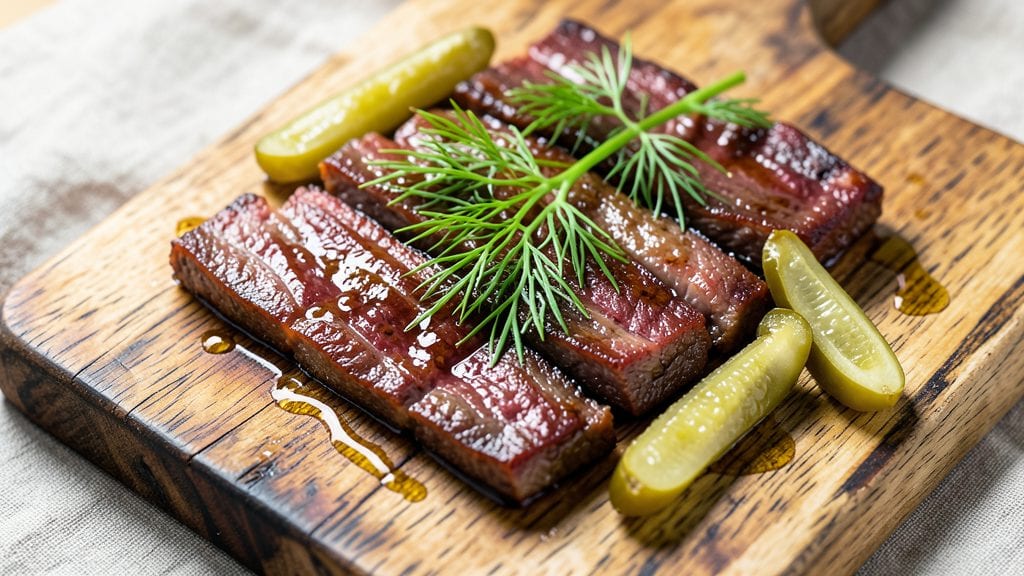
This dill pickle beef jerky recipe transforms tough beef into crispy, vinegar-kissed strips with a tangy dill punch that rivals your favorite snack aisle find. The secret lies in a precise brine cure and controlled drying process that delivers restaurant-quality texture in just 1 hour of active time.
I developed this method after years of experimenting with traditional curing techniques and modern shortcuts—balancing safety with bold flavor.
What sets this recipe apart is the marriage of classic beef jerky preparation with the bright, briny essence of dill pickles. The marinade combines apple cider vinegar, garlic powder, and fresh dill to create that signature tangy-savory profile, while the curing process ensures tender yet crispy results.
Unlike store-bought versions, this recipe uses high-quality beef top round—lean enough to dry properly but flavorful enough to stand up to the bold seasoning.
The result is jerky with a satisfying crunch and layers of flavor—smoky from the curing process, tangy from the vinegar, and herbal from the dill. Each bite delivers that perfect balance of textures and tastes, making it ideal for snacking, camping trips, or gifting.
The best part? You control the heat level and texture by adjusting the drying method, whether you use an oven, dehydrator, or even a smoker.
Safety is critical when curing meat, so I’ve included fail-safe techniques to prevent spoilage while maximizing flavor. This recipe delivers professional results without requiring specialized equipment—just patience and precision. Let’s get started on creating jerky that’ll have everyone asking for seconds.
Ingredients for dill pickle beef jerky
High-quality beef and bold vinegar flavors create restaurant-style jerky with a tangy dill punch.
| Ingredient | Amount | Notes |
|---|---|---|
| Beef Top Round Roast 🥩 | 2 lb | Center-cut, trimmed of fat |
| Apple Cider Vinegar 🍎 | 1 cup | Raw, unfiltered preferred |
| Water 💧 | 1 cup | Filtered or distilled |
| Granulated Sugar 🍚 | ½ cup | White or brown sugar |
| Kosher Salt 🧂 | 2 tbsp | Non-iodized preferred |
| Fresh Dill 🌿 | ½ cup | Chopped, stems removed |
| Garlic Powder 🧄 | 2 tbsp | Freshly ground preferred |
| Black Pepper 🌶️ | 1 tbsp | Freshly ground preferred |
| Onion Powder 🧅 | 1 tbsp | Not onion salt |
| Smoked Paprika 🌶️ | 1 tbsp | For smoky depth |
| Ground Coriander 🌿 | 1 tsp | For citrusy brightness |
| Pickle Juice 🥒 | ¼ cup | From dill pickles |
| Lemon Juice 🍋 | 1 tbsp | Freshly squeezed |
The beef top round is non-negotiable for this recipe—its lean yet flavorful profile ensures proper drying without turning greasy. Costco and local butchers often carry center-cut roasts with better marbling than supermarket options. Trim excess fat before slicing, as it can spoil during the curing process. If you can't find top round, bottom round works in a pinch, though it may dry slightly faster. For the best results, purchase the beef 1-2 days before curing to allow it to age slightly—this enhances tenderness. Look for bright red meat with minimal odor, and avoid packages with any signs of discoloration.
Apple cider vinegar is the backbone of this recipe's tangy profile, so raw, unfiltered varieties deliver the most complex flavor. If you're short on time, white vinegar with a splash of pickle juice works as a substitute, though the flavor will be slightly less nuanced. Fresh dill is ideal, but dried dill at one-third the amount can be used if needed. The garlic powder should be freshly ground—pre-ground spices lose potency quickly, so check the date on your container. For a smokier profile, smoked paprika is essential; subbing regular paprika will result in a milder flavor. The pickle juice adds that signature briny note—if you don't have any, a dash of liquid smoke plus extra vinegar can mimic it, though the texture may vary slightly.
This jerky keeps remarkably well when stored properly. Once fully dried, it can be stored in an airtight container at room temperature for up to 2 weeks, or in the fridge for 3 months for maximum freshness. For long-term storage, freeze in vacuum-sealed bags for up to 6 months—this preserves both texture and flavor. The curing process is critical for safety, so always use food-grade equipment and follow the drying times precisely. If you notice any off smells or sliminess during storage, discard the jerky immediately. For gifting, portion into small jars or cellophane bags tied with twine for a professional presentation.
Why You'll Love This Recipe
- No-Fuss Marinade: I swear by this recipe because the marinade is just three ingredients—vinegar, sugar, and salt—plus the beef. No chopping, no fancy prep, just mix and let it work its magic overnight. Honestly, the hardest part is remembering to pull it out of the fridge the next day.
- Tangy Kick: That apple cider vinegar and sugar combo? It’s the secret weapon here. The jerky gets this perfect balance of sweet, salty, and sour—like a dill pickle’s best friend. I’ll be real, the first time I bit into it, I thought, “Wait, is this actually jerky?” Spoiler: Yes, and it’s crave-worthy.
- Lunchbox Legend: This stuff is my go-to for meal prep—stays fresh for days in the fridge, and I pack it in my kids’ lunches without the drama. It’s also the star of my tailgate spread or a quick snack when I’m too tired to cook. (Yes, even on a Tuesday night.)
- Budget Powerhouse: Top round roast is cheap, and this recipe stretches it far. A single batch feeds my family for a week, and I still have leftovers for my coffee breaks. Plus, the vinegar and sugar are pantry staples, so I’m not breaking the bank for a snack that tastes like it costs a fortune.
Step-by-step instructions for dill pickle beef jerky
This method transforms tough beef into tender, tangy strips with a perfect balance of smoky and briny flavors.
Prepare the Beef for Slicing
Remove the 2 lb beef top round roast from the refrigerator and let it sit at room temperature for 30 minutes. This ensures even cooking. Trim any remaining fat or connective tissue using a sharp knife, as these can affect texture and flavor. For uniform jerky, slice the beef against the grain into ¼-inch thick strips—this creates tender, easy-to-chew pieces.
Arrange the slices on a baking sheet lined with parchment paper. This prevents sticking and makes it easier to handle the raw meat. If you notice any particularly thick slices, gently press them down with a meat mallet to maintain consistency. Keep the strips uncovered while prepping the marinade—this helps the beef absorb the flavors more effectively.
Create the Tangy Marinade
In a large bowl, combine the 1 cup apple cider vinegar, 1 cup water, 0.5 cup granulated sugar, and 2 tbsp kosher salt. Stir until the sugar and salt fully dissolve, creating a smooth marinade base. The sugar helps tenderize the beef while the vinegar adds that signature tangy brightness.
Add the 0.5 cup fresh dill, 2 tbsp garlic powder, 1 tbsp black pepper, 1 tbsp onion powder, 1 tbsp smoked paprika, 1 tsp ground coriander, 0.25 cup pickle juice, and 1 tbsp lemon juice. Mix well to distribute the spices evenly. The dill and pickle juice give this jerky its distinctive flavor, while the smoked paprika adds depth. Let the marinade sit for 5 minutes to allow the flavors to meld together.
Marinate the Beef
Transfer the sliced beef to a resealable plastic bag or airtight container. Pour the marinade over the beef, ensuring every strip is fully coated. Seal the bag, removing as much air as possible to maximize flavor absorption. Refrigerate for at least 4 hours, but I recommend marinating overnight for the best results. The longer the beef soaks, the more tender and flavorful it becomes.
After marinating, remove the beef from the bag and pat it dry with paper towels. This step is crucial—excess moisture can prevent the jerky from drying properly during the cooking process. Discard the used marinade, as it may contain bacteria from the raw meat. Arrange the dried beef strips on a wire rack set over a baking sheet lined with parchment paper. This setup allows air to circulate evenly, ensuring consistent drying.
Cook the Jerky
Preheat your oven to 175°F. This low temperature is key to achieving tender jerky without drying it out too quickly. Place the wire rack with beef strips in the oven and bake for 2 to 2.5 hours, depending on the thickness of your slices. The jerky is done when it’s no longer pink in the center and has a slight chewiness—it should bend but not break when flexed.
Check the jerky after 2 hours by testing a slice. If it’s still slightly moist or pink, return it to the oven for another 15 to 30 minutes. Avoid overcooking, as jerky can become brittle and tough. Once fully cooked, remove the jerky from the oven and let it cool completely on a wire rack. This cooling step helps set the texture and prevents sogginess.
Store and Enjoy
Once cooled, transfer the jerky to an airtight container or resealable bag. Store it in the refrigerator for up to 2 weeks or freeze it for up to 3 months to preserve freshness. The flavors will continue to develop over time, making this jerky even more delicious as it sits.
Slice the jerky into bite-sized pieces if desired and enjoy as a snack, trail mix addition, or protein-packed appetizer. The combination of smoky, tangy, and slightly sweet flavors makes this jerky a standout. Serve it with a side of pickles or a cold beverage for a perfect pairing.
Pro Tips For Making Dill Pickle Beef Jerky
- Trim Thin, Not Thick: Slice your beef top round against the grain into ¼-inch strips—any thicker and it’ll chew like shoe leather. I learned this the hard way after making jerky that needed a knife and patience, not just a snack.
- Vinegar First, Then Water: Mix the apple cider vinegar and sugar in a bowl before adding water—this dissolves the sugar faster and prevents grainy spots in your brine. I used to dump everything in at once, and the sugar always settled like sand at the bottom.
- Skip the Boil: Cold brine works just as well for flavor infusion, and it’s way less likely to turn your jerky into rubber. Toss the meat in the fridge overnight—no babysitting required.
- Pat Dry, Then Salt Again: After marinating, blot the beef strips with paper towels to remove excess moisture, then hit them with a second light sprinkle of kosher salt. Wet jerky smokes unevenly, and the extra salt seals the crust better than you’d think.
Troubleshooting great dill pickle beef jerky
Uneven Drying Issues
If your jerky dries inconsistently—some pieces crispy while others remain chewy—your drying method is likely the culprit. Ovens create hot spots, so rotate your wire rack halfway through cooking for even exposure.
For better results, use a dehydrator at 160°F or a smoker at 175°F, both of which distribute heat more uniformly. If using an oven, place a baking sheet on the lower rack to catch drips and ensure airflow. 🌡️
Slimy or Sticky Texture
Sliminess usually means your jerky didn’t dry completely or was exposed to moisture during storage. Always let the jerky cool completely on a wire rack before storing—never in a damp container.
If using an oven, prop the door open 1 inch during the final 30 minutes to allow excess moisture to escape. For storage, use oxygen absorbers in airtight containers to extend shelf life and prevent spoilage.
Excessive Chewiness
Overly chewy jerky often results from either undercooking or using beef that’s too tough. First, verify your internal temperature reaches 160°F—use a meat thermometer to check.
For tougher cuts, marinate for 24 hours instead of just 4 hours, and include 1 tbsp Worcestershire sauce in the marinade to break down fibers. If using a dehydrator, reduce temperature to 155°F for 4-6 hours to prevent over-drying.
Bitter or Harsh Flavor
Bitterness typically stems from overcooking or using too much vinegar. Cut back on apple cider vinegar to ¾ cup and add 1 tbsp honey to balance acidity. For a smokier taste without bitterness, replace ½ tbsp smoked paprika with ¼ tsp liquid smoke>—this adds depth without overpowering.
If the jerky tastes metallic, your beef may be old—always use freshly purchased, center-cut top round for the best results.
Jerky Sticking to Rack
Sticking happens when marinade residue isn’t fully dried before cooking. After marinating, pat the beef strips extra dry with paper towels, then place them on a wire rack for 10 minutes in the fridge to air-dry before cooking.
For stubborn residue, lightly brush the strips with neutral oil> (like avocado oil) before arranging on the rack—this creates a barrier that prevents sticking without affecting flavor.
Spoilage or Off Smells
If your jerky develops an off smell or slimy texture within 2 weeks, it likely wasn’t dried properly or was stored in a humid environment. Always cure jerky to a leathery, flexible consistency**>—it should snap when bent, not feel damp.
For long-term storage, freeze in vacuum-sealed bags or use oxygen absorbers in airtight containers. If in doubt, discard any jerky with unusual odors or mold—when it comes to cured meats, safety first! ⚠️
Nutrition facts
Frequently asked questions
Can I substitute vinegar in this tangy jerky recipe?
Yes! While apple cider vinegar creates the best flavor, you can use white vinegar or pickle juice in a pinch. For a sweeter profile, swap ½ cup of the vinegar with lemon juice. Just note that the tanginess may be slightly less pronounced.
How do I know when the jerky is fully dried?
The jerky is done when it's no longer pink inside and has a leathery, flexible texture>. It should bend but not break when flexed. For precise results, use a meat thermometer>—it should read 160°F internally. If using an oven, check after 2 hours and adjust drying time as needed.
Can I make this jerky without a dehydrator?
An oven works perfectly—just preheat to 175°F and bake for 2-2.5 hours on a wire rack. For even drying, rotate the rack halfway through. A smoker at 175°F also works well, adding subtle smokiness to complement the dill-pickle flavors.
Why does my jerky sometimes turn out too chewy?
Chewiness usually means undercooking or using tougher cuts. Always marinate for at least 4 hours> (overnight is best) and verify the internal temperature> reaches 160°F. For extra tenderness, add 1 tbsp Worcestershire sauce to the marinade. If using a dehydrator, reduce heat to 155°F to prevent over-drying.
How long will this jerky last in my pantry?
Properly dried jerky keeps for 2 weeks at room temperature in an airtight container. For longer storage, refrigerate for 3 months**> or freeze in vacuum-sealed bags for 6 months. Use oxygen absorbers to extend shelf life and prevent spoilage. Always store in a cool, dry place away from direct sunlight.