
Main Courses
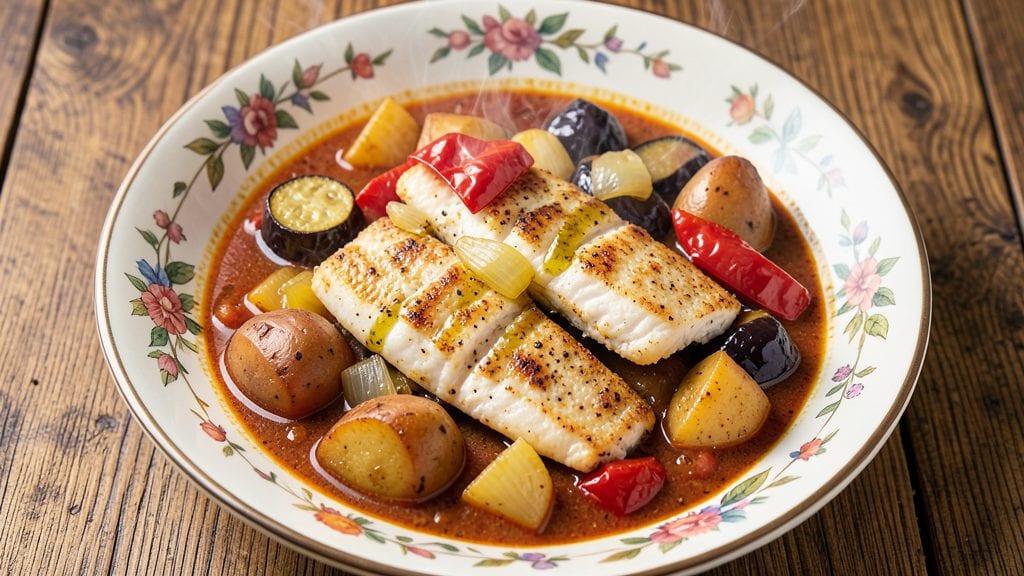
This fish curry with vegetables transforms simple ingredients into a fragrant, aromatic dish that balances tender fish, vibrant vegetables, and a rich coconut-turmeric sauce. The secret lies in slow-cooked spices that develop deep flavor while keeping the fish delicate and flaky.
I’ve perfected this recipe over years of testing—each element must harmonize for that perfect first bite.
The foundation begins with a fragrant spice blend of turmeric, cumin, and coriander, gently toasted to unlock their natural oils. Fresh coconut milk adds creaminess without overpowering the dish, while potatoes and eggplant absorb the sauce’s rich flavors.
The fish, chosen for firm yet tender texture, cooks just until it flakes effortlessly—a critical step to avoid dryness.
By the time you serve this curry, your kitchen will be filled with the scent of simmering spices and coconut, while the dish itself delivers layers of flavor: the earthy warmth of turmeric, the bright acidity of tomatoes, and the subtle sweetness of the vegetables.
Each spoonful is a balance of textures—tender fish, silky sauce, and the satisfying bite of vegetables.
Perfect for weeknight dinners or special gatherings, this recipe scales easily and pairs beautifully with steamed basmati rice or warm naan. The method is straightforward but requires patience—letting the spices bloom and the fish cook just right ensures restaurant-quality results at home. Let’s begin with the ingredients you’ll need.
Ingredients for fish curry with vegetables
Fifteen ingredients blend to create this aromatic coconut-turmeric harmony perfect for weeknight dinners.
| Ingredient | Amount | Notes |
|---|---|---|
| Firm White Fish Fillets 🐟 | 1 ½ lb | Cod, halibut, or snapper preferred |
| Yellow Onions 🧅 | 1 whole | Thinly sliced for even cooking |
| Red Bell Peppers 🌶️ | 1 whole | Diced, seeds removed |
| Russet Potatoes 🥔 | 2 medium | Cubed, 1-inch pieces |
| Eggplant 🍆 | 1 medium | Diced, salted and drained |
| Canned Crushed Tomatoes 🍅 | 1 14.5oz can | San Marzano preferred |
| Coconut Milk 🥥 | 1 13.5oz can | Full-fat for creaminess |
| Fresh Ginger 🌿 | 2 tbsp | Grated, finely for smooth texture |
| Ground Turmeric 🌶️ | 1 tbsp | Freshly ground preferred |
| Ground Cumin 🌿 | 1 tsp | Toasted for deeper flavor |
| Ground Coriander 🌿 | 1 tsp | Freshly ground preferred |
| Garlic Cloves 🧄 | 4 cloves | Minced for aromatic base |
| Extra-Virgin Olive Oil 🫒 | ¼ cup | For sautéing vegetables |
| Salt 🧂 | 1 ½ tsp | Diamond Crystal kosher preferred |
| Black Peppercorns 🌶️ | ½ tsp | Freshly cracked for brightness |
The fish selection is critical—opt for firm white varieties like cod or halibut that hold their shape during cooking. Whole Foods or local seafood markets typically carry the freshest cuts, but frozen fillets work well if properly thawed. For the vegetables, organic russet potatoes and eggplant absorb flavors better, though conventional works fine. The San Marzano crushed tomatoes provide the ideal balance of acidity and sweetness, elevating the sauce's depth. When selecting coconut milk, prioritize full-fat varieties for maximum creaminess—Thai Kitchen or Goya brands are reliable choices available at most supermarkets.
No fresh ginger? Substitute 1 tbsp ground ginger, though the texture will differ slightly. Running short on turmeric? Saffron at one-quarter teaspoon adds a luxurious depth, though it's significantly more expensive. For the bell peppers, substitute yellow or green varieties if red isn't available, though the color contrast is lost. The recipe accommodates vegetarian substitutions by replacing fish with extra eggplant or tofu—simply reduce the cooking time by half. When preparing the eggplant, salt it and let drain for 20 minutes to remove bitterness, a step that significantly improves the final texture.
Fresh herbs and spices maintain optimal quality for up to 3 months when stored properly. The ginger and garlic should be kept in a cool, dark place to preserve their volatile oils, while ground spices last 6 months in airtight containers. The prepared curry reheats beautifully—simply warm on the stove with 1-2 tbsp coconut milk to restore creaminess. For meal prep, portion into glass containers and store for 4-5 days in the refrigerator, or freeze for 3 months without compromising flavor. The sauce's consistency may thicken upon reheating, so thin with additional coconut milk as needed.
Why You'll Love This Recipe
- One-Pot Magic: I swear by this recipe when I’m too tired to deal with multiple pans. The fish, potatoes, and eggplant all simmer together in the same pot—no chopping boards left sticky, no dishes piling up. Just one spatula, one pot, and 30 minutes later, dinner’s ready.
- Spice That Sticks: That deep, smoky aroma from the onions and bell peppers caramelizing? It clings to everything—fish, veggies, even the rice. The potatoes soak up the curry like a sponge, and the eggplant? It melts into the sauce, making every bite rich and satisfying. (Yes, even on a Tuesday night.)
- Double-Duty Leftovers: This curry reheats like a dream—better than takeout, honestly. I make a big batch on Sundays, and by Thursday, I’m still pulling it out for lunches or tossing it into wraps. The potatoes stay tender, the fish flakes apart, and the flavors only get better the next day.
- Budget-Friendly Protein: Firm white fish is affordable, and the veggies stretch the dish without breaking the bank. A single fillet feeds two, and the rest of the veggies fill you up for half the cost of a restaurant meal. Plus, the leftovers turn into next-day lunches or a quick stir-fry—zero waste, all flavor.
Step-by-step instructions for fish curry with vegetables
Master this fragrant dish through precise technique and aromatic layering.
Prepare the Vegetable Base
Heat the 0.25 cup extra-virgin olive oil in a large, heavy-bottomed pot over medium heat. Add the 1 whole yellow onions and 1 whole red bell peppers (previously diced), cooking for 8-10 minutes until the onions soften and the peppers release their moisture. The onions should turn translucent while the peppers develop a slight caramelization.
Add the 2 medium russet potatoes (cubed) and 1 medium eggplant (previously diced and salted). Stir gently to combine, then sprinkle with 1 tsp ground cumin and 1 tsp ground coriander. Cook for an additional 5 minutes, stirring occasionally, until the potatoes begin to soften slightly. This step ensures the vegetables develop a deep, toasted flavor before the sauce forms.
Build the Spiced Tomato-Coconut Sauce
Increase the heat to medium-high and add the 4 cloves garlic (minced) and 2 tbsp fresh ginger (grated). Cook for 1 minute until the garlic becomes fragrant and the ginger loses its raw bite. Immediately add the 1 tbsp ground turmeric and stir vigorously for 30 seconds to toast the spice and release its aromatic oils.
Pour in the 1 14.5oz can canned crushed tomatoes, scraping the bottom of the pot to incorporate any browned bits. Stir in the 1 13.5oz can coconut milk and bring the mixture to a gentle simmer. Reduce the heat to low and let it cook for 10 minutes, allowing the flavors to meld and the sauce to thicken slightly. This is where the curry's signature harmony begins to develop.
Incorporate the Fish and Season
Gently add the 1.5 lb firm white fish fillets (cut into 2-inch pieces) to the simmering sauce. Avoid stirring vigorously to prevent breaking the fish. Sprinkle with 1.5 tsp salt and 0.5 tsp black peppercorns (freshly cracked). Cover the pot and cook for 8-10 minutes until the fish is just cooked through—it should flake easily when tested with a fork but remain moist.
The fish should absorb the vibrant flavors of the curry while maintaining its delicate texture. If the sauce appears too thick, add 2-3 tablespoons of water to achieve a luscious, velvety consistency. The curry is now ready to be served, offering a perfect balance of spice, coconut richness, and tender fish.
Pro Tips For Making Fish Curry With Vegetables
- Sear Fish First: Hit the fish fillets with a quick 2-minute sear in hot oil before adding anything else—this locks in moisture and gives them a crisp edge. I used to skip this, and the fish always ended up dry and sad, no matter how gently I cooked the rest.
- Dice Potatoes Evenly: Cut the russet potatoes into 1-inch cubes before anything else and soak them in cold water for 10 minutes to remove excess starch. This keeps them from turning mushy later, and trust me, nobody wants gluey potatoes in curry.
- Don’t Overcrowd the Pan: If you’re frying the onions and peppers, add them in batches—too much at once steams them instead of caramelizing. I learned this after burning a batch of onions because they just sat there, sad and soggy.
- Salt Eggplant Last: Hold off on salting the eggplant until the very end—it releases water like a faucet if you add it too soon. Toss it in with the fish just before serving, and it’ll stay tender without turning into a watery mess.
Essential equipment for perfect results
Heavy-Bottomed Pot
Your essential tool for this curry is a large, heavy-bottomed pot—I recommend a 5-6 quart Dutch oven like the Le Creuset Stoneware or All-Clad Stainless Steel. These pots distribute heat evenly, preventing hot spots that could burn your vegetables or curry sauce.
A heavy base also maintains consistent temperatures during the 10-minute simmer when building the sauce. 🌡️
High-Quality Thermometer
While not always required, a digital instant-read thermometer like the Thermoworks ThermoPop ensures your fish reaches the perfect 145°F internal temperature without overcooking. Insert the probe into the thickest piece of fish—it should flake easily when done.
This is especially helpful for beginners who worry about drying out the delicate fish fillets.
Sharp Chef's Knife
A high-carbon chef's knife (I use a Wüsthof Ikon) is a game-changer for chopping onions, bell peppers, and potatoes into evenly sized pieces. Consistent cuts mean vegetables cook uniformly, absorbing flavors without becoming mushy.
For the eggplant, a sharp knife ensures clean cuts that drain better after salting. 🔪
Wooden Spoon
Use a heat-resistant wooden spoon (like OXO Good Grips) to stir the curry without scratching your pot. Wood gently scrapes the bottom, incorporating browned bits that add depth to the sauce. Avoid metal utensils—they can react with acidic ingredients like tomatoes and coconut milk, altering the flavor.
Fine-Mesh Strainer
If you’re using fresh ginger or garlic, a fine-mesh strainer helps remove any fibrous bits after grating. I like the OXO Good Grips version—it’s durable and fits comfortably in one hand.
For the eggplant, this strainer also works well to drain excess moisture after salting, which prevents a watery curry. 🍋
Measuring Spoons Set
Precision matters with spices! A stainless steel measuring set (like OXO Stainless Steel) ensures you use the exact 1 tsp cumin, 1 tbsp turmeric, and 2 tbsp ginger called for.
Ground spices lose potency quickly, so accurate measurements guarantee bold, balanced flavors. Store your spices in airtight containers to preserve freshness until your next curry session. 🌶️
Nutrition facts
Frequently asked questions
What's the best fish to use for this coconut-turmeric curry?
Firm white fish like cod, halibut, or snapper work best—they hold their shape while absorbing flavors beautifully. Avoid delicate fish like tilapia, which can turn rubbery. If using frozen fillets, thaw them overnight in the fridge for even cooking.
Can I make this curry less spicy for kids?
Reduce the turmeric to ½ tsp and omit the black pepper. For extra mildness, add 1 tsp honey at the end to balance any remaining heat. The coconut milk naturally softens the spices, making it kid-friendly as-is for most children.
How do I prevent the fish from falling apart in the sauce?
Cook the fish for exactly 8-10 minutes—no longer! Use a digital thermometer to check for 145°F internal temp. Avoid stirring the fish once added, and remove it from the sauce immediately after cooking to keep it intact.
Can I substitute coconut milk with something else?
For a lighter version, use ½ cup coconut milk + ½ cup heavy cream. For dairy-free, try full-fat cashew cream (blend soaked cashews with water). The sauce will be less rich but still flavorful. Never use low-fat coconut milk—it won't emulsify properly.
Why did my curry turn out too thick?
This usually happens when the sauce reduces too much. Stir in 2-3 tbsp water or coconut milk and simmer for 2-3 minutes to restore balance. For next time, reduce the simmer time to 8 minutes instead of 10. The sauce should coat the back of a spoon but remain pourable.