
Main Courses
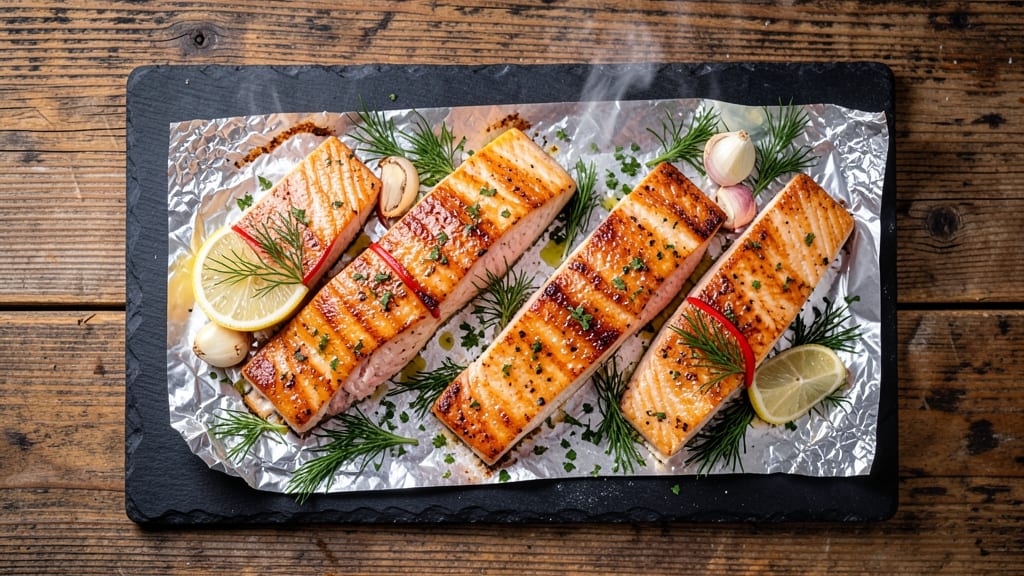
Foil-wrapped baked salmon recipe solves the age-old dilemma of perfect salmon—crispy skin without drying out the delicate center. After years of testing, I’ve perfected a method that guarantees juicy, flaky fillets with golden edges, every single time. The secret lies in the foil technique and precise oven timing, which transforms even the most cautious home cook into a salmon pro.
This recipe delivers restaurant-quality results with just five simple ingredients and 20 minutes of active prep. The foil wrapping locks in moisture while allowing the skin to crisp beautifully, and the lemon-herb marinade adds bright, aromatic depth that pairs perfectly with the rich salmon.
No special equipment is needed—just a baking sheet, foil, and your oven.
By the time you pull this salmon from the oven, you’ll have perfectly cooked fillets with crispy, caramelized skin and tender, flaky centers that melt at the touch of a fork.
The lemon-herb aroma will fill your kitchen, and the bright, citrusy flavor will elevate any meal. It’s the kind of dish that feels luxurious yet remains approachable for weeknight dinners.
Serve with roasted asparagus, a simple green salad, or crusty bread to soak up the juices. This method works equally well for salmon steaks or fillets, making it versatile for any occasion. Let’s get cooking—your next salmon dinner is about to become foolproof.
Ingredients for foil wrapped baked salmon
Five simple ingredients and one sheet of foil transform ordinary salmon into restaurant-worthy perfection.
| Ingredient | Amount | Notes |
|---|---|---|
| Salmon Fillets 🐟 | 4 whole | Skin-on, center-cut preferred |
| Extra-Virgin Olive Oil 🫒 | 1 tbsp | High-quality, fruity variety |
| Fresh Lemon Juice 🍋 | 2 tbsp | Freshly squeezed, no seeds |
| Fresh Dill 🌿 | ¼ cup | Chopped, stems removed |
| Fresh Parsley 🌿 | ⅛ cup | Chopped, flat-leaf preferred |
| Garlic Cloves 🧄 | 2 cloves | Minced or finely chopped |
| Sea Salt 🧂 | 1 tsp | Fine grain, kosher preferred |
| Black Peppercorns 🌶️ | ½ tsp | Freshly ground, coarse |
| Aluminum Foil 📄 | 1 sheet | Heavy-duty, 12x17 inches |
The salmon fillets are the star—center-cut, skin-on is ideal for even cooking and crispy skin. Wild-caught Alaskan salmon has the best texture and flavor, but any fresh fillet works. Avoid pre-sliced or thawed salmon; fresh from the seafood counter ensures optimal quality. If using frozen, thaw overnight in the fridge, wrapped in a towel to retain moisture. The skin should be intact and shiny, not dull or discolored. For best results, pat the fillets dry with paper towels before seasoning—this helps the skin crisp beautifully.
No fresh dill? Dried dill at one-third the amount works in a pinch, but fresh is worth seeking out at Whole Foods or local fish markets. The lemon juice can be bottled if fresh isn't available, but freshly squeezed adds that bright, zesty punch. Substitute parsley with cilantro or chives if needed, though parsley's milder flavor complements the salmon best. For extra richness, add 1 tbsp of unsalted butter to the marinade. The olive oil should be extra-virgin—cheap oil can overpower the delicate salmon flavor. If you're short on time, skip the herbs and just use lemon and olive oil; it'll still taste amazing.
This recipe reheats beautifully—5 minutes at 350°F in foil will warm it through without drying. Store leftovers in an airtight container for up to 2 days in the fridge, or freeze for 3 months by wrapping each fillet individually in foil. For meal prep, bake an extra fillet and portion it into salads or grain bowls. The foil wrapping keeps the salmon juicy, so don’t remove it until serving. If you’re serving with roasted asparagus or a green salad, assemble everything just before eating to maintain crispness.
Why You'll Love This Recipe
- Foolproof Foil Magic: I swear by this method—no flipping, no fiddling, just wrap and bake. The foil keeps everything juicy while the edges get that perfect crisp, and honestly? Even if you’re not a salmon fan, the bright lemon and dill trick you into loving it.
- Bright & Simple: That zesty lemon juice and fresh dill cut through the richness of the salmon like a breath of fresh air. I’ll be real: it’s the kind of flavor that makes you want to eat it straight from the foil—no plates required.
- Weeknight & Meal Prep: Between us, this is my go-to for busy nights and lunch prep. Bake a batch on Sunday, and you’ve got ready-to-reheat meals all week—just pop it back in the oven or microwave. (Yes, even on a Tuesday night.)
- Budget-Friendly Luxury: Salmon feels fancy, but this recipe stretches it. A single fillet feeds two easily, and the olive oil, lemon, and herbs cost pennies. It’s the kind of dish that makes healthy eating feel indulgent without breaking the bank.
Step-by-step instructions for foil-wrapped baked salmon
Here's how to achieve perfectly crispy skin and flaky salmon without overcooking.
Prepare the Salmon Fillets
Pat each of the 4 whole salmon fillets dry with paper towels, pressing firmly to remove all moisture. This step is crucial for crispy skin—any remaining moisture will steam the salmon instead of allowing it to brown properly. Place the fillets skin-side up on a clean work surface.
Season each fillet generously with the 1 teaspoon sea salt and 0.5 teaspoon black peppercorns, focusing on the skin side. The salt will draw out any remaining moisture and create a flavorful crust. Let the fillets sit at room temperature for 10 minutes while you prepare the rest of the ingredients.
Create the Herb-Lemon Mixture
In a small bowl, combine the 2 tablespoons fresh lemon juice, 0.25 cup chopped fresh dill, 0.125 cup chopped fresh parsley, and 2 cloves minced garlic. Mix well to distribute the herbs evenly. This vibrant mixture will infuse the salmon with bright, fresh flavors while keeping it moist during baking.
Taste the mixture and adjust seasoning if needed—you might want to add a pinch more salt or pepper to match your preference. The acidity from the lemon juice will help tenderize the salmon slightly and prevent it from drying out in the oven.
Assemble the Foil Packets
Cut the 1 sheet aluminum foil into 4 equal squares, each large enough to wrap one salmon fillet completely. Place one fillet skin-side down on each foil square. Drizzle each fillet with 1 teaspoon of the extra-virgin olive oil, spreading it evenly over the skin.
Spoon about 1 tablespoon of the herb-lemon mixture onto each fillet, spreading it evenly over the flesh side. This ensures every bite gets that bright, herby flavor without overwhelming the natural taste of the salmon. Fold the foil up tightly around each fillet, sealing the edges completely to create an airtight packet.
Bake to Perfect Doneness
Preheat your oven to 375°F. Place the foil-wrapped salmon packets on a baking sheet and bake for 12 to 15 minutes, depending on the thickness of your fillets. The salmon is done when the skin is crispy and golden brown, and the flesh flakes easily with a fork.
To check doneness, carefully open one packet and insert a fork into the thickest part of the fillet. The salmon should reach an internal temperature of 145°F and pull apart easily. If the skin isn't crispy enough, return it to the oven for another 2 to 3 minutes. The foil traps steam, so you won't overcook the fish while achieving that perfect texture.
Pro Tips For Making Foil Wrapped Baked Salmon
- Preheat That Foil: Toss the cold foil in the oven for 5 minutes before adding your salmon—it’s the cheat code for even cooking. I used to skip this, and my salmon would steam instead of crisp, no matter how hot the oven was.
- Dry the Skin: Pat the salmon skin thoroughly with paper towels before wrapping—this guarantees a crispy finish instead of a sad, soggy one. Wet skin = rubbery texture, and nobody wants that.
- Lemon First, Dill Last: Drizzle the lemon juice before adding olive oil and herbs—it marinates the salmon for 10 minutes while you prep the foil. The acid works its magic, and the dill stays bright instead of wilting into the pan.
- Don’t Overwrap: Leave a 2-inch gap at the top of the foil—steam needs room to escape, or your salmon will turn out mushy. Tight foil = sad texture, and nobody’s got time for that.
Troubleshooting this recipe
Skin Not Crispy
If your salmon skin stays soft instead of crispy, you likely didn’t dry it properly or used too much moisture in the foil. Pat fillets extra dry with paper towels before seasoning—no wet spots on the skin.
For extra crispiness, broil for 2-3 minutes at the end (watch closely to avoid burning). I also recommend using high-quality extra-virgin olive oil—cheaper oils can prevent proper browning. 🔥
Overcooked Salmon
Foil wrapping is forgiving, but salmon can still dry out if left too long. Pull it from the oven when the internal temp hits 145°F—overcooking past 150°F turns it rubbery.
For thicker fillets, start checking at 12 minutes (they cook faster than you think). If you’re unsure, use an instant-read thermometer—it’s the only foolproof way. 🌡️
Uneven Cooking
Thin and thick parts of the fillet cooking at different rates? Place thicker sections skin-side down on the foil to ensure even heat distribution. If using a baking sheet, avoid crowding—leave 1 inch of space between packets.
For extra insurance, rotate the tray halfway through baking. I’ve found heavy-duty foil (like Reynolds Premium) helps maintain consistent heat better than lightweight options.
Foil Leaking or Ripping
If your foil packets spring leaks, the salmon will steam instead of crisp. Use 12x17-inch heavy-duty foil and fold edges tightly—double-fold the seams for extra security. For stubborn leaks, add a second layer of foil over the first.
Pro tip: Crimp the edges with your fingers to seal completely before baking. A small leak won’t ruin the dish, but it’ll make the skin less crisp. 📄
Dry or Tough Texture
Dry salmon usually means it was overcooked or lacked moisture. The foil should create a steam bath, not a dry environment—if it’s too tight, the fish won’t release enough moisture.
Leave ½-inch gaps at the top of each packet to allow steam to escape slightly. For extra moisture, add 1 teaspoon of water to each packet before sealing. 💧
Herbs Not Infusing
If your salmon tastes bland or the herbs aren’t bright, the marinade didn’t penetrate enough. Spread the herb-lemon mixture evenly on the flesh side and let the salmon sit for 5 minutes before sealing the foil.
For stronger flavor, add 1 teaspoon of honey to the marinade—it helps the herbs cling better. I also recommend using fresh herbs (dried ones won’t infuse as well). 🌿
Nutrition facts
Frequently asked questions
Can I use frozen salmon for this recipe?
Yes, but thaw it properly first! Place frozen salmon in a sealed bag and submerge in cold water for 30 minutes or thaw overnight in the fridge. Never use microwave-thawed salmon—the uneven heating can make the texture inconsistent. Pat fillets completely dry before seasoning to ensure crispy skin.
What's the best way to reheat foil-wrapped salmon?
Reheat gently to preserve moisture: Place wrapped salmon on a baking sheet at 350°F for 5-7 minutes until warmed through. Avoid microwaving—it turns the skin rubbery. For leftovers, let the salmon cool completely before reheating to prevent bacterial growth.
Can I substitute other herbs besides dill and parsley?
Swap parsley for chives or cilantro, or use thyme or basil for a different flavor profile. For a Mediterranean twist, add oregano and a pinch of red pepper flakes. Just remember that fresh herbs work best—dried versions need half the quantity and won't infuse as well.
How do I adjust cooking time for thicker salmon fillets?
Add 2-3 minutes for every extra ½-inch of thickness. For example, 1-inch fillets need 14-16 minutes while 1.5-inch steaks require 18-20 minutes. Always use an instant-read thermometer to check for 145°F internal temp—this is the only reliable way to avoid overcooking.
Is this method safe for pregnant women?
Yes, but ensure your salmon reaches 145°F internal temp—this kills any potential parasites. Choose fresh, previously frozen salmon (like wild-caught Alaskan) for extra safety. Avoid raw or undercooked salmon dishes during pregnancy. The foil wrapping method actually makes it safer by ensuring thorough cooking.