
Side Dishes
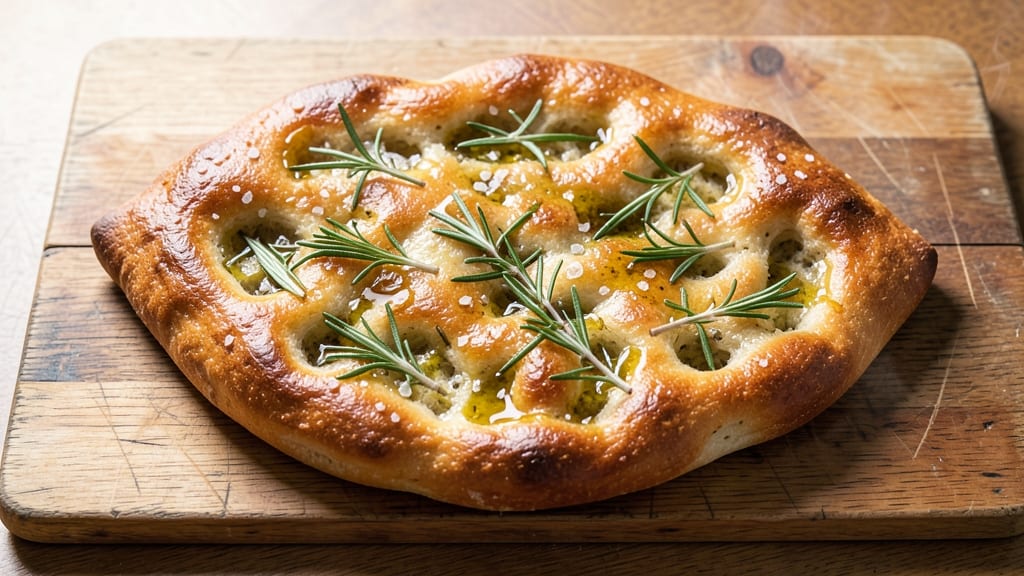
This King Arthur focaccia bread recipe turns the humble loaf into a restaurant-worthy masterpiece using its high-protein flour for an ideal texture. The dough rises beautifully, creating those signature air pockets that make every bite irresistible.
I've perfected this recipe over countless batches, and the secret lies in that first dimpled olive oil crust—it's where all the magic happens.
The process is straightforward but requires patience for proofing and baking times that reward you with a golden, crispy crust and tender interior. This recipe delivers professional results without the intimidation, using just five key ingredients plus your choice of herbs and toppings.
The King Arthur flour ensures a light, airy crumb that holds up perfectly for serving or storing.
By the time you pull it from the oven, you'll have a focaccia with shatteringly crisp edges, herby pockets of flavor, and enough olive oil glistening on top to make your kitchen smell like a Tuscan bakery.
It's the kind of bread that disappears faster than you can say "second slice," and leftovers stay fresh for days when wrapped properly.
Whether you're serving it alongside soups, using it for sandwiches, or enjoying it straight from the oven, this focaccia delivers texture and flavor that put store-bought versions to shame.
The King Arthur flour's performance makes all the difference—it's what transforms good focaccia into exceptional focaccia. Let's get started on creating your perfect loaf.
Ingredients for king arthur focaccia bread
Five core ingredients plus herbs that transform into golden, crispy focaccia magic.
| Ingredient | Amount | Notes |
|---|---|---|
| King Arthur High-Protein Bread Flour 🌾 | 3 ½ cups | Unbleached for best texture |
| Extra-Virgin Olive Oil 🫒 | 1 ¼ cups | High-quality, fruity variety |
| Warm Water 💧 | 1 ½ cups | 110°F for optimal hydration |
| Instant Yeast 🍞 | 1 tbsp | Active dry works too |
| Kosher Salt 🧂 | 1 ½ tsp | Fine grain preferred |
| Fresh Rosemary 🌿 | ¼ cup | Finely chopped, stems removed |
| Fresh Thyme 🌿 | ¼ cup | Leaves only, finely chopped |
| Coarse Sea Salt 🧂 | ½ cup | For dimpling and finishing |
| Flaky Sea Salt 🧂 | ¼ cup | Optional for final sprinkle |
| Garlic Cloves 🧄 | 4 cloves | Thinly sliced, for pockets |
The King Arthur high-protein flour is non-negotiable here—its protein content creates that signature airy crumb. Grab the unbleached version from their website or any major grocery store's baking aisle. For the olive oil, Trader Joe's or Whole Foods—avoid the cheap stuff, trust me. The warm water should be around 110°F (just warm to the touch), not boiling. If you're short on fresh herbs, dried rosemary at one-third the amount works, but fresh gives that Tuscan vibe. I always double-check my yeast is fresh by dropping it in warm water with a pinch of sugar—if it bubbles in 5 minutes, it's good to go.
No instant yeast? Active dry yeast works too—just let it proof longer. Short on rosemary? Fresh thyme or sage are great swaps, but rosemary's piney flavor is classic. The coarse sea salt for dimpling should be Maldon or Jacobsen if you're splurging—those flaky crystals melt beautifully. For the garlic, roasted cloves add a sweet depth, but fresh thin slices give that bright punch. If you're making this ahead, prep the dough but stop after shaping—it keeps in the fridge for up to 24 hours before baking.
This dough is forgiving but needs time to shine. Once shaped, let it rise at least 2 hours (or overnight in the fridge for deeper flavor). The extra-virgin olive oil on top should be generous—don't skimp, that's where the magic happens. Baked focaccia keeps 3 days at room temp wrapped in a towel, or 5 days in the fridge. For freezing, slice before wrapping—toast straight from frozen for crispy results. The crust stays crisp for 24 hours if stored properly, but the interior softens after day two.
Why You'll Love This Recipe
- No-Knead Magic: The King Arthur flour does all the heavy lifting—just mix, rest, and bake. No roller, no stress, no fancy tools. Honestly, my lazy Sundays now include this instead of takeout.
- Olive Oil Bliss: That first drizzle of extra-virgin olive oil? It’s the secret weapon. The crust gets golden and crispy while the inside stays soft—like a hug from Italy. (Yes, even on a Tuesday night.)
- Leftovers? More Like Leftovers: This bread stays fresh for days, perfect for toast, sandwiches, or dipping. I’ll be real: I’ve eaten it cold straight from the fridge at 2 AM. No judgment.
- Protein-Packed Staple: High-protein flour means it fills you up without the guilt. Great for meal prep—slice it, freeze it, and reheat it. My gym buddies now ask for my "secret" recipe. (It’s not a secret.)
Step-by-step instructions for King Arthur flour focaccia bread
Here's how to create a golden, olive oil-drenched focaccia with aromatic herby pockets that'll make your kitchen smell like a Tuscan bakery.
Mix the Dough and Let It Rest
In a large mixing bowl, combine the 3.5 cups King Arthur High-Protein Bread Flour, 1 tbsp Instant Yeast, and 1.5 tsp Kosher Salt. Mix gently with a wooden spoon until just combined. Create a well in the center and pour in the 1.5 cups Warm Water and 1.25 cups Extra-Virgin Olive Oil. Gradually incorporate the wet ingredients into the dry, mixing until a shaggy dough forms.
Transfer the dough to a lightly oiled surface and knead for 5-7 minutes until smooth and elastic. You'll know it's ready when it springs back slowly when pressed. The high-protein flour gives this focaccia excellent structure, so don't overwork it—just until it comes together. Place the dough in a lightly oiled bowl, cover with a damp towel, and let it rest at room temperature for 1 hour. This initial rest allows the gluten to relax and the flavors to meld.
Shape and First Rise
After the initial rest, punch down the dough gently to release any air bubbles. Transfer it to a 9x13-inch baking pan that's been lightly greased with olive oil. Press the dough out to completely cover the bottom of the pan, using your fingers to stretch it evenly. The edges should be about ½ inch thick—don't worry if it's not perfectly even, as focaccia should have some variation in thickness.
Cover the pan with a damp towel and let the dough rise at room temperature for 1 to 1½ hours, or until it's puffy and has nearly doubled in size. You'll see the dough pull away slightly from the edges of the pan. This rise creates the airy texture that makes focaccia so satisfying. The warm water in the recipe helps activate the yeast quickly, so keep an eye on it—it should be ready before it starts to overflow the pan.
Create Olive Oil Pockets and Herby Dimples
Preheat your oven to 375°F while the dough rises. Once the dough has puffed up, use your fingertips to gently press dimples all over the surface—about ½ inch apart. Press down firmly but not so hard that you tear the dough. Then, use a small spoon to create small pockets in the dimples by pressing down and pulling up slightly. This is where the magic happens—the pockets will fill with olive oil and become crispy.
Next, drizzle the remaining olive oil (about ¼ cup) evenly over the surface, letting it pool in the dimples and pockets. Sprinkle the 0.25 cup Fresh Rosemary and 0.25 cup Fresh Thyme evenly over the top, pressing them lightly into the dough. Then, arrange the 4 cloves Garlic Cloves in a pattern across the surface. The herbs will infuse the bread with their bright, aromatic flavors, while the garlic adds a subtle depth. Let the focaccia sit for 15 minutes while the oven preheats fully.
Bake to Golden Perfection
Bake the focaccia for 25 to 30 minutes until the top is deep golden brown and the edges are crispy. The bread should smell intensely of olive oil and herbs—this is your cue that it's ready. If the top browns too quickly, tent it loosely with aluminum foil to prevent over-browning while the center finishes baking.
About 5 minutes before the focaccia is done, sprinkle the 0.5 cup Coarse Sea Salt evenly over the top. This adds a satisfying crunch and balances the richness of the olive oil. For an extra touch, sprinkle the 0.25 cup Flaky Sea Salt over the top in the last minute of baking. Let the focaccia cool in the pan for 10 minutes before transferring it to a wire rack. The residual heat will help the bread set, making it easier to slice and serve.
Serve Warm and Enjoy
Slice the focaccia into squares or rectangles while it's still warm. The interior should be soft and airy, with pockets of crispy, golden olive oil. Serve it immediately with your favorite dips, such as garlic-infused olive oil, whipped feta, or roasted red pepper spread. The herby pockets will release their aromas with every bite, making this focaccia a showstopper for any meal.
This focaccia keeps well at room temperature for 2 days, wrapped in a clean kitchen towel. For best results, warm slices in a 350°F oven for 5-7 minutes before serving. The flavors only deepen as it sits, so it's perfect for making ahead and serving at your leisure.
Pro Tips For Making King Arthur Focaccia Bread
- STRETCH THE DOUGH: The high-protein flour in King Arthur’s mix makes this dough sticky—like, "why-did-I-think-I-could-hand-shape-this?" sticky. Instead of fighting it, slap the dough into a greased 9x13 pan, let it relax for 10 minutes, then stretch it gently with wet hands. No need to force it; the gluten will align itself when it’s ready.
- USE COLD WATER FOR YEAST: Instant yeast is forgiving, but warm water (110°F) can wake it up too fast, leading to a sour or overly active dough. I’ve learned this the hard way—my focaccia once rose like a volcano before collapsing. If your kitchen’s warm, use cool water (around 75°F) and let the yeast bloom for 5–10 minutes before mixing. The dough will thank you with a cleaner rise.
- SALT THE OIL LAST: The recipe might say to mix salt into the dough, but trust me: brushing the finished focaccia with olive oil after baking and before sprinkling flaky salt is a game-changer. The salt sticks to the crispy crust instead of dissolving into the dough, and the oil stays glossy. (Yes, it’s an extra step, but your focaccia will look like it came from a bakery.)
- SKIP THE OVERMIXING: High-protein flour loves to develop gluten, but focaccia should be tender, not chewy. Mix the dough just until the flour is mostly incorporated—lumps are fine—then fold in the rest by hand. Overmixing turns your focaccia into a dense loaf. I used to knead like I was punishing the dough; now I treat it like a delicate soufflé.
Dietary considerations for this king arthur focaccia bread
Gluten-Free Adaptation
The King Arthur Gluten-Free Measure for Measure Flour works beautifully here—just replace the high-protein bread flour with 3.5 cups of the blend. Add 1 extra tbsp xanthan gum to ensure proper structure since gluten-free dough lacks elasticity.
The texture will be slightly denser but still crispy on top. Let the dough rest 30 minutes longer before shaping to help the blend hydrate properly. 🌾
Low-Carb Option
For a keto-friendly version, swap the flour for 1 cup almond flour and 2.5 cups shredded mozzarella (yes, cheese as flour!). Use ½ cup psyllium husk powder to bind and reduce olive oil to 1 cup.
The result is a cheesy, crispy focaccia with only 6g net carbs per serving. Bake at 350°F for 20-25 minutes since it browns faster. 💪
Dairy-Free Version
Skip the mozzarella in the low-carb version and use vegan olive oil (like Primal Kitchen) instead of regular olive oil. For binding, add 1 tbsp ground flaxseed mixed with 3 tbsp water to replace eggs.
The texture stays crispy, and the flavor remains rich. Store-bought vegan butter works for brushing the pan instead of olive oil. ✨
Allergen-Friendly Swaps
For nut allergies, use sunflower seed flour instead of almond flour in the low-carb version. If avoiding yeast, make a sourdough starter with 1 cup gluten-free flour and ½ cup water—let it ferment 24 hours before using ¼ cup as a yeast replacement.
Always check labels for hidden allergens in sea salt or herbs. 💡
Soy-Free Considerations
Most King Arthur flours are soy-free, but always verify the label. For the low-carb version, ensure your mozzarella is soy-free (check brands like BelGioioso). Use tapioca starch instead of psyllium husk if needed—it adds chewiness but requires 1 extra tbsp for binding.
Soy lecithin is often in vegan products, so opt for brands labeled "soy-free." 🌱
Nutrition facts
Frequently asked questions
Why does King Arthur flour make focaccia so much better?
The high-protein content in King Arthur's bread flour creates that signature airy, open crumb structure while maintaining a crispy crust. The protein helps develop gluten properly, giving your focaccia those signature pockets and a lighter texture than regular all-purpose flour. It also absorbs moisture differently, preventing a gummy or dense result.
Can I make this focaccia without a 9x13-inch pan?
Yes! Use a 10x15-inch pan for a thinner focaccia or a 9-inch round pan for a more rustic shape. For a free-form version, shape the dough on a baking sheet lined with parchment paper. Just adjust baking time—smaller pans may need 20-25 minutes while larger ones could take up to 35 minutes for even browning.
What's the best way to store leftover focaccia?
Wrap cooled focaccia in a clean kitchen towel (not plastic) to maintain crispiness. It stays fresh at room temperature for 2-3 days. For longer storage, slice before wrapping and freeze for up to 3 months. To revive, warm slices in a 350°F oven for 5-7 minutes until crispy again. The towel trick prevents sogginess better than bags.
Why did my focaccia turn out dense instead of airy?
Over-kneading or skipping the rest periods are common culprits. The dough needs 1 hour initial rest and 1-1.5 hours proofing—don't rush it. Also check your yeast: if it's old, it won't activate properly. For extra airiness, press dimples deeper and let the dough rise until it nearly doubles in size before baking. Cold kitchen? Move the bowl to a warmer spot (like near the oven) to help yeast work faster.