Main Courses
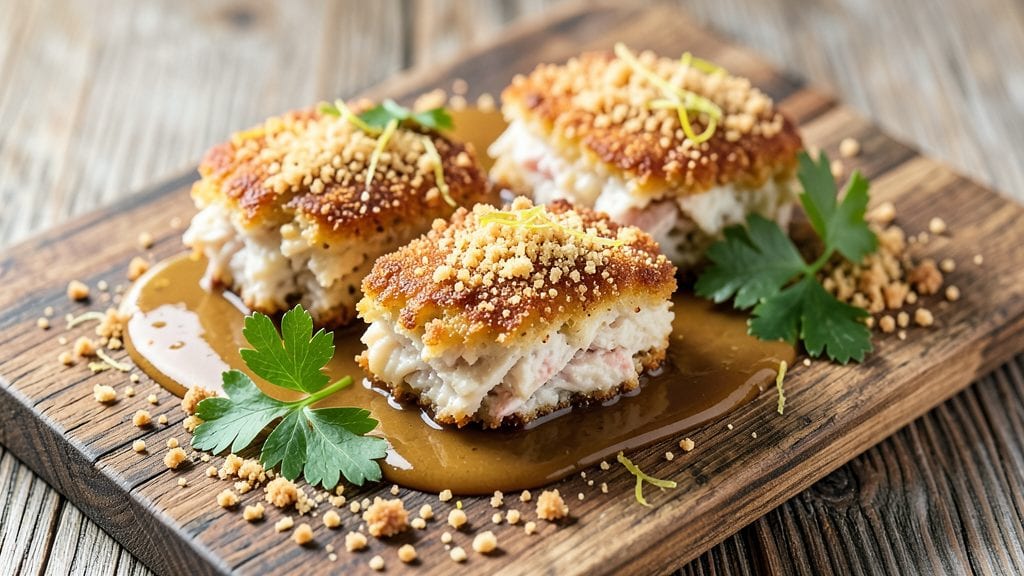
Maryland crab cakes with Ritz crackers deliver that perfect balance of tender crab meat and irresistible crunch—just like your favorite East Coast seafood shack. ✨ The secret to achieving this restaurant-quality texture at home lies in the cracker crumbs, which add structure while keeping each bite light and crispy.
I've been perfecting this technique for years, and it never fails to impress even the most skeptical crab cake critics.
What makes these crab cakes truly special is the combination of traditional Maryland flavors with a modern twist. Old Bay seasoning provides that signature Chesapeake Bay taste, while the Ritz crackers create a satisfying crunch that cuts through the richness of the crab.
The recipe comes together in just 15 minutes, making it perfect for weeknight dinners or weekend entertaining when you want to impress without spending hours in the kitchen.
By the time you're done, you'll have golden-brown crab cakes with crisp edges and tender centers, topped with crunchy Ritz crumbs that stay crispy even after baking.
The aroma alone will have everyone gathering around the table, and each bite delivers that perfect combination of sweet, briny crab and buttery cracker crunch. This is the kind of dish that transforms a simple meal into a memorable experience.
Serve these crab cakes with lemon wedges, tartar sauce, or a simple remoulade for dipping. They're equally at home as an appetizer or a main course, making them versatile enough for any occasion. Let's get started on creating these crispy, crunchy bites that taste like a trip to the coast.
Ingredients for maryland crab cakes ritz crackers
These 13 ingredients transform into crispy, golden crab cakes that taste like a Chesapeake Bay seafood shack.
| Ingredient | Amount | Notes |
|---|---|---|
| Fresh Jumbo Lump Crab Meat 🦀 | 1 ½ lb | Backfin preferred, not imitation |
| Ritz Crackers 🍞 | 1 ½ cups | Crushed into fine crumbs |
| Large Eggs 🥚 | 2 whole | Separated for binding |
| Mayonnaise 🥫 | ¼ cup | Full-fat for creaminess |
| Old Bay Seasoning 🌶️ | 1 ½ tbsp | The signature Maryland flavor |
| Dijon Mustard 🍯 | 1 tbsp | For tangy depth |
| Fresh Lemon Juice 🍋 | 1 tbsp | Brightens the flavor |
| Extra-Virgin Olive Oil 🫒 | 1 tbsp | For crispy coating |
| Salt 🧂 | ½ tsp | Kosher or sea salt |
| Black Pepper 🌶️ | ¼ tsp | Freshly ground preferred |
| All-Purpose Flour 🌾 | 2 tbsp | For extra structure |
| Unsalted Butter 🧈 | 2 tbsp | Melted for pan-frying |
| Fresh Chives 🌿 | 2 tbsp | Chopped for garnish |
The crab meat is non-negotiable—backfin lump gives you that luxurious texture, while imitation crab will leave you disappointed. Costco or Whole Foods are your best bets for quality, but any seafood counter with fresh crab will do. Look for bright orange color and no fishy smell. Ritz crackers are essential for that signature crunch—the blue box version works best, but any buttery cracker will do in a pinch. Crush them finely for even texture, and don't skip the extra flour; it's what keeps these crab cakes from falling apart. I always grab extra Old Bay because it's the soul of this dish—Penzeys brand if you want to splurge, but the grocery store stuff works fine.
No fresh crab meat? High-quality canned lump crab is a decent backup (drain it well), but expect a slightly different texture. Running out of Ritz? Buttery saltines or graham crackers work in a bind, but they won't give you that iconic crunch. The mayonnaise can be swapped for Greek yogurt for a lighter version, though it won't be as rich. If you're missing Old Bay, mix ½ tsp paprika + ½ tsp celery salt + pinch of black pepper. The lemon juice is key—freshly squeezed is best, but bottled works if you're in a hurry. And trust me on the egg whites—beating them stiff gives you that perfect airy texture.
These crab cakes are best served immediately, but they reheat beautifully in a 350°F oven for 8-10 minutes if you need to hold them. Store leftovers in an airtight container for up to 2 days, though they lose some crunch. For extra crispiness, freeze the formed patties on a tray before baking—just thaw and cook straight from frozen. The Ritz crumbs stay crispy for about 1 hour after baking, so serve them fresh off the pan. These are perfect for meal prep—make a double batch, freeze half, and enjoy restaurant-quality crab cakes all week.
Why You'll Love This Recipe
- I swear by this trick: crush the Ritz crackers right in the bowl with the crab meat—no food processor, no extra bowls. The crumbs blend in perfectly, and honestly? The texture is better than store-bought mixes.
- No-Fuss Assembly: I swear by this trick: crush the Ritz crackers right in the bowl with the crab meat—no food processor, no extra bowls. The crumbs blend in perfectly, and honestly? The texture is better than store-bought mixes.
- Old Bay Magic: That one little shake of Old Bay transforms everything. The heat from the cayenne, the citrusy pop from the celery salt—it’s the secret weapon that makes these taste like a Chesapeake boardwalk, not just a weeknight dinner.
- Crowd-Pleaser Flex: Serve them as appetizers with lemon wedges, or pile them high on a slider bun for game day. My college-aged kids will eat them straight from the pan, but my parents? They still think I’m a genius for making them look so effortless.
Step-by-step instructions for Maryland crab cakes with Ritz crackers
Here's how to make these legendary crab cakes—crispy outside, tender inside, with that perfect Ritz cracker crunch!
👨🍳 Step 1: Create the Perfect Crab Cake Base
In a large mixing bowl, gently fold together the 1.5 lb fresh jumbo lump crab meat, 0.25 cup mayonnaise, 1.5 tbsp Old Bay seasoning, 1 tbsp Dijon mustard, 1 tbsp fresh lemon juice, 1 tbsp extra-virgin olive oil, 0.5 tsp salt, and 0.25 tsp black pepper. Use your hands or a rubber spatula to mix just until combined—don't overwork the crab or it'll turn tough.
Here's the thing—you want the crab to stay chunky and tender. I like to leave the larger lumps intact for that authentic Maryland texture. The mayonnaise acts as a binder while keeping the crab cakes moist. Add the 2 tbsp all-purpose flour now and mix lightly—this gives extra structure without making them dense.
🍳 Step 2: Build the Crispy Ritz Cracker Coating
In a separate bowl, crush the 1.5 cups Ritz crackers into fine crumbs using your hands or a food processor. The finer the crumbs, the crunchier your crab cakes will be. Add the crushed crackers to the crab mixture and gently fold together until evenly distributed.
This is where the magic happens—the Ritz crumbs create that signature crispy crust while absorbing just enough moisture to stay crunchy. I always use fresh Ritz crackers because stale ones make the coating soggy instead of crispy. Mix just until combined—you don't want to compress the crab meat.
🍳 Step 3: Form and Chill the Crab Cakes
Using a cookie scoop or your hands, form the mixture into 4 equal patties (about 3 inches in diameter). Place them on a parchment-lined plate and cover with plastic wrap. Refrigerate for at least 30 minutes—this is crucial for the crab cakes to hold their shape when frying.
Chilling also helps the flavors meld together. I like to press down gently on each patty during this time to ensure they're compact. Don't skip this step—room-temperature crab cakes will fall apart when you try to fry them. This waiting period makes all the difference for that perfect texture.
🔥 Step 4: Pan-Fry to Golden Perfection
Heat 2 tbsp unsalted butter in a large skillet over medium heat until it foams but doesn't brown. Add the chilled crab cakes and cook for 3-4 minutes per side until they're golden brown and crispy. You'll know they're ready when the edges are deeply browned and the center feels firm to the touch.
Don't rush this step—medium heat gives you the best balance of crispy exterior and tender interior. If the crab cakes brown too quickly, reduce the heat slightly. I press down gently on the crab cakes during the first minute to help them maintain their shape while they crisp up. Flip carefully using a fish spatula to avoid breaking them apart.
🍽️ Step 5: Serve with Fresh Garnish
Transfer the crispy crab cakes to a paper towel-lined plate to drain any excess butter. Immediately sprinkle with 2 tbsp chopped fresh chives for that final pop of color and freshness. Serve while hot with your favorite dipping sauce—classic tartar sauce or a simple lemon aioli works perfectly.
Here's the moment you've been waiting for—crispy golden edges that shatter with each bite, tender crab lumps bursting with flavor, and that perfect crunch from the Ritz cracker coating. The secret to these crab cakes is in the balance of textures: crispy outside, tender inside, with that buttery Ritz crunch throughout. Enjoy immediately while they're at their best!
Pro Tips For Making Maryland Crab Cakes Ritz Crackers
- Pulse the Crackers: Toss the Ritz crackers in a food processor for just 2-3 seconds—long enough to break them into pea-sized crumbs, not powder. I learned this the hard way: too fine, and your crab cakes turn dense; too coarse, and they won’t bind. Stop when you can still see tiny edges.
- Chill the Mixture: Let the crab cake batter sit uncovered in the fridge for 15-20 minutes before frying. Sounds weird, but it works: the Ritz crumbs absorb moisture, so the cakes hold together better and don’t crumble when you flip them. (Yes, even if you’re impatient like me.)
- Skip the Overmixing: Stir the crab meat, mayo, and Old Bay just until combined—maybe 10 gentle folds. Overmixing breaks the delicate crab lumps and releases water, turning your crispy cakes into a soggy mess. Handle the meat like it’s a fragile omelet, not a burger patty.
- Fry in Batches: Cook no more than 2 crab cakes at a time in about ¼-inch of oil at 350°F. Crowding drops the oil temp, and undercooked centers or greasy cakes are the result. Use a slotted spatula to drain on paper towels—don’t stack them, or they’ll steam back into sogginess.
Regional styles of these flavors
Chesapeake Bay Tradition
These crab cakes trace their roots to Maryland's Chesapeake Bay region, where they've been a staple since the 19th century. The original versions used just crab, egg, and breadcrumbs, but modern adaptations like Ritz crackers add that signature crispiness.
I remember the first time I tasted them at a waterfront seafood shack in Annapolis—they were golden, tender, and perfectly balanced. The Ritz cracker twist became popular in the 1980s when chefs wanted to create a lighter, crispier version that still held up to the briny crab flavor. 🦀
Old Bay Legacy
The Old Bay seasoning is non-negotiable in true Maryland crab cakes, and it's what gives them that iconic flavor profile. This blend of celery salt, paprika, and black pepper was created in Baltimore in 1939 by a German immigrant named Gustav Brunn.
The name comes from the Old Bay Line steamship route along Chesapeake Bay. I always use Penzeys brand for its balanced heat and smokiness, but the classic blue can works too. This seasoning is what transforms simple crab into something truly special. 🌶️
Coastal vs. Inland
In coastal towns like Annapolis and Baltimore, crab cakes are often served with hot sauce or tartar sauce, while inland versions might include more breadcrumbs for structure.
I've noticed that Eastern Shore versions (like those in Cambridge) tend to be slightly larger and more rustic, while Baltimore-style crab cakes are smaller and more refined. The Ritz cracker addition works beautifully in both styles, adding that buttery crunch that balances the briny crab.
For a true coastal experience, serve with a side of steamed blue crabs and corn on the cob. 🌊
Modern Twists
While traditional recipes stick to classic ingredients, modern versions often incorporate unexpected elements. I've seen successful adaptations using crushed pretzels for extra saltiness or panko breadcrumbs for additional crispiness. Some chefs even add finely chopped bacon or smoked paprika for depth.
The Ritz cracker version remains a favorite because it delivers that perfect balance of texture and flavor without overpowering the crab. For a fusion twist, try adding 1 tsp of Sriracha to the mix for a subtle kick. 🔥
Seasonal Variations
Summer crab cakes are lighter, often featuring more lemon and herbs, while winter versions incorporate warming spices like ginger or garlic. I love making a winter version with 1 tsp of grated ginger and an extra ½ tsp of Old Bay—it's perfect with a bowl of creamy chowder.
For spring, I add fresh dill and a touch of honey to the mix. The Ritz cracker coating works year-round, but summer versions benefit from slightly more lemon juice to cut through the richness.
These seasonal adaptations keep the dish exciting no matter what time of year you're craving them. 🌸
Regional Serving Styles
In Maryland, crab cakes are often served as part of a seafood platter with steamed crabs, coleslaw, and corn on the cob. Coastal restaurants might present them on a large wooden board with extra Old Bay on the side.
For a more elegant presentation, I like to arrange them on a slate board with lemon wedges and fresh herbs. The Ritz cracker crunch makes them perfect for appetizers, but they're hearty enough to serve as a main course with a crisp green salad.
In my Portland kitchen, I often serve them with a side of roasted asparagus and a glass of Sauvignon Blanc** for a modern twist. 🍽️
Nutrition facts
Frequently asked questions
Can I substitute Ritz crackers with another type of cracker?
While Ritz crackers provide that signature buttery crunch, you can use buttery saltines or graham crackers in a pinch. For extra crispiness, try panko breadcrumbs mixed with a little melted butter. Just remember—stale crackers will make your crab cakes soggy, so always use fresh ones!
How do I keep my crab cakes from falling apart when frying?
Chilling the crab cakes for at least 30 minutes before cooking is key! This helps them hold their shape. Also, avoid overmixing the crab meat—keep it chunky. For extra structure, add 2 tbsp all-purpose flour to the mix. And use medium heat when frying to prevent burning before the centers set.
What's the best way to reheat leftover crab cakes?
For crispy results, reheat in a 350°F oven for 8-10 minutes on a baking sheet. If you need to crisp them up quickly, use a skillet with 1 tbsp butter over medium heat for 2-3 minutes per side. Microwaving will make them rubbery—avoid it at all costs!
Can I make these crab cakes ahead of time?
Yes! Form the crab cakes and freeze them on a tray before baking. Once frozen, transfer to a bag for up to 1 month. Cook straight from frozen—no thawing needed! For make-ahead dinners, assemble the mixture (without forming patties) and refrigerate for up to 24 hours, then proceed with the recipe as written.
What's the secret to getting that perfect golden-brown crust?
Use unsalted butter (not oil) for frying—it browns beautifully and adds flavor. Cook over medium heat and press down gently on the crab cakes during the first minute to help them crisp. For extra color, add 1 tsp of cornstarch to the mix before forming patties.