
Snacks
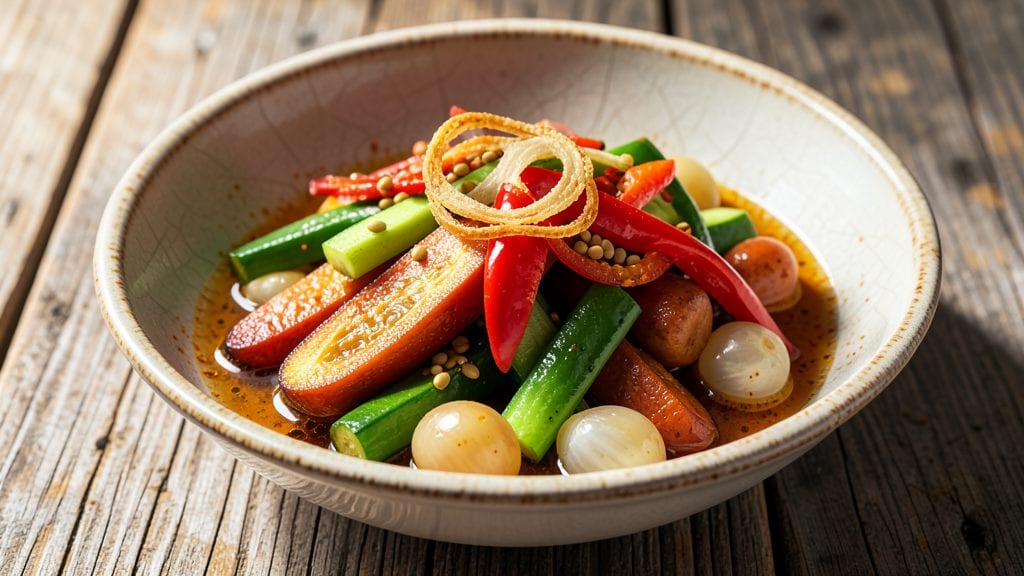
This mix veg pickle recipe transforms simple vegetables into a vibrant, tangy condiment that adds zing to sandwiches, salads, and snacks. The process combines traditional pickling techniques with modern convenience, ensuring bold flavors develop without requiring advanced skills.
I’ve perfected this recipe to deliver a crunchy, flavor-packed result that stays fresh for weeks.
What sets this recipe apart is the balance of acidity and spice—mustard seeds, turmeric, and vinegar work together to create a pickle that’s both sharp and subtly sweet.
The vegetables (carrots, onions, cucumbers) retain their texture while absorbing the zesty marinade. Sterilization and proper storage ensure safety and longevity, making this a pantry staple.
By the end, you’ll have a batch of crisp, tangy pickles that elevate everyday meals with their vibrant color and bold taste. The recipe is foolproof, with clear steps for preparation, fermentation, and storage. Whether you’re a beginner or an experienced cook, this method delivers restaurant-quality results at home.
Use these pickles in sandwiches, as a snack, or to add crunch to salads. The flavors deepen over time, making this a recipe worth repeating. Let’s get started on creating your own zesty mix-vegetable pickles!
Ingredients for mix veg pickle
Simple vegetables meet bold spices for a tangy, crunchy condiment that transforms ordinary meals.
| Ingredient | Amount | Notes |
|---|---|---|
| White Vinegar 💧 | 2 cups | Distilled white vinegar preferred |
| Water 💧 | 2 cups | Filtered or bottled preferred |
| Granulated Sugar 🍚 | 1 cup | White sugar for balance |
| Diamond Crystal Kosher Salt 🧂 | 1 ½ tbsp | Not iodized for best flavor |
| Mustard Seeds 🌶️ | 1 tbsp | Yellow or brown seeds |
| Turmeric Powder 🌿 | 1 tsp | Freshly ground preferred |
| Fresh Ginger Root 🌿 | 2 tbsp | Finely grated, organic preferred |
| Black Peppercorns 🌶️ | 1 tsp | Crushed for better infusion |
| Cucumber 🥒 | 1 lb | English or Persian type |
| Carrot 🥕 | 1 lb | Baby carrots or uniform size |
| Yellow Onion 🧅 | 1 whole | Medium yellow or white |
| Green Bell Pepper 🌶️ | 1 whole | Medium size, seeds removed |
| Red Bell Pepper 🌶️ | 1 whole | Medium size, seeds removed |
| Fresh Fenugreek Leaves 🌿 | ¼ cup | Optional for authentic flavor |
The vegetables form the foundation—opt for firm, fresh produce with no soft spots. Whole Foods or local farmers' markets offer the best quality for pickling. Carrots should be uniform in size for even pickling, while cucumbers benefit from a thin peel for better texture retention. Bell peppers add vibrant color and subtle sweetness, but any mix of red, green, or yellow works. For the spices, Penzeys or Spicewalla provide premium mustard seeds and turmeric that elevate the flavor profile significantly compared to standard grocery store brands.
No mustard seeds? Substitute with 1 tsp ground mustard, though texture will differ slightly. Fresh ginger can be swapped for 1 tbsp ground ginger, but fresh offers superior depth. Fenugreek leaves, while traditional, are optional—fresh cilantro or dill can mimic the herbal note if unavailable. For the vinegar, apple cider vinegar adds subtle sweetness, though white vinegar remains the classic choice. Sterilize all jars and utensils to prevent spoilage, using boiling water for 10 minutes before filling.
Store sealed jars in a cool, dark place for 2-3 weeks to develop optimal flavor. Once opened, refrigerate and consume within 2 weeks. The pickles will remain crisp for up to 6 months when properly stored. For best results, use within 3 months—flavors peak at this stage. Portion into smaller containers for easy snacking or meal topping, ensuring airtight seals to maintain freshness.
Why You'll Love This Recipe
- No Chop, No Fuss: I swear by this one—just toss in whatever veggies you have (carrots, cauliflower, beans) and let the vinegar and sugar work their magic. No dicing, no peeling, no stress.
- Tangy Crunch Alert: That balance of vinegar and sugar? Chef’s kiss. The mustard seeds add a tiny pop, and the salt makes every bite addictive—like a sweet-and-sour hug in your mouth.
- Lunchbox Legend: Between us, this is my go-to for kids’ lunches (yes, even picky eaters). It keeps for weeks in the fridge, and I just grab a jar—no reheating, no soggy veggies.
- Pantry Staple Power: Honestly, the ingredients cost next to nothing. A few bucks for vinegar and salt, and boom—you’ve got a jar that lasts months. Perfect for when you’re broke or just lazy. (No judgment.)
Step-by-step instructions for mix veg pickle recipe
Here's how to craft a vibrant, tangy mix vegetable pickle that stays crisp for weeks.
Prepare and Sterilize the Vegetables
Begin by thoroughly washing all vegetables under cold running water. For the cucumber, cut it into ½-inch thick slices or ½-inch thick matchsticks depending on your preference—thinner slices will soften faster but retain crunch longer. Peel the carrots and cut them into ¼-inch thick rounds or sticks. Remove the stems and seeds from both bell peppers, then slice them into ¼-inch thick strips. Finely chop the yellow onion, aiming for ⅛-inch pieces to ensure even flavor distribution.
Place all prepared vegetables in a large stainless steel bowl. Add the 0.25 cup fresh fenugreek leaves and toss gently to distribute. The fenugreek adds a subtle bitterness that balances the sweetness of the carrots and peppers. Set aside while you prepare the brine.
Create the Brine and Spice Mixture
In a separate medium saucepan, combine the 2 cups white vinegar, 2 cups water, 1 cup granulated sugar, and 1.5 tablespoons diamond crystal kosher salt. Stir over medium-high heat until the sugar and salt fully dissolve—this should take about 3-4 minutes. The mixture should be clear and slightly syrupy.
While the brine heats, crush the 1 teaspoon black peppercorns lightly with a mortar and pestle or the flat side of a knife. Finely grate the 2 tablespoons fresh ginger root using a microplane or fine grater. In a small bowl, mix the crushed peppercorns, grated ginger, 1 tablespoon mustard seeds, and 1 teaspoon turmeric powder. This spice blend will infuse the brine with deep, aromatic flavors.
Combine and Sterilize the Pickles
Pour the hot brine into a large, clean glass jar or sterilized crock. Add the spice mixture and stir gently to dissolve. Transfer the prepared vegetables into the jar, packing them tightly but not mashing. The vegetables should be fully submerged in the brine—if not, add a bit more brine from the saucepan. Seal the jar with a lid or cover with a clean cloth secured with a rubber band.
Allow the jar to cool to room temperature before refrigerating. This step ensures the vegetables absorb the brine evenly without floating. For best results, refrigerate for at least 24 hours before tasting. The longer it sits, the more the flavors meld—ideal pickles develop after 3-5 days in the fridge.
Store and Enjoy
Once the pickles have infused, transfer the jar to the refrigerator where they will keep for up to 3 months. The acidity of the vinegar and the cold temperature preserve the vegetables while enhancing their crunch and flavor. Before serving, give the jar a gentle shake to redistribute the spices.
This pickle pairs exceptionally well with spicy dishes, grilled meats, or even as a refreshing side to sandwiches. The combination of sweet carrots, tangy cucumber, and the subtle heat from the fenugreek and ginger creates a complex flavor profile that elevates any meal.
Pro Tips For Making Mix Veg Pickle
- Boil the Vinegar First: Skip dumping cold vinegar into hot water—it’ll dilute your brine and weaken the tang. Instead, heat the vinegar alone until just simmering (30 seconds max), then pour it into the water. This preserves the sharpness and lets the mustard seeds pop properly without burning.
- Use Whole Mustard Seeds: Those tiny ground mustard powders won’t cut it. Whole mustard seeds need a head start—toss them in the dry pan for 30 seconds until they sizzle and darken slightly before adding to the liquid. This unlocks their flavor instead of just floating as bland specks.
- Salt the Veggies First: Toss your chopped veggies with 1 teaspoon of kosher salt before adding them to the brine. This draws out moisture, helps them crisp up faster, and prevents a watery, sad pickle texture. Rinse off the salt after 10 minutes—just enough to make a difference.
- Simmer Low and Slow: After everything’s combined, reduce to a barely simmer—no rolling boils. Too much heat turns vinegar harsh, and sugar burns faster than you’d think. A gentle shiver (20-30 minutes) keeps the brine balanced and the veggies tender without mush. (Yes, even if you’re impatient like me.)
Dietary considerations for these flavors
Gluten-Free Adaptations
This mix veg pickle recipe is naturally gluten-free since it relies on vegetables, vinegar, and spices—no wheat or gluten-containing ingredients are involved. However, always double-check the labels on your mustard seeds and turmeric powder to ensure they’re certified gluten-free, as some brands process them in facilities with wheat.
I’ve used Penzeys and Spicewalla brands, which are safe for gluten-free diets.
Low-Sugar Options
If you’re watching your sugar intake, reduce the 1 cup granulated sugar to ½ cup or omit it entirely. The vinegar and spices will still create a tangy, flavorful pickle, though the balance of sweetness will shift.
For a natural sweetener, add 1 tablespoon honey or 1 tablespoon maple syrup to the brine instead. The flavors will develop differently but remain delicious.
Vegan and Cruelty-Free
This recipe is inherently vegan, as it contains no animal products. The ingredients—vegetables, vinegar, sugar, and spices—are all plant-based. For an extra boost, ensure your fenugreek leaves are organic or ethically sourced. The tangy, crunchy result is perfect for vegan diets, adding vibrant flavor to any plant-based meal.
Allergen Considerations
If you or someone in your household has mustard allergies, omit the 1 tablespoon mustard seeds entirely. The recipe will still work with the remaining spices, though the flavor profile will be slightly milder.
For those with ginger sensitivities, substitute the 2 tablespoons fresh ginger with an extra ½ teaspoon turmeric powder for warmth without the same bite. Always read labels on spices to avoid cross-contamination risks.
Soy-Free and Nut-Free
This pickle recipe is naturally soy-free and nut-free, making it safe for those with soy or nut allergies. The ingredients list avoids common allergens, so no substitutions are needed.
Just ensure your vinegar and salt are from trusted brands that don’t process products in shared facilities with soy or nuts. I recommend Bragg Organic Apple Cider Vinegar and Morton Kosher Salt for added peace of mind.
Diabetic-Friendly Adjustments
To make this pickle more diabetic-friendly, skip the sugar entirely and use stevia or erythritol instead—about ½ teaspoon of liquid stevia or 1 tablespoon erythritol will add minimal sweetness without spiking blood sugar.
The vinegar’s acidity helps balance any residual sweetness, keeping the pickle tangy and refreshing. Always monitor portion sizes, as even low-sugar pickles can be high in sodium due to the salt and vinegar.
Nutrition facts
Frequently asked questions
Can I use apple cider vinegar instead of white vinegar?
Yes, apple cider vinegar works beautifully and adds a subtle sweetness to the mix. For best results, use the same 2 cups measurement as white vinegar. The tangy flavor will still develop, though the color may be slightly darker. Reduce the sugar to ½ cup if you prefer less sweetness, as apple cider vinegar already has natural sugars.
How do I know when the pickles are ready to eat?
Your pickles will be ready after 3-5 days in the refrigerator, but they’ll keep improving for up to 3 months. The vegetables should be crisp with vibrant colors, and the brine should be infused with the spices. Taste after 3 days—if the flavors are too mild, let them sit another day or two. The longer they steep, the more complex the taste becomes.
What if my vegetables aren’t fully submerged in the brine?
If your veggies aren’t fully covered, they’ll absorb the brine unevenly and may become soggy. Add more brine (hot or room temperature) until all vegetables are submerged. Use a clean spoon to gently press them down if needed. The key is complete submersion to maintain crispness and prevent spoilage.
Can I make this pickle without fenugreek leaves?
Fenugreek leaves are optional but add depth. Substitute with ¼ cup fresh cilantro or ¼ cup fresh dill for a similar herbal note. If you omit them entirely, the pickle will still be flavorful—just slightly less complex. The spices (turmeric, mustard seeds) will still deliver the signature tangy kick.
Why did my pickles turn cloudy or lose their crunch?
Cloudiness or softness usually means the vegetables weren’t properly sterilized or submerged. Always sterilize jars and utensils by boiling for 10 minutes, and ensure veggies are fully covered in brine. If using older jars, check for cracks or damage. For extra crunch, add 1 tablespoon lemon juice to the brine—it helps preserve texture longer.