Side Dishes
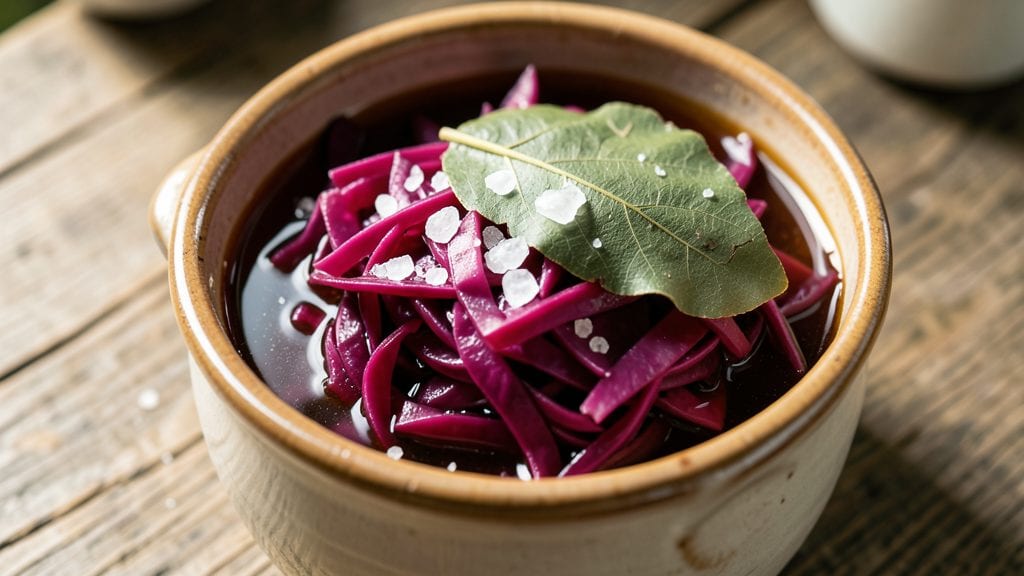
This old-fashioned pickled red cabbage recipe brings the tangy, crunchy flavor of fermented vegetables to your table with a method that's been trusted for generations.
I first learned this technique from my grandmother, who used it to preserve cabbage from her garden—each jar packed with vibrant color and complex, tangy-sweet flavors. The process is simple but requires patience, as the flavors develop over time through natural fermentation.
The key to success lies in the brine mixture: a balance of salt, spices, and sometimes vinegar that preserves while enhancing the cabbage's natural sweetness. You'll need about 30 minutes of prep time, followed by a week or more of fermentation for that perfect tang.
This recipe delivers restaurant-quality flavor at home, perfect for pairing with sausages, roasted meats, or serving alongside holiday meals.
What makes this recipe special is its versatility—use it as a side dish, mix it into salads, or serve it with corned beef and rye bread for a classic Reuben-style experience.
The crunchy texture and bright tang cut through rich dishes beautifully, making it a staple in my kitchen. Once you try homemade pickled cabbage, store-bought versions will never compare.
The fermentation process might sound intimidating, but it's foolproof once you understand the basics. We'll walk through every step, including how to monitor fermentation and when your cabbage is ready to eat.
This recipe has been tested with home cooks of all skill levels, so you'll achieve professional results in your own kitchen.
Ingredients for old fashioned recipe for pickled red cabbage
Fresh cabbage, a pinch of spices, and a jar—this old-fashioned recipe keeps beautifully.
| Ingredient | Amount | Notes |
|---|---|---|
| Red Cabbage 🥬 | 2 lb | Fresh, firm, purple-red color |
| Non-Iodized Salt 🧂 | ½ cup | Fine grain preferred |
| White Vinegar 🍶 | 1 cup | Distilled or apple cider |
| Water 💧 | 1 cup | Filtered or boiled |
| Granulated Sugar 🍚 | ½ cup | White or raw cane |
| Bay Leaves 🌿 | 2 whole | Fresh or dried |
| Black Peppercorns 🌶️ | 1 tbsp | Whole, lightly crushed |
| Mustard Seeds 🌾 | 1 tsp | Yellow or brown |
| Allspice Berries 🌶️ | ½ tsp | Crushed lightly |
| Juniper Berries 🌿 | ½ tsp | Lightly crushed |
| Cloves 🌶️ | 3 whole | Lightly crushed |
| Fresh Dill 🌿 | ¼ cup | Chopped, stems removed |
| Garlic Cloves 🧄 | 3 cloves | Lightly smashed |
The cabbage is non-negotiable—look for heads that feel heavy for their size, with crisp, unblemished leaves. Local farmers markets often have the freshest, or grab a couple of heads from the produce section at Whole Foods or Trader Joe's. If you're using pre-shredded cabbage, skip it—it's too limp. Core the cabbage yourself with a sharp knife, then slice into thin strips. The more even the slices, the better it packs into jars. My grandmother always said, 'A good cabbage is worth the extra minute to prep it right.'
No allspice? Substitute with a pinch of cinnamon and nutmeg—it won't be identical, but it'll still taste amazing. Running low on juniper berries? Skip them entirely—they're more for depth than necessity. Vinegar options? Apple cider vinegar adds a subtle sweetness, while white vinegar keeps it classic. The sugar can be swapped for honey if you prefer, but white sugar dissolves more easily. Fresh dill is ideal, but dried dill at one-third the amount works in a pinch. If you're feeling fancy, add a few red onion slices to the jar for extra crunch.
This keeps for months in the fridge—honestly, it tastes better after a week or two as the flavors meld. Once opened, store it in the fridge and use within 2 weeks. The brine will separate slightly, but give it a good stir before serving. For gifts, this is a winner—just tie a ribbon around the jar and label it with the date. Freezing isn't recommended, as it can make the cabbage mushy. If you're worried about fermentation, start with 1/4 cup less vinegar and taste after 3 days to adjust.
Why You'll Love This Recipe
- No-Chop Hassle: I swear by this recipe because you barely need a knife—just shred that cabbage into a bowl, let the salt draw out the water, then pack it tight. The vinegar brine does all the work while you sip tea.
- Sweet-Tangy Magic: That perfect balance of sugar and vinegar? It’s like a grown-up’s candy. The cabbage stays crisp but softens just enough to soak up flavors—ideal for sandwiches or alongside roasted meats.
- Potluck Star: Between us, this is my go-to for gatherings. It’s cheap to make in bulk, stays fresh for weeks, and everyone reaches for seconds. Bonus: it’s the one dish that actually improves overnight.
- Pantry Goldmine: Honestly, I’ve had this sitting in my fridge for months—it’s the ultimate lazy-day side. A handful of cabbage with a smear of mustard on bread? Or tossed with potatoes for a hearty dinner? It’s my secret weapon for stretching meals without extra shopping.
Step-by-step instructions for old fashioned pickled red cabbage
Here's how to create that perfect balance of tangy, crunchy, and aromatic in every jarful.
Shred and Salt the Red Cabbage
Begin by removing any wilted outer leaves from the 2 lb red cabbage and quarter it lengthwise. Remove the hard core from each quarter, then slice thinly using a sharp knife or mandoline—aim for slices about ⅛-inch thick. You should end up with roughly 8 cups of shredded cabbage.
Transfer the shredded cabbage to a large mixing bowl and sprinkle evenly with the 0.5 cup non-iodized salt. Using your hands, massage the salt into the cabbage for about 5 minutes until it begins to soften and release liquid. This step draws out moisture and begins the fermentation process that creates that signature tangy flavor. Let the cabbage sit for 30 minutes while you prepare the remaining ingredients.
Prepare the Spiced Brine
In a medium saucepan, combine the 1 cup white vinegar, 1 cup water, 0.5 cup granulated sugar, 2 whole bay leaves, 1 tbsp lightly crushed black peppercorns, 1 tsp mustard seeds, 0.5 tsp crushed allspice berries, 0.5 tsp crushed juniper berries, and the 3 whole lightly crushed cloves. Bring the mixture to a gentle simmer over medium heat, stirring occasionally to dissolve the sugar completely.
Simmer for 5 minutes to allow the spices to infuse the liquid. You'll notice the aroma become rich and complex—this is where the distinctive character of your pickled cabbage develops. Remove the pan from heat and let it cool for 10 minutes, then strain out the spices using a fine-mesh sieve, pressing gently on the solids to extract all the flavor. Discard the strained spices and set the cooled brine aside.
Combine Cabbage and Brine
After the 30-minute salting period, give your cabbage a good squeeze to remove excess liquid—this prevents a watery final product. Transfer the cabbage to a large clean jar or divided fermentation crock, then pour the cooled spiced brine over it. The cabbage should be completely submerged by about 1 inch.
Add the 0.25 cup chopped fresh dill and the 3 smashed garlic cloves, pressing them gently into the cabbage layers. The garlic and dill will sink to the bottom, so make sure they're fully submerged. Cover the jar with a clean kitchen towel secured with a rubber band or lid, leaving it slightly ajar for the first 24 hours to allow gases to escape during the initial fermentation.
Ferment and Store
Let the cabbage ferment at room temperature for 48 hours. You'll know fermentation is working when you see small bubbles forming and smell a faintly tangy aroma. After 48 hours, seal the jar completely and refrigerate to halt fermentation. The cabbage will continue developing flavor in the fridge for up to 2 weeks, though it's best enjoyed within the first week for maximum crunch.
When ready to serve, taste and adjust seasoning if needed—sometimes a splash of the original brine enhances the flavor. This old-fashioned method creates a cabbage with perfect texture: tender yet still slightly crisp, with layers of spicy, sweet, and tangy flavors. The result is versatile enough for charcuterie boards, sandwiches, or as a side dish that steals the show.
Pro Tips For Making Old Fashioned Recipe For Pickled Red Cabbage
- SHRED SMALLER THAN YOU THINK: That giant chunky cabbage look? It’s a rookie move. Cut the cabbage into ¼-inch ribbons or smaller—it cooks faster and soaks up the brine evenly. I used to eyeball it, but now I measure: ¼-inch is the sweet spot for tender, bite-sized pieces that stay crisp after pickling.
- SALT THE CABBAGE FIRST: Dump the raw cabbage in a bowl with 1 tablespoon non-iodized salt per pound and massage it like you’re kneading dough for 5 minutes. This draws out moisture, which means the final brine won’t be watery. (Yes, it looks sad at first—that’s the point.)
- USE COLD BRINE, NOT HOT: I learned this the hard way—hot vinegar kills the crunch. Mix your brine (vinegar, sugar, water) cold, then pour it over the salted cabbage. If you’re impatient and heat it, at least let it cool to room temp first. The texture difference is night and day.
- WEIGH DOWN THE CABBAGE: Skip the floating cabbage disaster. Pack the jars tightly, then add a small plate or cabbage leaf to submerge everything under the brine. If you skip this, the top layers turn soggy or ferment unevenly. (Pro move: Use a sterilized grapefruit half as a weight—it’s vintage and works.)
Troubleshooting this recipe
Fermentation Gone Wrong
If your cabbage smells rotten or overly sour after 48 hours, it’s likely over-fermented.
This happens when the jar isn’t covered properly, allowing too much air exposure. Fix it by removing the cabbage, rinsing it in cold water, then repacking it in fresh brine (double the vinegar to 1.5 cups) and refrigerating immediately.
The texture may soften, but it’ll still be safe to eat. 💡
Mushy Texture Issues
If your pickled cabbage turns mushy, it’s usually from too much handling during prep or not enough acidity. For future batches, massage the cabbage gently (no squeezing!) and ensure the brine fully covers it.
If it’s already too soft, mix it into soups or stews where texture matters less. For crunchier results, ferment for only 3-4 days instead of a full week.
Brine Separation
The brine often separates into layers—this is normal! Just stir well before serving or give the jar a gentle shake. If the brine smells off (like vinegar gone bad), the cabbage is still safe but may need extra seasoning.
For a smoother texture, add 1 tsp xanthan gum to the brine before cooling—it helps stabilize the mixture.
Mold or Fuzz
Seeing white or gray fuzz on top? That’s usually harmless yeast or mold from fermentation. Skim it off and check the cabbage below—if it smells fine, the batch is still good.
For prevention, always use non-iodized salt (iodine inhibits fermentation) and keep the cabbage fully submerged in brine. If mold appears deeper in the jar, discard the batch.
Weak or Bland Flavor
Bland cabbage usually means under-fermented or weak spices. Boost flavor by fermenting for 5-7 days instead of 3. For extra punch, add 1 tsp smoked paprika or ½ tsp coriander seeds to the brine.
If it’s still lacking, serve it with a drizzle of the original brine or a splash of lemon juice to brighten the tang.
Storage Surprises
If your cabbage tastes too salty after refrigeration, it likely absorbed too much brine. Drain and rinse before serving, then toss with a little honey or sugar to balance.
For long-term storage, freeze the brine separately in ice cube trays—thaw and mix with fresh cabbage later for a quick flavor boost. Just remember: never refreeze** once thawed.
Nutrition facts
Frequently asked questions
Can I use green cabbage instead of red?
While you can substitute green cabbage, the flavor and color will differ significantly. Red cabbage's natural sweetness and deep purple hue create a more complex, visually striking result. If you must use green, add an extra ½ teaspoon of sugar to compensate for its milder taste. The fermentation process works the same, but the final product won't have that signature vibrant color or slightly sweeter profile.
How long does this recipe actually last?
Properly stored in the fridge, your pickled cabbage will stay fresh for 3-4 months—though it tastes best within the first 2 months. The flavor actually improves over time! For longer storage, freeze the cabbage (without the brine) for up to 6 months, though texture may become softer. The brine itself can be frozen in ice cube trays for later use. Always check for off smells or sliminess before eating.
What's the difference between this and sauerkraut?
This recipe uses a vinegar-based brine with spices, while traditional sauerkraut relies solely on lacto-fermentation (salt and water only). The result is a tangier, crunchier product with more complex flavors from the spices. Sauerkraut has a stronger probiotic content but lacks the sweet-tangy balance. Think of this as a "spiced cousin" of sauerkraut—more versatile for pairing with meats or salads.
Can I make this without vinegar?
Yes, but you'll need to adjust the process. For a true lacto-ferment, replace the vinegar with an extra ¼ cup of salt and ferment for 7-10 days at room temperature. Use a fermentation crock with an airlock to prevent mold. The flavor will be more sour and less sweet. If you skip vinegar entirely, monitor the cabbage closely for signs of over-fermentation (strong odor, excessive bubbles).
What are the best ways to use this in meals?
This versatile pickled cabbage works beautifully as a Reuben sandwich topping, alongside smoked sausages, or mixed into grain bowls. Try it in tacos, as a charcuterie board accent, or even as a soup garnish. For extra flavor, sauté with onions and apples for a quick side dish. The acidity cuts through rich foods perfectly, making it a great pairing for roasted meats or creamy sauces.