Main Courses
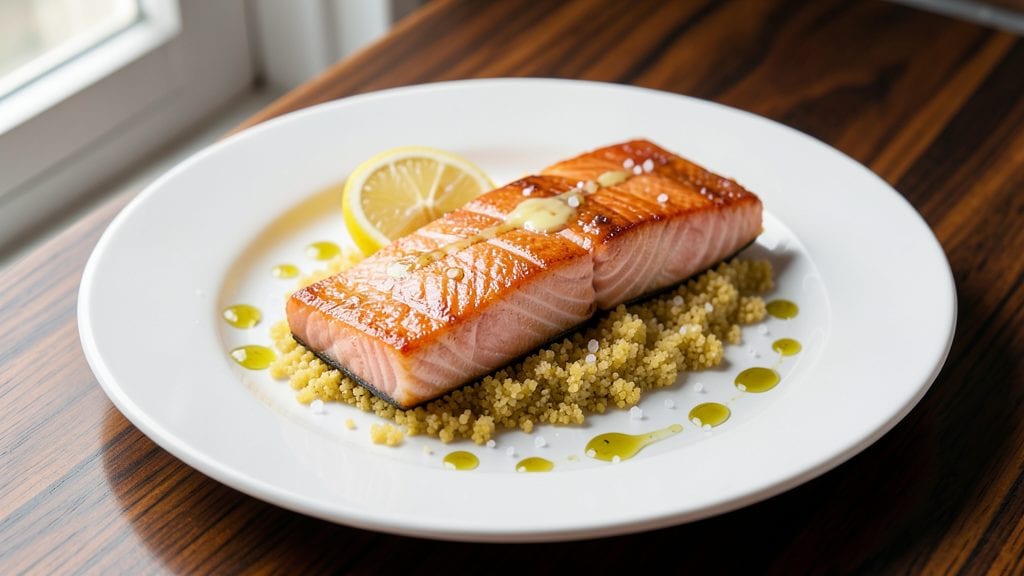
This Salmon Oscar recipe delivers restaurant-worthy elegance with a crispy cornmeal crust and velvety hollandaise sauce—exactly what makes it a brunch classic. 💛 I first perfected this dish during a Charleston seafood festival, where the buttery crust and lemon-herb sauce became my signature.
The key lies in balancing the crispy exterior with perfectly cooked salmon inside, paired with a sauce that's rich yet bright.
What sets this recipe apart is the foolproof technique for achieving that signature crunch without drying out the fish. You'll start with a simple cornmeal crust that creates a golden, shatteringly crisp exterior while keeping the salmon tender inside.
The hollandaise sauce—made with fresh lemon juice and herbs—adds the perfect tangy finish that cuts through the richness.
By the time you plate this dish, you'll have a presentation that looks as impressive as it tastes: crispy-edged salmon resting on a bed of asparagus or potatoes, drizzled with that luxurious sauce.
The flavors are balanced—crispy, creamy, and fresh—making it ideal for brunch gatherings or a special weekend meal. This is the kind of dish that feels like a celebration on a plate.
While traditionally served with asparagus, this recipe works beautifully with roasted potatoes or a simple green salad. The cornmeal crust is naturally gluten-free, making it accessible for those with dietary restrictions, though the hollandaise can be made dairy-free with a few adjustments.
Let's bring this classic to your table with professional results at home.
Ingredients for salmon oscar
Four elegant ingredients transform simple salmon into a brunch masterpiece—crispy crust, silky sauce, and vibrant herbs.
| Ingredient | Amount | Notes |
|---|---|---|
| Center-Cut Salmon Fillets 🐟 | 4 pieces | Skin-on, 6-8 oz each, patted dry |
| Fine Yellow Cornmeal 🌽 | ½ cup | Stone-ground preferred for texture |
| Unsalted Butter 🧈 | ½ cup | Cold, cubed for crust |
| Diamond Crystal Kosher Salt 🧂 | 1 tbsp | Coarse grain for crust |
| Fresh Lemon Juice 🍋 | ¼ cup | From 2 large lemons |
| Extra-Virgin Olive Oil 🫒 | ½ cup | Light variety for hollandaise |
| Large Egg Yolks 🥚 | 4 whole | Fresh, room temperature |
| Fresh Chives 🌿 | ¼ cup | Finely chopped, for sauce |
| Fresh Tarragon 🌿 | 0.15 cup | Chopped, stems removed |
| Fresh Asparagus 🌱 | 1 lb | Thin spears, trimmed |
| White Wine Vinegar 🍷 | 1 tbsp | For hollandaise acidity |
| Freshly Ground Black Pepper 🌶️ | ½ tsp | Cracked, not powdered |
| Freshly Grated Nutmeg 🌿 | ¼ tsp | Microplane for fine texture |
The salmon is non-negotiable—center-cut fillets with skin ensure even cooking and that signature crisp. Grab these from Whole Foods seafood counter or your local fishmonger; they'll often scale them to your preference. For the cornmeal, Bob's Red Mill stone-ground gives the best texture, but any fine yellow cornmeal works. The butter needs to be cold and cubed—don't melt it! I like to use Plugrá unsalted butter for its rich flavor. Fresh herbs are essential here: chives and tarragon from the grocery store's produce section should be vibrant green with no wilting. If you can't find tarragon, fresh dill at half the amount works in a pinch.
No extra-virgin olive oil? Light olive oil or avocado oil keeps the hollandaise from becoming too heavy. Short on fresh herbs? Dried chives at one-third the amount plus a pinch of dried tarragon substitute, though fresh is ideal. The white wine vinegar can be swapped for lemon juice plus a splash of water if you're out. For the asparagus, thin spears roast faster and look more elegant—trim the woody ends but leave the tips intact. The nutmeg is crucial for depth; if you don't have a microplane, grate it finely with a cheese grater. And trust me on the cracked black pepper—freshly ground makes all the difference in both the crust and sauce.
Salmon fillets keep best in the fridge for 1-2 days if wrapped tightly in parchment. The cornmeal crust mix (cornmeal, butter, salt) can be prepped 1 day ahead and stored in the fridge. Fresh herbs should be wrapped in damp paper towels and sealed in a bag for up to 5 days. The hollandaise sauce is best made fresh but can be reheated gently with a splash of warm water if needed. Roasted asparagus holds for 3 days in the fridge—reheat in the oven at 350°F until warmed through. For a showstopper presentation, plate the salmon on a bed of asparagus, drizzle with sauce, and garnish with extra chives.
Why You'll Love This Recipe
- I swear by this combo: the salmon’s buttery richness meets that golden cornmeal crust—no fancy marinades, just salt, lemon, and a quick sear. The crust clings like a hug while the inside stays silky; it’s the kind of dish that makes you question why you ever overcomplicated salmon before.
- Here’s what sold me: center-cut salmon feels fancy, but the prep is so minimal it doesn’t break the bank. A single fillet costs less than takeout, and the butter, salt, and cornmeal are pantry staples. It’s the kind of dish that makes you feel like you’re eating out without the guilt—or the price tag.
Step-by-step instructions for salmon oscar recipe
Here's how to craft this restaurant-worthy dish with crispy cornmeal crust and silky lemon-herb hollandaise.
🍳 Step 1: Create the Crispy Cornmeal Crust
Preheat your oven to 425°F and line a baking sheet with parchment paper. In a small bowl, whisk together the 0.5 cup fine yellow cornmeal, 1 tablespoon diamond crystal kosher salt, and 0.25 teaspoon freshly grated nutmeg until evenly combined. This triple-threat seasoning will give your salmon that signature crunch and depth of flavor.
Place each of the 4 center-cut salmon fillets (skin-side down) on the prepared baking sheet. Press the cornmeal mixture firmly onto the skinless side of each fillet, creating an even layer. The cornmeal should adhere well—if it's crumbling, lightly mist the salmon with water and press again. Let the crust-coated salmon sit at room temperature for 10 minutes while you prepare the rest of your components.
🔥 Step 2: Roast the Salmon to Perfect Doneness
Carefully transfer the salmon to the preheated oven and roast for 8-10 minutes, depending on thickness. You're aiming for an internal temperature of 125°F—this ensures the salmon is just cooked through but still tender. The crust should be golden brown and crispy, while the flesh remains moist and flaky.
I like to check the doneness by gently pressing the thickest part of each fillet with my finger—it should yield slightly but still feel firm. Remove the salmon from the oven and let it rest on a wire rack for 5 minutes. This resting period is crucial as it allows the juices to redistribute, preventing them from running out when you slice.
🍳 Step 3: Prepare the Lemon-Herb Hollandaise
While the salmon rests, it's time to make the showstopping hollandaise. In a heatproof bowl, whisk together the 4 large egg yolks, 0.25 cup fresh lemon juice, and 1 tablespoon white wine vinegar until well combined. Place this bowl over a pot of simmering water, ensuring the bottom doesn't touch the water—this creates a double boiler.
Gradually whisk in the 0.5 cup extra-virgin olive oil in a slow, steady stream while maintaining a gentle heat. The mixture should begin to thicken and turn pale yellow—this typically takes about 3-5 minutes. Remove the bowl from heat and stir in the 0.25 cup finely chopped fresh chives and 0.15 cup chopped fresh tarragon. The sauce should be smooth and glossy, with a bright lemon-herb aroma that's simply irresistible.
🥘 Step 4: Blanch and Prepare the Asparagus
Fill a medium pot with water and bring to a rolling boil. Add the 1 pound fresh asparagus and cook for 2-3 minutes until the spears are bright green and just tender. Immediately transfer them to a bowl of ice water to stop the cooking process and preserve their vibrant color. Once cooled, drain and pat dry with paper towels.
In a small bowl, combine 0.5 cup unsalted butter (softened) with 0.5 teaspoon freshly ground black pepper. Using a pastry brush, lightly coat each asparagus spear with this butter mixture. The butter will add richness while the pepper provides a subtle kick that complements the salmon perfectly.
🍽️ Step 5: Assemble and Serve with Elegance
To plate, place two asparagus spears on each of four plates, fanning them slightly at the base. Carefully transfer each salmon fillet alongside the asparagus, skin-side down. Spoon the lemon-herb hollandaise generously over the salmon, allowing it to cascade down the sides of the plate for maximum visual appeal.
Garnish each plate with a sprinkle of additional fresh chives and tarragon for a pop of color and fresh herb aroma. The contrast of the crispy cornmeal crust against the silky hollandaise and tender salmon creates a textural symphony that's pure dining delight. Serve immediately while the hollandaise is still warm and the salmon is at its peak tenderness.
Pro Tips For Making Salmon Oscar
- CRISP THE CORNMEAL: Use a dry paper towel to pat the salmon fillets bone-dry before dredging in cornmeal—this guarantees a proper crust instead of a soggy coating. I learned this the hard way when my first batch turned out more like a sad, gluey pancake than a crispy blanket.
- SALT THE BUTTER: Mix your unsalted butter with a generous pinch of kosher salt (about ¼ teaspoon per 2 tablespoons) before melting—it cuts down on extra seasoning later and keeps the flavor balanced. Yes, even if the recipe doesn’t say it, trust me on this.
- WATCH THE HEAT: Start the salmon in a cold, dry skillet over medium heat—too hot, and the cornmeal burns before the butter renders. After 2 minutes, crank it to medium-high to finish cooking, or you’ll end up with a greasy mess instead of a golden crust.
- LEMON JUICE LAST: Add the lemon juice after removing the salmon from the pan—it cooks off quickly and can make the cornmeal coating bitter if it steams too long. A quick squeeze over the finished dish is all you need for brightness.
Best sauces and condiments for these flavors
Classic Hollandaise
The traditional sauce for Salmon Oscar is a rich, velvety hollandaise that balances the crispy cornmeal crust beautifully. I use 4 large egg yolks, 0.5 cup extra-virgin olive oil, and 0.25 cup fresh lemon juice to create a sauce that's bright yet luxurious.
The key is tempering the yolks properly over a double boiler while whisking in the oil slowly—this prevents scrambling and creates that signature silky texture. 💛
Lemon-Tarragon Bearnaise
For a lighter alternative, try a lemon-tarragon bearnaise that still delivers depth but with a touch more acidity. Start with the same hollandaise base but add 0.15 cup chopped fresh tarragon and 1 tablespoon white wine vinegar to the egg mixture.
After emulsifying, finish with 1 tablespoon chopped shallots for subtle sweetness. This variation works especially well if you prefer a slightly tangier profile that cuts through the richness of the salmon.
Herb-Infused Aioli
If you're looking for a garlic-forward option, this herb-infused aioli brings a bold, creamy contrast to the dish. Blend 0.5 cup mayonnaise with 2 minced garlic cloves, 1 tbsp lemon juice, and 1 tbsp chopped chives until smooth.
The garlic adds a punch that pairs surprisingly well with the cornmeal crust. I like to serve this with a sprinkle of smoked paprika for extra warmth.
White Wine Reduction
A white wine reduction offers an elegant, slightly acidic complement that enhances the salmon's natural flavors. Simmer 0.5 cup dry white wine with 1 tbsp butter and 1 tsp lemon zest until reduced by half.
Finish with a pinch of freshly cracked black pepper and a tablespoon of chopped tarragon. This sauce is lighter than hollandaise but still luxurious, making it perfect for those who prefer less richness.
Creamy Dill Sauce
For a fresh, herbaceous twist, this creamy dill sauce adds a bright contrast to the dish. Mix 0.5 cup sour cream with 2 tbsp chopped fresh dill, 1 tbsp lemon juice, and 1 tsp Dijon mustard.
The tangy dill balances the buttery salmon beautifully, and the sour cream keeps it light. This is my go-to when I want to highlight the freshness of the fish without overpowering it.
Spicy Sriracha Hollandaise
Craving heat? This spicy sriracha hollandaise adds a kick that complements the crispy crust perfectly. Start with your standard hollandaise base, then stir in 1 tsp sriracha and 0.5 tsp honey to balance the heat.
The sweetness of the honey rounds out the spice, creating a sauce that's both bold and harmonious. Serve with extra chives for garnish to keep the presentation elegant.
Nutrition facts
Frequently asked questions
Why does the cornmeal crust need to be pressed firmly onto the salmon?
The firm pressing creates an even, crispy layer that adheres perfectly to the fish. This prevents the crust from crumbling during cooking and ensures every bite has that signature crunch. A well-adhered crust also helps seal in the salmon's natural juices, keeping it moist while the exterior gets perfectly golden.
Can I make the hollandaise sauce ahead of time?
Fresh hollandaise is always best, but you can prepare the components ahead. Whisk the egg yolks, lemon juice, and vinegar up to 1 day ahead and store in the fridge. When ready to use, gently reheat the mixture in a double boiler (without oil) and whisk in the oil slowly. The sauce will be slightly thicker but can be thinned with warm water if needed.
What's the best way to reheat leftover Salmon Oscar?
Reheat gently in a 350°F oven for 5-7 minutes to maintain the crust's crispiness. For the sauce, warm it in a small saucepan over low heat, stirring constantly, and thin with warm water if it thickens too much. Never microwave the salmon—it will make the crust soggy and the fish dry.
Can I substitute the asparagus with another vegetable?
Try roasted green beans or haricots verts for a similar texture. For a heartier option, creamy polenta or roasted baby potatoes work beautifully. Just adjust the cooking time—green vegetables should be tender-crisp, while starchy sides need to be fully cooked through.
Why does my hollandaise sometimes curdle?
Curling happens when the eggs cook too quickly or the oil is added too fast. Always use a gentle heat and whisk constantly while adding oil in a slow stream. If it happens, whisk in 1 teaspoon hot water to bring it back together. For extra insurance, temper the yolks by whisking them with a little warm water before adding to the double boiler.