
Desserts
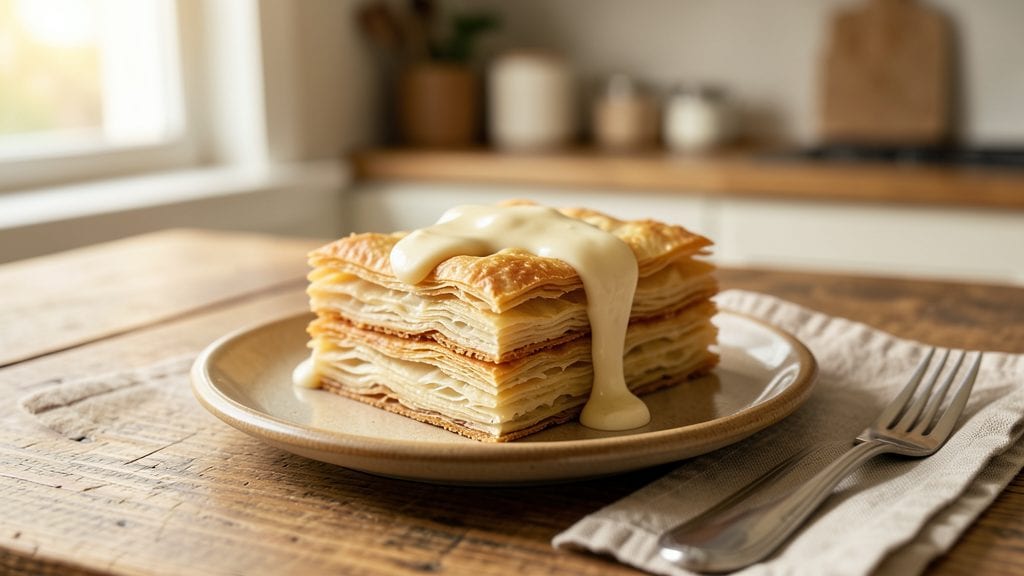
This Sitabhog sweet recipe brings the layered elegance of Bengali tradition to your kitchen, where flaky, crispy dough meets aromatic cardamom cream in perfect harmony. 🌟 The delicate balance of textures—crunchy outside, soft inside—makes it a centerpiece for festivals like Durga Puja and Diwali, where every bite feels like a celebration.
What sets this recipe apart is the foolproof dough technique, where thin layers of maida and ghee are carefully stacked and fried to golden perfection. The cardamom-infused cream adds a fragrant touch, while optional coconut variations elevate it further. No special equipment is needed—just patience and precision.
By the end, you’ll have a stack of crispy, melt-in-your-mouth layers drizzled with velvety cream, ready to impress guests or satisfy your sweet cravings. The aroma alone will transport you to Kolkata’s sweet shops, where Sitabhog is a beloved classic.
Perfect for special occasions or indulgent treats, this recipe scales easily—whether you’re serving a crowd or enjoying a small batch. Let’s create this Bengali masterpiece step by step.
Ingredients for sitabhog sweet
Layered magic starts with these 13 ingredients—flaky dough meets fragrant cream for Bengali sweetness.
| Ingredient | Amount | Notes |
|---|---|---|
| All-Purpose Flour (Maida) 🌾 | 2 cups | Sifted for light texture |
| Unsalted Butter 🧈 | ½ cup | Cold, cubed for layers |
| Ghee 🫒 | ½ cup | Clarified butter for frying |
| Granulated Sugar 🍚 | ¾ cup | Fine grain preferred |
| Cardamom Pods 🌿 | 8 whole | Lightly toasted and crushed |
| Heavy Cream 🥛 | 1 ½ cups | Full-fat for richness |
| Shredded Coconut 🥥 | ½ cup | Unsweetened, optional |
| Vanilla Extract 🌸 | 1 tsp | Pure vanilla preferred |
| Pinch of Salt 🧂 | ⅛ tsp | Enhances flavors |
| Rose Water 🌹 | ½ tsp | Optional floral touch |
| Ground Green Cardamom 🌿 | 1 tsp | For cream infusion |
| Powdered Sugar 🍚 | ¼ cup | For dusting layers |
| Food Coloring (Optional) 🎨 | ¼ tsp | Pink or yellow for layers |
The maida is non-negotiable here—its fine texture creates those signature crispy layers. Local Indian grocery stores carry it pre-sifted (like Patel Brothers or Apna Bazaar), but if you’re using regular all-purpose flour, sift it twice. Cold butter and ghee are your best friends—Amul or Land O'Lakes work well, but nothing beats homemade ghee for that authentic flavor. For cardamom, whole pods from a spice shop (like Penzeys) are worth the splurge—they release more aroma when toasted. Skip the pre-ground stuff; it’s dull in comparison.
No cardamom pods? Ground cardamom at double the amount works, but you’ll miss that floral punch. Heavy cream can be swapped for full-fat coconut milk (though texture differs slightly). The shredded coconut? Trader Joe’s unsweetened version is my go-to—it’s consistently fresh. For the dough layers, food coloring isn’t mandatory—just use powdered sugar between layers for natural color separation. And if you’re feeling adventurous, swap half the sugar for khoya (mawa) for a richer, drier texture.
Store the fried dough layers in an airtight container with a paper towel to absorb moisture—keeps them crisp for 3 days. The cardamom cream? 3 days in the fridge, but freeze it for up to 2 months in a sealed container. Assemble the Sitabhog just before serving—those layers lose their crunch if stacked too early. Pro tip: Dust each layer with powdered sugar before stacking to prevent sticking. And if you’re making this for Diwali? Double the batch—it disappears fast!
Why You'll Love This Recipe
- No-Fuss Folding: I swear by the "pinch-and-fold" method here—no rolling, no stress. Just mix the maida, butter, and sugar until it crumbles like sand, then shape into tiny rounds. Ten minutes of hands-on time, and you’re done.
- Cardamom Butter Bomb: That first bite? Pure warmth. The ghee and cardamom infuse the dough so deeply, every crunch has this golden, spiced richness. It’s like dessert in a bite-sized hug—no frosting, no fuss, just flavor.
- Party in a Box: Store-bought sweets? Overrated. This keeps for a week in an airtight tin, and the texture stays perfect—crisp outside, tender inside. Pack it for picnics, gift it to neighbors, or just snack on it while binge-watching. Versatile as hell.
- Budget Luxury: Three ingredients—maida, butter, sugar—do all the heavy lifting. No expensive extracts or fancy tools. I’ve made this for under $5 and still felt like I served something special. (Yes, even on a Tuesday night.)
Step-by-step instructions for Bengali layered bliss with cardamom cream
Here's the method that delivers that signature sitabhog texture—light, flaky layers with fragrant cardamom cream.
👨🍳 Step 1: Prepare the Cardamom Cream Filling
In a medium saucepan, combine the 1.5 cups heavy cream, 1 tsp vanilla extract, 1 tsp ground green cardamom, 0.5 tsp rose water, and 0.125 tsp pinch of salt. Warm over medium-low heat until the mixture just begins to simmer—you should see tiny bubbles forming around the edges but not a full boil.
Remove from heat and let cool completely to room temperature. This cooling step is crucial—warm cream will melt the butter layers prematurely. Once cooled, whisk in 0.25 cup powdered sugar until fully dissolved. If using, add 0.25 tsp food coloring now for those beautiful layered colors. The cream should be smooth, fragrant, and thick enough to hold its shape when piped.
🍳 Step 2: Create the Flaky Butter Layers
In a large bowl, sift together the 2 cups all-purpose flour (maida) and 0.75 cup granulated sugar. Cut in the 0.5 cup cold unsalted butter and 0.5 cup ghee using a pastry cutter or your fingers until the mixture resembles coarse crumbs with pea-sized butter pieces remaining. This texture is essential for creating those signature flaky layers.
Gradually add ½ cup ice water (start with less and add more as needed) until the dough just comes together. Knead lightly for 2-3 minutes until smooth. Divide into 4 equal portions (about 8 ounces each) and shape into smooth balls. Wrap tightly in plastic and chill for 30 minutes—this resting period prevents the butter from melting during rolling.
🥘 Step 3: Assemble the Layered Masterpiece
Preheat your oven to 350°F. Line a 9x9-inch baking pan with parchment paper. Take one dough ball and roll it into a ¼-inch thick circle slightly larger than your pan. Press gently into the bottom, creating your first layer.
Spread ¼ of the cardamom cream evenly over the dough layer, leaving a ½-inch border around the edges. Sprinkle ¼ cup shredded coconut over the cream if using. Repeat with remaining dough balls and cream, creating 4 layers total. The top layer should be plain dough without any filling. This careful layering creates that signature sitabhog texture we're after.
🔥 Step 4: Bake to Golden Perfection
Bake for 35-40 minutes until the top is golden brown and the edges are set. The center should still feel slightly soft when pressed—this ensures the layers stay tender. If the top browns too quickly, tent loosely with foil after 20 minutes to prevent over-browning.
Remove from oven and let cool completely in the pan for 1 hour. This slow cooling prevents the layers from shifting. Once cooled, carefully lift the sitabhog from the pan using the parchment paper. For that professional finish, dust the top with powdered sugar just before serving. The result should be light, flaky layers with that signature cardamom-infused cream oozing between each one.
Pro Tips For Making Sitabhog Sweet
- Chill the Dough: Sitabhog dough needs time to relax—at least 30 minutes in the fridge before rolling. I used to skip this and ended up with tough, uneven sheets. Cold dough stretches smoothly and absorbs the ghee better, so don’t rush it (yes, even if you’re impatient like me).
- Toast the Cardamom: Lightly crush the cardamom pods and dry-toast them in a pan for 30 seconds before grinding. This brings out their aroma and prevents bitterness from overcooking later. My grandmother swore by this, and she was right: the flavor jumps off the plate.
- Low and Slow for Crisp: Bake the sitabhog at 160°C (325°F) for the first 10 minutes, then increase to 180°C (350°F) until golden. Rushing the heat gives you burnt edges and raw centers. The low start guarantees even cooking—no more guessing.
- Butter Over Ghee First: Mix the butter into the dough before adding ghee—it creates a smoother texture. Ghee comes last because it’s richer and needs to melt into the layers, not get trapped. I was skeptical until I tried it: the result is lighter and more tender.
Creative variations of this recipe
Classic Bengali Style
For an authentic experience, stick to the traditional method: use maida flour and ghee for the dough layers, and infuse the cream with whole cardamom pods instead of ground. Toast the pods lightly before crushing to release their aromatic oils.
I like adding a pinch of nutmeg to the cream for that classic Bengali touch. Serve in square layers rather than round for that iconic look from Kolkata sweet shops. 🌿
Coconut & Khoya Twist
Swap half the granulated sugar for khoya (mawa) in the dough for a richer, drier texture that holds up better. Fold ½ cup toasted coconut flakes into every layer for extra crunch.
For the cream, replace heavy cream with full-fat coconut milk and add ½ tsp grated nutmeg—this variation is a favorite during Vishu, Kerala’s harvest festival. 🥥
Rose & Pistachio Luxe
Elevate your Sitabhog with a rose-pistachio fusion: infuse the cream with 1 tsp rose water and 2 tbsp crushed pistachios. Toast the pistachios in 1 tbsp ghee until golden, then sprinkle between layers.
Garnish with edible rose petals for a visually stunning dessert perfect for weddings or Diwali celebrations. 🌹
Spiced Chai-Inspired
For a cozy twist, add ½ tsp ground cinnamon and ¼ tsp black cardamom to the cream. Top each layer with a sprinkle of star anise powder (lightly toasted) for a warm, spiced aroma reminiscent of masala chai.
This version pairs beautifully with a cup of masala chai for a comforting treat. ☕
Mini Individual Servings
Make bite-sized versions by rolling the dough into 1-inch circles and baking in a muffin tin (greased with ghee). Fill each with a small dollop of cream and a sprinkle of shredded coconut.
These are perfect for festive platters or as a fun dessert for kids. Use food coloring to create pastel layers for a playful look. 🎨
Vegan Adaptation
For a plant-based version, replace butter and ghee with coconut oil and use vegan heavy cream (or coconut cream). Substitute khoya for coconut yogurt in the dough.
The flavor stays rich, though the texture will be slightly denser. Top with toasted coconut flakes and a drizzle of agave syrup for sweetness. 🌱
Nutrition facts
Frequently asked questions
What makes Sitabhog different from other layered Indian sweets?
Sitabhog stands out with its flaky, crispy layers made from maida and ghee, paired with a fragrant cardamom cream filling. Unlike other desserts like rasgulla or gulab jamun, it has a distinctive layered texture that's both crunchy and soft—perfect for cutting into neat squares. The Bengali technique of layering dough with cream creates that signature melt-in-your-mouth experience.
Can I make Sitabhog without food coloring?
Food coloring is optional—just use powdered sugar between layers to create natural color separation. The contrast between the layers will still be visible, especially if you use shredded coconut in some layers. For a rustic look, skip all coloring and rely on the textures alone. The cream's cardamom aroma will shine through regardless.
How do I prevent the layers from sticking together?
Dust each layer generously with powdered sugar before stacking, and use parchment paper between layers when baking. Let the dessert cool completely in the pan for 1 hour before lifting—this prevents shifting. If you're in a hurry, chill the assembled dessert in the fridge for 30 minutes before slicing. The cream should hold its shape without oozing out.
What’s the best way to store leftover Sitabhog?
Store the fried dough layers separately in an airtight container with a paper towel to absorb moisture (keeps them crisp for 3 days). The cardamom cream can be refrigerated for 3 days or frozen for 2 months. Assemble the dessert just before serving—this preserves the layers' texture. For longer storage, freeze the fully assembled dessert (without dusting sugar) for up to 1 month.
Can I substitute khoya for sugar in the dough?
Yes! Replace half the granulated sugar with khoya (mawa) for a richer, drier texture that holds up better. The khoya adds a subtle caramelized flavor and reduces stickiness. For best results, blend khoya into a smooth paste before mixing with flour. This variation is especially popular during festivals like Durga Puja.