
Desserts
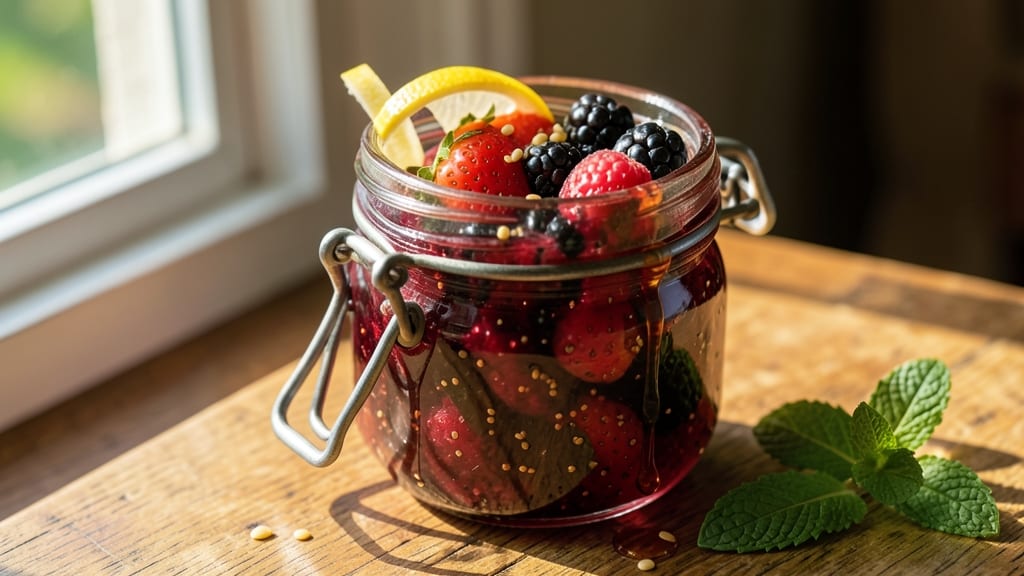
This sugar-free fruit jam recipe redefines homemade preserves by using natural sweeteners like monk fruit or erythritol to create a spread that’s just as vibrant and flavorful as traditional jam—without the refined sugar.
After years of experimenting with low-sugar alternatives, I’ve perfected a method that delivers the perfect balance of tartness and sweetness while maintaining a natural set. The key lies in carefully selecting ripe fruit and using pectin alternatives like chia seeds or lemon juice to achieve that classic jam consistency.
What sets this recipe apart is its versatility—it works with any fruit, from berries to stone fruits, and adapts seamlessly to vegan diets while keeping sugar content at zero grams per serving.
The process is straightforward: simmer the fruit to break down its natural sugars, then thicken it with a natural alternative to pectin. This approach ensures your jam stays fresh-tasting and guilt-free, whether spread on toast, mixed into yogurt, or paired with cheese.
The result is a jam that’s rich in flavor, naturally sweetened, and free from artificial additives. Each batch delivers a velvety texture with bursts of fruit intensity, proving that sugar-free doesn’t mean sacrificing taste.
Plus, the storage life is impressive—up to three months in the fridge or six months if canned properly. This is the kind of jam that satisfies cravings while aligning with health-conscious goals.
Ready to make jam that’s as good for you as it is delicious? Let’s get started with a method that’s simple, foolproof, and perfect for anyone looking to enjoy fruit preserves without the sugar.
The ingredients list is minimal, and the steps are designed to ensure success every time—no guesswork required.
Ingredients for sugar free fruit jam
Minimal ingredients transform into velvety, guilt-free jam with natural sweetness and perfect set.
| Ingredient | Amount | Notes |
|---|---|---|
| Fresh or Frozen Fruit 🍓 | 4 cups | Pitted and chopped (berries, stone fruits, or mixed) |
| Monk Fruit Sweetener 🍯 | ½ cup | Granulated, sugar-free alternative |
| Erythritol 🍯 | ¼ cup | Fine granulated, optional for texture |
| Chia Seeds 🌾 | 2 tbsp | Ground into powder for natural pectin substitute |
| Lemon Juice 🍋 | ¼ cup | Freshly squeezed, for acidity and set |
| Apple Cider Vinegar 🍎 | 1 tbsp | For preservation and tang |
| Extra-Virgin Olive Oil 🫒 | 1 tbsp | Prevents sticking during cooking |
| Vanilla Extract 🌸 | ½ tsp | Pure, for depth of flavor |
| Sea Salt 🧂 | ¼ tsp | Fine grain, enhances fruit flavor |
| Xanthan Gum 🧪 | ¼ tsp | Optional for ultra-thick consistency |
The fruit selection is critical—opt for ripe, organic berries or stone fruits like peaches and plums for peak flavor. Trader Joe’s and Whole Foods carry excellent frozen options when fresh isn’t available, ensuring consistent quality. Monk fruit sweetener, available at health food stores or online, provides sweetness without blood sugar spikes. For a more refined texture, Bob’s Red Mill chia seeds work best when finely ground. Always use freshly squeezed lemon juice—bottled lacks the bright acidity needed for proper gelling.
No monk fruit? Lakanto or allulose provide similar results, though texture may vary slightly. Substitute erythritol with stevia extract (reduce to 1/4 tsp per cup of fruit) for a zero-calorie alternative. Chia seeds can be omitted if you prefer lemon juice alone for thickening, though the jam will set more slowly. For a nutty depth, add 1 tsp almond extract alongside vanilla. Ensure all equipment is sterilized—jam safety depends on proper preservation techniques, especially when canning.
Store finished jam in sterilized glass jars with airtight seals. Unrefrigerated, it lasts up to 3 months in a cool, dark pantry, while refrigerated batches remain fresh for 6 months. Freeze extras in ice cube trays for single-serving portions. The olive oil layer on top prevents mold—simply spoon it off before use. For canned batches, process in a water bath for 10 minutes to extend shelf life to 1 year.
Why You'll Love This Recipe
- No Chopping Struggle: I’ll be real—frozen berries or pre-cut fruit mean zero knife work. Just toss, simmer, and stir. The chia seeds do all the thickening magic while I sip coffee.
- Taste Like Childhood: That bright lemon juice and monk fruit sweetness? It’s the jam I craved as a kid, but without the sugar crash. Honestly, my husband still asks where I hide the "secret ingredient" (it’s just fruit).
- Breakfast, Toast, or Dessert: Slather it on toast, mix into yogurt, or drizzle over pancakes—this jam plays well everywhere. Even my picky teenage nephew licks the spoon clean when it’s raspberry.
- Lasts Months, Costs Pennies: A single batch stretches for weeks in the fridge, and chia seeds bulk it up so it doesn’t separate. Between us, I’ve made this twice with the same frozen strawberries and still have jars left. Budget win.
Step-by-step instructions for sugar free fruit jam recipe
Here's the method for crafting a luscious, sugar-free fruit spread with perfect set and vibrant flavor.
Prepare and Cook the Fruit Base
In a medium-sized saucepan, combine the 4 cups of fresh or frozen fruit with the 0.5 cup monk fruit sweetener and 0.25 cup erythritol. Stir gently to distribute the sweeteners evenly throughout the fruit mixture. This ensures balanced sweetness without crystallization that often occurs with sugar substitutes.
Place the saucepan over medium-high heat and bring the mixture to a gentle boil. Once boiling, reduce the heat to medium-low and let it simmer uncovered for 10-12 minutes. You'll notice the fruit breaking down and releasing its natural juices, creating a thickened consistency. Stir occasionally to prevent sticking, especially if using stone fruits which can cling to the pan.
The key visual checkpoint here is when the fruit releases its juices and begins to form a slightly syrupy texture. You're not looking for a fully reduced jam yet—just a broken-down fruit base that will serve as the foundation for your thickening process.
Add Acid and Stabilizers for Perfect Set
Remove the saucepan from heat and carefully stir in the 0.25 cup lemon juice, 1 tbsp apple cider vinegar, and 0.5 tsp vanilla extract. These acidic components are crucial for both flavor development and the proper setting of your sugar-free jam. The lemon juice provides the necessary acidity to activate the chia seeds' natural thickening properties, while the vinegar enhances preservation and tang.
In a small bowl, whisk together the 2 tbsp ground chia seeds with 2 tbsp cold water until completely dissolved. This creates a chia gel that will serve as your natural pectin substitute. For an ultra-thick consistency, dissolve the 0.25 tsp xanthan gum in 1 tbsp cold water separately and add it to the saucepan as well. Return the fruit mixture to low heat and stir in the chia gel and any xanthan gum solution.
Simmer the mixture gently for an additional 5-7 minutes, stirring constantly to prevent lumps from forming. The jam should begin to thicken noticeably, coating the back of a spoon. If using xanthan gum, you'll see a dramatic thickening effect within just a few minutes of simmering.
Incorporate Oil and Final Seasoning
With the jam still at a gentle simmer, stir in the 1 tbsp extra-virgin olive oil and 0.25 tsp sea salt. The olive oil prevents crystallization of the sweeteners and adds a luxurious mouthfeel, while the salt enhances all the natural fruit flavors. This is also when you can adjust the thickness if needed—add 1 tbsp water at a time if the jam is too thick, or simmer longer if it's too loose.
Taste the jam and make any final adjustments to sweetness or acidity. Remember that the flavors will mellow slightly as it cools, so it's better to err on the side of slightly more tart or sweet now. Continue simmering for another 2-3 minutes to ensure all ingredients are fully incorporated and the flavors have melded together.
Test for Doneness and Prepare for Storage
To test if your jam has reached the proper consistency, place a small spoonful on a chilled plate and refrigerate for 5 minutes. When you remove it, it should hold its shape without spreading excessively, yet still be soft enough to spread easily. If it's too loose, return it to low heat and simmer for another 3-5 minutes, stirring constantly.
Once you're satisfied with the texture, carefully transfer the jam to a clean glass jar using a ladle or spoon. Leave about ½ inch of headspace at the top to allow for thermal expansion. The jam will continue to thicken slightly as it cools, so don't worry if it looks a bit runny when hot.
Let the jam cool to room temperature before sealing the jar. This cooling process is crucial for developing the final texture. Store in the refrigerator where it will keep for up to 3 weeks, or process in a water bath for shelf-stable preservation. The final product should have a glossy sheen, vibrant fruit color, and a perfect balance of sweetness and acidity.
Pro Tips For Making Sugar Free Fruit Jam
- Prep Fruit Like a Pro: Cut fruit into even ¼-inch chunks—no bigger, no smaller. I learned this the hard way with strawberries: big pieces stay undercooked, tiny ones burn before the chia thickens. Use a mandoline if you’re impatient (yes, even if you’re impatient like me), but a sharp knife works fine if you’re steady.
- Simmer Low and Slow: Keep the heat at a gentle bubble—just enough to see tiny ripples, not a rolling boil. Monk fruit burns faster than sugar, and erythritol can crystallize if you rush it. I used to crank the heat, and my jam always ended up grainy or bitter. Trust me, low and steady wins.
- Whisk Chia Seeds First: Mix chia seeds with half the lemon juice before adding to the fruit. This prevents clumping—chia soaks up liquid fast, and dry seeds left to sit turn into a pasty mess. Stir like you mean it for 30 seconds, then let it sit 5 minutes before cooking. Your future self will thank you.
- Taste Before Thickening: Check sweetness and tartness before the chia sets. Monk fruit is intense—start with half the recommended amount, then adjust. Lemon juice is easy to add later, but you can’t unsweeten jam. I’ve ruined batches by waiting too long to taste. Do it now.
Essential equipment for sugar free fruit jam
Essential Cooking Tools
You'll need just a few basic kitchen tools to make perfect sugar-free jam, and I’ll share my go-to brands for each. Start with a heavy-bottomed saucepan—I recommend All-Clad or Le Creuset—to prevent scorching during simmering.
A fine-mesh strainer (like OXO Good Grips) helps remove seeds or skins if you prefer smooth jam. 🥄
Precision Measuring
Accurate measurements are key when working with sugar substitutes. Use a digital kitchen scale (I love the OXO Good Grips) for monk fruit and erythritol to avoid over-sweetening. A liquid measuring cup with spouts makes adding lemon juice and vinegar effortless.
For chia seeds, a small measuring spoon set ensures you get the exact 2 tbsp needed for thickening.
Thickening Tools
A handheld immersion blender (like the Ninja) comes in handy if you prefer ultra-smooth jam—simply blend after simmering to break down any fruit chunks. For testing consistency, keep a small glass plate chilled in the fridge.
A silicon spatula (I use OXO) helps scrape every last bit of jam from the pot without scratching.
Storage Essentials
Invest in sterilized glass jars—I recommend Ball Mason jars for canning or Kilner jars for short-term storage. A canning funnel (like OXO’s) makes transferring jam into jars mess-free.
For long-term storage, a water bath canner (such as Presto’s) is essential if you plan to preserve jam beyond 3 weeks without refrigeration. 💡
Optional Luxury Tools
For next-level jam-making, consider a thermometer (like ThermoWorks) to monitor simmering temps—ideal is 212°F for proper gelling. A food mill (such as OXO’s) transforms chunky fruit into silky-smooth preserves.
If you’re experimenting with flavors, a small mortar and pestle helps infuse spices like cinnamon or cardamom directly into the fruit before cooking.
Nutrition facts
Frequently asked questions
Can I use any fruit in this sugar-free jam?
This recipe works beautifully with most fruits! Berries like strawberries and raspberries are ideal, but stone fruits like peaches or plums also work well. For tart fruits (like citrus), you may need to reduce the sweetener slightly. Avoid overly watery fruits like watermelon—they won't thicken properly without additional pectin substitutes.
Why does my sugar-free jam turn out runny?
Runny jam usually happens when the fruit hasn't broken down enough or the thickening agents (chia seeds/xanthan gum) weren't activated properly. Simmer the fruit longer to extract juices, and ensure you're using freshly ground chia seeds. The lemon juice and vinegar are critical—they activate the chia's natural gelling properties. If needed, simmer an extra 5 minutes while stirring constantly.
How do I store sugar-free jam without refrigeration?
For pantry storage, process your jam in a water bath canner for 10 minutes to kill bacteria and extend shelf life. Use sterilized jars with airtight seals, leaving ½ inch headspace. Properly canned jam lasts 1 year unrefrigerated. If you prefer short-term storage, keep it in the fridge for up to 3 months—the olive oil layer helps preserve freshness.
Can I substitute monk fruit sweetener?
Yes! Try erythritol (1:1 ratio) or allulose for similar results, though texture may vary slightly. For zero-calorie options, stevia extract works (reduce to ¼ tsp per cup of fruit). Avoid honey or maple syrup—they're not sugar-free. Always taste as you go, since natural sweeteners vary in intensity.
Is this jam truly vegan?
This recipe uses no animal products—just fruit, plant-based sweeteners, and natural thickeners. The chia seeds and xanthan gum are both vegan, and the olive oil adds richness without dairy. Even the vanilla extract can be vegan-certified (check labels). It's a perfect sugar-free, plant-based spread for toast, yogurt, or desserts.