Sauces & Condiments
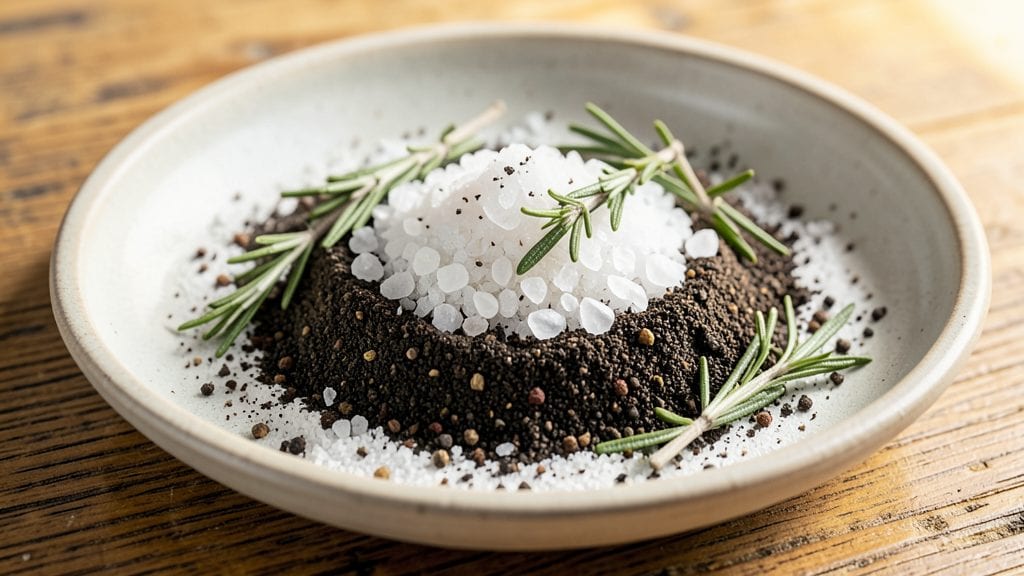
Recreating Trader Joe's Everyday Seasoning at home transforms your pantry into a flavor powerhouse with just five simple ingredients. This versatile blend—salty, peppery, and subtly aromatic—elevates everything from roasted vegetables to popcorn without overpowering.
I first discovered its magic when I needed a quick way to enhance store-bought chicken, and it became an instant staple in my kitchen.
The secret lies in the precise ratios of coarse salt, black pepper, and dried herbs like thyme and rosemary. These ingredients work together to create a balanced, all-purpose seasoning that mimics the store-bought version perfectly.
Unlike complex spice blends, this mix requires no special equipment—just a bowl and a whisk. The coarse salt adds texture and depth, while the pepper provides a warm, slightly spicy kick.
What makes this seasoning truly remarkable is its adaptability. Sprinkle it on roasted potatoes for extra crunch, toss it with fresh greens for a savory salad, or use it as a finishing touch on grilled meats.
The blend stays fresh for months when stored in an airtight container, making it a cost-effective alternative to buying pre-made. Once you try this, you'll never reach for the store-bought version again.
Perfect for meal prep, camping trips, or quick weeknight dinners, this seasoning mix is the ultimate pantry essential. Let's get started on creating your own batch today—your taste buds will thank you.
Ingredients for trader joe's everyday seasoning
Five pantry staples create this restaurant-quality seasoning that'll transform your cooking instantly.
| Ingredient | Amount | Notes |
|---|---|---|
| Coarse Kosher Salt 🧂 | ½ cup | Diamond Crystal preferred for texture |
| Freshly Ground Black Pepper 🌶️ | ¼ cup | Freshly cracked for maximum aroma |
| Dried Thyme Leaves 🌿 | 1 tbsp | Organic preferred, no stems |
| Dried Rosemary Leaves 🍃 | 1 tbsp | Finely chopped for even distribution |
| Ground White Pepper 🌶️ | ½ tsp | Subtle alternative to black pepper |
The salt is non-negotiable—Diamond Crystal kosher gives that perfect flaky texture, but Morton coarse salt works too. I grab mine from Trader Joe's bulk section because it's cheaper than the tiny jars. Freshly cracked black pepper makes a world of difference over pre-ground. Penzeys sells whole peppercorns that you can grind yourself, but honestly, the cheap bag from the grocery store works fine if it's not ancient. For the herbs, organic dried thyme and rosemary from the bulk bins at Whole Foods or Sprouts have the best flavor—just make sure they're labeled as culinary-grade, not for decorative purposes.
No white pepper? Black pepper at half the amount works in a pinch, though it'll darken lighter dishes. Short on thyme? Dried oregano at the same quantity gives a similar earthy kick. The rosemary can be swapped for dried marjoram, but you'll lose that piney depth. If you're feeling fancy, toast your dried herbs in a dry pan for 30 seconds before mixing—it intensifies the aroma. And trust me, measure carefully. Too much salt ruins everything, but the herbs can be eyeballed if you're in a rush.
This blend keeps for up to a year in an airtight container in your pantry. I portion mine into small jars—one for my kitchen, one for camping trips. Label them because it looks identical to everything else. The salt and pepper lose potency first, so if your seasoning tastes flat after 6 months, it's time for a fresh batch. Freezing isn't necessary, but if you're making a huge batch, divide it into ice cube trays first for easy single-use portions.
Why You'll Love This Recipe
- Five-Minute Mix: I swear by this blend—just toss those five ingredients in a jar and shake. No measuring cups, no guesswork, just pure simplicity that still packs a punch.
- Earthy Magic: That rosemary and thyme combo? It’s like a warm hug for your food. The white pepper adds a subtle sophistication without overpowering, and the coarse salt? Crunchy perfection in every bite.
- Pantry Staple: Honestly, this seasoning is my secret weapon for roasted veggies, grilled chicken, or even sprinkled on popcorn. It turns basic meals into something special without extra effort.
- Budget Booster: A tiny jar lasts forever—seriously, I’ve had mine for months. Freshly ground pepper and dried herbs cost next to nothing, but they make everything taste like you slaved over it. (Between us, I’ve used it on takeout too.)
Step-by-step instructions for Trader Joe's everyday seasoning
This simple blend transforms ordinary dishes into extraordinary meals with just a few basic ingredients.
Measure All Ingredients Precisely
Start by gathering all your ingredients and measuring them exactly as listed. For the coarse kosher salt, use a kitchen scale or measuring cup to ensure you have exactly 0.5 cup. I like to use Diamond Crystal brand for its larger flakes that distribute evenly. The freshly ground black pepper should measure 0.25 cup—this is crucial for achieving the right balance of flavors.
Next, measure out 1 tablespoon each of dried thyme leaves and dried rosemary leaves. Use a fine-mesh strainer to remove any stems from the rosemary if they're present. The ground white pepper needs only 0.5 teaspoon, so use a small measuring spoon for accuracy. Having everything measured before you begin ensures you won't accidentally double or miss any ingredients during mixing.
Combine Dry Ingredients in a Mixing Bowl
In a medium-sized mixing bowl, add all the measured ingredients together. Start with the coarse kosher salt and freshly ground black pepper as your base. These two components form the foundation of the seasoning blend and should be distributed evenly throughout the bowl. I like to use a whisk to begin breaking up any clumps in the salt and pepper before adding the herbs.
Next, add the dried thyme leaves and dried rosemary leaves. Gently fold these in with a rubber spatula, making sure they're evenly distributed. The rosemary should be finely chopped if it wasn't already, so you might want to crush it lightly between your fingers to release its aromatic oils. Finally, sprinkle in the ground white pepper and give everything another thorough mix. The blend should look like a uniform, speckled gray-green mixture at this point.
Blend Thoroughly for Even Distribution
Transfer the mixed ingredients to a food processor or high-powered blender. Pulse the mixture in short bursts, about 3-4 seconds at a time, until everything is finely ground and completely combined. You're looking for a powdery consistency where you can no longer see individual flakes of salt or whole herb leaves. This step ensures that every pinch of your seasoning will have the same balanced flavor profile.
If you don't have a food processor, you can use a mortar and pestle for a more traditional approach. Simply grind the ingredients together until they form a fine powder. The key is to work in small batches if needed to achieve complete uniformity. Once fully blended, transfer the seasoning to an airtight container for storage.
Store Properly for Maximum Freshness
Choose an airtight container with a tight-sealing lid to preserve your seasoning blend. A glass jar with a silicone lid works perfectly for this purpose. The seasoning will keep well in a cool, dark pantry for up to 6 months, though I find it's always best when used within 3 months for maximum flavor potency. Before storing, give the container a few good shakes to ensure everything is well-mixed and evenly distributed.
This versatile seasoning can now be used on everything from roasted vegetables to grilled meats. A little goes a long way—start with about 1 teaspoon per pound of meat or ½ teaspoon per cup of vegetables. The blend's balanced combination of salt, pepper, and herbs will elevate any dish you prepare, making it taste like it came straight from your favorite restaurant.
Pro Tips For Making Trader Joe'S Everyday Seasoning
- TOAST THE HERBS FIRST: I learned this the hard way—dried thyme and rosemary taste like cardboard if they’re not warmed first. Lightly toast the dried leaves in a dry pan over medium heat for 30 seconds until fragrant, then let cool before grinding. The aroma alone makes the difference between a bland rub and one that actually sings.
- GRIND THE PEPPERS FRESH: That jar of pre-ground black pepper? Skip it. Freshly cracked black pepper loses potency fast, but grinding it yourself right before mixing keeps the flavor sharp. Use a pepper grinder (not a blender) for even distribution—no clumps, no dullness. The same goes for white pepper: grind it last to preserve its subtle bite.
- MIX IN STAGES: Don’t dump everything in at once. Start with the coarse salt and black pepper, then fold in the toasted herbs, and finish with the white pepper. This prevents clumping and ensures even distribution—especially important if you’re using this on delicate proteins or vegetables where texture matters.
- STORE IT DRY: Moisture is the enemy. Keep your homemade blend in an airtight container away from light, but here’s the real trick: add a silica packet (the kind that comes with electronics) to absorb any lingering dampness. I’ve seen seasoning go rancid in weeks when stored “properly” because of hidden moisture—this guarantees it stays fresh for months.
Essential equipment for great trader joe's everyday seasoning
Basic Mixing Tools
All you truly need is a medium mixing bowl and a whisk or rubber spatula—no fancy gadgets required. I use a stainless steel bowl from my OXO Good Grips set because it's durable and easy to clean.
For the whisk, any basic model works, but I prefer one with angled wires for better mixing action. If you're short on time, a fork can do the job too—just stir vigorously for 2 minutes to ensure even distribution. 💡
Precision Measuring Essentials
A kitchen scale is my go-to for accurate measurements, especially for the salt and pepper. The OXO Good Grips scale measures down to 0.1 ounce, perfect for this recipe. For dry ingredients like thyme and rosemary, a small measuring spoon set (like Weston) ensures precision.
If you don’t have a scale, use a standard measuring cup for the salt and pepper, but level it off with a knife for consistency. Never eyeball the salt—it’s the foundation of the blend!
Blending Options
For a smooth, professional finish, a mini food processor (like the Ninja BN601) is ideal—just pulse in 3-second bursts until uniform. No processor? A mortar and pestle works beautifully for a hands-on approach.
I’ve even used a rolling pin in a pinch by pressing the ingredients directly in the bowl until finely ground. The key is thoroughness—every ingredient should be evenly distributed for balanced flavor. 💪
Storage Containers
An airtight glass jar with a silicone-sealing lid (like Le Parfait) is perfect for keeping your seasoning fresh. Avoid plastic containers—they can absorb odors over time. For portability, I keep a small mason jar in my camping gear.
Label your container with the date and contents to avoid confusion. Pro tip: Store in a cool, dark pantry—light and heat degrade the herbs faster. A 16-ounce jar makes 4 batches, so you’ll always have backup on hand.
Optional Upgrades
Want to take it to the next level? A spice grinder (like Magic Mill) lets you grind whole peppercorns fresh for maximum aroma. For herbs, a herb chopper (like OXO Good Grips) ensures even, fine texture.
If you’re making large batches, a stand mixer with a whisk attachment saves time—just mix on low for 1 minute. These tools aren’t necessary, but they make the process even smoother. 🌟
Budget-Friendly Swaps
No fancy tools? No problem. Use a clean coffee can for storage—just line it with parchment paper to prevent moisture. For blending, a wooden spoon works in a pinch, though it requires more elbow grease. A plastic spoon can also do the trick if you’re in a hurry.
The most important tool? Patience—take your time to mix thoroughly, and your seasoning will taste just as good as the store-bought version. Every kitchen has these basics, so you’re covered!
Nutrition facts
Frequently asked questions
Can I substitute fresh herbs for the dried ones in this recipe?
Fresh herbs won't work here—they contain too much moisture and won't blend properly into a dry seasoning. The recipe specifically calls for dried thyme and rosemary to maintain the perfect texture and shelf life. If you're out of dried herbs, you can use 1 teaspoon of fresh herbs for each 1 tablespoon of dried, but you'll need to dry them thoroughly first by spreading on a baking sheet at 200°F for 1-2 hours or air-drying for 24 hours.
How much seasoning should I use for different dishes?
Start with 1 teaspoon per pound of meat or poultry, and ½ teaspoon per cup of vegetables. For popcorn or salads, use ½ teaspoon per ¼ cup of popcorn or 2 cups of greens. The blend is potent, so it's better to start light and adjust to taste. A little goes a long way—this seasoning is designed to enhance, not overpower!
Why does my homemade seasoning taste different from Trader Joe's?
Even with identical ingredients, slight variations in salt brands (like Diamond Crystal vs. Morton) or pepper freshness can change the flavor. Store-bought versions may also include proprietary blends or additional ingredients. To match it perfectly, use freshly ground black pepper and coarse kosher salt—these are the most critical factors. If your blend tastes too salty, reduce the salt by ¼ teaspoon next time.
Can I make this seasoning without a food processor?
If you don't have a food processor, use a mortar and pestle or even a rolling pin pressed directly in the bowl. For a quick fix, stir with a fork for 2 minutes to break up clumps. The key is thorough mixing—every ingredient should be evenly distributed. A whisk works too, but it may leave slightly larger salt flakes. Patience is key for a consistent texture!
How do I know if my seasoning has gone bad?
Check for a stale, musty smell or a loss of aroma—fresh seasoning should smell vibrant and herby. If the herbs look discolored or the salt has clumped into hard crystals, it's time for a new batch. Properly stored in an airtight container, this blend stays fresh for 6-12 months. When in doubt, toss it and start fresh—your dishes will thank you!