Main Courses
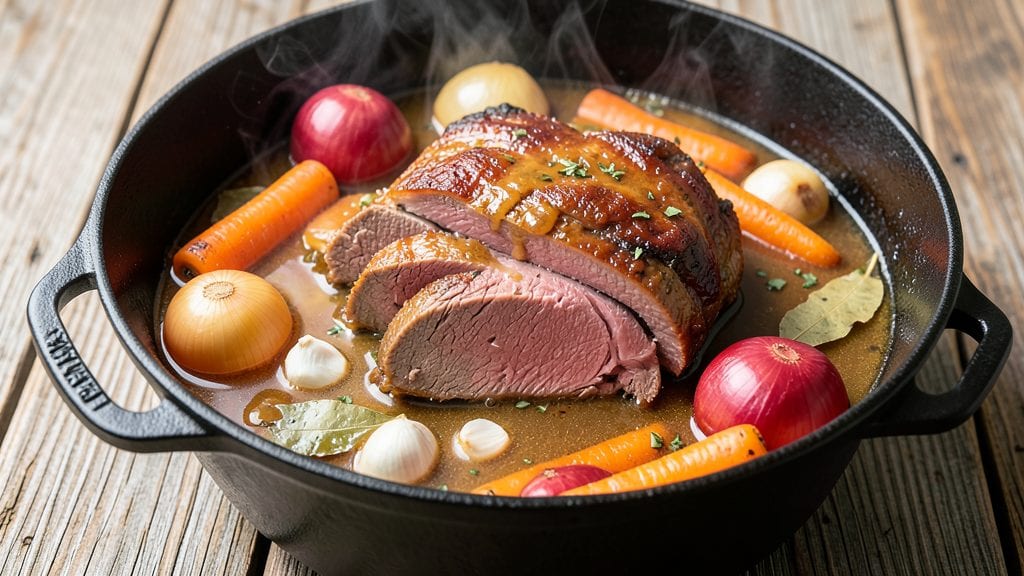
Mastering a corned beef brisket boil recipe transforms a simple pot of meat into a showstopping centerpiece—especially when you achieve that signature crispy vinegar crust. The secret lies in balancing slow braising with precise vinegar application, creating layers of flavor that make every bite unforgettable.
I've perfected this method over years of St. Patrick's Day celebrations, where the aroma alone draws crowds before the meal even begins.
The process starts with a well-seasoned brisket, simmered low and slow until tender enough to shred. What sets this apart is the final step: brushing with a vinegar mixture that caramelizes into a crispy, tangy crust while keeping the meat juicy inside.
This technique requires patience—about 3 hours of active cooking—but the results are worth every minute of attention.
By the time you pull it from the pot, you'll have perfectly tender beef with edges that crackle like a perfect sear. The vinegar crust adds a bright, tangy contrast to the rich, savory meat, creating a balance that feels both traditional and elevated.
This is the kind of dish that makes guests ask for seconds before the plates are even cleared.
Serve it with classic accompaniments like cabbage, potatoes, and mustard for the full experience. The recipe scales beautifully for gatherings, and leftovers reheat just as well. Let's get started on creating your most impressive corned beef yet.
Ingredients for corned beef brisket boil
Six ingredients make the brisket. Fourteen transform it into a showstopper.
| Ingredient | Amount | Notes |
|---|---|---|
| Corned Beef Brisket 🥩 | 4 lb | Whole pack, no pre-cooked |
| Water 💧 | 8 cups | Filtered or bottled preferred |
| Yellow Onion 🧅 | 1 whole | Quartered, skin on |
| Carrot 🥕 | 4 whole | Scrubbed, cut into chunks |
| Garlic Cloves 🧄 | 6 cloves | Smashed, not minced |
| Bay Leaves 🌿 | 2 whole | Fresh preferred |
| Black Peppercorns 🌶️ | 1 tbsp | Whole, lightly crushed |
| Apple Cider Vinegar 🍎 | 1 cup | Raw, unfiltered preferred |
| Brown Sugar 🍚 | ½ cup | Light or dark |
| Green Cabbage 🥬 | 1 lb | Heads cut into wedges |
| Russet Potatoes 🥔 | 2 lb | Scrubbed, quartered |
| Yellow Mustard 🍯 | ¼ cup | For serving |
| Salt 🧂 | 2 tbsp | Kosher or sea salt |
| Ground Black Pepper 🌶️ | 1 tsp | Freshly ground |
The brisket is the star—4 lbs gives you plenty for leftovers. Look for a whole pack at Costco or your butcher shop, not pre-cooked or pre-seasoned. The apple cider vinegar needs to be raw and unfiltered (like Bragg's)—the cloudiness means more flavor. Brown sugar adds depth, but muscovado or turbinado gives a more complex caramel note. I always grab extra bay leaves—fresh ones have a brighter aroma, but dried work fine if that's what you've got.
No apple cider vinegar? White vinegar or red wine vinegar in a pinch, but you'll lose some of that apple tang. Running short on brisket? Chuck roast works in a bind, though it won't shred as nicely. The potatoes can be Yukon Golds or red potatoes if that's what's in the bag. For the cabbage, green or red works—just make sure it's fresh with crisp leaves. The mustard is just for serving, so grab whatever's in your fridge (Dijon works too).
This reheats like a dream—just add water to cover and simmer. Keeps for 5 days in the fridge, freezes for 3 months. I always make a double batch because the leftovers are even better the next day. Store the vinegar crust mixture separately if you want to reheat it fresh—just brush it on before serving. The cabbage and potatoes can be prepped ahead and stored in water in the fridge for 2 days.
Why You'll Love This Recipe
- One-Pot Magic: I swear by this recipe—just dump the brisket, toss in whole onions, carrots, and garlic, then walk away. The pot does all the work while you sip tea or scroll through your phone.
- Garlic Bomb Flavor: Between the corned beef’s built-in spices and those raw garlic cloves simmering right in the broth, every bite tastes like a hug. Honestly, I’ve never met a corned beef this aromatic.
- Leftovers for Days: This recipe makes way more than you’ll eat in one sitting—perfect for meal prep or feeding a crowd. My freezer is always stocked with reheated slices that taste just as good cold.
- Budget Stretch: A single brisket feeds my family for weeks—the broth alone is a flavor bomb for soups or mashed potatoes. Between us, this is my go-to for stretching groceries without sacrificing taste.
Step-by-step instructions for corned beef brisket boil
Here's how to transform tough brisket into melt-in-your-mouth perfection with that signature crispy vinegar crust.
Prepare the Brisket and Pot
Start by placing the 4 lb corned beef brisket in a large Dutch oven or heavy pot. The brisket should fit snugly but not be crowded - if needed, use a slightly larger pot. Add the quartered yellow onion, whole carrots, smashed garlic cloves, and whole bay leaves around the brisket. Pour in the 8 cups water and sprinkle the 2 tbsp salt and 1 tsp ground black pepper directly on top of the brisket.
This arrangement ensures the brisket cooks evenly while absorbing all those aromatic flavors. I like to add the vegetables first because they'll soften during the long cook, creating a flavorful broth. The salt and pepper on top help develop that crispy crust later - don't skip this step, even if it seems like too much seasoning.
Simmer Until Fork-Tender
Bring everything to a boil over high heat, then immediately reduce to a gentle simmer. Cover the pot and maintain this temperature for 3 to 3.5 hours. You'll know it's simmering properly when you see just a few small bubbles breaking the surface - not a rolling boil.
Here's the key: check the brisket after 3 hours. It should be fork-tender with an internal temperature of 195°F to 200°F. If it's not quite there, continue cooking for another 30 minutes. The long simmer breaks down the collagen in the meat, turning it into gelatin that keeps the brisket incredibly moist. Don't rush this step - patience is what makes this dish special.
Create the Crispy Vinegar Crust
Once the brisket is fork-tender, carefully remove it from the pot and place it on a cutting board. Strain the cooking liquid through a fine-mesh sieve into a clean pot, discarding the vegetables. Return the brisket to the pot and pour in the 1 cup apple cider vinegar and 0.5 cup brown sugar. Bring everything to a boil over medium-high heat.
Simmer uncovered for 10 to 12 minutes, basting the brisket with the vinegar mixture every 2-3 minutes. You're looking for that magical transformation where the surface develops a deep mahogany color and forms a crispy crust. This is where the real flavor magic happens - the vinegar cuts through the richness while caramelizing the sugars to create that signature crispy texture. Don't walk away during this step - constant basting is essential.
Prepare the Sides
While the brisket is developing its crust, prepare the sides. Cut the 1 lb green cabbage into wedges and the 2 lb russet potatoes into quarters. Add them to the pot with the brisket in the last 30 minutes of the vinegar basting. The vegetables will cook quickly in the hot liquid, absorbing all those delicious flavors.
I like to add the cabbage and potatoes together so they cook evenly. The cabbage should be tender but still hold its shape, while the potatoes should be fork-tender with crispy edges. If they finish cooking before the brisket, remove them to a serving platter and keep them warm. The brisket is the star, so let it shine with its crispy crust while the sides play supporting roles.
Rest and Serve
Once the brisket has that perfect crispy crust, remove it from the pot and let it rest for 10 minutes. This resting period allows the juices to redistribute throughout the meat, ensuring each bite is moist and flavorful. During this time, keep the pot with the cooking liquid and vegetables warm over low heat.
To serve, slice the brisket against the grain into ¼-inch thick slices. Arrange the cabbage and potatoes on a platter with the brisket slices. Ladle the flavorful cooking liquid over everything and serve with the 0.25 cup yellow mustard on the side. The crispy crust should still hold up nicely after resting, giving you that satisfying contrast with each bite. Enjoy immediately while the brisket is at its peak tenderness and the sides are hot.
Pro Tips For Making Corned Beef Brisket Boil
- Trim the Fat First: Cut away the thick layer of fat on the brisket before boiling—it doesn’t cook down well and makes the broth greasy. I learned this the hard way after serving a pot of soup where the fat had congealed into a slick mess. Use a sharp knife and trim it close, but don’t go too deep into the meat.
- Start with a Cold Pot: Place the raw brisket in a cold pot, then cover with cold water. Heating it gradually prevents the meat from toughening up or shrinking away from the liquid. I used to throw it in hot water like I do with pasta, and the brisket always came out chewier than it should have.
- Peel and Quarter Carrots: Skip peeling the carrots—their skin adds flavor and color to the broth, and it’s one less step. Cut them into thick chunks (about 1-inch) so they hold together during boiling. Thin slices turn to mush and make the pot look messy without adding much to the dish.
- Simmer, Don’t Boil: Keep the heat low enough that you see just a few tiny bubbles breaking the surface, not a rolling boil. A fast boil wastes energy, toughens the meat, and makes the broth cloudy. After burning through three briskets this way, I finally cracked open a cookbook and realized I’d been overdoing it.
Perfect pairings for this corned beef brisket boil
Classic Irish Sides
No corned beef brisket boil is complete without colcannon or boxty—traditional Irish potato dishes that soak up every drop of that rich cooking liquid. For colcannon, mash 2 lbs Yukon Gold potatoes with ½ cup butter, ¼ cup heavy cream, and ¼ cup chopped chives.
Fold in 2 cups shredded cabbage cooked until tender. For boxty, mix 2 cups grated raw potato with 1 cup cooked potato, 1 egg, and 1 tsp salt, then pan-fry until golden. Both dishes add hearty texture and complement the brisket's tangy crust perfectly. 🥔
Mustard Variations
While classic yellow mustard is traditional, don’t be afraid to experiment! Dijon mustard adds a refined, slightly sweet note that pairs beautifully with the vinegar crust. For heat lovers, mix 1 tbsp hot honey into ¼ cup yellow mustard before serving—it balances the brisket’s richness with a subtle sweet-spicy kick.
I also love a whole-grain mustard for extra texture and depth. Always serve it on the side so guests can adjust to taste. 🌶️
Creamy Sauce Upgrade
Transform the cooking liquid into a luscious sauce by whisking in ½ cup sour cream and 1 tbsp cornstarch after removing the brisket. Simmer for 3-5 minutes until thickened, then stir in 1 tbsp apple cider vinegar for brightness.
This sauce elevates the dish, turning it into a one-pot meal with minimal effort. Serve it drizzled over the brisket and sides for a restaurant-worthy finish. 🍽️
Beverage Pairings
A dry Irish stout like Guinness cuts through the richness of the brisket while complementing the vinegar crust’s tang. For non-alcoholic options, sparkling apple cider (chilled) mirrors the dish’s apple cider vinegar notes.
If you prefer wine, a Pinot Noir from Burgundy offers earthy undertones that harmonize with the brisket’s depth. Always serve drinks slightly chilled to balance the meal’s warmth. 🍺
Crispy Vinegar Crust Hack
For an extra-crispy crust, brush the brisket with a mix of ½ cup apple cider vinegar and 2 tbsp brown sugar twice during the final 10 minutes of cooking. The second application locks in the caramelization, creating a glazed, crackling exterior that’s irresistible.
Pro tip: Use a pastry brush for even coverage—it’s worth the extra step for that restaurant-quality texture. 🔥
Leftovers Reinvented
Repurpose leftover brisket into corned beef hash by dicing the meat and frying it with diced potatoes, onions, and fried eggs on top. For a quick sandwich, layer shredded brisket on toasted rye bread with caramelized onions and Dijon mustard.
The crispy crust adds a delightful crunch to both dishes, making leftovers feel like a new meal. 💡
Nutrition facts
Frequently asked questions
Why does the brisket need to rest after cooking?
Resting for 10 minutes lets the juices redistribute throughout the meat, preventing them from leaking out when you slice. This keeps every bite moist and flavorful. Skipping this step can leave your brisket dry, especially with the crispy vinegar crust that might crack if cut too soon.
Can I use a slow cooker instead of a stovetop pot?
Transfer the brisket, vegetables, and water to a slow cooker and cook on low for 8-10 hours or high for 5-6 hours. For the vinegar crust, transfer the brisket to a skillet and simmer with vinegar and sugar on the stovetop for 10-12 minutes to achieve the crispy texture. The slow cooker works great for hands-off prep!
What if my vinegar crust isn't crispy?
Check your basting technique—you need to simmer uncovered and baste every 2-3 minutes for 10-12 minutes. If it's still soft, try increasing the heat slightly or adding 1 extra tablespoon of brown sugar to the vinegar mixture. A dry skillet can also help caramelize the sugars faster for that perfect crackle.
How do I know when the brisket is done?
It's ready when it reaches an internal temperature of 195°F-200°F and easily shreds with a fork. The meat should pull apart cleanly, not require excessive force. If it's not quite there, add 1 more hour of simmering. Overcooking won't ruin it, but it can make the texture slightly mushy.
Can I make this recipe ahead of time?
Yes! Cook the brisket up to the vinegar crust step, then refrigerate it overnight. Reheat in the pot with 1 cup water for 30 minutes on low heat. The crust won't be as crispy, but it'll still be delicious. For the crispy finish, just brush with vinegar and sugar mixture before serving.