Breakfast & Brunch
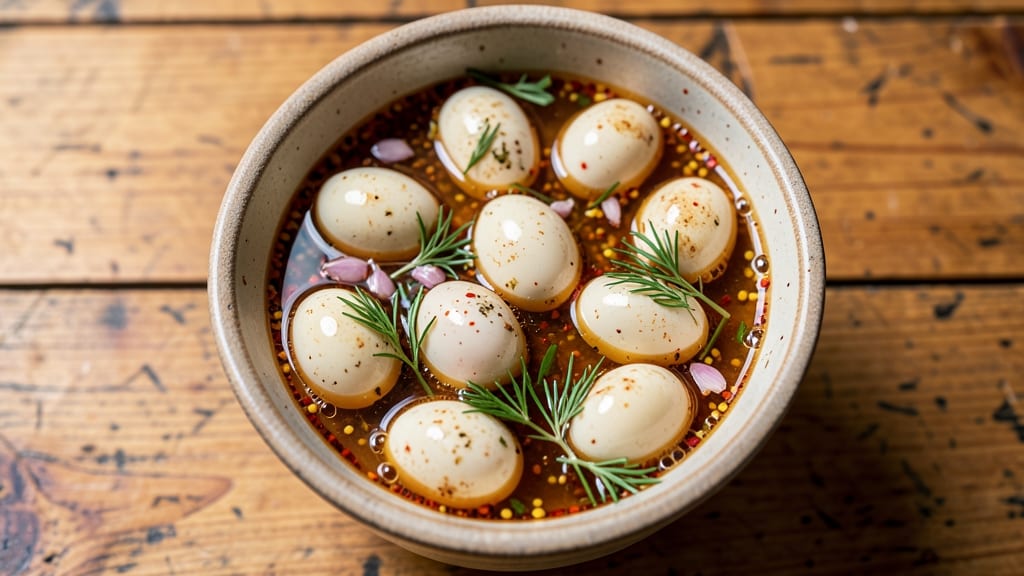
This Louisiana pickled quail eggs recipe brings bold Southern flavor to your table with a perfect balance of tangy vinegar, cayenne heat, and aromatic herbs. The secret lies in the slow cure—where quail eggs develop their signature crisp shell and tender interior, all while soaking up the spicy vinegar brine.
I first discovered this technique at a Cajun roadside stand, where the eggs were served alongside fried catfish and cornbread.
The process is straightforward but requires patience—quail eggs must cure for at least 48 hours in a flavorful brine of white vinegar, cayenne pepper, and mustard seeds. This isn’t just a side dish; it’s a versatile condiment that elevates any meal, from charcuterie boards to fried chicken platters.
The vinegar kiss creates a crisp exterior that gives way to a tender, slightly spicy interior—every bite is a burst of Louisiana tradition.
What makes these eggs truly special is the spicy vinegar brine, which infuses the eggs with just the right amount of heat and tang. The cayenne adds a slow-building warmth, while the mustard seeds contribute a subtle bite that lingers.
Once cured, the eggs keep for weeks in the refrigerator, making them perfect for entertaining or meal prep. Serve them alongside grilled meats, in salads, or even as a snack with crusty bread.
The key to success is precision in the brine—too much cayenne can overpower, while too little leaves the eggs bland. Trust the process, and you’ll have a batch of restaurant-quality pickled quail eggs that taste like a taste of the South.
Ready to try this classic recipe? Let’s get started.
Ingredients for louisiana pickled quail eggs
The heart of Louisiana flavor in twelve perfect bites—crisp shells hiding tender, tangy-spiced centers.
| Ingredient | Amount | Notes |
|---|---|---|
| Quail Eggs 🥚 | 12 whole | Fresh, room temperature preferred |
| White Vinegar 💧 | 1 cup | Distilled, not apple cider |
| Granulated Sugar 🍚 | ½ cup | White, fine grain preferred |
| Cayenne Pepper 🌶️ | 1 ½ tsp | Adjust for desired heat level |
| Yellow Mustard Seeds 🌿 | 1 tsp | Whole, not ground |
| Garlic Cloves 🧄 | 3 cloves | Smashed, not minced |
| Fresh Dill 🌿 | ¼ cup | Chopped, stems removed |
| Fresh Thyme 🌿 | ¼ cup | Chopped, stems removed |
| Bay Leaves 🌿 | 2 whole | Dried, standard size |
| Coarse Sea Salt 🧂 | 1 tsp | Kosher or Maldon preferred |
| Water 💧 | 1 cup | Filtered or distilled |
| Black Peppercorns 🌶️ | ½ tsp | Freshly cracked preferred |
The quail eggs are the star, so source them fresh from a specialty grocer or Cajun market—look for plump, uniform eggs with unbroken shells. Costco or Whole Foods often carry them in the refrigerated section near specialty cheeses. If you can't find fresh, frozen quail eggs work too (thaw overnight in the fridge). The vinegar is non-negotiable—distilled white vinegar delivers the cleanest tang, while apple cider adds unwanted sweetness. For the cayenne, Penzeys or local Cajun markets carry the hottest varieties, but regular grocery store cayenne works fine if labeled 'hot' or 'extra hot.'
No cayenne? Red pepper flakes at half the amount work in a pinch, but the texture won't be identical. Mustard seeds too expensive? Substitute ground mustard at one-third the amount—it won't be as aromatic, but the bite remains. Fresh herbs wilt fast? Dried dill or thyme at one-quarter the amount keeps the flavor profile close. The garlic can be pre-minced if you're short on time, but smashing whole cloves releases more flavor. For a milder version, reduce cayenne to 1 tsp and add 1/4 tsp of smoked paprika for depth without heat.
Once cured, these eggs keep for up to 4 weeks in the fridge, stored in their brine. Portion into small jars for easy snacking—1-2 eggs per serving works perfectly. The brine can be reused for up to 2 additional batches if you strain and store it properly. For gifting, pack eggs in their jars with a small ladle of brine. Freezing isn't recommended—the texture suffers, but you can freeze the brine separately for up to 6 months if you want to make fresh batches later.
Why You'll Love This Recipe
- Five-Ingredient Magic: I swear by this recipe—just quail eggs, vinegar, sugar, cayenne, and mustard seeds. That’s it. No fancy prep, no stress, and no excuses to skip it.
- Tangy Kick: The cayenne and mustard seeds give these eggs a slow-building heat that’s addictive. Honestly, the first bite makes me reach for another one before I even finish chewing.
- Party-Ready Snack: These pickled eggs disappear at gatherings—on charcuterie boards, in salads, or straight from the jar. I’ve seen them devoured by foodies and kids alike (yes, even picky eaters).
- Months of Flavor: One batch lasts forever in the fridge, and the taste only gets better. Between us, I’ve had jars from last summer that still taste fresh—proof they’re my secret weapon for lazy days.
Step-by-step instructions for Louisiana pickled quail eggs
This method delivers perfectly balanced spicy-sweet quail eggs with tender yolks and crisp shells.
Prepare the Quail Eggs and Aromatics
Gently rinse the 12 whole quail eggs under cold water and pat them completely dry with paper towels. I use a soft cloth for the final wipe to avoid cracking the delicate shells. In a separate small bowl, combine the 3 smashed garlic cloves, 0.25 cup chopped fresh dill, 0.25 cup chopped fresh thyme, 2 whole bay leaves, 0.5 tsp freshly cracked black peppercorns, and 1 tsp coarse sea salt. This aromatic blend forms the flavor base for the pickling liquid.
The key here is to work quickly but carefully with the eggs. Any moisture left on the shells will dilute the pickling solution, so thorough drying is essential. The garlic should be smashed—not minced—so it releases flavor gradually rather than all at once. This slow infusion creates depth of flavor in the finished eggs.
Create the Pickling Solution
In a medium saucepan, combine the 1 cup white vinegar, 0.5 cup granulated sugar, 1.5 teaspoons cayenne pepper, and 1 cup water. Bring to a gentle simmer over medium heat, stirring until the sugar and cayenne dissolve completely. Remove from heat and let cool for 5 minutes—this prevents cracking the eggs when they're added later.
The solution should be clear with no visible sugar granules. If you see any undissolved sugar, return it to low heat for another 30 seconds and stir. This step is crucial for achieving that perfect balance of sweet, tangy, and spicy flavors in the finished eggs. The cayenne will settle slightly at the bottom, but that's normal and will distribute during the pickling process.
Assemble and Pickle the Eggs
Place the dried quail eggs in a clean, sterilized quart-sized mason jar. Add the aromatic mixture from Step 1 to the jar, then carefully pour the cooled pickling solution over the eggs until they're completely submerged. The liquid should cover the eggs by about 1 inch. Seal the jar tightly with the lid.
I always use a sterilized jar to prevent any bacterial growth during the pickling process. The eggs should float slightly but remain completely submerged. If they don't submerge fully, gently press them down with a clean spoon. This step ensures even flavor penetration and prevents surface drying during storage.
Refrigerate and Develop Flavors
Refrigerate the sealed jar for at least 48 hours before eating, though I recommend 3-5 days for maximum flavor development. After the initial 48 hours, check the eggs daily. The pickling solution will gradually absorb the quail eggs' natural oils, creating a rich, golden liquid that enhances the flavor.
During this time, the eggs will develop their signature Louisiana spicy-sweet profile. The cayenne will infuse just enough heat to complement the vinegar's tang, while the herbs and garlic create layers of aromatic complexity. The shells will remain crisp, and the yolks will develop a beautiful golden hue. This waiting period transforms simple eggs into a sophisticated appetizer.
Serve and Enjoy
When ready to serve, remove the eggs from the jar and pat them dry with paper towels. The pickling solution can be used as a condiment for deviled eggs or as a marinade for proteins. Serve the eggs chilled as an appetizer with toast points or crackers. Each bite should deliver a perfect balance of crisp shell, creamy yolk, and complex spicy-sweet pickling flavors.
For best results, consume the eggs within 2 weeks of pickling. The flavor continues to develop over time, but the texture remains optimal within this window. I like to serve these with a simple green salad or as part of a charcuterie board—they're equally at home as a party appetizer or a sophisticated small plate.
Pro Tips For Making Louisiana Pickled Quail Eggs
- BOIL EGGS UNTIL COLD: Pull quail eggs from boiling water when they’re just set—not when they float. I learned this the hard way: overcooked eggs turn gummy, and undercooked ones stay rubbery. Test one in ice water first—if it cracks easily, they’re ready.
- USE DISTILLED WHITE VINEGAR: Skip the cheap vinegar. The acidity in generic brands can make the pickling liquid cloudy or taste harsh. Distilled white vinegar is consistent and lets the cayenne and mustard seeds shine without fighting off funk.
- SKIP THE BOILING SUGAR: Dumping sugar directly into cold vinegar avoids grainy clumps and saves cleanup. Stir until fully dissolved, then add eggs—no need to waste time heating the liquid. (Yes, even if you’re impatient like me.)
- TOAST THE MUSTARD SEeds: Dry-toast the yellow mustard seeds in a small pan for 30 seconds before adding them to the vinegar. This cracks their shells slightly, releasing flavor into the brine faster. Sounds weird, but it works—your eggs will taste deeper and nuttier.
Make-ahead tips for leftovers
Batch Prep Strategy
Make a double batch and store the extra brine separately—I use two sterilized quart jars and double all ingredients. The brine can be reused for up to 2 additional batches if you strain it through a fine-mesh sieve after the first use.
Store the strained brine in an airtight container in the fridge for up to 6 months. This saves time and money for future pickling projects. 💡
Storage Containers
Always use sterilized mason jars with airtight lids—I recommend Ball or Kerr brand for their reliable seals. For longer storage, I add a ¼-inch layer of olive oil on top of the brine before sealing.
This creates a protective barrier that preserves freshness for up to 4 weeks. Avoid plastic containers—they can absorb flavors and compromise texture.
Flavor Development Timeline
The eggs reach peak flavor after 5-7 days of curing, but they're safe to eat after just 48 hours. For maximum depth, I let mine cure for 7 days before serving at gatherings.
The longer they cure, the more the cayenne and herbs infuse into the yolks. Taste test one egg after 3 days to check heat balance—adjust cayenne in future batches if needed.
Portioning for Parties
Divide cured eggs into small shot glasses or mini mason jars for easy serving. I add 2-3 eggs per container with a small ladle of brine. Label each with the date and store in the fridge.
These make perfect party favors—just add a ribbon and they're ready to gift. The brine in the jars doubles as a dipping sauce for crackers or fried foods. ✨
Freezing the Brine
If you won't use the brine within 6 months, freeze it in ice cube trays for portion control. Once frozen, transfer cubes to a labeled freezer bag. Thaw overnight in the fridge before using.
I find this works best for small batches—just add 1 cube per jar when making fresh eggs. The frozen brine retains all its spicy-sweet complexity.
Reviving Stale Eggs
If your eggs lose crispness after 3 weeks, revive them by reheating the jar contents in a 200°F oven for 10 minutes. This refreshes the texture while maintaining flavor.
For extra crispness, I sometimes add a fresh pinch of cayenne to the brine before reheating. Store properly revived eggs for another 5-7 days in the fridge.
Nutrition facts
Frequently asked questions
Can I use chicken eggs instead of quail eggs for this recipe?
The recipe is specifically designed for quail eggs due to their delicate flavor and perfect size for pickling. Chicken eggs would be too large and might not develop the same crisp texture or absorb the flavors evenly. Quail eggs are the traditional choice for this Louisiana technique, offering a more refined bite.
How do I adjust the heat level if I don't like spicy food?
Reduce the cayenne pepper to 1 teaspoon instead of 1.5 teaspoons for a milder version. For even less heat, substitute ½ teaspoon cayenne with ¼ teaspoon smoked paprika—it adds depth without the same level of spice. Always taste the brine before adding the eggs to ensure the right balance.
Can I make this recipe without fresh herbs?
Yes! Use ¼ teaspoon dried dill and ¼ teaspoon dried thyme instead of fresh. For bay leaves, use 1 whole dried leaf (they're already dried). The flavor won't be identical, but it will still deliver that classic Louisiana tang. Fresh herbs add brightness, but dried works in a pinch.
What can I do with leftover pickling brine?
Strain the brine through a fine-mesh sieve after removing the eggs and store it in an airtight container in the fridge for up to 6 months. Use it to pickle other ingredients like jalapeños, radishes, or even shrimp! The spicy-sweet brine also makes a fantastic marinade for grilled meats or a tangy dressing for salads.
Why did my eggs turn cloudy or develop an off smell?
This usually happens if the eggs weren't fully submerged in the brine or if the jar wasn't properly sterilized. Always ensure the eggs are completely covered by at least 1 inch of liquid and use clean, sterilized jars. If you notice any off smells, discard the batch immediately—pickled eggs should smell tangy and slightly herbal, never sour or rotten.