
Soups & Stews
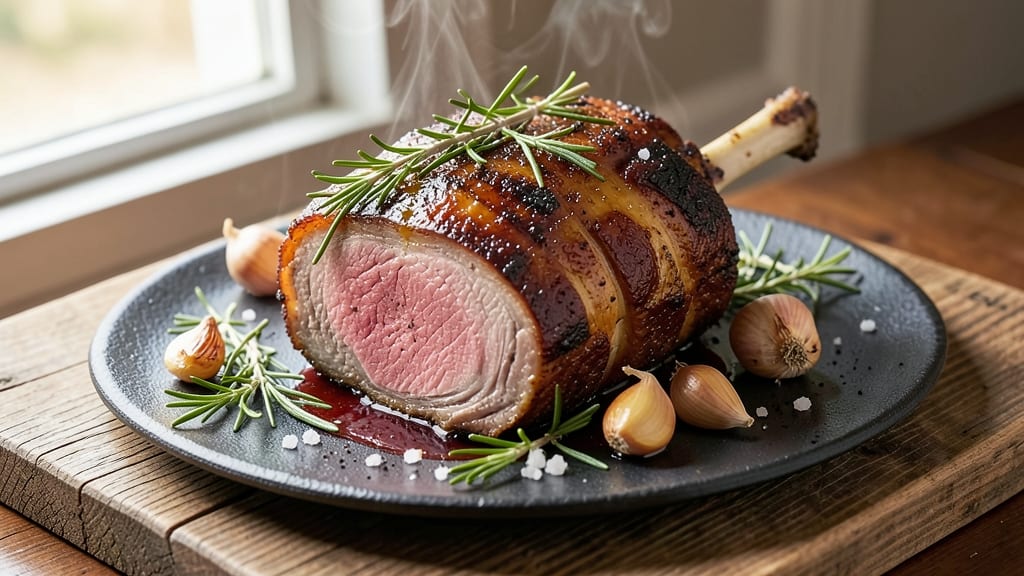
A slow roasted bone-in leg of lamb transforms tough cuts into melt-in-your-mouth perfection with minimal effort. This method unlocks deep, caramelized flavors while keeping the meat juicy and tender—ideal for special occasions or when you crave restaurant-quality results at home.
The bone adds rich, savory depth that no other cut can match, making it worth the investment.
The secret lies in low-and-slow cooking, where the lamb roasts for hours until the connective tissue dissolves into a luscious, gravy-like sauce. You’ll need just five simple ingredients—olive oil, garlic, rosemary, salt, and pepper—plus time to let the magic happen.
No fancy techniques, just patience and precision for a dish that feels luxurious yet straightforward.
By the end, you’ll have a fall-off-the-bone centerpiece that pairs beautifully with roasted vegetables or crusty bread. The aroma alone will have everyone gathered at your table, while the rich, herby crust gives every bite an irresistible crunch. This is the kind of meal that turns weeknights into celebrations.
Perfect for holiday feasts or intimate dinners, this recipe scales effortlessly and reheats wonderfully. The bone-in method ensures maximum flavor, while the one-pan approach keeps cleanup to a minimum. Let’s get started on creating your most impressive lamb yet.
Ingredients for slow roasted bone in leg of lamb
Five core ingredients transform a simple lamb leg into a showstopping centerpiece.
| Ingredient | Amount | Notes |
|---|---|---|
| Bone-In Leg Of Lamb 🐑 | 4 lb | French cut, fat cap intact |
| Extra-Virgin Olive Oil 🫒 | ½ cup | High quality, fruity variety |
| Garlic Cloves 🧄 | 8 cloves | Peeled, smashed slightly |
| Fresh Rosemary 🌿 | ¼ cup | Stems removed, chopped |
| Diamond Crystal Kosher Salt 🧂 | 1 ½ tbsp | Coarse grain preferred |
| Freshly Ground Black Pepper 🌶️ | 1 tsp | Freshly cracked preferred |
| Red Wine 🍷 | ½ cup | Dry, bold variety |
The lamb cut makes all the difference. French-cut bone-in leg (with the fat cap) delivers the richest flavor and juiciest texture—ask your butcher for this specific cut. If you can't find it, a regular leg works, but trim excess fat to 1/4-inch thickness for even cooking. Whole Foods or specialty butchers usually carry the French cut, but most grocery stores stock regular legs. Pat the lamb dry before seasoning—this helps the crust form. I always buy mine the day before to let it dry out slightly in the fridge, which makes the crust even better.
No red wine? Beef broth with a splash of balsamic works just as well. Fresh rosemary is ideal, but dried at one-third the amount gets you close in a pinch. For garlic, roasted cloves add a sweeter depth—wrap them in foil with a drizzle of olive oil and roast at 400°F for 10 minutes before adding to the lamb. The olive oil should be high-quality extra-virgin—none of that cheap cooking oil. If you're short on time, Trader Joe's or Costco sell excellent imported options that won't break the bank.
Lamb reheats beautifully—better the next day once all the flavors meld. Store leftovers in the fridge for up to 5 days, wrapped tightly in foil to preserve moisture. For longer storage, freeze portions for up to 3 months. I always portion mine into individual containers so I can grab a serving straight from the freezer. The bone-in method means you'll have plenty of leftovers—perfect for sandwiches or grain bowls later in the week.
Why You'll Love This Recipe
- Hands-Off Magic: I swear by this method—just rub the lamb with olive oil, garlic, rosemary, and salt, then let the oven do all the work. No flipping, no fussing, just perfect results while you sip wine or binge a show.
- Crispy-Creamy Obsession: That bone-in magic? The outside gets glossy and crackling while the inside stays tender enough to melt. Honestly, the first time I cut into it, my husband paused mid-bite just to stare—worth every minute.
- Weeknight to Weekend: Same recipe feeds my chaotic Tuesday dinner or impresses guests on Saturday. The leftovers? Even better cold in sandwiches or reheated with a sprinkle of herbs—my lazy Sunday secret weapon.
- Budget-Friendly Luxury: A bone-in leg stretches further than boneless cuts, and the flavor? Ridiculously rich for the cost. I’ll be real: this is how I trick myself into eating “fancy” without the restaurant price tag.
Step-by-step instructions for slow roasted bone-in leg of lamb
Here's how to transform a simple leg of lamb into melt-in-your-mouth perfection with minimal effort.
Prepare the Lamb for Maximum Flavor
Remove the lamb from the refrigerator and let it sit at room temperature for 30 minutes. This ensures even cooking throughout. Pat the lamb dry with paper towels—this step is non-negotiable for crispy skin. I like to work in a well-ventilated area because the rosemary and garlic will release strong aromas as they cook.
In a small bowl, combine the 0.5 cup extra-virgin olive oil, 1.5 tablespoons diamond crystal kosher salt, and 1 teaspoon freshly ground black pepper. Rub this mixture all over the lamb, including the fat cap, until fully coated. The fat cap will render down beautifully during roasting, basting the meat with rich, golden fat.
Create the Herb and Wine Rub
In a separate bowl, mix the 8 smashed garlic cloves and 0.25 cup chopped fresh rosemary. Press this mixture firmly into the lamb, working it into any crevices or thick parts of the meat. The smashed garlic releases its oils more effectively, while the rosemary adds an earthy depth that pairs perfectly with lamb.
Next, create a simple wine reduction by combining the 0.5 cup red wine in a small saucepan. Bring it to a simmer over medium heat and reduce by half—this should take about 5-7 minutes. The reduced wine will intensify the flavor and create a glossy finish for the lamb. Let it cool slightly before using.
Roast at Low Temperature for Even Cooking
Preheat your oven to 325°F. Place the lamb fat-side up on a rack in a roasting pan to allow air circulation on all sides. This low temperature ensures the meat cooks slowly and evenly, preventing it from drying out. Roast for 2 hours, then carefully flip the lamb and continue roasting for another 1 hour 30 minutes.
Here's the key: the lamb is done when it reaches an internal temperature of 145°F (measured with an instant-read thermometer in the thickest part of the meat). The external crust should be deep golden brown, with the fat cap crisping beautifully. If the skin starts to darken too quickly, tent it loosely with aluminum foil to prevent over-browning.
Rest and Carve for Perfect Texture
Once the lamb reaches 145°F, remove it from the oven and tent it loosely with foil. Let it rest for 20-30 minutes before carving. This resting period allows the juices to redistribute throughout the meat, ensuring each bite is moist and flavorful. I know it's tempting to cut into it immediately, but patience here makes all the difference.
Use a sharp carving knife to slice the lamb against the grain into ½-inch thick pieces. The meat should pull apart easily with minimal resistance, and the fat cap should be crisp and golden. Serve the lamb with the reduced wine sauce spooned over the top, and garnish with any remaining fresh rosemary sprigs for a pop of color and aroma.
Pro Tips For Making Slow Roasted Bone In Leg Of Lamb
- SEAR FIRST, SLOW LATER: After burning three batches, I finally figured out—blast that leg of lamb with high heat for 5 minutes before lowering the oven. The Maillard reaction on the outside locks in flavor while the slow roast does its magic inside. (Yes, even if you're impatient like me.)
- SALT THE GARLIC: Don’t just stuff raw garlic cloves under the lamb—salt them first. A pinch of kosher salt on each clove before roasting makes them caramelize into sweet, jammy pockets. I learned this the hard way when mine stayed bland.
- SKIP THE CROWDED PAN: If your roasting pan is packed with other veggies, move them. Lamb needs room to breathe—cramped, it steams instead of roasting. Use a second tray if needed; crispy edges are worth the extra space.
- TEST THE BONE: The meat might hit 145°F, but the bone’s the real thermometer. If it’s still pink when you cut into the center, give it another 15 minutes. I was skeptical until I tried it—now I never skip this step.
Essential equipment for slow roasted bone in leg of lamb
Must-Have Oven Gear
You’ll need a heavy-duty roasting pan with a rack—All-Clad Stainless Steel or Le Creuset Stoneware are my top picks for even heat distribution. The rack elevates the lamb, allowing air to circulate and fat to drip away, which prevents soggy skin.
If you’re on a budget, a basic Vitamix 10-inch roasting pan works perfectly for occasional use. 🌡️
Temperature Control Tools
An instant-read thermometer is non-negotiable for perfect doneness. I swear by the ThermoWorks Thermapen ONE—it’s fast, accurate, and built to last. For long cooks like this, a dual-probe thermometer (like Meater Plus) lets you monitor both the oven and internal temp simultaneously.
Avoid cheap dial thermometers—they’re inconsistent and can ruin your meal.
Prep Essentials
Gather sharp carving tools—a Wüsthof Classic 8-inch carving knife slices through lamb like butter, while a Dexter-Russell 12-inch slicer handles larger cuts with ease. For prepping, a microplane (like Barbaglio) helps finely grate garlic and zest herbs, while a meat mallet ensures even herb distribution.
Don’t skip the paper towels—they’re crucial for drying the lamb before seasoning.
Optional Upgrades
For next-level flavor, invest in a smoker box (like Master Smoker Box) to add subtle wood smoke—hickory or applewood chips pair beautifully with lamb. A meat injector (such as Master Injector) lets you infuse the lamb with garlic-herb oil for deeper flavor penetration.
If you love crispy edges, a broiler pan finishes the lamb with a caramelized crust in minutes.
Cleanup Shortcuts
Line your roasting pan with heavy-duty aluminum foil (like Reynolds Oven Bag) for effortless cleanup—just peel it away after cooking. A silicone brush (such as OXO Good Grips) removes stubborn bits from the rack, while a large spoon helps scrape up the reduced wine sauce for serving.
Keep a small bowl nearby to catch drippings for pan sauces later.
Nutrition facts
Frequently asked questions
Why does the recipe call for a bone-in leg of lamb?
The bone adds incredible depth of flavor and moisture during slow roasting. As the lamb cooks, the bone infuses the meat with rich, savory notes while the marrow slowly melts, creating a natural basting sauce. Bone-in cuts also stay juicier longer than boneless ones during extended cooking. For best results, ask your butcher for a French-cut leg with the fat cap intact.
Can I use a different cut of lamb if I can't find a bone-in leg?
Yes, but expect slightly different results. A bone-in shoulder or rack will work, though cooking times may vary. For boneless options, choose a thick-cut leg or loin roast (at least 2 inches thick) and increase the roasting time by 15-20 minutes. The bone-in method delivers maximum flavor and moisture, but boneless cuts still yield delicious results with proper seasoning and resting.
How do I know when the lamb is fully cooked?
Use a meat thermometer to check the internal temperature at the thickest part (avoiding the bone). Lamb is perfectly cooked at 145°F. The external crust should be deep golden brown with crisp fat. If the skin darkens too quickly, tent it loosely with foil to prevent over-browning. Never rely on color alone—some cuts may appear done before reaching safe temperatures.
What's the best way to reheat leftovers?
Reheat lamb gently to preserve moisture. Place slices in a baking dish with a splash of broth or water, cover with foil, and warm in a 325°F oven for 15-20 minutes. Alternatively, use a skillet over low heat with a pat of butter. Microwaving can dry out the meat, so avoid it if possible. Leftovers actually improve in flavor after resting for 24 hours as the juices redistribute.
Can I make this recipe in a slow cooker?
While possible, oven roasting gives better results for crispy skin and caramelized crust. For a slow cooker version, sear the lamb first in a skillet, then cook on low for 6-8 hours with all seasonings and 1 cup broth instead of wine. The meat will be tender but lack the golden exterior. For best texture, stick with the oven method and save slow cooking for other cuts like chuck roasts.