
Side Dishes
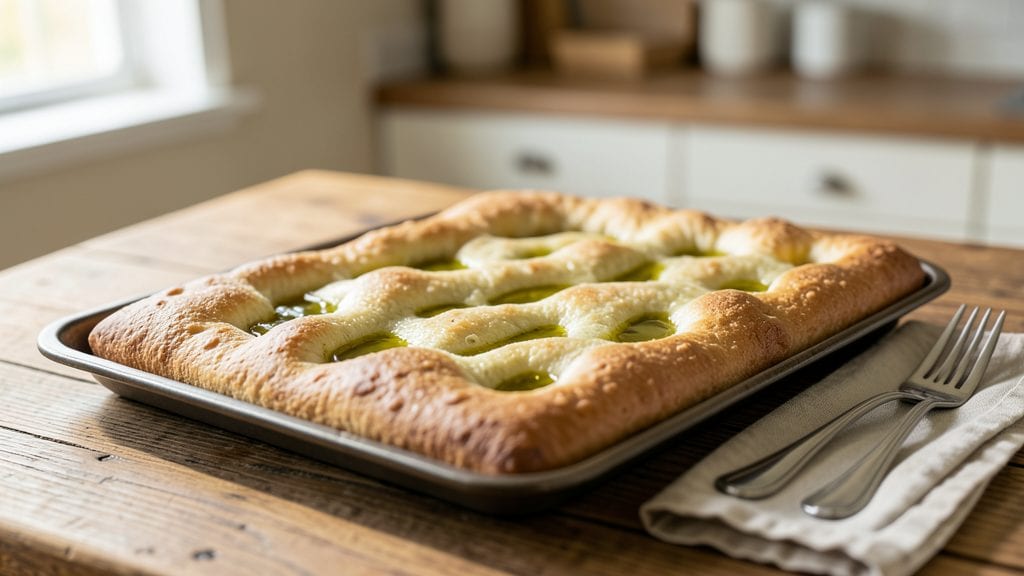
This sourdough focaccia bread recipe from Alexandra’s Kitchen delivers restaurant-quality results with its signature olive oil-pooled crust and herby dimples.
The key lies in a well-fed starter and the right balance of olive oil, salt, and fresh herbs—transforming simple ingredients into golden, aromatic bread that’s crisp at the edges and tender inside.
I’ve perfected this method after years of baking, ensuring every batch rises properly and develops that coveted airy texture.
The process begins with a foolproof starter (or using an active one), followed by a straightforward dough mix that rests overnight for maximum flavor development.
What sets this recipe apart is the olive oil technique—generously pooling it into the dough before shaping creates that iconic crispy crust while keeping the interior soft. Fresh rosemary and garlic infuse every bite with bright, aromatic notes that make this bread irresistible on its own or as a side.
By the time it emerges from the oven, your focaccia will have a golden, crackling crust with deep dimples filled with herby olive oil. The aroma alone will have everyone gathering around the table, and the texture—crisp yet yielding—is impossible to resist.
This recipe ensures restaurant-quality results at home, with minimal effort and maximum reward.
Whether you serve it warm with olive oil drizzled over the top or as a base for bruschetta, this focaccia becomes the star of any meal. The secret to success? Patience during proofing and precise oven temperature control. Let’s get started on your next perfect loaf.
Ingredients for sourdough focaccia bread recipe alexandra's kitchen
Nine simple ingredients transform into golden focaccia with crisp edges and herby dimples.
| Ingredient | Amount | Notes |
|---|---|---|
| Active Sourdough Starter 🍞 | 1 cup | Well-fed, bubbly starter |
| All-Purpose Flour 🌾 | 3 ½ cups | High-protein preferred (11-12%) |
| Extra-Virgin Olive Oil 🫒 | ½ cup | Fruity, cold-pressed variety |
| Warm Water 💧 | 1 ¼ cups | 105-110°F for activation |
| Fine Sea Salt 🧂 | 1 ½ tsp | Diamond Crystal preferred |
| Fresh Rosemary 🌿 | ¼ cup | Finely chopped, stems removed |
| Garlic Cloves 🧄 | 4 cloves | Minced for herb mixture |
| Fresh Thyme 🌿 | 2 tsp | Leaves only, finely chopped |
| Cornmeal 🌽 | ¼ cup | For dusting baking sheet |
The sourdough starter is the heart of this recipe—it should be active and bubbly, not sluggish. For best results, feed your starter twice daily for 24 hours before using. King Arthur or Bob's Red Mill flours work exceptionally well due to their high protein content, but any bread flour will do. The olive oil is non-negotiable; California avocado or Colavita brands deliver that rich, fruity flavor that elevates the crust. Rosemary and thyme should be fresh—Trader Joe's or Whole Foods markets carry excellent quality, or grow your own if you're ambitious. The garlic adds depth, but don't overdo it; four cloves strike the perfect balance without overpowering the bread's natural aroma.
No fresh rosemary? Dried works at half the amount, but the flavor won't be as vibrant. Out of thyme? Fresh oregano or basil can substitute, though the taste profile will shift slightly. The cornmeal is crucial for preventing sticking—avoid flour, as it can make the crust tough. For the herb mixture, pulse everything in a food processor for 10 seconds to ensure even distribution. If you're short on time, pre-minced garlic from the jar works, but fresh is always superior. The salt measurement is precise—Diamond Crystal is less dense than table salt, so don't double up if using another brand.
This dough benefits from an overnight rest in the fridge, allowing flavors to meld. Store it in an airtight container for up to 24 hours before shaping. Once shaped, let it proof at room temperature for 1-2 hours until nearly doubled in size. The focaccia keeps well at room temperature for 2-3 days wrapped in a clean kitchen towel, or freeze for up to 3 months. For reheating, wrap in foil and warm in a 350°F oven for 10 minutes—this restores the crispy crust without drying it out. Slice just before serving to maintain that perfect texture.
Why You'll Love This Recipe
- Five-Ingredient Magic: I swear, this focaccia only needs five things—your starter, flour, olive oil, water, and salt. No yeast packets, no confusing ratios, just that perfect tangy, airy loaf every single time.
- Oil-Soaked Goodness: That lavish drizzle of extra-virgin olive oil? It’s not just decoration—it makes the crust shatter like glass while keeping the inside pillowy. Honestly, I’ve never had focaccia this rich without the fuss of fancy toppings.
- Weeknight Workhorse: Toss it in a pan, let it rise while you prep dinner, then bake. It’s the ultimate sidekick—great with soups, charcuterie, or just toasted with jam. (Yes, even on a Tuesday night.)
- Leftovers That Last: A single batch feeds my family for days: toast for breakfast, sandwiches for lunch, and garlic knots for dinner. Freeze slices for quick meals later—no waste, all flavor.
Step-by-step instructions for sourdough focaccia bread
Here's the method for creating a perfectly crisp-edged focaccia with aromatic herbs and a golden olive oil crust.
Mix the Dough and Let It Rise
In a large mixing bowl, combine the 1 cup active sourdough starter, 3.5 cups all-purpose flour, 1.25 cups warm water, and 1.5 teaspoons fine sea salt. Using a wooden spoon or your hands, mix until a shaggy dough forms. The dough should be sticky but manageable—this is normal for focaccia.
Transfer the dough to a lightly oiled bowl, cover with a damp kitchen towel, and let it rise at room temperature for 1 to 2 hours, or until it has nearly doubled in size. You'll know it's ready when the dough feels light and airy, with visible bubbles forming on the surface. This initial rise develops the flavor and structure of the focaccia.
Shape and Prepare the Dough
Generously oil a 9x13-inch baking sheet with the 0.5 cup extra-virgin olive oil, making sure to coat the bottom and sides thoroughly. This prevents sticking and creates that signature olive oil pool. Transfer the risen dough to the prepared baking sheet and gently press it out into an even layer, stretching the edges to cover the entire surface. Use your oiled fingers or a damp spatula to help shape it evenly.
Dust the top of the dough lightly with the 0.25 cup cornmeal, then cover it again with the damp towel. Allow the dough to rest for 30 minutes at room temperature. This step helps the dough relax and ensures it doesn't shrink back during baking. The cornmeal also adds texture and prevents the dough from sticking to your fingers as you work with it.
Create the Herb Mixture and Dimples
While the dough rests, prepare the herb mixture by combining the 0.25 cup finely chopped fresh rosemary, 4 minced garlic cloves, and 2 teaspoons finely chopped fresh thyme in a small bowl. This aromatic blend will infuse the focaccia with deep, savory flavors. Set aside until ready to use.
After the 30-minute rest, use your fingertips to press dimples into the dough all over, creating pockets for the olive oil and herbs. The dimples should be about 1 inch apart and roughly ½ inch deep. This step is crucial—it gives focaccia its signature texture and allows the olive oil to pool beautifully. Gently press the herb mixture into the dimples, then drizzle the remaining olive oil evenly over the top, allowing it to seep into the dough.
Bake to Golden Perfection
Preheat your oven to 425°F with the rack positioned in the lower-middle position. Bake the focaccia for 20 to 25 minutes, until the crust is deep golden brown and the edges are crisp. The top should be slightly puffed, and the olive oil should pool beautifully in the dimples. If the edges brown too quickly, tent the focaccia loosely with aluminum foil to prevent over-browning while the center finishes baking.
Remove the focaccia from the oven and let it cool on a wire rack for 10 minutes before slicing. The interior should be soft and airy, with a crisp crust that gives way slightly when pressed. The aroma of fresh rosemary and thyme will fill your kitchen—this is the moment you've been waiting for. Serve warm, cut into squares, and enjoy the rich, herby flavors of this classic Italian bread.
Pro Tips For Making Sourdough Focaccia Bread Recipe Alexandra'S Kitchen
- Use Lukewarm Starter: Your sourdough starter should look like bathwater—not boiling hot—when mixing. If it’s too cold, the rise will be sluggish; too warm, and you’ll kill the yeast. Stick it in a glass of warm (not hot) water for 5 minutes to match body temperature before adding.
- Press Salt Deep: Don’t just sprinkle salt on top—press it into the dough’s surface with your fingertips while dimpling it. This ensures every bite gets that salty kick, especially important since Alexandra’s recipe calls for fine sea salt, which dissolves faster than coarse.
- Bake with a Lid: Cover the focaccia with foil or a baking sheet halfway through baking (around 20 minutes) to trap steam. This prevents the top from drying out too quickly, giving you that coveted crackly crust without over-browning.
- Oil the Pan First: Generously oil the baking pan before adding the dough—about 2 tablespoons—so it slides in easily and doesn’t stick. A well-oiled pan means less fuss when turning and more even baking, especially when you’re dealing with the dense, oil-rich focaccia dough.
Serving suggestions for this sourdough focaccia bread recipe alexandra's kitchen
Warm Olive Oil Drizzle
Freshly baked focaccia shines with a simple drizzle of extra-virgin olive oil—I recommend California avocado brand for its fruity notes. Warm the oil slightly (just until it pools) and pour generously over each square.
The heat enhances the bread's aroma while the oil's richness complements the herby crust. For extra flair, sprinkle with flaky sea salt (like Maldon) right after drizzling. 🌿
Bruschetta Toppings
Turn your focaccia into bruschetta by topping with classic combinations: diced tomatoes with balsamic glaze, mozzarella and basil, or ricotta with honey and walnuts.
I love a sun-dried tomato pesto (blend ½ cup sun-dried tomatoes, 2 tbsp olive oil, and 1 garlic clove) for a quick, flavorful spread. Toast the bread lightly before topping to restore crispness.
Cheese Board Star
Slice focaccia into 1-inch squares and arrange on a cheese board alongside aged pecorino, creamy burrata, and sharp manchego. The bread's crisp edges contrast beautifully with soft cheeses, while its herby notes cut through rich flavors.
Add proscuitto, fig jam, and toasted nuts for a complete charcuterie experience. Serve with chilled Prosecco for an Italian-inspired spread. 🧀
Breakfast Companion
Use focaccia as a base for sweet breakfast toppings: spread with ricotta and drizzle with honey, then top with sliced peaches or berries. For savory mornings, layer with scrambled eggs, crumbled feta, and roasted red peppers.
The bread's texture holds up perfectly to both sweet and savory combinations, making it a versatile breakfast hero.
Meal Pairings
Pair focaccia with tomato-based soups (like minestrone) to soak up broth, or serve alongside grilled meats (think steak or chicken). Its herby notes also complement seafood dishes, especially garlic butter shrimp or grilled salmon.
For vegetarians, try it with roasted vegetables and white beans for a hearty, flavorful meal. 🍽️
Storage and Reviving
Store focaccia wrapped in a clean kitchen towel at room temperature for 2-3 days. To revive stale bread, wrap it in foil and warm in a 350°F oven for 10 minutes—this restores the crispy crust without drying it out.
For longer storage, freeze slices in a ziplock bag for up to 3 months. Reheat directly from frozen in the oven for best results. ✨
Nutrition facts
Frequently asked questions
Why does Alexandra's Kitchen focaccia need an overnight rest?
The overnight rest in the fridge is key for developing deep flavor and texture. This 24-hour cold proof allows the sourdough starter to ferment slowly, creating complex flavors and a lighter crumb. It also makes shaping easier—cold dough is more pliable and less likely to shrink during baking.
Can I substitute the rosemary with other herbs?
Try fresh thyme, oregano, or basil for a different flavor profile. For a citrus twist, add zest from 1 lemon along with your herbs. Just keep the total herb amount at 0.25 cup to maintain balance. The herb mixture should be finely chopped to distribute evenly.
What's the secret to getting that perfect crispy crust?
Three things: generous olive oil (don't skimp!), 425°F oven temperature, and steam. Place a baking tray on the lower rack before preheating to create steam. The oil pools into those dimples during baking, creating the signature crispy edges while keeping the interior tender.
My focaccia turned out dense—what went wrong?
Dense focaccia usually means one of three things: over-kneading (keep it sticky!), underproofed dough (let it rise until nearly doubled), or too much flour (this bread relies on olive oil for moisture). For next time, weigh your flour and use the 3.5 cups measurement exactly. The dough should be shaggy—not smooth like sandwich bread.
How do I make this focaccia without a sourdough starter?
Use 1 packet (2¼ tsp) active dry yeast instead of the starter, dissolved in the 1.25 cups warm water. Let it sit for 5 minutes until foamy before mixing with other ingredients. The yeast will create similar lift, though the flavor won't be quite as complex as with sourdough. For best results, use this method only if you can't access a starter.